Author Archives: Kent Sterling

John Lennon’s murder – a remembrance from 40 years ago today at Indiana University

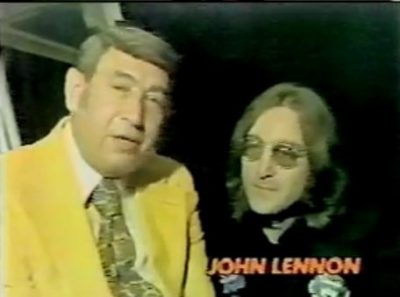
Howard Cosell and John Lennon on Monday Night Football several years before Cosell informed the world of Lennon’s murder.

“Remember, this is just a football game, no matter who wins or loses. An unspeakable tragedy, confirmed to us by ABC News in New York City: John Lennon, outside of his apartment building on the West Side of New York City, the most famous perhaps of all of the Beatles, shot twice in the back, rushed to Roosevelt Hospital, dead on arrival.” Howard Cosell near the end of a Monday Night Football broadcast of a Patriots and Dolphins game, December 8, 1980.

That is how the world found out together about Lennon’s murder.

It’s hard to explain how media has changed since 1980.  Back then, cable was just beginning its proliferation.  ESPN was launched 15 months prior, and CNN signed on nine months after that.  Almost everyone watching TV during prime time chose among shows on ABC, CBS, and NBC.  And on Monday nights in the fall, America watched football.

At Indiana University, where I was a freshman living on the third floor in Briscoe’s north tower,  two unmistakable affinities presented themselves every Monday night during my first semester on campus – pot and football.  The latter you heard from TVs in each room, and smoke from the former billowed from under closed doors.

I was in the loft my roommate built for me a couple of weeks prior so he had more room to get stoned with his girlfriend and high school buddy.  I had my parents’ 12-inch black and white TV up there, and I watched the game because studying was tedious and jumping out the third story window would only cause me pain and injury instead of end my misery.

Lennon had recently made a resurgence in our cultural consciousness, releasing his first album of original material in six years.  Songs written and performed by Lennon and his wife Yoko Ono alternated throughout.  This caused issues no longer relevant in the post-album age of music consumption.  If you wanted to listen to Lennon’s loving odes, you either had to tolerate Ono’s shrill and bizarre songs to get to the next Lennon cut or get up and move the needle to the next track.

When Cosell announced Lennon’s death, it was hard to comprehend.  There was always a sense that The Beatles might reunite.  That was gone.  There was also a sense that Lennon was an important voice, whose songs forced us to contemplate decency, hope, and love rather than greed, power, and anger.  He was now silent.  Imagine, Beautiful Boy, Grow Old with Me, and All You Need Is Love would have to be enough.

It seemed like a good idea to get a more informed perspective on this loss, and right down the hall lived the hippie president of the student body – a mentor of sorts for me – named Jeff Stanton.

Stanton had a dry erase board on his dorm room door that he filled will all manner of wisdom.  Reviews of cultural events, sad ruminations on societal woes, and hilarious critiques of   haughty bureaucrats were his best works.  He was a rabble rouser whose oddly effective political cabal insured his election as they stole all copies of IU’s student newspaper the morning the editorial board endorsed his opponent.

As I walked to Jeff’s room to see what he might have written about Lennon’s demise, a cacophony of Beatles songs from each room melded together to form one oddly moving tribute.  Turning toward the cross hall with the single rooms where Jeff lived, I saw him sitting alone just outside his open door.  Strawberry Fields Forever played loudly, cutting through all the other songs in the hall.  His head was between his bent knees.

I got to within a few feet, and just stood there.  Jeff looked up with tears rolling down his cheeks.  I wish I could tell you that I sat next to him and we both wept, or that I put my arm around him and offered profound words of consolation.  His eyes were fixed on mine like I might just be the guy to make some sense of all this.  I shrugged and shook my head before turning to walk back through the gauntlet of disjointed hit songs that continue to define a generation.

I was not the guy to offer answers or empathy to those who felt profound loss because of the death of the smart Beatle.

Shrinking from that moment with Jeff, I climbed back onto my loft of unhappiness and listened to my roommate and his friend chortle about Lennon’s murder and the outpouring of grief from their classmates as they reenacted the scene outside Lennon’s apartment building as they guessed it might have happened, “BANG! BANG! Ugh, I’m shot! Yoko!”

People who claim excessive pot smoking robs people of creativity must have spent considerable time with those two idiots.  I doubt they were very creative two begin with, kind of like Beavis & Butthead minus wit, but the pot, hash, and speed sure didn’t help.

The next night, Indiana’s soon-to-be national championship basketball team lost to Notre Dame, and the world reverted back to normal on a campus more invested in basketball and Bob Knight than mourning a lost icon.

Today, I can’t tell you a thing about that basketball game, but I can still see Jeff weeping, smell the pot smoke, and hear Cosell share the news of a senseless silencing of a beautiful voice and heart.  Hard to believe it was 40 years ago today.



Indiana Basketball – IU vs. Florida State time change suits fans – and Bob Knight – just fine

Indiana was scheduled to play Florida State tomorrow night at 9:30p in the Big 10/ACC Challenge.  Game time has been changed to 7:15p, which is far more convenient for those of us who work for a living.

Games that start at or after 9p end after 11p – sometimes well after 11p – and the cooling down period can cause fans to put off their sleep for another hour if the game was close.  That would means a weary Thursday, if the game was to be played as scheduled.

We understand why ESPN and other networks like the late starts. They accommodate the viewers in the Pacific Time Zone, for whom the game begins at 6p and ends roughly at 8p.  The staggered start times are purely for the viewers and cash available for more events, and that explains why Purdue plays Miami today at 5p.  Lining up three sets of games at 5p, 7:15p, and 9:30p is more profitable for ESPN, the Big 10, and ACC than a more crowded slate of games at 7:00p.  As we know, it’s all about the cash as student-athletes and our love for the alma mater are “exploited.”

When Bob Knight was the coach at IU, he used to rail against the 9p starts as inconvenient for student-athletes.  His point was that if a team tipped off on the road at 9p, it was unlikely his players’ heads would hit the pillow before four in the morning.  If kids had early morning classes, that would cause them to be less than his best as professors presented critical information about sociology, finite math, or Taoism.  Oh the humanity.

Remote learning has virtually eliminated student-athlete concerns, so that worry is part of a lost era.  And let’s be honest, knowing what we do about Knight, it was much more likely he was pissed about his own inconvenience than the players.  After all, wasn’t he well known for calling a practice after they got home if his Hoosiers lost?

My concern about start time is purely selfish.  The academic welfare of Trayce Jackson-Davis is his problem – not mine.  When I was a student at IU, my bedtime was immaterial to me, so why would I invest my energy in caring deeply about when Khristian Lander gets home?

What I do care about is when I get to bed, so the Hoosiers playing at 7:15p beats a 9:30p start because it means I get a head start toward a good night sleep and a productive Thursday.

I’m not sure when Knight goes to bed these days, but I’m guessing he’s as happy as I am game time has been moved up a couple of hours – and not because it improves the academic experience for Archie Miller‘s players.

Indianapolis Motor Speedway historian Donald Davidson retires – and it bums me out

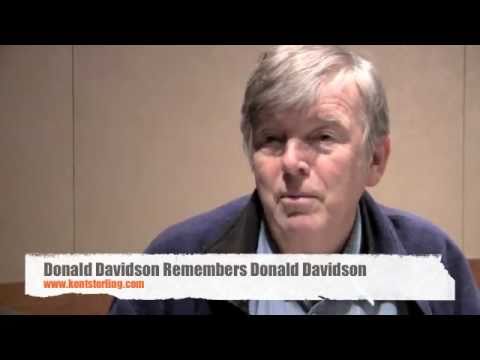
For a half-century, Donald Davidson spoke about those who made the Indianapolis Motor Speedway world famous, and then he become one.

Did you hear the one about the guy who loved talking so much about the men who made the Indianapolis Motor Speedway famous that he actually became one?

That’s the story of Donald Davidson, who is retiring as the historian of the Indianapolis Motor Speedway at the end of the month.

Donald saying goodbye makes me just as sad as when Jim Nabors sang “(Back Home Again in) Indiana” for the final time.

Whatever you wanted to know about The Greatest Spectacle in Racing, Donald had you covered.  He answered questions about the Indy 500 for over 50 years on WIBC and 107.5 The Fan during his Talk of Gasoline Alley.  Many of the questions were the same – year after year, but that was part of the charm of the show.

When I came to WIBC in 1993, I thought my radio was channeling some weird English show about racing the first time I heard Donald.  He’s English, and he sounds it.  I had no idea who he was talking about when he explained, “Mauri Rose worked at Allison Transmission and practiced for the Indianapolis 500 during his lunch hour.”.  I was from Chicago, and had no idea who Mauri Rose was or that Allison was a major Indy employer.

This was the strangest radio show I had ever heard.  A hour of answers from an English guy to questions about colors and numbers of cars, drivers, starting positions, engines, and broadcasters for the Indy 500.  The answers were very, very complete.  There was rarely time for more than one question each segment because Donald was, well, complete in his responses, and then would recall an anecdote about a driver.  It was unlistenable for me – at first.

By the end of that first May, I loved it.  Donald’s personality was quirky, but warm and authentic.  His unabashed love for the the Indy 500 oozed from the speakers on my drive home.  It was magical, and continued to be through this past May.  I learned about the passion people felt for the Indy 500 that May, as well as a giant helping of arcane trivia.

Over the years, I learned a lot about Donald.  He was a film projectionist in London who was fascinated by the Indy 500 to the point he saved every spare pound in order to make his first trip to America and 16th & Georgetown in 1964.  He returned for good in 1966.  Talk of Gasoline Alley came about a few years later as a segment on WIBC and then a one-hour show that became a very successful tradition.

Donald truly loved – and loves – the Indianapolis 500, but reserves his greatest passion for the roadster era that ended shortly after he arrived.  When I pleaded to Donald that he spend a little more time talking about the current lineup of cars and drivers, he would say, “I’m more interested in the pre-moderns.”  When I asked him to define the “Moderns,” he responded, “Anything after 1964.”

Every spring I would get a call from Donald to confirm that he would host the show again that year.  There was no question we wanted him, so this was a perfunctory communication that could have taken all of thirty-seconds.  Because Donald doesn’t do :30s, the conversation would go on for a long time – with multiple off-ramps discussing topics ranging from radio station formats to jazz singer Mel Torme.  I tolerated the calls at first, and then enjoyed them.  Over the years, I began to look forward to hearing from Donald as an annual tradition in my life.

Among Donald’s greatest talents was filling time during the four annual Indy 500 qualifications shows.  Resolving rain delays at the IMS takes a very long time, and rain happens often during May in Indiana.  From the moment it starts raining, it can be a solid three hours before the track is completely dry.  There was so much commercial content attached to qualifications coverage that sending it back to the studio was financially unsound.  That meant finding someone who could yammer in an interesting way to race fans for looooong expanses of time at a moment’s notice.  Never has a radio host’s talent been so perfectly aligned with a task.

I can’t imagine the Indianapolis Motor Speedway without Donald Davidson, a place with a long list of quirky traditions.  Only at Indy could a projectionist from London become a radio star who specializes in answering questions like, “How many times has the car starting 18th finished as the runner-up?”

Donald was nice enough to sit down with me for some interviews a few years ago where he answered questions about himself as well as those fearless men and women who give deep meaning to the Indianapolis Motor Speedway:

https://www.youtube.com/watch?v=UXyGN5LRdho

Indianapolis Colts penalties – grading nine penalties that could have snatched a loss out of the jaws of victory

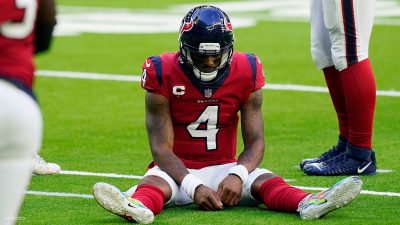
Deshawn Watson is dejected because his fumble did not allow the Texans to take advantage of Colts penalties that could have won the game.

Coaches will always tell you that victory favors the team making the fewer mistakes.  In other words, screw ups are more likely to determine the winner of a game that highlight reel plays.  Such was the case yesterday in Houston.

The Colts appeared to be the better team throughout their win against the Texans, but there was Deshaun Watson at the Colts two-yard line with 1:28 left about to take a lead the Colts would be challenged to overcome.  Watson fumbles the snap, Grover Stewart bats it away, and Anthony Walker recovers.  Colts win.

But there were chances for the Colts to put the game away prior to that, and penalties were a big part of how that didn’t get done.

The Colts committed nine penalties.  Some were unimportant, but others had a massive effect on game flow.  Here are the nine penalties graded by their severity and potential to impact the result.

    • 2nd & 12 at HOU 27 (11:31 – 1st)

      PENALTY on IND-M.Pittman, False Start, 5 yards, enforced at HST 27 – No Play.  Colts scored a touchdown on this drive.  No effect.

    • 1st & 10 at IND 49 (5:57 – 1st)

      D.Watson pass incomplete deep left to B.Cooks. PENALTY on IND-T.Stallworth, Defensive Offside, 5 yards, enforced at IND 49 – No Play.  Result of the drive was a 42-yard field goal.  Effect on the game was minimal.

    • 3rd & 12 at IND 15 (5:12 – 2nd)

      D.Watson scrambles left end to IND 11 for 4 yards (A.Walker; K.Turay). PENALTY on IND-A.Walker, Defensive Holding, 5 yards, enforced at IND 11.  This penalty resulted in an automatic first down which led to a touchdown rather than field goal for Houston.  The net effect was four points for the Texans.  The penalty would have been critical had the Texans take a one-point lead late.  It was a dicey call, but penalties called are penalties enforced.

    • 3rd & 10 at HOU 24 (1:20 – 2nd)

      P.Rivers pass short left to J.Taylor to HST 24 for no gain (V.Hargreaves). Penalty on IND-C.Green, Illegal Formation, declined.  No effect, which was good because it was a garbage call.

    • 3rd & 2 at HOU 34 (0:39 – 2nd)

      D.Watson pass short middle to C.Hansen to HST 49 for 15 yards (X.Rhodes). Penalty on IND-X.Rhodes, Defensive Holding, declined.  No effect.

    • 4th & 7 at HOU 19 (8:27 – 3rd)

      B.Anger punts 54 yards to IND 27, N.Hines pushed ob at HST 38 for 35 yards (B.Anger). PENALTY on IND-Z.Franklin, Illegal Block Above the Waist, 10 yards, enforced at IND 40.  Assuming the illegal block was not responsible for springing Hines, the change in field position because of the penalty was 32 yards, and likely cost the Colts a shot at a field goal that would have extended their lead to 27-20.  We will call this penalty net -3 points.  It would have been a critical key to a Colts loss.

    • Free Kick following safety (6:02 – 4th)

      B.Anger kicks 64 yards from HST 20 to IND 16. N.Hines pushed ob at HST 12 for 72 yards (L.Johnson). PENALTY on IND-A.Walker, Offensive Holding, 10 yards, enforced at IND 35.  The following Colts drive stalled at midfield and required a punt.  Without Walker’s penalty, which had no effect on the return, the Colts are looking at a field goal that would extend the lead to nine.  The net result of the penalty was 61 yards.  We will call this penalty net -3 points as well, although it could have been seven. This penalty would have been another critical key to a Colts loss.

    • 2nd & 10 at HOU 49 (3:08 – 4th)

       J.Wilkins right end to 50 for -1 yards (C.Omenihu, W.Mercilus). PENALTY on IND-R.Kelly, Offensive Holding, 10 yards, enforced at HST 49 – No Play.  (See next penalty)

    • 3rd & 18 at IND 43 (2:57 – 4th)

      PENALTY on IND-M.Pittman, False Start, 5 yards, enforced at IND 43 – No Play.  These two penalties were on the same set of downs, and cost the Colts 15 yards of field position and a potential opportunity at a long field goal that would have put the game out of reach.  Even a first down likely would have exhausted enough time to keep the Texans offense from having a legit chance to win.  Cannot have these penalties late in the game – especially a false start on a wide receiver.  The net effect may have been three points.

The total points the Colts cost themselves was a minimum of six, and they gifted the Texans four.  That is a net -10 for a team that could have very easily lost by one.

The impact of penalties on a game can be huge, and the impact of a game on playoff eligibility is massive.  Yesterday’s win could be the difference between playing and sitting at home the second weekend in January, and penalties could have caused a shift in the result.

Playing against a 4-8 team like the Texans allows a team like the Colts to win despite massive game-changing errors.  Against playoff teams, this level of sloppiness will end the Colts season.  Their offense is just not dynamic enough to overcome negative field position shifts.

Penalties didn’t bite the Colts on the backside yesterday, but they very easily could have.  And if they don’t get cleaned up, they will.

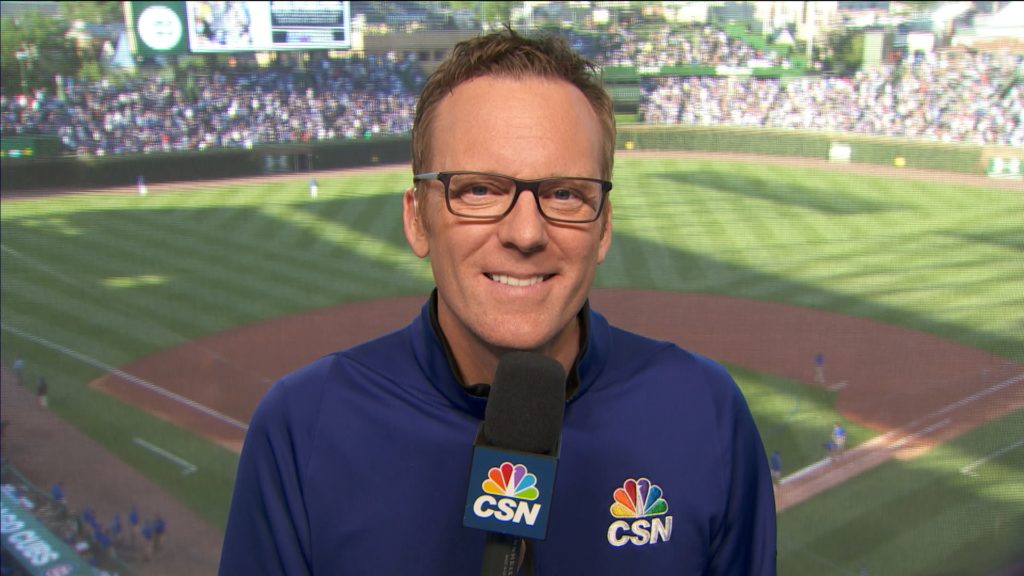
Chicago Cubs announcer Len Kasper leaves Marquee for White Sox and WMVP

How can Len Kasper leave Cubs TV to join White Sox Radio?

Some mornings, news breaks that needs to be checked, re-checked, confirmed, and then I’m still not sure it’s true because it just doesn’t compute.  Len Kasper bolting from his gig as the Chicago Cubs TV play-by-play guy to do radio for the White Sox qualifies.

Kasper has been a companion to Cubs fans for 16 seasons – through the demolition of the team that was five outs away from the 2003 World Series to back-to-back playoff appearances in 2007 and 2008 through another rebuild, and finally a World Championship in the midst of a six-year run of competence just ended.

Team voices like Kasper become friends welcomed into homes through bad times and good, and for those who follow the Cubs, Kasper was really the third such friend, following Jack Brickhouse and Harry Caray.  Sure, Chip Caray and Thom Brennaman both called Cubs games, but they were comparative short-timers – and generic short-timers at that.

These types of guys just don’t leave that job without a really good reason.  Brickhouse retired and was replaced by Caray, whose value the White Sox failed to realize.  Of all the personnel moves the Cubs have made in their nearly 150 years of existence, hiring Caray away from the Sox was probably the most lucrative.

When the Cubs were broadcast on WGN-TV, that job might have been the best in sports.  Rarely does a local team have a national network and presence.  For Caray, it was perfect.  Live at the Ambassador East, commute to Wrigley, travel first class, enjoy baseball, and develop a national brand.

The Cubs are no longer on a national network.  In fact, there are a lot of people in Chicago who are unable to watch the Cubs because of shortsighted clearance negotiations between the Marquee Network and carriers like Hulu and Youtube TV.  The Cubs charge roughly $6/month for their Marquee product, and that’s a lot of jack for roughly 500 hours of meaningful programming during an entire year.  In addition to the games, they also have replays of old games (not bad in a pinch) and trivia contests between former Cubs (terrible).

I could go on and on about the weak sauce collar programming for Cubs games, but you are way ahead of me if you watch.  The point is that the Cubs job behind that pseudo-paywall is not nearly the gem it once was.  Kasper knows it, picked up his phone when it rang, and now the White Sox have Jason Benetti and Steve Stone on TV (the best pairing in MLB) and Kasper and Darrin Jackson on the radio.

The Cubs?  Reports are that Chris Myers will take over for Kasper.  I love Myers as a broadcaster.  There are few guys in the business as hard-working and professional as Myers, but as the next link in the Brockhouse-Caray-Kasper chain, it is an odd fit.  Myers is a by-the-book national voice, and the Cubs job requires a local partisan.  Cubs fans want to live and die with a broadcaster, not listen to Myers describe dispassionately the events of a three-hour marathon.

Maybe there were other reasons for Kasper to leave the job every Cubs fans pined for as a kid.  We’ll never know.  Kasper is too classy to go out with complete transparency.  His tweets this morning were filled with saccharine gratitude to the Cubs, the Sox, and everyone else drawing breath in Chicago and beyond.  That’s not criticism, by the way.  His tone was as it should be. but that doesn’t make it any less nauseatingly sweet.  Burning bridges is fun and satisfying in the short-term, but memories of a walk-out smackdown burn brightly to the grave.

The question of why Kasper would decide to change his work address from the beauty and wonder of 1060 West Addison to the urban blight at 35th & Shields will haunt Cubs fans for a long time to come.  Choosing the White Sox over the Cubs seems absurd – like opting for a walking taco and carton of milk at a school cafeteria  over a pork chop and beer at Harry Caray’s.

The Cubs appear to be an organization more intent on positive cash flow than satisfying employees and keeping fans.  Jon Lester, Theo Epstein, Kyle Schwarber, and now Len Kasper are gone.  Maybe they will move Harry Caray’s statue to an even more distant outpost again if they run out of human beings to alienate.