Author Archives: Kent Sterling

Are the Colts ready to go to the playoffs? Game One will reveal whether national pundits or local fans are right

Chris Ballard has said all the right things on Zoom calls during a weird offseason. Now it’s time for the team he assembled to do all the right things.

In the three-plus years since Chris Ballard took over as general manager of the Indianapolis Colts, the message has evolved from, “There is a ton of work to do,” to we’re “excited about our roster and ready to get started.”

So now it’s put up or shut up time for Ballard and the Colts.  They open the season Sunday in Jacksonville as an eight-point favorite to win their first season opener since 2013 and first game in Jacksonville since 2014.  For the first time since Ballard took over, expectations are that this team is ready to win the AFC South – a division that has done more harm to itself than good this offseason.

Last year, Colts fans and media were bullish until the bizarre retirement of franchise quarterback Andrew Luck.  He was only 29, just off a trip to the playoffs, and appeared to be healthy when his season ended in the Pro Bowl.  The Colts started fast under game manager Jacoby Brissett, putting together a 5-2 record.  Then the roof caved in with seven losses in the final nine games.

Click here for your copy of “Oops – the Art of Learning from Mistakes and Adventures” by Kent Sterling

After what looks to have been a solid draft and splashy free agent signings, fans assume the Colts will return to their winning way.  So does Ballard, who knows that the time has come to match his rhetoric with results.

National analysts as well as the numbers crunchers are not so enamored of the Colts.  They see a 7-9 team that added an aging Philip Rivers, a 38-year-old quarterback coming off a 5-11 season with 20 interceptions.  They see a team whose best players are a left guard and outside linebacker.  They see a team that did not have a first round draft pick.

Local fans see DeForest Buckner, the three-technique defensive tackle acquired in exchange for a first round pick.  They view the loss of Adam Vinatieri as a net positive despite his replacement being a rookie who has never attempted an NFL field goal (which is 599 fewer than Vinatieri made).

Now I’m not trying to crap all over the 2020 Colts and the way Ballard has assembled his roster. I’m a huge fan.  Ballard has employed the same methodology I would if an NFL owner ever had an epiphany that somehow I should run his team.  Ballard has built from the inside out and with team-first athletes who are driven to win rather than build a brand.  I love the locker room.

But I also believe that past is prologue.  Winning brings winning.  Losing brings losing.  Mediocrity brings mediocrity.  The Colts, despite my admiration for Ballard’s candor and methods, were a mediocre team with a mediocre quarterback in 2019.  They plugged in a QB that has led his team to the playoffs once in the last six seasons while finishing in the NFL’s top 10 in interceptions five times during that span.

Maybe Rivers was prone to throwing picks because the Chargers offensive line sucked.  Maybe it was because he was playing from behind most of the time.  Maybe it was because his right arm tends to throw floaters that are easily caught by somebody – regardless of the color of his jersey.

Maybe the Colts will come together to take advantage of what many believe is the easiest schedule in the NFL.  Maybe Rodrigo Blankenship will hammer field goals and extra points at a rate that will make us forget pre-2019 Vinatieri.

The truth is that we don’t know what this season will bring.  In Indianapolis, we feel good about assuming the best while the national analysts project what the Colts have been will not be changed by the addition of a 5-11 quarterback who threw 20 picks, no first round draft picks, and a disruptive defensive tackle.

One more truth – game one is going to reveal a lot about what fans will see in the 15 games that follow.  The Jaguars will not be good this year.  In fact, they may be the worst team in the league.  If the Colts cannot leave Jacksonville Sunday with a win, it will be time for fans to adjust expectations toward those of the national pundits.  With a win, Colts fans and Chris Ballard, will feel a hint of vindication.

NBA’s biggest problem is also its biggest strength – its stars, and their brand aware restlessness

Maybe once upon a time Victor Oladipo thought Indy was “MY CITY!” Seems those days might be gone.

The NBA’s biggest problem is also one of its greatest strengths – it’s stars.

Late NBA commissioner David Stern made the decision to market the league around its best players in the 1980s.  Back then, the NBA had Michael Jordan, Julius Erving, Larry Bird, Magic Johnson, Isiah Thomas, and others to feature.  The league went from delayed network broadcasts to being must see TV very quickly.

Each of those titans of professional basketball played virtually his entire NBA career with one team – Jordan with the Bulls (minus a couple of Wizards years well after his prime), Dr. J with the 76ers after an ABA career with the Squires and Nets, Bird with the Celtics, Magic with the Lakers, and Isiah as a member of the hated Pistons championship teams.  As a bridge from the 1980s to the 2000s, Reggie Miller toiled for the Indiana Pacers for all of his 18 seasons.

Click here for your copy of “Oops – the Art of Learning from Mistakes and Adventures” by Kent Sterling

As the star system matured and individual brands overtook team loyalty as the most important driver of fan fervor, the NBA made concessions that gave the players tremendous freedom to move from team to team.  The result has been a transitory system of employment for the NBA’s most popular players that makes it hard to know who plays where from year to year.

Kawhi Leonard is playing for his third team (not counting the Pacers who originally drafted him).  So is LeBron James (although he played twice with the Cavs).  James Harden is on his second team.  Paul George is playing for his third.  Chris Paul is on his fourth stop.  Dwyane Wade played for the Heat (2X) and the Bulls.  Hell, Shaquille O’Neal played for six teams.  Derrick Rose has worn jerseys for five different teams.

As stars bounce around, fan loyalty is disrupted.  As fan loyalty is disrupted, TV ratings sag.  Boy, have they sagged.  From 2012 to 2019, TV ratings dropped 45%.  That’s a hell of a problem for a league that requires significant revenue from media deals to reconcile its books.  As the possibility of limited attendance looms for 2020-2021 a sweet TV deal has never been more critical.

Even for people who follow the NBA, it’s very difficult to name a single player for teams like the Sacramento Kings, Phoenix Suns, Orlando Magic, New York Knicks, Charlotte Hornets, or Detroit Pistons.  Those franchises have no identity whatsoever, so there is no compelling reason to watch.  Quick, name the coach of any of those teams this past season!  (The answers?  Luke Walton, Monty Williams, Steve Clifford, David Fizdale & Mike Miller, James Borrego, and Dwane Casey.  If you knew Borrego coached the Hornets, you get a cookie!)

Other than a logo or a player from the 1980s and 1990s, what image do you associate with a team?  If your mind drew a blank, you are not alone.  Star level players slide from team to team with relative ease once they reach the age of 27 or 28, and prior to that employers deal them for assets to try to acquire a generational talent.

The problem was especially apparent during Pacers president Kevin Pritchard’s season postmortem earlier this week.  He spoke about the need to create a positive atmosphere for Victor Oladipo if the Pacers are to retain him.  Keep in mind that Oladipo just finished playing so poorly in a series swept by the Heat that coach Nate McMillan was fired 12 days after his contract extension was announced.  Pritchard spoke of the need to hire a coach who can communicate with this very brand-aware generation of player.

The fix for the problem is a non-starter – grabbing from players the freedom to bounce from team to team during collective bargaining.  The players would strike or be locked out, and no basketball is far worse for the NBA than star-driven, team-last basketball.

Climbing out of the hole the NBA and its stars have dug for themselves will take the kind of team-first effort it appears this new generation of players are incapable of – the very issue that caused the problem in the first place.

Here’s hoping Colts GM Chris Ballard is right because he’s done exactly what I would have

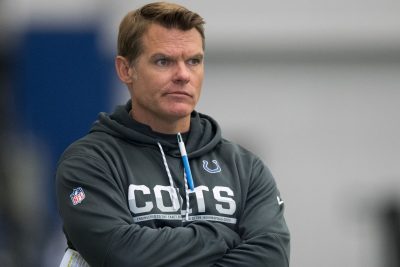
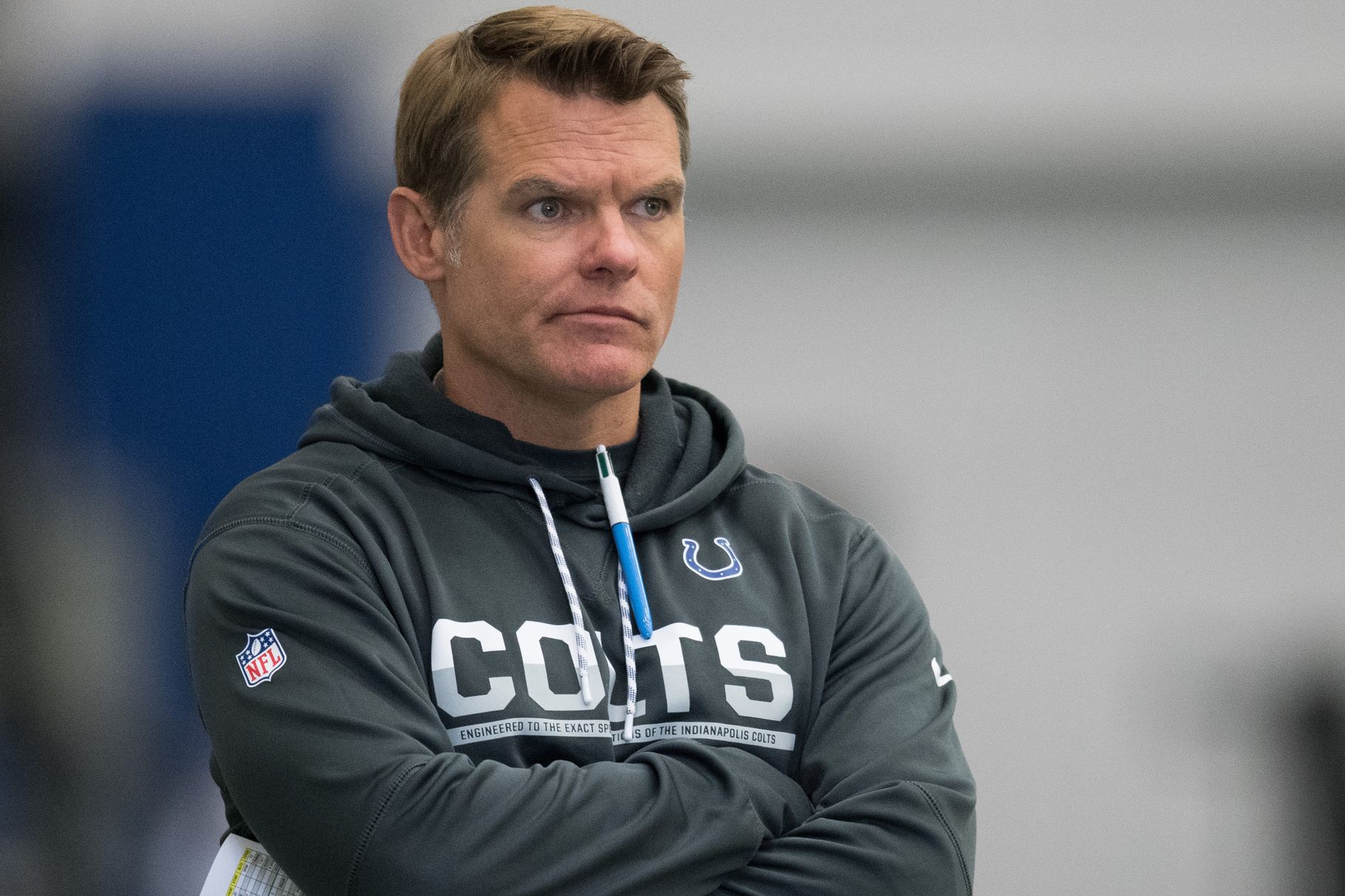
If I were a GM at practice, I would look a lot like this pic of Chris Ballard, and if I were the GM of the Colts, I would have done to this point exactly what Ballard has done – and that might not be a good thing.

What’s the point of winning if you do it with bad people?

Fans and media ponder what they would do if they ran a professional sports franchise, and over the years I have developed what I believe to be a solid formula for building a Super Bowl level roster.  Without getting lost in the weeds, I would build from the inside out, draft speed, and have a very strict adherence to filling the locker room with men committed to sacrificing personal status for the glory of the whole.  Then I would make damn sure I had a quarterback capable of winning a lot of games.

Click here for your copy of “Oops – the Art of Learning from Mistakes and Adventures” by Kent Sterling

In dealing with the media, I would be as honest as I could be without shoving any of my players or coaches under a bus.  And I would hire coaches who agreed that winning must validate a philosophy about the goodness of man – which is the antithesis of “Just win, Baby!”

If that sounds familiar, we are watching Colts General Manager Chris Ballard execute a very detailed version of that blueprint for greatness.  If his work is not ultimately responsible for championship level football, the Colts will lose and I am going to have to admit that I am wrong – and I do not like admitting I’m wrong about this kind of thing.

The current Colts locker room is filled with men who understand a rising tide lifts all boats.  They are a pleasure to listen to as they talk to the media and each other.  They care about their brothers and team.  That has not always been the case.  If you want to know who Ballard identified as the bad eggs when he took control of Ryan Grigson’s roster, check the moves he made during that first year.

If you want to know how honest Ballard is willing to be with the media and fans, all you had to do was listen to Friday’s Dan Dakich Show on 107.5 the Fan in Indianapolis.  He went after former Jets GM and current ESPN analyst Mike Tannenbaum’s take on running back Marlon Mack with ill-temper and (almost) raw language:

“Let me say this, watch the freakin’ tape. You can’t tweet on things if you are not…that’s why I don’t listen to any of that crap. Now, somebody that watches games and watches the tape, he’s got a voice. But how can you say that? Marlon Mack was freakin’ unbelievable. Did he not watch the freakin’ Sunday Night game against Kansas City? I almost cussed on radio. Stupidity on Twitter is at an all-time high right now. Marlon Mack has two 1,000-yard seasons and Marlon Mack is a hell of a player. And then he has a broken hand and misses some games and comes back and plays with a broken hand. Off season, my ass.”

It’s not lost on me (or you) that Grigson’s teams had a cumulative record of 49-31 record that featured exactly zero losing seasons, while Ballard is 21-27 after three years with two losing seasons.  Jacoby Brissett was the quarterback in Ballard’s two losing seasons, so there is that, but a GM is what his record says he is.

While the record is not yet stellar, the offensive line is believed to be the best in the NFL, and with DeForest Buckner added to the defensive front, the interior has been built to win.  The running game should be in good shape with Marlon Mack and Jonathan Taylor.  If T.Y. Hilton and Parris Campbell stay healthy ( a bit of a long shot), they are a dynamic pair  complemented by rookie Michael Pittman, Jr.

Everything is set for the Colts to make a run, except for the most important position in sports –  quarterback.  With Andrew Luck, this group could go to the Super Bowl, but as we know too well, Luck retired.  So the burden of getting the Colts to where the other 52 players are capable of taking them falls on the soon-to-be 39-year-old shoulders of Philip Rivers, whose 20 picks played a significant role in the Chargers 5-11 record in 2019.

There will be two very stark truths that need to be acknowledged if Rivers’ tank is empty as some suspect – Ballard’s method for team building is flawed, and as a result so will be mine.

What the hell fun is watching NFL teams if not for second guessing the HMFIC running things.  Sadly for me, if Ballard fails as a GM, I will have no high ground upon which to build my fictitious throne of genius.  I’ll be the dope who agrees with the dope, unless the Colts win big, and then you’ll never hear the end of how smart I think I am.

Fast men who prioritize team ahead of individuals win football games – that’s how you win.  At least Chris Ballard and I hope so.

Kevin Pritchard claims responsibility, gives Oladipo credit, says new coach needs to communicate with new age players

This is where Kevin Pritchard is at his best – in the same room as the media he’s addressing.

It’s hard to do a Zoom meeting with the media and not sound crazy.  There is something about sitting in a room with people looking you in the eye that keeps a person honest.

That’s all I have as a defense for Pacers president Kevin Pritchard’s post mortem media hour.  Sitting in front of a computer, a person can say some weird things, and Kevin did.

There were two repeated themes from Pritchard I found odd.  The first was how he claimed culpability for his team’s woes in its four game sweep at the hands of the Miami Heat.  Many times today Pritchard said, “I take full responsibility.”  This was offered as a gracious statement to counter  recently fired coach Nate McMillan, who generously claimed responsibility after he was canned.

Click here for your copy of “Oops – the Art of Learning from Mistakes and Adventures” by Kent Sterling

Had we been in the Fuson Media Room at Bankers Life Fieldhouse, my brow would have furrowed, and I might have asked, “Hey, if you are responsible, why is Nate out of work, and you are sitting here claiming responsibility?”  Of course, the answer is self-evident.  Many executives are publicly polite, but very few resign whether or not they are responsible for the poor performance of his/her entity or department.

Pritchard also spent a disproportionate amount of time during his 60 minutes of unchecked opining thanking Victor Oladipo for making “a huge sacrifice” by playing in the Orlando bubble.  He said, “You have to give Victor a ton of credit.”  Oladipo’s contract pays him roughly a quarter million dollars each game.  I must have missed the lecture on business ethics where fulfilling the terms of a contract qualifies as “sacrifice.”

If by “sacrifice,” Pritchard was referring to Oladipo exposing his physical condition as incapable of competing at a high level, I agree with him, but it seemed his mental errors were at least as big a part of his lackluster performance as his surgically repaired quad tendon.

Then Pritchard delved into the psyche of the current player, and how a new coach would be hired in part due of his ability to communicate effectively.  Nothing wrong with hiring a gifted communicator, but Pritchard’s assessment of modern NBA players struck me as bizarre.  “We have to figure out how to communicate on their terms,” he said.  “They’re living a different life and it seems like it’s based around the phone, but, again, they’re into fashion and they’re changing and they’re becoming more self-observant.”

Four things occurred to me as Pritchard shared this thoughts about today’s players.  One – Pritchard made my dad sound old with his these darned kids appraisal of players.  Two – he never saw the clothes horse stylings of Clyde Frazier when he played for the Knicks, (Frazier makes current NBA stars look like corporate attorneys).  And three, if Pritchard really values communication, he might want to stop talking about those with whom he is going to communicate like they are pod people whose evolution requires massive re-programming of a basketball operation.  Four – he basically said McMillan is incapable of relating to current NBA players.

The final strange interlude we’ll discuss was an admission that he called Colts general manager Chris Ballard to pick his brain about his process for hiring a coach.  The rivalry between Indy’s two major league franchises used to be intense enough that such a conversation was unthinkable.  That a talk between Ballard and Pritchard took place, I applaud.  The part that’s unusual is that Pritchard – an executive with a 141-96 (.595) record after taking over the Pacers presidency from Larry Bird – called a guy for advice whose three Colts teams are 21-27 (.438).

Ballard may go down in NFL history as a great general manager, but his record as of today tells a different story.  Pritchard may also be remembered as an all-time great, but the next time he talks to the media, he needs to be in the same room.  It helps him – and it helps us.

Bucks start boycott ball rolling, so basketballs stop bouncing – hopefully it brings closer an end to racism

Basketball courts will be empty tonight as NBA players led by the Milwaukee Bucks try to bring needed change.

The Milwaukee Bucks feel so passionately about the crimes visited upon blacks and the constant fear in their lives that they have boycotted this afternoon’s Game Five in the playoff series against the Orlando Magic.

Never before in the history of professional sports has a team passed on the opportunity to compete in order to protest racism.  The outcome is of the Bucks demonstration that “enough is enough” is uncertain, as is the extent to which other teams and the NBA will support the Bucks action through their decisions to play or pass on the opportunity to compete in future games.

Click here for your copy of “Oops – the Art of Learning from Mistakes and Adventures” by Kent Sterling

I tweeted earlier today that the Bucks should take the forfeit because without it, the game will be made up, and what good does that do?  People leaped to the conclusion that I believe a forfeit should be assessed by the NBA as a punitive measure.  That is 180-degrees from my beliefs.  I’ve engaged several of them, and the result has been a reasonable exchange of ideas.

The time has come to put racism behind us, and the path toward a post-racist society will be bumpy and unpleasant – in particular for those who have never experienced it.  Lives will be disrupted in ways far more serious than the simple inconvenience of the loss of a basketball game – or games being canceled, forfeited, boycotted, or the entire postseason scrubbed.

Our history of racism is a pox on America, and we must correct it.  That means white people looking within our hearts to search for thoughts of intolerance, hatred, and stereotypical assumptions that continue to marginalize and excuse violent acts with no motivation other than racial differences.

I have unending respect for the Bucks players who decided to sit so others can stand.  That people on Twitter believe that I side with those who deride these actions is endemic of those problems we face as a society – they assume facts based upon incomplete evidence.

If the NBA cancelling games tonight causes whites to examine our beliefs, our humanity, and our ability to empathize, it is a more than worthwhile exploit.

If the NBA issues requirements for continuing play to cities and states where franchises exist, I hope they will react by leading us toward the humanity that should already be cemented as part of our cultural identity.

Good for the Bucks.  Good for the NBA.  Good for everyone who sees racism as a vicious cancer in Kenosha, Louisville, Minneapolis, and everywhere else injustice has been excused because of the color of a victim’s skin.

Nate McMillan fired by the Pacers – he deserved better, but deserve has nothing to do with it

Nate McMillan was a success in the regular season, but failed in the playoffs. And so he is now a former coach of the Pacers.

The Indiana Pacers decision to fire Nate McMillan is shocking.  Maybe it shouldn’t be, but it is.

When news of the firing spread at Colts practice today after a tweet from Scott Agness, the first response was disbelief.  Then, it was agreed this was a very un-Pacers thing to do.  This is a franchise that has never won an NBA title, gone to the NBA Finals once, and has been satisfied with a whole lot of good, very little bad, and a small sliver of great.

The Pacers press release announcing the termination grimly pointed out McMillan’s 3-16 record in the postseason – including three sweeps.  That isn’t good, but there were circumstances beyond McMillan’s control that led to the losses, including the debacle of a sweep at the hands of the Miami Heat that concluded less that 48 hours ago.  That’s usually enough to earn the benefit of the doubt from owners who detest chaos.

Click here for your copy of “Oops – the Art of Learning from Mistakes and Adventures” by Kent Sterling

Speaking of chaos, McMillan has dealt with his share over his four years as coach.  Each year brought significant roster turnover and Injuries.  Here is a very incomplete list of lowlights:

  • Paul George was dealt after year one for Victor Oladipo and Domas Sabonis.
  • Myles Turner missed 16 games in 2016-2017.
  • Victor Oladipo suffered a season ending quad tendon tear in January of the 2018-2019 season, and did not return until January of this season.
  • Prior to the 2019-2020 season, the Pacers allowed Bojan Bogdanovic and Thad Young left the Pacers for free agency and Darren Collison retired.
  • Less than a month after Oladipo came back, Jeremy Lamb tore his ACL.
  • While preparing to play in the Bubble, Domas Sabonis was sidelined by Plantar Fasciitis that ended his season.
  • Even Malcolm Brogdon, who was relatively healthy this season, missed 19 games with a variety of physical maladies.

Dealing with adversity is a big part of being a coach, and the Pacers being swept in their last two opening rounds despite exceeding expectations in the regular season shows McMillan was unsuccessful in adapting to player availability issues when it mattered most.  While no clear-headed NBA fan expected the Pacers to beat the Heat in their seven-game series, it was expected the Pacers would be the aggressor in more than one of their 16 quarters.

Was the Heat series so grotesque that the Pacers brain trust decide to pull the trigger, or is this change an acknowledgment that migrating to the modern offense favored by calculus students is needed to compete against the early adopters.  Who knows?

Did players – or a player – come to team president Kevin Pritchard and general manager Chad Buchanan demanding a change, did owners Herb and/or Steve Simon call Pritchard with frustrations about their team’s postseason miseries, did Pritchard and McMillan have a fistfight in the lobby of the Grand Floridian Hotel at Disneyworld, or maybe a more mundane scenario played out that led to McMillan’s ouster.  Whatever the cause – he’s gone and not coming back.

Did McMillan deserve the ax?  Somebody in a position of power within the organization thinks so – as they tend to every three to five years (no NBA coach has made it beyond five full seasons, and the last to be dispatched after less than three full seasons was Bob Hill in 1993).

Rumors have already begun to abound who might replace McMillan, but be very careful who you listen to.  Agents for every unemployed coach will plant rumors with journalists that they might be the choice.  That’s what agents do – creating a market where there might otherwise be none is part of securing a contract extension or a broadcasting deal for clients.

There are other jobs available too, so there will be significant competition for the leaders who may or may not be available.  The Brooklyn Nets, Chicago Bulls, New Orleans Pelicans, and Philadelphia 76ers are all coach hunting too.  That will affect availability and the price the Pacers will need to pay for their man, who will be the next coach to be replaced in anywhere between three and five years.

Former UConn assistant Kenya Hunter being hired at Indiana wasn’t a coup – it was commerce

Kenya Hunter – welcome to Indiana Basketball!

When the report of Indiana Basketball hiring former UConn assistant Kenya Hunter was tweeted, there was great rejoicing among IU fans.  Some media types were shocked that Hunter would make the move from UConn.

“How did Archie Miller pull this off?” they asked.

Here’s how.  Indiana’s athletic department has more money than UConn can begin to dream of.  In fact, ANY money is more money than UConn can imagine.  In 2019, UConn Athletics posted a $42.3 million loss.  That’s right, in a single year, the Huskies lost $42.3 million!

The stated goal of UConn athletics is to reduce losses to 2010 levels of $15 million.  A university with that kind of peculiar and failing business model is not going to be an attractive destination for a coach no matter how many national championships they have won over the last 22 years (UConn has won four!)  Reasons for the loss are many – including the move from the American Athletic Conference to the Big East came with a $17 million exit fee.  Canceling football this season due to COVID-19, will extract another $1.7 million in ticket sales.

IU on the other hand remains comparatively flush because of Big 10 media deals.  Revenue in 2019 hit a record $127.8 million with a surplus of $13 million.

Click here for your copy of “Oops – the Art of Learning from Mistakes and Adventures” by Kent Sterling

That means IU can roll out a welcome mat woven from spun gold, while UConn gave him a gift card to Costco as an exit gift.  Hunter also gets access to a bottomless recruiting budget to woo out of state recruits like Aminu Muhammad, Zion Cruz, and Justice Williams, and I’m certain new athletic director Scott Dolson is saying yes to damn near anything that has a chance to win another game or two for Miller’s Hoosiers.

There are underlying issues at IU that might have proven attractive to Hunter, like a friendship with Miller that goes all the way back to North Carolina State when Miller was a plucky point guard and Hunter a student manager and then director of basketball operations.  But this isn’t summer camp where you work with buddies.  This is big boy basketball where assistants earn more than $300K.  Hunter was paid $315K at UConn.  You can bet he received a significant bump for the move to Bloomington.

Whether Hunter will be a reason IU makes its long awaited move back into national prominence – or state prominence, for God’s sake – time will tell.  People say that Hunter is very good at getting the most out of bigs and was key in the development of Otto Porter, Greg Monroe, and Roy Hibbert while at Georgetown.  That may mean good things for Trayce Jackson-Davis and Joey Brunk.

Hunter will do what he does, and Indiana may be better for it, but like virtually anyone leaving one employer for another, the reason is cash – both for the short and long term.

This wasn’t a coup.  This was commerce.

Victims of Heat stroke, Pacers path to immediate improvement hard to see

There were several events like the introduction of Malcolm Brogdon last offseason, but they will likely be few and far between this fall.

Now what?

The Indiana Pacers were routed by the Miami Heat in their four games of postseason futility.  A sweep is what their level of effort deserved, so yesterday’s 99-87 loss was delivered as expected.

There are several pieces of good news, and some good news/bad news issues depending upon your perspective for the Pacers as the front office looks ahead to the 2020-2021 season (assuming the season begins in 2020).

Let’s deal with the positives first – the plantar fasciitis that took Domas Sabonis out of the Bubble before play began and the knee injury suffered by Jeremy Lamb will heal.  That will help solve two glaring issues – rebounding and bench scoring.  Victor Oladipo’s rehab continuing through another offseason will bring him closer to 100% – we hope.

Click here for your copy of “Oops – the Art of Learning from Mistakes and Adventures” by Kent Sterling

That’s the good.

Depending upon your perspective, there are issues that you will either find encouraging or frustrating:

Oladipo is heading into the final year of his contract, so if he wants to leave after next season as a free agent, the Pacers will have a tough time getting value back in a trade.  In the four miserable-to-watch playoff games, Oladipo was unable to get the corner on even Goran Dragic, and was unable to stay in front of almost anyone he was paired against on the opposite end.

That’s not to slam Oladipo, but to point out what opposing GMs will see as they evaluate him as a potential one-year rental.

More good or bad news – the Pacers have everyone under contract for next season but Justin Holiday and JaKarr Sampson.  That means roster stability, which would be great if not for the washout in the playoffs.  It also constrains management opportunities to sign free agent talent because the Pacers have no cash to spend on upgrades.

Here’s another bit of grist for your mill – Nate McMillan, not beloved by fans after leading the Pacers to being swept three times in his four playoff series, signed an extension prior to Bubble play.  That means that replacing him is impossible because Kevin Pritchard will not pick up the phone to tell owner Herb Simon he is going to have to write a check to cover that extension two weeks after it was announced.

But for those of you who want McMillan gone, let’s look at his record a little more closely.  He can’t be held accountable for the sweep against the Celtics last year, as the team cratered following Oladipo’s injury.  The Pacers arguably played the Cavs tougher than anyone in the Eastern Conference when they were swept in 2016.  Losing Sabonis, the lone Pacers all-star, before the debacle against the Heat gives McMillan another valid out for 2020.

More bad news – the Pacers have no first round draft pick.  It was sent to Milwaukee in return for Malcolm Brogdon.  That’s not too bitter a pill because the pick earned by the Pacers is 24th.  The last three first round picks brought the Pacers T.J. Leaf, Aaron Holiday, and Goga Bitadze, so if past is prologue, whomever they would have taken likely would not have brought a unique talent to the team.

The only path available for acquiring new talent is through trade, and that means giving something to get something.  Barring an odd one-sided deal like Pritchard executed last year to buy T.J. Warren’s contract, the piece that may generate significant interest is Myles Turner, who at age 24 still has upside that is difficult to estimate.  His record in playoff games, though not specifically his to own, is 6-20.

Last offseason was critical for the Pacers because they had the assets available to flip a significant chunk of the roster.  This year, there are very limited avenues for upgrading talent beyond what can be done internally.  That may make this the offseason that defines Pritchard’s era as the team’s architect.

The Pacers are now one of five franchises in NBA history to have been eliminated in the first round in five straight seasons.  No one wants to see that streak reach six.

Marco Andretti understands moments, and he is ready for his in Sunday’s Indy 500

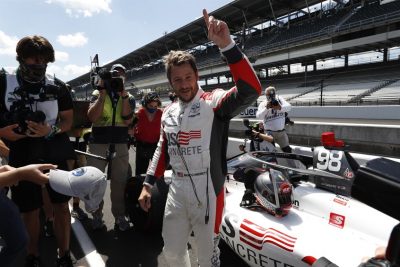
Marco Andretti. Photo by Chris Jones – Indianapolis Motor Speedway

By Bert Beiswanger

Shortly after the completion of the 103rd Indianapolis 500 last year, while Simon Pagenaud was celebrating the greatest moment of his racing life, Marco Andretti was sitting on his golf cart on pit lane, head down, frustrated and looking like he wanted to be anywhere but where he was. He had just finished multiple laps down, perplexed at battling an ill-handling car for three hours. His race was virtually over shortly after the green flag dropped.

As I walked towards Marco Andretti to garner some post-race comments for a column the IMS News Bureau would file for his home Lehigh Valley-area newspaper, The Morning Call, Marco saw me approaching. He put his hands out with shoulders shrugged and asked, “What do you want me to say?” I replied very simply, “You battled the car all day. What happened?” Andretti replied very simply, “I don’t know; we need to look at it. But I picked a terrible day to have the worst race of my career.”

A man of few words sometimes, that was sufficient for me in the moment. And Marco Andretti always understands the moment at Indianapolis Motor Speedway. He takes nothing for granted. He understood the moment when he amazingly got beat at the line his rookie year in 2006 by Sam Hornish Jr. Those chances don’t come around often. But what a moment it was for him last Sunday as he put an Andretti on the Indy 500 pole for the first time since 1987.

I’ve enjoyed working with Marco over the years. Among some IndyCar fans, he may be one of the most misunderstood drivers out there simply because he’s so reserved. But he’s very focused and VERY well respected among his fellow drivers; a favorite. The scene in the Team Penske garage of Josef Newgarden, Will Power and others celebrating as they watched Marco capture the pole was awesome. The admiration and happiness of the moment permeated throughout the Speedway…

James Hinchcliffe: “People who don’t know him well don’t realize how hard he works, how much he cares, and how much he shares with other people. It’s incredible, and that’s why we’re all happy for him.”

Conor Daly: “It really is cool. Marco works so hard and cares so much, and he’s such a nice guy. I can’t tell you all the things he’s done for me in my career and the friend he’s been.”

There’s no doubt the Andretti name at Indianapolis has a prestige and fan following that would make Marco one of the most popular winners in recent memory. Indianapolis Motor Speedway president Doug Boles’ video Tweet of fans cheering across the street in a 16th Street lot as they watched on the video board inside the hallowed grounds as Andretti secured the pole was a reminder that Marco has a lot of people pulling for him. The Andretti name means so much to the passionate Indy 500 fans. It was one of the neatest moments in this odd spectator-less world. It’s a shame the fans weren’t inside to share in the moment because there’s no doubt the roar would have been loud.

“It would have been awesome,” Andretti said afterwards of the thought of fans being in the stands. “But I can’t complain. I’m lucky to be driving race cars during these times.” Marco Andretti always understands the moment.

Marco certainly has a firm grasp on the significance of his family’s history at Indianapolis and how fortunate the Andretti family has been to be able to compete in 80+ 500s, not to mention the wins the Andretti Autosport team has had.

In a pre-500 column for The Morning Call a couple years ago, Andretti said, “People sometimes bring up the idea of an Andretti curse at Indianapolis. I think it’s a cool media story. Do I believe in it? No, I don’t. I think we’re actually pretty blessed as a family when you think of coming up on 80 tries here as a family, and we’re all unscathed and able to keep doing it. And I have a lot of good history here, actually. If I’m able to win, the crowd’s going to go nuts.”

Maybe this is Marco Andretti’s year, his time to shine. If that elusive Indy 500 win comes to fruition, it would once again be a shame to not have the passionate fans there sharing in the moment. But if Marco Andretti is “able to win,” I have a feeling a cast of millions will “go nuts,” in some form or fashion and share in the moment.