Author Archives: Kent Sterling

Unbelievable “Ahead of the Curve” on tap for Today – Isiah, DWest, Frank, and more

by Kent Sterling

hagan_sterling_235Talking to Isiah Thomas about the “Bad Boys” 30 for 30 and David West about the Pacers playoffs ought to be enough, but there is a lot more going on.  Former Indiana guard Austin Etherington is headed to Butler, a seven-footer from Arizona is coming to Bloomington, and Matt Painter may be on his way to Missouri with Frank Haith rolling to Tulsa.

That’s a lot to fit into two hours with the always loquacious Fox 59 sports director Chris Hagan and me on 1070 the Fan (11a-1p) and 1070thefan.com, but that’s not all. The other three Indiana recruits were busy last night as the Derby Festival Classic and Jordan Brand Classic were played.  What any of their performances mean for the Hoosiers is anyone’s guess, but it was likely Indiana fans first chance to see Max Hoetzel and Robert Johnson.

And the Butler Bulldogs lost yet another player as Elijah Brown, so of Cleveland Cavaliers coach Mike Brown, is leaving the program.  Brown averaged 6.8 points per game in his only season at Hinkle Fieldhouse.  He joins Freshmen Nolan Berry and Rene Castro, and sophomore Devontae Morgan as former Bulldogs.

The biggest story is and will remain the Pacers playoff run as it begins today.  The NBA Playoffs are always a maximum of four games being over for every team, and you never know what can happen, but the top-seeded Pacers should find a way to put away the Atlanta Hawks with relative ease.  Sounds silly after watching the team finish 23-19 after starting 33-7, but I can’t imagine the Hawks forcing the Pacers beyond a fifth game.

Maybe I’m a cockeyed optimist, I don’t know, but the Pacers looked and sounded ready yesterday at practice.  I suppose the Hawks could have looked and sounded as ready, but I didn’t see or hear them.

We’ll hear from Frank Vogel, Roy Hibbert, and Paul George in addition to the interview with David West.

Cannot wait to get started.

Indiana Pacers – Painful run-up over, it’s time to get to work in the postseason

by Kent Sterling

Luis Scola is a smart guy who has played a lot of important basketball on many stages.  Listening to elders like Scola would be a very good idea for his younger teammates.

Luis Scola is a smart guy who has played a lot of important basketball on many stages. Listening to elders like Scola would be a very good idea for his younger teammates.

Since that January 20th game at Golden State, the Indiana Pacers knew where they would be on April 19.  At 33-7, the postseason was a done deal, and it would take a total collapse for the aging Miami Heat to catch them for the #1 seed.

The Pacers put it to the test by playing mediocre basketball through the second half, but it was enough to earn what they worked so hard for during the offseason – home court advantage through the Eastern Conference Finals.

Click here to follow Kent Sterling on Twitter

Now the real work starts and we will see whether the Pacers have been able to replenish their depleted energy reserve and developed enough toughness to take out the Atlanta Hawks, an eight seed based upon their 38-44 record.

The veterans who spoke to the media today appear ready.  David West was at his loquacious best, and Luis Scola said after today’s practice that he is much happier with where the team is today than he was two weeks ago.

The tenor of the work and post-practice interviews was much more animated than yesterday, and Scola actually seemed to enjoy talking to the media.  That’s a little different from the normal tenor of the team when Larry Hawley, Chris Widlic, or one of the phalanx of Indy Star scribes who create content for Pacers quote hungry fans.

Scola spoke eloquently about how he has learned to not take for granted the opportunity that lies in front of the Pacers.  He said that ten years ago he felt the same way – that winning 50 games and going to the playoffs was assured.

It’s not hard to guess about which guys he is talking, and which of them need to get the heads clear of their behinds if the Pacers are going to contend for a championship.

After watching the “Bad Boys” 30 for 30 last night, it was clear the price that is paid for a championship is steeper than that which the Pacers have offered – at least in the days of Magic, Michael, Kareem, the Chief, Pip, Larry, and Isiah.  A deal with the devil was required to lay claim to the Larry O’Brien Trophy.  Morality was discarded, physical ailments ignored, and friendships trashed.

Nice guys didn’t necessarily finish last 25 years ago, but they sure as hell didn’t win an NBA Finals against Hall of Famers.  The Pacers have a couple of guys who would crawl across broken glass to win, but the rest are nice guys who try to say and do the right things.  That might work in 2014 during an era when the biggest and baddest player in the NBA is carried from the court by teammates because of muscle cramps.

Back to present day possibilities.  The Pacers looked a hell of a lot happier today than yesterday, and whether that happiness can be funneled into tenacity will come clear beginning tomorrow night.

The second half of the season was a pointless exercise, but tomorrow night, the games become very pointful (I’m certain that “painful” is not a word, but it I’m not sure why, so I’m stepping outside the boundaries of correctitude).  It’s been since 2004 that the expectations have been this high for the Pacers, and how they handle that will go a long way to determining their level of success.

Here’s another lesson from the past that might benefit the Pacers – if fans expectations outpace your own, you are at fault – not them.  There was never a season that Michael Jordan didn’t demand more from himself than fans did.  Letting yourself off the hook is not what champions do.

If the Pacers are able to hang a banner, they were right all along.  If not, they need to recognize like their NBA ancestors that the answer lies inside each of them, and not because of anyone else.

NCAA Football and Basketball – “Student-Athletes” do exist, and there are more of them than you think

by Kent Sterling

This NY Times pic shows Wisconsin basketball players celebrating their trip to the Final Four by studying.

This NY Times pic shows Wisconsin basketball players celebrating their trip to the Final Four by studying.

What I have always loved about Dan Dakich as a radio host is that he is not swayed by the prevailing media winds.  His perspectives on 1070 the Fan are unique and developed through experience as a player and coach, as well as animated discussions he has with himself.

Yesterday, he said something during his show that struck me as absolutely valid, but unheard from other supposed college athletic experts – that when we talk about one-and-dones being a problem, we are focusing upon 10-15 of nearly 5,000 division one participants.

Click here to follow Kent Sterling on Twitter

Allowing those few exceptionally talented kids to define the experience of being a college athlete is one of the worst examples of profiling in our society, and discounting the role academics play in the development of the vast majority of young men playing college football and basketball is myopic and short-sighted.

It’s true that the term “student-athlete” was a contrivance advanced by then NCAA chief Walter Byers to battle a perception that players behave as employees for the universities for which they work and play, but that doesn’t mean that they are any less dedicated to earning their degrees.

Sure, there are exceptions at schools where shadow classes are commonplace and tutors earn the grades given to athletes who are admitted to universities for the sole purpose of competing (because of Mary Willingham’s brave honesty, the only one we can be sure of is North Carolina), and it’s right and proper to talk about them.  When the only compensation available to young men responsible for generating millions of dollars for universities is academic, they should be able and required to accept it.

That those rogue outfits are allowed to define the big school experience, something is amiss.  Dan’s son Andrew attends Michigan and plays basketball.  He is inside the room at study tables, and knows with certainty what the academic load is for the Wolverines.  At Indiana, when you talk to the athletes and administrators, you can see the pride they take in course load and classroom accomplishment.

At Butler, Brad Stevens held practice at 6:00 a.m. to accommodate the class schedules of his basketball players.  Meaningful degrees are earned as the players make great use of the scholarship they were awarded because of their talents.

My son played at Loyola-Chicago, and he along with several others on the team were recognized for their academic excellence.  They all attended study tables, and were held to a high standard of academic performance – which was good because winning regularly was not in the cards as their reward.

There isn’t much sex appeal in talking about success stories, so ESPN spends an inordinate amount of time describing the term “student-athlete” as a canard, a prevarication – a lie.  It isn’t.  There are many more student-athletes than future pros, but tales of kids in libraries preparing diligently for a test aren’t very interesting, so the focus shifts to the outliers who do what’s needed to stay eligible while they audition for the NBA or NFL.

Most D-1 football and basketball players enter college believing they have a chance to chase their dream of earning millions as they continue to play a game they love, but a vast majority of them understand the great value of an education – even if gaining it through the grind of attending class and study table is a pain in the ass.

Click here to fix your teeth in pain-free comfort at Today’s Dentistry in Fishers, Indiana

Athletes deserve to be compensated for the real dollar value and marketing heft they bring to the universities they attend, but in no way does that mean the education and degree they garner should be discounted.  Coaches are paid as much as $10 million per year for their work as educators, so paying students as employees doesn’t seem to be as wretched an idea or the violation of amateur principles as many claim.

Indianapolis is very fortunate to have a host like Dan who has been there, done that, and seen how academics and athletics can mesh at those many schools where the right things are done.  College football and basketball are defined in the media by their occasional scandals.  That not only inaccurate, but unfair to the schools and student-athletes who do it right.

Indiana Pacers need to show they are as ready as they should be against Hawks

by Kent Sterling

If these two guys and others like them can ruin the mood for a professional athlete, they need to remember who they are and get over it.

If these two guys and others like them can ruin the mood for a professional athlete, they need to remember who they are and get over it.

Everybody thinks the Pacers are either soft or gassed, and that the series against the Atlanta Hawks is going to be some intense battle to the death between an overrated flash in the pan and a tough eight seed.

That’s a load of crap or it better be.  Top seeds lose to an eight seed once in a while, but writing an epitaph for a team that only improved its roster after a run to Game Seven of the Eastern Conference Finals a year ago is ridiculous.

Click here to follow Kent Sterling on Twitter

Talking heads, by definition, need to talk about something, and the obvious choice for a topic is why a team that started 33-7 finished 23-19.  Oh the answers they came up with.  For media guys, they sure sounded like psychologists.  Roy Hibbert is too sensitive, and Paul is embarrassed by the sexual dalliances in which he became embroiled.  The Danny Granger trade lanced a trusted friend from the roster, and Andrew Bynum’s signing sent a confusing message to Hibbert.

It’s a miracle the Pacers had the emotional fortitude to leave their homes!  The courage it must take for Roy Hibbert to shoot a basketball, knowing there is a chance his fragile psyche could wilt if he misses.

All those issues might affect eight-year olds playing for a CYO team, but for grown men making millions to play basketball in front of 18,000 rabid adults and high strung kids dealing with soap opera chatter should be simple.  Keep the focus on what’s important and win the damn game.

The Pacers aren’t playing this series against themselves.  The Hawks are going to have something to say about whether the Pacers move forward, but come on, they’re the damn Atlanta Hawks who lost more than they won, and aren’t worthy of being called a speed bump, and the Pacers know it.

To stop the Atlanta Hawks, you contain Jeff Teague, deny Kyle Korver, and limit Paul Milsap’s touches down low.  Now that we’ve gotten that out of the way, let’s talk about whether the Chicago Bulls or Washington Wizards will be next up for the Pacers in the second round.

Wait a minute.  The Pacers knew two of those things during last year’s postseason, and the Hawks took the Pacers to six games with team-wrecker Josh Smith playing aggressively 20% of the time.

This time around, the Hawks bring Paul Milsap. (Non-NBA fans should resist the impulse to wonder whether Paul is related to blind country singer Ronnie Milsap.  I haven’t tracked their genealogy, but I’m going to guess their family trees share no branches.)  For those who don’t pay close attention to the Utah Jazz, for whom Milsap played for seven years before signing with Atlanta as a free agent last July, Milsap was an efficient scorer and rebounder.

In Atlanta, Milsap changed his game.  He started shooting threes.  In the first seven years of his NBA career, Milsap attempted a total of 113 three-pointers.  This season, he took 212 threes, making 35.8%.  Pacers fans should imagine Milsap as Paul George with a much thicker, well, everything.  Milsap scores 3.8 points per game less, and grabs 1.7 rebounds more, but statistically they are more similar than I ever would have guessed.

Teague is Teague.  He loves putting a defender on his hip, using his speed to create space, and putting up floaters before the defense can close.  He’s sneaky fast and very smart.  He’s not a great outside shooter, but his scoring has improved every year of his five-year career.

Korver is a deadly accurate bomber who shoots roughly two-thirds of his shots from beyond the arc, making 47.2% of his attempts this season.  He’s a clever fellow, who knows how to find space, and isn’t such a liability on defense that he can be easily exploited.

Okay, so we talked about the Hawks.  Teague, Milsap, and Korver are serviceable players.  No offense to them.  They deserve respect.  But if the Pacers allow this Hawks team to derail their dream of a championship, they have fooled everyone in Indianapolis.  There is just no way the Hawks can muster the execution and fire needed to beat the Pacers, and if they do, then all the talking heads were right, and the Pacers are weak – weak enough to overreact to a bunch of noise made by guys paid to do nothing more than make noise.

Chicago Cubs have worst day since 1962 as Yankees sweep doubleheader

by Kent Sterling

The "L" flag above the iconic Wrigley Field scoreboard will fly more often than not for several more years.

The “L” flag above the iconic Wrigley Field scoreboard will fly more often than not for several more years.

On Sunday, April 29, 1962, the San Francisco Giants shutout the Chicago Cubs 7-0 and 6-0 in a doubleheader at Candlestick Park.  Glen Hobbie and Jack Curtis were the losing pitchers that day, and the offense generated three hits in each game.  Future Hall of Famers Ernie Banks and Billy Williams each a hit in each game.

That sweep left the Cubs in last place in the National League with a 4-14 record to an all-time worst 59-103 record (tied with the 1966 team).  Incredibly, that doubleheader represented the third time in that miserable April the Cubs were swept in consecutive games.

Click here to follow Kent Sterling on Twitter

Yesterday was the first time the Cubs were shutout twice for the first time since those dark days 52 years ago.  The Yankees did the deed in beating the Cubs 3-0 and 2-0.  In Game One, the Cubs managed an eerily familiar three hits – bunt singles by Junior Lake and Anthony Rizzo, and another single by Rizzo in the ninth.

The sweep left the Cubs with four wins, in last place, and having suffered four shutouts in 14 games.  They have another 13 games to amass the two additional goose eggs to equal futility the futility of the 1962 team.

It’s impossible to say whether the 2014 Cubs will measure up to the 103 losses of the 1962 group, but so far, so bad.

Somewhere in heaven Elvin Tappe is laughing (he was relieved as head coach of the 1962 Cubs two games after the sweep as the Cubs record hit 4-16, and before you think I’m nuts for referring to him as a head coach, the Cubs employed a college of coaches during that season rather than a manager), and in Kansas City, former manager Dale Sveum is smiling too while feeling great empathy for current manager Rick Renteria.

Poor Rick Renteria, so happy that he finally got his chance to lead a major league team only to figure out so quickly that he is destined to fail just as Sveum was because the Cubs roster is filled top to bottom with relentless mediocrity.

Shouting that the Cubs suck seems a waste of effort.  Of course they do, but it’s not just because the Cubs are the Cubs, as many not-so-cleverly surmise.  The Cubs are bad because a decision has been made that it’s best if they suck until the financial constraints imposed by the terms of sale come off after the 2019 season.

So because 81-81 doesn’t do anyone any good, team president Theo Epstein and GM Jed Hoyer will continue to cobble together substandard parts in an effort to stockpile as much young talent as possible.  They will draft fourth in the 2014 June Draft, and will have a tough time wriggling out of another top three slot in 2015.  That would take wins, and the Cubs are not going to win much this season especially after selling off all coveted talent before the trade deadline.

If the Cubs are brutal now, imagine the starting rotation without Jeff Samarzdija and Jason Hammel.  On the positive side of the ledger, it’s possible Darwin Barney and his .120 batting average will be dealt.

That doesn’t keep the Cubs from charging a king’s ransom to watch this wayward outfit play at a historic level of terrible, or for the duplicitous owner to proclaim during spring training the team looks playoff contention worthy.  For those who argue, “What the hell is the owner supposed to say during spring training?”, I argue he should have said, “This team is built to fight hard every game, and we will enjoy every win.”  That level of pablum is insulting, but it beats a bald-faced lie.

While fans await the arrival of Kris Bryant, Javier Baez, Albert Almora, and Jorge Soler – among others – they are treated to a trip to a valley of wretchedness that lets fans know that baseball is a pretty damn difficult game to be good at.

It must be if the Cubs can be on a pace to suffer more than 40 shutouts when the team record is only 22.

Indiana Basketball – Kenny Johnson leaving would bring opportunity, not pain for Hoosiers program

by Kent Sterling

Kenny Johnson is a popular man these days.

Kenny Johnson is a popular man these days.

If Indiana Basketball is in a position where losing assistant coach Kenny Johnson deals them a significant blow in courting and signing talent, then Indiana is not the program fans believe it to be.  If the state university in the middle of an area teeming with talent that has great heritage, beautiful facilities, and a commitment to winning has to rely upon a pipeline from the east coast to compete, they Hoosiers are in big trouble.

Click here to follow Kent Sterling on Twitter

Johnson is a very popular assistant basketball coach these days.  Maryland and Louisville are supposedly courting the east coast recruiting wizard who was responsible for bringing Stanford Robinson, Troy Williams, and Noah Vonleh to Bloomington last year, and freshman Robert Johnson in the 2014 class.

Indiana is reportedly working to give Johnson a significant salary bump to compel him to reject overtures from Mark Turgeon and Rick Pitino, and remain with the Hoosiers.

Johnson’s body of work is hardly complete and judging the value of his effectiveness in attracting those three freshman is silly at this point, but the Hoosiers 17-15 record didn’t please many inside or outside the program.

Could Indiana have suffered a worse result than not qualifying for any tournaments without Johnson last season?  The 17-15 record doesn’t exactly scream for anyone to be regarded as untouchable.  If you can’t see the loss of an assistant coach from a 17-15 team as an opportunity for growth, what does that say about the overall health of the program?

In no way am I saying that Johnson can’t recruit or teach at a very high level, but based upon what evidence does Johnson represent the kind of value that demands emptying the bank to keep him?

All things being equal, an assistant coach who can lock down Indiana kids like Trey Lyles, Trevon Bluiett, Gary Harris, Glenn Robinson Jr., Mitch McGary, and Zak Irvin would provide a more sustainable talent stream than a guy plugged into Team Takeover, Boo Williams, and the rest of the east coast AAU structure.

It’s not a bad idea to poach the occasional kid from the east to plug a hole, but to build a program in the state of Indiana, where basketball is the sport of choice for the best athletes doesn’t seem like a very Hoosier thing to do – especially when John Beilein and Tom Izzo win regularly with Indiana kids.

Understanding why a Maryland native like Victor Oladipo would pledge Indiana isn’t difficult.  He was ranked #150 in his class, and was exceptionally raw.  Where Indiana was at the time, taking a chance on Oladipo made sense, and given the dearth of offers for Oladipo, his pledging IU was logical.

Oladipo’s summer basketball program was Team Takeover, the same group for whom former Hoosier Maurice Creek played, and Johnson coached and worked.

Building an Indiana program with talent from Virginia, Maryland, and Massachusetts isn’t sustainable if a relationship with Johnson is the only reason recruits are coming.

Click here to buy the best engineered hot tub in America from Indiana’s own Royal Spa

Johnson grew up in Maryland, graduated from Maryland, and coached in Maryland and Virginia.  That’s where he’s from, and offering him enough money to make it impossible for him to leave Indiana to return seems cruel and guarantees only a short-term reprieve from his departure anyway.

It’s not unusual for assistant coaches to bounce from program to program, and if Johnson leaves Indiana, Tom Crean will have an opportunity to hire another coach who can communicate well with players and recruit a different specific geographic area – maybe one closer to home.

Johnson has always been friendly and knowledgeable, and clearly has the ears of the players.  He seems to be a very good assistant coach, but he’s not the only one.  His leaving shouldn’t be inferred as a step back for the program or Tom Crean, but an opportunity to move ahead.

Indiana Pacers – Postseason should provide a reboot for team chasing banner

by Kent Sterling

For Roy Hibbert, the problem isn't heart or confidence, it's legs.  When they come back, he'll be the player who is cheered not booed by home fans.

For Roy Hibbert, the problem isn’t heart or confidence, it’s legs. When they come back, he’ll be the player who is cheered not booed by home fans.

After a disheartening game seven loss to the Miami Heat in the Eastern Conference Finals, the Indiana Pacers dedicated themselves to making certain the next game seven against the Heat would be at Bankers Life Fieldhouse.

The front office went to work signing C.J. Watson and Chris Copeland, and trading Gerald Green and Miles Plumlee for Luis Scola.  The players and coaches also prepared for a run at the franchise’s first NBA championship.  When training camp opened, the five-on-five portions of the workouts were harder fought than some regular season games.

Click here to follow Kent Sterling on Twitter

A 33-7 start to the season followed, and the stories from the road sounded like tales from summer campers who loved being around one another.  C.J. Watson being locked in a bus bathroom was hilarious.

Because of the hot start, the Pacers became ESPN’s flavor of the month.  All of a sudden they were the hunted, rather than the hunters.  The media tried to find flaws because that’s what the media does.  They invent wounds, pick the scabs, and bicker about why the patient is bleeding.

The freewheeling and fun-loving Pacers became a different animal after their 40th win that took their record to a gaudy 33-7.  All of a sudden winning wasn’t so easy anymore, and the losses came nearly as often as the wins.  Since game 40, the Pacers are a less than robust 22-19.

As the Pacers cartwheeled toward mediocrity, the media busied itself by picking the same scab each day trying to guess the cause.  One day it was fatigue, the next an evaporation of chemistry, the next the Andrew Bynum signing, and once Danny Granger was dealt for Evan Turner and Lavoy Allen – that became the answer du jour.

They were right the first time.  Concentrating virtually every night for the first 40 games – the only obvious exception being the home loss to the Detroit Piston on December 16 – is exhausting, and an offseason consumed with the regret of coming one game from a trip to the NBA Finals led to serious mental and physical fatigue.

It sounds silly to be tired of playing basketball, but it happens.  It sounds silly to be in great condition but getting physically tired, but it happens to marathoners, swimmers, and even bowlers.  The timing and duration of their periods of rest are as important as the periods of hard work, and if the Pacers needed rest, March was not a good option.  Eighteen games (11 on the road) in 31 days doesn’t allow much room for refreshment.

The Pacers have been waiting for a chance to get another bite at the postseason apple for more than 10 months.  That’s what the regular season was for them – a ticket to redemption.  Once they proved to themselves they were capable of being the best team in the NBA, the edge was gone, and with that edge went their legs and brains.

After tonight’s exercise in futility in Orlando, the Pacers will be exactly where they wanted to be from the beginning and it will be up to them whether they can turn back the clock to January 20th when the game was fun and life was easy.  They worked tirelessly to earn the #1 seed in the East, and they got it.

Despite finishing either 23-19 or 22-20 over their last 42 games, depending upon the result of tonight’s game, they are still the best team in the NBA at home by at least two games with a 35-6 record.  The naysayers are everywhere, doubting Roy Hibbert’s motivation and Frank Vogel’s ability to adjust his rotation.  Fans booed Hibbert Sunday at Fan Appreciation Day, for God’s sake.

Click here to buy a custom hot tub engineered and built in Indiana at Royal Spa

Expectations got out of line with 33-7, and now the criticism drowns out the cheers.  That’s okay.  The media and fans don’t defend, shoot, or move the ball.  The Pacers do, and despite the wayward protests of ESPN’s Brian Windhorst, the Pacers know exactly who and what they are.

Starting this weekend, the real season starts and with it the Pacers will play like the games are meaningful for the first time in months because for the first time in months they will be meaningful.

Right, fellas?  Back me up here.

Long overdue NCAA approval of unlimited meals shows weak leadership

by Kent Sterling

Shabazz Napier brought about change through a simple comment after the NCAA Championship. That is how shaky the NCAA's leadership is today.

Shabazz Napier brought about change through a simple comment after the NCAA Championship. That is how shaky the NCAA’s leadership is today.

There are two kinds of leaders – proactive and reactive.  Proactive leaders pick apart their own dogma, rules, and strategies to make adjustments that enact improvements prior to external critique.  Reactive leaders put out fires, take public temperatures with polls, and adjust based upon which way the wind blows.

Some towns and cities wait until streets are marred with potholes to fix roads, while others repave streets regularly before the asphalt disintegrates.  With the NCAA in charge of the roads in Indianapolis, storm gutters and sidewalks would be filled with hubcaps dislodged by impossible to avoid pocks in the pavement.

Click here to follow Kent Sterling on Twitter

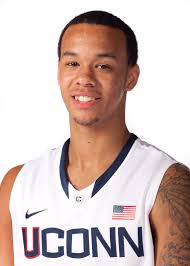
In their latest effort to fix a problem that has existed for a very long time, the NCAA’s legislative council approved a proposal that will allow schools to feed students at any time they are hungry.  The move was prompted by UConn guard Shabazz Napier’s comment after winning the National Championship that he went to bed starving on occasion because he couldn’t afford food.

Napier’s claim was either an exaggeration or he needs a financial planner, but that the NCAA moved this quickly should tell collegiate athletes two things about the operation that governs their participation in sports – the NCAA staff is sensitive to noise, and they have no interest in doing the right thing because it is the right thing.

Hunter S. Thompson was a great political/sports writer and practical thinker who said that when someone complains about the loud music coming from your hotel room, turn it up and eventually they will stop complaining.  That’s perfect advice for college athletes trying to change the landscape of their governance.

With the many attacks currently being waged upon the establishment of big money college football and men’s basketball, never has there been a better time to make noise about nutty NCAA rules.

Napier hit upon just one of them.  Why allowing the feeding of athletes 24/7 was prohibited until now is not the salient question to ask today; it’s why someone inside the NCAA didn’t raise enough hell to motivate the change prior to Napier’s very public and logical complaint.

What corruption within the rule making, rule breaking, and rule enacting structure of the NCAA requires an external complaint from a 22-year old to motivate change?  That’s the question that NCAA president Mark Emmert needs to answer.

The status quo is safe harbor for those who have reached the pinnacle of their profession – like college presidents.  With nothing ahead but retirement, change can only cause friction, and too much friction causes premature retirement.  Very few college administrators want to take the risk to enact significant change – even for all the right reasons – because great risk lurks in the shadows of change.

Click here to stop hiding your teeth when you smile – Dr. Mike O’Neil of Today’s Dentistry will fix them today

For every alteration is the current structure, the likelihood of unintended consequences for bureaucrats multiply exponentially, and administrators don’t climb to the top of a mountain because they move boldly toward the unknown.

Mistake averse leadership moves only when the cost-reward ratio tilts toward a greater penalty for staying put, and as college athletics leaders have milked the teat of the status quo completely dry, that ratio finally favors the athletes.

The landscape is so shaky that an athlete can gripe, and force a fundamental change in less than two weeks.  This committee’s action requires approval by the membership to go into effect on August 1st, but it would defy reason for the college presidents to reject a measure that allows them to feed hungry athletes.

The O’Bannon lawsuit will finally go to trial in June, the Northwestern football team will vote to unionize soon, and several other lawsuits will move forward over the coming months.  College athletics will either change through or around the NCAA.  It’s their choice.  Until then, Emmert and his staff will answer complaint calls for a rule book filled with potholes.

Questions and Answers about Isiah Thomas as dad, Tom Izzo cheating, Roy Hibbert’s slump, and Cubs sucking

by Kent Sterling

1070Filling in for Dan Dakich leaves a guy open to being questioned on his opinions.  The reason many listen to news or sportstalk radio is to yell back at the dashboard as they drive, and social media and email serves as a very nice dashboard for people who can multitask by typing while they yell and drive.

Click here to follow Kent Sterling on Twitter

Guests included Isiah Thomas, Joy Harris (the mother of soon-to-be NBA player Gary Harris), 1070 the Fan.com’s Conrad Brunner, Sun-Times sportswriter Mark Potash on the current state of the Cubs, Will Carroll on the Cubs, and Mike Chappell of the Indianapolis Star.

It was inevitable that listeners would disagree.  Hell, Conrad and I disagreed about the diagnosis of Roy Hibbert’s woes, and Cubs fans are getting just as tired of hearing people talk about the hopelessness of the franchise as the 90+ loss seasons that are stacking end-to-end under Ricketts Family ownership.

Throughout the afternoon, I have been questioned, praised, and taken to task for my thoughts.  Thought I would provide clarification and/or get the last word here.  Of course, If you disagree, you can feel free to comment, thereby getting the last word yourself.  I may choose to comment again, and win the argument, but you could then, well, this could go on all night.

Q – Conrad Brunner is obviously right that Hibbert is lacking confidence.  Why do you insist that he is either hurt or tired to explain his poor shooting?

A – I’ve known a lot of basketball players at the college and pro level – mostly college – and one trait I have yet to encounter is a lack of confidence.  People don’t accede to the highest levels of professional athletics by doubting their ability to convert a two-foot baby hook.

What makes accurate shooting impossible are the legs being dinged up or tired.  The legs are the power plant for shooting and the arm and hand serve as guidance.  When the legs go, the arm tries to breach the power gap, and the guidance goes to hell.

Regardless of conditioning, people can experience fatigue.  Too much conditioning or work, and the muscles fail.

Q – Do you really believe that Isiah Thomas is a great dad?  He’s failed at everything else.

A – He won a National Championship at Indiana and two NBA Championships with the Pistons.  He was elected to the Basketball Hall of Fame in his first year of eligibility, and the final year he coached the Pacers they finished 48-34, and he coached the East in the All-Star Game.  Isiah’s legacy is not without flaws, but whether anyone could have won with James Dolan as a boss is debatable.

None of that answers the question, just the charge you slapped Isiah with.  I saw him as a dad for a limited time in an isolated incident, but he was kind, loving, and supportive, as a great sports parent would be.  As he said in the interview, his son did not play a lot for a team with Greg Oden, Mike Conley, and Daequan Cook, and he needed the kind of advice Isiah gave him.

I felt I was trespassing on their moment, but glad that I was there to see it because it made me a better sports dad.

Q – Your interview with Joy Harris sounded more like a paid informercial for Michigan State University.  Do you really believe Tom Izzo is that squeaky clean?

A – I don’t pretend to know who is clean and who is dirty, but if I had to come with a single name for a coach who I believed was completely clean, it would be Tom Izzo, who strikes me as the type of man that would rather lose than win the wrong way.  if that makes me naive, okay, but I have to believe someone in the wild west world of college sports is a good guy.  Watching his players throw their arms around him shows the kind of love and respect reserved only for the very best leaders.

Q – Are you telling me that after 12 games, you know that the Cubs can’t win this season?

A – Yes.  The Cubs are 4-8.  Does that mean they will finish 54-108?  Yes it does.  The Cubs are still going to be sellers at the trade deadline, and that means Jeff Samardzija and Jason Hammel pitchers are going to be sent out in exchange for prospects.  Who pitches every fifth day then is anyone’s guess.  The Cubs are built to lose, and will likely continue to through 2016.  It brings me no more joy to give you that news than for a dermatologist to tell a patient that his acne will only get worse.

Where the Cubs are concerned, the truth always hurts.

**********************

There, I feel much better.  Funny how hosting a show doesn’t end when the show does.  The discussions keep echoing, and the arguments continue to rage.  My head requires a post show flush, and this did the trick.

Chicago media finally seeing problem with Chicago Cubs rebuilding as Sun-Times makes great point

by Kent Sterling

If Theo was really that smart, wouldn't Michael Wacha be a Cub instead of Edwin Jackson?

If Theo was really that smart, wouldn’t Michael Wacha be a Cub instead of Edwin Jackson?

The issue with the Chicago Cubs isn’t about improving over the next four years, but catching the St. Louis Cardinals who manage to win and build at the same time.

It’s not about whether Cubs president Theo Epstein is a smart baseball executive; it’s about whether he is a smarter baseball executive than Cards GM John Mozeliak.

Click here to follow Kent Sterling on Twitter

I’ve been writing about that for two years, and Mark Potash of the Chicago Sun-Times is climbing aboard the logic train that is starting to roll in Chicago.

In Theo’s first draft, the Cubs drafted outfielder Albert Almora with the sixth overall pick.  Almora, who will turn 20 tomorrow, is hitting .279 in high-A ball, and is projected to hit the majors in either 2016 or 2017.  The Cardinals drafted Michael Wacha 13 selections later, and he was the best pitcher in the 2013 postseason as he put the Cardinals on his back to carry them into the World Series.

The reason teams passed on Wacha was reportedly the lack of a third pitch.  Now he has one that the Cubs are going to likely face four times a year for the next decade and a half..

Potash also correctly holds the Cubs accountable for the signing of Edwin Jackson, a 30-year old career underachiever now toiling for his eighth team.  The year prior to the Cubs signing him, the Nationals awarded Jackson’s two months of relative success with the Cardinals with a one-year, $11-million deal.  Jackson was 10-11 for a 98-64 team.

The Cubs were then compelled through a process they should abandon to give him an inexplicably generous four-year, $52 million deal.  Predictably, he won at a percentage lower than the team he played for.  Meanwhile, Wacha, well, you know.

Kris Bryant, Javier Baez, Almora, C.J. Edwards, Jorge Soler, and other prospects are filling the Cubs farm system with quality talent, but can the Cubs figure out how to prepare them to win at the major league level?  No one knows.  Fans can hope or doubt, depending upon their perspective.  What Cubs fans should know is that the Cardinals are really good at preparing young talent to succeed.

Last season, the Cardinals had 15 players on their postseason roster earning less than $1 million per year, and they nearly won the World Series for the second time in three years.  That shows development in the Cardinals farm system that nurtures and produces winners.

The Cubs first trick will be an easy one – to improve over the status quo.  Bringing up better talent than Luis Valbuena, Nate Schierholtz, and Ryan Sweeney should be a simple process.  The tougher part of the equation is putting a product on the field that will win more than Cardinals.  That is heavy lifting, and Chicagoans are beginning to understand it because smart guys like Potash are finally starting to ask the right questions.