Author Archives: Kent Sterling

College Football – Big Time Conferences Want the Little Guys Out of the Way

by Kent Sterling

Jim Delany wants the small conferences the hell out of his way, so the Big Ten can make more money and serve student-athletes a little better.

Jim Delany wants the small conferences the hell out of his way, so the Big Ten can make more money and serve student-athletes a little better.

All is not equal in college athletics, and Big Ten Commissioner Jim Delany said yesterday that he wants nonFBS schools out of the way like the driver of a new Corvette wants the mope behind the wheel of a 1974 Pinto the hell out of the fast lane.

Click here to follow Kent on Twitter

Now, he didn’t say that explicitly, but when Delany and the other four commissioners of the five major conferences in college athletics call for stipends to be paid to all scholarship athletes, what he is saying is that not only do small conferences not belong at the adult table for holiday dinners, they don’t belong in the same house.

And he’s right.

At the Big Ten/SEC/ACC/Pac-12/Big 12 level, schools have plenty of money to be able to pay the athletes enough to cover the “full cost of attendance.”  They have plenty of money for a lot of things – like $3-$6 million for head basketball and/or football coaches, tens of millions for practice facilities separate from the arenas and stadia, and palaces for non-revenue sports.

The small schools hustle to maintain what they have, and while the big time programs have state of the art academic labs and academic advisors for athletes, the small schools host study table in conference rooms.

Football is played at SEC schools in front of 100,000-plus people, and for millions on TV.  ESPN and the SEC have inked a deal that will pour millions into its 14 conference athletic departments.  The Horizon League is excited that its basketball games are available to friends and families of the players via ESPN3.

To govern the major and small conference athletic departments with the same rule book is madness.

Delany and each of the other commissioners spoke about the need for change within the NCAA, and that was prompted by the small schools voting down initiatives that the big boys championed.  There are more small schools than big, so a democratic one-school – one vote dynamic to govern NCAA D-1 athletics will forever frustrate the current 62 members of the five major conferences.

The commissioners certainly coordinated their messages to simultaneously ring the same bell this week, and for the NCAA, that bell tolled for thee.

They can either move forward by segregating the big and small schools behind tall walls, and allow each to govern themselves, or other options will be pursued.  It’s not easy to get these five groups to sing as a unified chorus, but the idea that they can make more money without input from Mountain West, Missouri Valley, Big East, MAC, WAC, and others is beyond dispute.

The small school, for better or worse, operates as almost purely amateur entities.  They work like dogs to lose less money than the year before, while the Big Ten and SEC print money.

The conversations about licensing agreements, network television deal, and sweat over the ramifications don’t happen on the campus of Loyola University in Chicago, but in Gainesville, Columbus, Austin, and Ann Arbor, radio stations make millions discussing it.

These are two different worlds, and Delany and his brothers in this one battle were right to fire a scud over the NCAA Headquarters this week.

The outcome of the separation will mean that the Corvette can haul ass down the highway unrestricted by the Pinto, and that the pinto is going to have to figured out how to run a little more efficiently.  Both will result in better experiences for the student-athletes.

[polldaddy poll=7276574]

Brickyard 400 – I’m All in for NASCAR’s Loneliest Driver, Danica Patrick

by Kent Sterling

Danica Patrick hopes to smile on Saturday and Sunday at the Indianapolis Motor Speedway, and I hope she has reason to.

Danica Patrick hopes to smile on Saturday and Sunday at the Indianapolis Motor Speedway, and I hope she has reason to.

When she was young, Danica Patrick was an unrelentingly sour personality at the Indianapolis Motor Speedway.  Whether it’s because of maturity or working with a team of PR pros, she has relaxed a little bit despite being a target for criticism from fans and media during every race.

Click here to follow Kent on Twitter

Other drivers have had the opportunity to grow and develop without being the most famous person on the track, but since moving to stock cars, Patrick has answered every challenge with a smile.

In today’s Indianapolis Star, Bob Kravitz interviews the oft-ridiculed Patrick, and as usual, it’s impossible not to admire her tenacity.

She is utterly alone on and off the track, and loneliness is tough, even when compensated so well for the difference that separates her from the rest of the good ol’ boys at the Indianapolis Motor Speedway this weekend for the 20th running of the Brickyard 400.

It’s tough being alone, unaccepted, and in many cases unwanted.  There is a jealousy among drivers for the cash and exposure she receives, which they believe is totally out of proportion with her results.

Marketing is not about results, though.  It’s all about exposure, and when you are the only one of something, that is always more interesting than someone who is among many.  Tiger Woods is the champion golfer who is multi-racial, so he is worth trucks filled with cash to advertisers, even if (and maybe especially because) he had a serious departure from socially acceptable behavior.

Patrick hasn’t indulged in a ride on the crazy train Tiger boarded a few years ago, but she’s still a unique combination of pretty, feminine, and fast, so she gets big checks from companies like Go Daddy, Peak Anti-Freeze, Tissot, and many others.

That doesn’t mitigate the consistent and obvious difference between Patrick and everyone else.  Anyone who moved to a new city a school as a kid knows what it’s like to be judged as different, new, and without regard to anything but visceral criteria.

It’s tough to fight through the judgment to perform at a high level, and redefine your brand every day.  Patrick has never known a different life as a woman in racing, so she’s calloused to it at this point, but when a knucklehead like Kyle Petty attacks, and then questions follow at every turn about the attack, it has to grate on a person’s soul.

Petty is no dolt.  He knew that his comment would increase his exposure, and that’s what the media game is all about, and whether or not he believed the unjustifiably silly rant, both Petty and Patrick benefitted from it.

Petty said, “She’s not a racecar driver.  There’s a difference. The King (Petty’s Dad) always had that stupid saying, but it’s true, ‘Lots of drivers can drive fast, but very few drivers can race.  Danica has been the perfect example of somebody who can qualify better than what she runs. She can go fast, but she can’t race. I think she’s come a long way, but she’s still not a racecar driver. And I don’t think she’s ever going to be a racecar driver.”

That turns Petty into the Charles Barkley of racing – a very good thing to be – and Patrick into an even more sympathetic figure.  All attention is good attention where media is concerned (unless you are facing a murder charge like Aaron Hernandez), but for Patrick it must get old continually being forced to explain why you do what you do.

Kravitz asked Patrick about what she thinks about her on-track performance halfway through her rookie season, and she deferred to the response team owner Tony Stewart gave when she asked him the same question, “He told me, ‘I think you’re doing a good job. If I thought there was a problem or something I noticed you need to work on, I would come over and ask if I could help. But you’re doing a great job and as a team, we have to keep making these cars better for all of us, so I’ll let you know.’ So that’s the best judge. If the boss thinks I’m doing OK, that’s the most important answer.”

Not only is that the ‘most important answer’ from Stewart, it’s a really smart answer from a woman who has been at this media game almost as long as she has been driving race cars.

I’ll root for Patrick on Sunday not just because she’s the square peg surrounded by round ones who is judged either negatively or positively before she ever gets in a car, but because she has learned to use the media for her own benefit rather than seeing them as adversaries – and that makes her damn smart as well as sympathetic.

Big Ten Commish Jim Delany Calls for Student-Athlete Stipends

by Kent Sterling

UnknownIt sounds easy, giving student-athletes a little cash each week for expenses not covered by a scholarship.  It sounds like the absolute right thing to do.  Being an athlete in college is all consuming, and having a job in the dorm cafeteria isn’t possible because of the investment of time in the pursuit of athletic and academic excellence.

Click here to follow Kent on Twitter

Yesterday, at his Big Ten Football Media Day address Commissioner Jim Delany called for the NCAA to implement a stipend for all Division One student-athletes.

Kids need to do laundry, eat when the cafeteria is closed, and take a date to the movies once in a while.  Parents don’t always have the cash to cover those expenses, so Delany wants the schools to be able to kick in a few bucks a week.  Who can argue against that?

The smaller schools can and do argue against it with vigor.  Non-FBS athletic programs can’t afford $80-$100 each week for each athlete, so the universities that do have enough money are prohibited by NCAA rules from paying players an allowance.

Schools in the SEC, ACC, Pac 12, Big 10, and Big 12 would all like to pay their athletes because it’s the right thing to do, and for some ancillary reasons, most of which are more than a little self-serving.

Schools in the non-FBS conferences can’t pay the stipend because you can’t get blood from a turnip.

When Delany says that he champions paying a stipend to athletes, what he’s really saying is that he wants a separate NCAA division created for the members of the five conferences who live in a completely different universe from the smaller conferences.

Change comes with difficulty at the NCAA headquarters in Indianapolis, and this kind of  fundamental adjustment to the bedrock of college sports would have ripple effects that would profoundly and adversely effect the economics of schools in the Missouri Valley, Atlantic 10, Big East, Horizon, and other leagues that feature profitable men’s basketball programs.

Why?

An $80-$100 per week payment to all athletes wouldn’t be enough money for any one kid to get rich, but it would be a significant advantage in recruiting to schools that offer stipends for every sport.  If two companies offered me a similar professional experience, but one threw in an extra $5K, I’m taking the gig with the extra $5K for the same reason that if I saw a $20 on the street I would pick it up.  Some money is better than no money, and more money is better than less.

Schools within the five major conferences would recruit at a different level – not just in the revenue sports, but in all sports – and the less profitable conferences would wither on the vine while schools within the five major conferences thrive.

None of that takes into account the effect $5K per year would have on transfers from a conference like the Horizon League to the five major conferences.  A basketball player at Cleveland State whose family lives paycheck to paycheck would likely jump as soon as he got word that there might be an offer for him at an FBS program, and that would be true for every player at every school in every sport.

The FBS programs would be able to treat non-FBS programs as a feeder system.

That’s the market economy at work, and it’s rightly what Delany wants.  Were he the commissioner of the Horizon League, Delany would campaign against such a change with every breath.  Today’s relative equanimity in men’s basketball and non-revenue sports would be replaced by a competitive landscape that would make the existence of a Butler program that could earn a spot in the NCAA Championship virtually impossible.

And that’s good for the Big Ten.

The trump card for Delany is that it’s also the morally correct answer.  Not compensating student-athletes with enough cash to take a girl out on a Friday night or do his or her laundry while coaches like Tom Crean, Urban Meyer, Nick Saban, and Mike Krzyzewski put $3-$6 million per year in their pockets for coaching them is preposterous.

The end game for the big schools is a complete divorce from the small schools because including them in the same division in any sport is of no economic use for them.  An NCAA Basketball Tournament that would be an all-skate for the 62 (probably moving to 64) teams in the Big Ten, Big 12, SEC, ACC, and Pac 12 would be far more profitable for those schools than allowing 35-40 of the non-FBS schools into the dance.

Everything that spills from the lips of the commissioners during football media day addresses has to do with cash, but at least with Delany there is a first-person level of understanding that comes from his experience as a student athlete at North Carolina.  Delany spoke about the decision to eliminate the laundry money in 1972, “The first thing they did was they cut out the $15 a month laundry money.  Now, I had graduated two years before, but I can tell you that $15 a month was about two‑thirds of my cash between the money I got from my mom and dad at home and that $15.

“So I wasn’t in school.  But if I had been an athlete I would say, ‘Why are you cutting out the $15?’  Because at North Carolina, we played in full houses every night.  We played with pros and every game was televised, and we didn’t get $15 a month.  But now that we’re revisiting 45 years later, it’s never too late to do the right thing.”

It’s nice that the right thing is also what would create a new NCAA division that would allow the big conferences to be even more profitable, so your level of cynicism will determine whether you believe Delany’s heart is pure.

Indiana Football – Kevin Wilson “Excited” About Hoosiers “Energy” and “Hard Work”

by Kent Sterling

NCAA Football: Big Ten-Media DayIt wasn’t hard to listen to Indiana University Football Coach Kevin Wilson, and figure out what he likes about his third team while in Bloomington.

The words “excited”, “energy”, and “hard-working” were used so often that Wilson sounded like President George H.W. Bush talking about his “thousand points of light” and Al Gore talking about his “lock box” for Social Security.

Click here to follow Kent on Twitter

Everyone in college football is optimistic, but few are quite this effusive.  The last time I heard an IU football coach communicate with this kind of positive energy was Bill Lynch telling me that the Hoosiers were only 12 plays away from being undefeated the previous season.  What he didn’t say is that’s true for virtually every team in football.

Four months later, after a 4-8 record that included an 83-20 mauling at Wisconsin, Lynch was gassed and Wilson was hired.

Coaches need to be as careful about building expectations among the fan base as IU students need to be about writing checks they can’t cover – not that I ever bounced a check at the IGA.

There is some well earned doubt among fans that Indiana much overcome.  The recruiting classes have been better under Wilson, but clearing the bar set by predecessors is jumping over a garden hose.

Wilson put together the #38 recruiting class in college football last year with five four-star recruits, or four more than I can find going back a decade.

He did seem genuinely excited though, “There wasn’t one day in spring practice that I wanted it over. (Never once) I thought we went through the motions,” Wilson said.  “We’re getting more physical. We have a lot of kids now that are going into their third year of playing because we played 16 freshmen two years ago, and 11 freshmen last year.”

The Hoosiers return 19 starters and all three specialists.  At most schools, that would be reason for wild speculation about a trip to the highest level of bowl, but at Indiana, the Heart of Dallas Bowl would be a historic marker for the program.

The Hoosiers have gone to one bowl over the past 20 years – an 49-33 Insight Bowl loss to Oklahoma State during the season after the tragic passing of coach Terry Hoeppner.

To give some historical perspective to the legacy of terrible football that Wilson is trying to correct, since Bill Mallory was fired after the 1996 season the Hoosiers have posted a Big Ten record of 27-101, and a 3-13 record against Purdue.

Whether the job of getting Indiana back on track, well, wait a minute.  Indiana has never been ‘on-track’, if ‘on-track’ is defined as winning in the Big Ten.  Exactly none of the coaches in Indiana Football history has posted a winning record in their careers against Big Ten opponents.  Bo McMillin was an even 34-34-6 from 1934-1947.  Since 1951, no coach at IU has won 40% of the Big Ten games he has coached.

Winning at Indiana is about more than “energy” and “hard word”.  It’s about recruiting players who can run very fast, and hit very hard.  Wilson says he has more of those guys than in the past, “Might be some growing pains, but we’ll be growing with guys that are faster and more talented. That’s exciting to me.”

There’s that word again.  It’s going to take some on field success for it to translate to fans, and that doesn’t mean beating Indiana State and Bowling Green.  Being a top tier MAC team might represent progress in Bloomington, but it’s far short of an acceptable long term result.

Just read what I wrote, and my aim is not to be cheeky or negative, but to temper the wild optimism that Wilson expressed today.  He had no choice, because that’s part of his job at Big Ten Media Day, but building Indiana’s football program has been historically difficult to the point of being virtually impossible.

Bill Mallory found a way to take Indiana to six of its nine bowl games in a seven-year period.  Minus that stretch, John Pont took Indiana to the 1968 Rose Bowl, Lee Corso won the 1979 Holiday Bowl, and then there was Lynch’s ill-fated trip to Tempe.

Then again, if you had told me four months ago the Indiana Baseball would go to Omaha for the College World Series, I would have laughed.

Great accomplishments start with belief by the architect, and unless Wilson is a better actor than I would guess he is, the Hoosiers have that covered.

Chicago Cubs – Junior Lake is Yasiel Puig, Minus the Media Circus

by Kent Sterling

Whether Junior Lake (R) is a flash in the pan, or another building block joining Anthony Rizzo remains to be seen - but not by many.

Whether Junior Lake (R) is a flash in the pan, or another building block joining Anthony Rizzo remains to be seen – but not by many.

Chicago Cubs rookie centerfielder Junior Lake has hit the ball hard in his first five games as a major leaguer – just as hard as Dodgers sensation Yasiel Puig did last month in his first five games.  So where is the media hysteria for the newest Cub?

Click here to follow Kent on Twitter

When Puig went 8-for-18 in his first five games with four home runs and a 1.555 OPS, the national media went bananas.  Every Sportscenter led with Puig’s travails from the night before, and the panel shows took to discussing his historical relevance.

Lake has notched 12 hits in 22 at bats with two home runs and a 1.429 OPS, and it’s crickets from national outlets.

This would be easily explained if Lake played for the Kansas City Royals, a team that I’ve been told is still in the major leagues despite not being seen on ESPN in decades, minus the relentless repeats of George Brett’s tirade following the Pine Tar incident.  Lake would have had a better chance getting a highlight on Sportscenter as an Iowa Cub that as a Royal.

Nothing wrong with that.  I don’t know a Royals fan, and have zero interest in them.  If they popped on through some error in programming judgment, I would likely move to another channel.

But Lake plays for the Chicago Cubs – as in one of the five most popular teams in baseball that represents the third largest media markets in the country.

There has been precious little to excite Cubs fans over the past four seasons, and it’s likely Lake’s return to the mean will be a harsh reminder of why the Cubs chose Luis Valbuena at third and David DeJesus in center instead of the 24-year-old Lake when camp broke in March.  The rookie’s huge start has been a nice respite from the drudgery of mediocrity to which Cubs fans are routinely exposed.

Maybe the anonymity in which Lake has toiled will ultimately be better for him than the harsh spotlight under which Puig was revealed to be a bit of a mope, and a player whose Dodgers teammates appear to revile.

Through five games, no Cub in history has been more productive.  Andy Pafko got off to a great start in 1943 – going 11-for-21 in his first five games with a 1.165 OPS, and then making it 19-for-41 after his first nine, but Lake has been more productive and hit for a higher average after five.

ESPN by its own proclamation is a research company that delivers sports content, so I’m sure they have a good reason for taking a pass on the Lake story, and you can feel free to venture a guess.  Mine is that Junior Lake does not engage a growing segment of the ESPN audience – the Hispanic demographic.  Lake is from the Dominican Republic, but few know that because his name does not make it obvious.

So he’ll keep hitting (or trying to) unbothered by Shelley Smith, Pedro Gomez, Tim Kurkjian, and Buster Olney, and America won’t be bothered by relentless stories about the next big thing.

NASCAR’s Move to NBC Sports Is a Big Deal for IndyCar

by Kent Sterling

UnknownWhat a break for IndyCar!  NASCAR is leaving ESPN in favor of NBC Sports Network and NBC.  This is like your uncle owning a gas station in the middle of nowhere as the Simons decide to build a 1.2 million square foot shopping mall next door.

If IndyCar can’t bring NASCAR fans to its races, maybe NBC can bring its races to NASCAR fans.

What looked like a knuckleheaded media play five years ago when IndyCar jumped from ESPN to the network formerly known as Versus, has become a delayed version of Jed Clampett shooting at a rabbit and striking oil.

This 10-year deal will begin with the 2015 NASCAR and Nationwide seasons, so IndyCar and NASCAR will co-exist for at least the first four years of the deal.

There are a myriad of collar events also to air on NBC owned networks, including the NASCAR Hall of Fame ceremony and season-ending banquets as well as rights to certain NASCAR K&N Series, NASCAR Whelen Modified Tour and NASCAR Toyota (Mexico) events and Spanish-language broadcast rights on Telemundo and Mun2 for national series events and the Toyota (Mexico) Series races.

The only potential negative could come when the IndyCar deal comes up for renewal.  NBC could decide that IndyCar’s product and ratings are not worth the investment or thorn in NASCAR’s side, or IndyCar could become petulant and resist efforts to move their races to accommodate the more popular stock cars series.

The NASCAR schedule should fit reasonably well with IndyCar because NBC will take the ESPN portion of the schedule which begins this weekend with the Brickyard 400, while IndyCar only has five weekends of events remaining on their calendar.

By the time IndyCar’s deal with NBC is up for renewal, they will be able to do what’s necessary to fit into NBC Sports plans.

Or, will IndyCar and ESPN reconvene to enact a full blown partnership to add to the handful of races the network currently carries – including the Indianapolis 500.  That deal also expires in 2018.

Look for IndyCar to put their races under one umbrella of networks – either NBC or ESPN, with the Indy 500 the only significant piece of programming in terms of audience and revenue for either network.

For IndyCar, a more robust NBC Sports can only help there exposure, regardless of where they wind up.

Bill Belichick Speaks Today, But He Will Say Nothing – as Usual

by Kent Sterling

For people who value rings above all else, Bill Belichick is a hero.

For people who value rings above all else, Bill Belichick is a hero.

Every fiber in his being and every thought in his head is about the New England Patriots winning.  His focus is absolute, and that is why everything Patriots Coach Bill Belichick tells the media today at 1:45p is irrelevant.

Click here to follow Kent on Twitter

He drafted Aaron Hernandez for the same reason he drafts everyone – because Hernandez possessed the skill and will to help the Patriots win.  The moral compass that spun erratically enough for Hernandez to be arrested for murdering a friend in cold blood was immaterial.  He could play football better than anyone else on the board, so he became a productive member of the Patriots.

That plan appeared to work until the lifeless Odin Lloyd was found with bullets in his head.  Since then, the worst kept secret in sports, other than Ryan Braun’s PED use, became widely known – that Aaron Hernandez is a bad guy.

There are those who believe that Belichick’s only responsibility as coach of the Patriots is to win, and for those people he is a mentor, a symbol of the laser focus necessary to build a champion.

Others demand a dash of morality, caring, and understanding that a craving to win is not the only thing of value in their leaders.

Success is an interesting word because it has many connotations.  There are the championship banners that fly above the stadium, and provides joy to the fans who follow a team.  Those are a source of pride because they reflect the sacrifice of a unit toward a common goal that was rewarded with wins while others fell.

Then there is the legacy of the men who shape lives that become fuller, and leaders and parents who are themselves molded by the example of a great man.  That is a deeper and more profound level of success.  It doesn’t preclude winning, but those who understand the joy of watching players become better men understand that they are the true trophies of a life and career well spent.

Belichick has hung three banners through any means necessary.  Spygate comes to mind right alongside the draft of an accused sociopath as example of decisions that will define the Belichick legacy along with those three rings.  The Patriots cheated to gain an advantage in Super Bowl 36 against the St. Louis Rams by taping a practice prior to the game, and won the game as a result.

Some look at Spygate and applaud Belichick for doing everything necessary to win.  Others see a cheat who doesn’t understand that winning through duplicity, lying, and fraud shows an amorality that invalidates the accomplishment a championship represents.

It’s one thing to take a group of men, show them the path to a potential they never knew they possessed, and help them to overcome adversity presented by an opponent.  It’s a different thing entirely to employ any means necessary to achieve a result without the humanity that provides the context for true greatness.

Belichick’s championships are hollow because he lacks the basic goodness that makes a championship worthwhile.  His acquisition of truly bad men, emotional mistreatment of coaches to the point where they became ill, and win at all costs ambivalence toward rules that others respect make him a villain of 21st Century sports, not a hero.

People live and people die.  What we do for them, to them, and beside them, is what should define us as men and women – not whether we can gain fleeting validation through the result of a meaningless game.

So he will talk today, but say nothing.  Belichick reveals nothing because there is nothing to gain by doing so.  A public looking for understanding will get nothing because it does not benefit Belichick to provide it.

Belichick is driven to win, and for those that view banners as the greatest feat a coach can achieve, that’s enough.

As a society, we should ask a little more than that from those we choose to respect.

[polldaddy poll=7272993]

Steroids, HGH, & NCAA Cheating – The Middle Ground Doesn’t Work; Time to Ban Cheaters Has Come

by Kent Sterling

If I spent $3 million to make $133 million, I would be smiling too.

If I spent $3 million to make $133 million, I would be smiling too.

There is a tendency within people to forgive, and it has not place in ensuring equity and fairness in sports.

Judge Kennesaw Mountain Landis was the first commissioner of baseball.  The owners asked him to clean up baseball’s gambling problem.  In particular, they wanted answers about the allegations that the 1919 World Series was thrown by the Chicago White Sox.

Click here to follow Kent on Twitter

After a significant investigation, the verdict in Landis’s mind was guilty for the eight players who were accused.  The players were forever banned from the game, and the White Sox went from the best team in baseball to the worst.  Since that ruling by Landis, the White Sox have played in two World Series – three fewer than the world’s standard bearer for misery, the Chicago Cubs.

The eight players never played professional baseball after the 1920 season, and none has been allowed his place in the Baseball Hall of Fame.  Only outfielder Shoeless Joe Jackson, and pitchers Lefty Williams and Eddie Cicotte had any chance to be enshrined, but the finality of the end of their careers has served as a severe disincentive for gambling on baseball.

There are signs hung in prominent places in every professional baseball clubhouse that serve as consistent reminders that gambling is forbidden, and the penalties are the harshest available – a lifetime ban.

Only Pete Rose has turned a blind eye to those signs, as far as we know.  He is still hoping the Hall of Fame will welcome him one day, but that’s as unlikely as Shoeless Joe’s case being heard and overturned.

In college athletics, the biggest hammer used by the NCAA to teach lessons to coaches who ignore the rules is a show cause order.  Those aren’t used very often, and more often than not those who receive this virtual ban from coaching for a specific period (Kelvin Sampson’s was five years when Indiana self-reported impermissible phone calls), bounce to the pros where pay checks continue.

In baseball, players are being given suspensions for using performance enhancing drugs.  Ryan Braun’s rip will take him through the end of the 2013 season, and cost him roughly $3 million of his $8.5 million salary.

The problem is that Braun’s extension that was signed in April, 2011, was entered into by the Milwaukee Brewers with the expectation that Braun was clean and would be able to continue to produce at the same level – or close to it – throughout the duration of the deal set to expire after the 2020 season (there’s a mutual option for $20M).

Without the chemical help supplied by the supplements that caused the suspension, Braun could turn into David DeJesus, and that isn’t worth the $113 million Braun is scheduled to be paid through the next seven season – not counting the $20M in the option year.

In my world, that’s fraud, and could cause the invalidation of that deal, but that’s a whole different story.

In exceptionally simple terms, Braun spent $3 million to make what will either be $113 or $133 million.  Anyone else who out there who might take that deal?

The problem with both Major League Baseball and the NCAA is that neither (this is true with the NFL, NBA, and NHL too) cares whether their sport is clean or dirty.  They care about appearances of being clean because fans hate cheaters who beat their favorite teams.

As long as the fans see the environment as pure, the leagues don’t sweat the details because why should they.  It’s immaterial to any metric by which success is measured, and that leads to the cheating that continues everywhere.  Every once in a while, the leagues need to flex their muscles to calm the jitters of fans, who aren’t so much purists, but want to believe their teams aren’t being dicked over.

There is only one way to change the behavior of men who are very serious about both their sport and their bank account, and that is to mete out meaningful consequences to those who transgress – and that isn’t a $3 million ding against $133 million in potential income.

It’s time to walk the cheats to the door, close it behind them, and promise never to allow them back.  Kelvin Sampson, Ryan Braun, Alex Rodriguez (if guilty), Bruce Pearl, Bartolo Colon (if guilty), and Nelson Cruz (if guilty).  Gone.  Banned.  Sayonara forever.

You cheat and get caught you lose everything.  Period.  The disincentive needs to outweigh the incentive in order for people to choose not to engage in the behavior that is unwanted.  That’s the way the world works, and as long as baseball and the NCAA don’t understand that, nothing will change.

Going soft is the reason we are forced to revisit the same damn stories of cheating over and over again.

St. Louis Rams – Five Questions Answered for Most Improved Team in NFL

by Kent Sterling

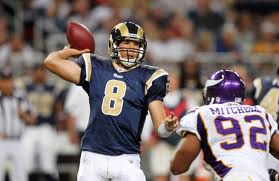
Sam Bradford's development is key for the Rams to take another leap forward.

Sam Bradford’s development is key for the Rams to take another leap forward.

The St. Louis Rams have moved a lot of dirt in Earth City, Missouri, over the last 18 months in rebuilding the team that put together the worst five year run in NFL History from 2007-2011.

The fruits of that labor netted a 7-8-1 record in 2012, and another offseason with key additions has put the Rams in a position to take another major leap forward.

Click here to follow Kent on Twitter

It might be a stretch to turn back the clock 29 years to look at a similar rebuilding project five hours north up I-55, but the Chicago Bears after the return of ancient owner George Halas to the front office was similar.

The Bears put together two great drafts in 1982 and 1983 to set the table for an ascension that brought one magical season and nearly a decade of success under another coach with a Bears pedigree and a famous mustache.

Jeff Fisher and Les Snead added tight end  Jared Cook and left tackle Jake Long in free agency, and then brought explosiveness to both sides of the ball by drafting wide receiver Tavon Austin and linebacker Alec Ogletree in the first round.

Austin is a playmaker with great speed and elusiveness who will help regardless of where he lines up, but he will be a profound upgrade returning punts.

Ogletree was an impact player at Georgia with a checkered past, but that formula worked in 2012 with Janoris Jenkins, so going to that well again is logical.  Watching Georgia play defense last year, it was impossible not to notice #9 chasing down ball carriers.  He has speed and enjoys hitting people hard.

The rest of the draft is filled with guys, but one that I like is Barrett Jones from Alabama.  He started at three different spots the last three years in college, and stood his ground with quarterback A.J. McCarron during a dust up in the BCS National Championship Game.

Can Sam Bradford assume the mantle of leadership to lead the Rams?

Rams fans are sharply divided in their assessment of the abilities Bradford has shown in leading the offense during his first three seasons.  Excuses have included Steven Jackson’s unwillingness to cede that role to Bradford, and the rotating door of offensive coordinators.  Well, Jackson is in Atlanta and Brian Schottenheimer is back for a second season.  The Rams have invested high picks the last three drafts to surround Bradford with weapons.

This won’t be a make or break season for Bradford because his contract runs for another two years after this one, and because Fisher seems genuinely confident that Bradford can be the franchise QB he was drafted first overall to be.

Ron Jaworski is less certain, ranking him 22nd among current starting quarterbacks.

There is no doubting his athleticism – he is said to be a +1 as a right handed golfer, and a four handicap as a lefty.  That hasn’t been confirmed, but the stories about his ability to punish a golf ball are legend at Persimmon Woods, where he belongs.

Bradford took very small steps forward in his third season, and needs to take a bigger leap in 2013 for the Rams to close the gap on the 49ers and Seahawks.

How long will it take Austin to become productive?

Wide receivers traditionally take a little bit longer to adapt to an NFL playbook, but the Rams will do everything they can to give Austin a chance to be the gamebreaker they drafted #8 overall.  They will use him wide, in the backfield, in the slot, returning punts, and anywhere else they can exploit his elusiveness.

Austin appears to be diligent and clever enough to embrace the high expectations the Rams have in him.  The better question might be whether he can stay healthy given his small frame, and the  pounding he will take every time he is caught by a defender.

Will Jake Long stay healthy for 16 games?

The 28-year-old Long missed four games in 2012 after missing two in 2011.  That trend needs to reverse for the Rams to be successful in 2013.  With Long at left tackle and Rodger Saffold on the right side, Sam Bradford has a chance to reduce his ridiculously consistent sack numbers (34 as a rookie, 36 his second year, and 35 in 2012).  More time means better choices, less picks, and more big plays.

the interior of the line is in better shape than in previous years with center Scott Wells, Harvey Dahl, Shelley Smith, Jones, and Chris Williams fighting for playing time.

Who the hell is going to play safety?

Almost anyone will be an upgrade as a starter for Craig Dahl.  No doubt Dahl gave great effort, but the number of over the top plays allowed because of Dahl’s lack of speed was stupefying.  Quintin Mikell was a good run stopper, but he’ll turn 33 in September.  He’s still out on the market after the Rams.

The players on the depth chart at safety as of today are Darian Stewart and Rodney McLeod.  The Rams drafted T.J. McDonald in the third round of the 2013 draft out of USC, and he could wind up starting in place of McLeod at free safety.

The biggest question mark for the defense when the season ended seven months ago remains unanswered.

Is a repeat of the 4-1-1 division record a realistic goal in the loaded NFC West?

Only a psychotic would have predicted 4-1-1 against the West in 2012, but that was exactly what the Rams tallied against the 49ers, Seahawks, and Cardinals.  Experts believe all three have improved, so the question becomes, have the Rams improved more.  They were the youngest team in the NFL last year, and have said goodbye to two of the elder statesmen in Jackson and Mikell.

Is the ceiling for the development of the young players high enough to win at the level Rams fans crave after so many years of national irrelevance?

I think so.  The staff assembled by Fisher and Snead is one of the best teaching groups in football, and the players seem willing to listen.  This is going to be a very good team in 2013.  Let’s take a look at the schedule:

September 8 vs. Cardinals  Win – Carson Palmer is not the answer for Bruce Arians

September 15 @ Falcons  Loss – SJ39 metes out punishment to former team

September 22 @ Cowboys  Win – Rams are due against Pokes

September 26 vs. 49ers  Win – Home field helps just enough – as in 2012

October 6 vs. Jaguars  Win – Jags are terrible

October 13 @ Texans  Loss – Andre Johnson is tough matchup for undersized corners

October 20 @ Panthers  Win – Just can’t see Carolina taking enough positive steps to beat Rams

October 28 vs. Seahawks  Win – The Rams better get this one because winning in Seattle is a long shot.

November 3 vs. Titans  Win – No way Jeff Fisher allows his former employer to beat the Rams.

November 10 @ Colts  Win – This is a toss up between two QBs who are measured against each other because of draft position.

November 24 vs. Bears  Win – The Bears are in transition, and the Rams will win at home.  Side note – Rams fans be ready to deal with the worst travelling fans in the NFL.  Bears fans are hideous drunks.

December 1 @ 49ers  Loss – The schedule starts getting tough right here

December 8 @ Cardinals  Loss – The Cardinals will be tough at home

December 15 vs. Saints  Loss – The Saints will avenge their brutal 2011 defeat.

December 22 vs. Bucs  Win – The Bucs aren’t very good, and the Rams should beat them at the Jones Dome.

December 29 @ Seahawks  Loss – Seahawks in Seattle is the toughest road game in the NFL.

So that gives us 10-6 against one of the toughest schedule in football.  That is going to be the cut line for the playoffs, and the Rams might need to win a tiebreaker to make the playoffs for the first time since 2004.

Are these rock solid picks, or simply guesses?  Let’s see how the season plays out before I answer that.  I might have been a little pessimistic, but a 2 1/2 game jump seems about right for a team this young.

Chicago Cubs – Theo Fleeces Rangers as Garza Dealt for Five Prospects

by Kent Sterling

Rangers third base prospect has plenty of pop, and might make people forget Matt Garza very quickly.

Rangers third base prospect has plenty of pop, and might make people forget Matt Garza very quickly.

Chicago Cubs President Theo Epstein and the Texas Rangers finally pulled the trigger on a trade that was cooking for more than a week as Matt Garza goes to Texas for #22 overall MLB prospect third baseman Mike Olt, mediocre young arm Justin Grimm, and rising pitching prospect C.J. Edwards.

Click here to follow Kent on Twitter

There are reportedly two other players to be named that will come to the Cubs in return for the injury prone and well-traveled Garza.

For a guy who will be a free agent in ten weeks, the Cubs could have done much worse but likely no better.  Olt could be the third baseman in Chicago for a generation while Edwards is a wild card who’s getting people out with regularity in A ball.

There will be two more prospects according to Chicago reports that will help stock a still depleted Cubs farm system.  To be fair to the Rangers, Olt was never going to displace Adrian Beltre.

The Cubs under what passed for leadership under then General Manager Jim Hendry were regularly on the other end of fleecings, including the trade that brought Garza to the Cubs in an ill-considered attempt to catch lightning in a bottle and save his job.

Garza would never have been resigned by the Cubs as they are unlikely to contend until at least 2016.  The money spent on Garza would have doubled down of the Edwin Jackson money, which would be better handed to Ronnie Woo-Woo to pay down his dental bills.

So the Rangers will get 10-11 starts out of Garza, and the Cubs get five guys, two of which might help once the team is ready to play real baseball.

That is the kind of trade that can help give the organization a boost.

I have no idea where the Cubs think they are going to get the arms needed to stock their rotation and bullpen, but if the young position players develop, there might be a chance for this franchise yet.

If similar deals for Alfonso Soriano, Kevin Gregg, and Nate Schierholtz follow, maybe they find an arm or two that will blossom.

Taking advantage of panicked buyers at the trade deadline is a great way to restock.

As much as I thought the signing of Jackson was a canard designed to give hope to easily duped fans, this trade appears to have been made by people who understand who to build for 2016.
