https://www.youtube.com/watch?v=wmWD9ZHnVUE


https://www.youtube.com/watch?v=wmWD9ZHnVUE
https://www.youtube.com/watch?v=y10LW7Tvalw


The Colts are 10-4, have lofty and attainable goals, but might not even make the playoffs.
Some Colts fans may be too optimistic for believing they are capable of winning a playoff game. Others may be too cynical for not being sold on their ability to qualify for the playoffs.
One group or the other will look very smart in a few weeks, but I’ll be damned if I know which it will be.
At 10-4, the Colts could win out at Pittsburgh and at home against Jacksonville to claim the AFC South and pass the Bills and Steelers for the second seed. They could also lose to the Steelers this Sunday, and fall out of the playoffs entirely.
Kind of figures, doesn’t it, given how close the Colts are to being 7-7. If not for three exceptionally well-timed fumbles by the Texans (2) and Packers, the Colts could very easily be a .500 team without any viable path to the postseason.
Philip Rivers has been as good as any reasonable person could have expected, but still just barely good enough to keep the Colts in the AFC playoffs conversation. Three straight games with two touchdown passes and no picks have allowed the Colts to hang around in the mix for a playoff spot. He’s smart, accurate, competitive, fixed-footed, and a game manager without much in the way of what might be called dynamism.
The defense has been wildly uneven within each game. Yesterday was a perfect example. In the first quarter, the Colts defense was magnificent, sacking Deshawn Watson repeatedly and forcing three punts. After that third punt with 11:43 remaining in the second quarter, the Colts allowed two touchdowns and two field goals. The Texans fifth straight scoring drive was derailed by the fumble at the Colts two-yard-line that sealed the game.
Because we tend to believe what we last saw, local belief in the Colts as a Super Bowl threat is growing exponentially with each win. But a quick peak beyond the final score reveals what is true for almost all NFL teams – quality of rosters is so balanced that one big play decides most games. Had the ball bounced differently once in each of the three games against the Texans and Packers, the 7-7 Colts would prompt a different set of discussions.
Should defensive coordinator Matt Eberflus be fired? What about Chris Ballard and Frank Reich? How patient do we want Jim Irsay to be with them? How will the Colts spend the $40 million in cap savings as Rivers retires and Jacoby Brissett leaves town? Fortunately, the ball bounced the Colts way, so Ballard, Reich, Rivers, and (to a lesser extent) Eberflus are viewed as conquering heroes who may earn contract extensions.
I’m not trying to crap on your Corn Flakes, but the Colts are still a few tools shy of a full box if they are to be viewed through the same prism as the Kansas City Chiefs. They are missing a franchise quarterback, dynamic receiving weapon, and a game-wrecking defensive end.
What the Colts don’t lack is care with the ball and hunger in trying to take it away. Their turnover margin of +12 is tied for first in the NFL with the Tennessee Titans. That’s how you win in the NFL, and if the Colts are to earn their way into the playoffs, that’s how they are going to do it in these last two crucial games.
Let’s hope the Colts continue to find ways to win, qualify for the tournament, and make this a January to remember. But it’s also important to understand Ballard and Reich have a lot of work to do this offseason to continue to bridge the gap between themselves and championship level teams.
Enjoy this run, and then get ready for an eventful March and April.

https://www.youtube.com/watch?v=EXzUztQzkNk
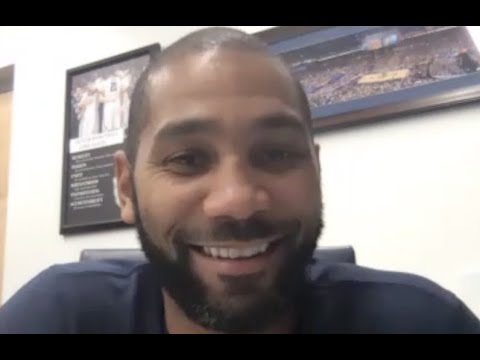

Notre Dame’s Brian Kelly wants to know how playing a CFP semifinal in an empty concrete encircled park makes any sense when many other options exist.
How about today’s fastball up and in from Notre Dame coach Brian Kelly toward the State of California and the Rose Bowl!
The Rose Bowl is the scheduled site for one of the two College Football Playoff semifinals that will likely include Kelly’s Fighting Irish, Clemson, Ohio State, and Alabama. As it stands today, California officials have shut down all fan attendance at sporting events.
So if the Rose Bowl is the site for a Notre Dame game, Kelly is not enthusiastic that families of players will be prohibited from watching sons, grandsons, brothers, and nephews play what could be their final game.
“I’m not sure we’ll play in the playoffs if the parents can’t be there,” Kelly threatened. “What’s the sense of playing a game in an area of the country where nobody can be part of it?”
“Why can’t it be the Rose Bowl in Las Vegas or can it be the Rose Bowl in another town?” Kelly asked. “Where’s the flexibility for the student-athlete is all I’m saying. The one thing these kids have been is incredibly flexible, and then on the other side we can’t be flexible? It’s hard to imagine.”
Kelly makes a great point. Why play a game in an empty stadium in California when there are states and cities where fans are allowed to safely distance in cavernous venues. Lucas Oil Stadium in Indianapolis has welcomed 12,500 fans for Colts games for the last several months, and will allow 10,000 for Sunday’s Colts vs. Texans game.
Who benefits from choosing an empty Rose Bowl in virus-torn Pasadena, California? Kelly had a pithy and accurate answer, “We’re worshiping the ashes of tradition. That can be the only reason.”
It stands to reason that Kelly’s comments were a warning shot across the bow of the College Football Playoff Selection Committee, who can choose to send the Irish – assuming they are among the four programs chosen – to the Sugar Bowl at the Superdome in New Orleans. Recent restrictions have capped attendance for Saints games at 3,000, but that would allow families to attend.
Clemson’s Dabo Swinney agrees, “It makes no sense to me to put a bunch of kids on a plane and fly them all the way to California to play in an empty stadium. That makes zero sense when you have plenty of stadiums where you can have fans and, most importantly, you can have families. It should be the same for all four teams as far as the opportunity that you have. This a year everybody has had to make adjustments. To me, that would be a simple one to make.”
You can bet Ohio State coach Ryan Day and Alabama’s Nick Saban will feel the same way. At a time when coaches happily jump upon their high horse to make all manner of nutty comments, here is a moment when they can scream in unison and make perfect sense while the world outside California applauds.

https://www.youtube.com/watch?v=5Yi8XdTR8Gg
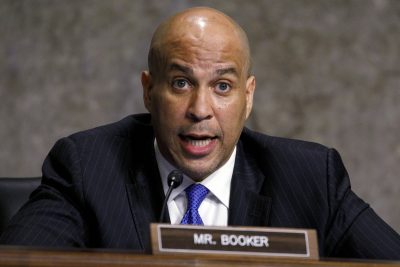

Like most senators, Cory Booker is more interested in creating bureaucratic layers than actually solving problems.
“(College sports) is one of the few industries in America that is allowed to exploit those who are responsible for generating most of the revenue,” – U.S. Senator Cory Booker, explaining the need for the College Athlete Bill of Rights authored by he and fellow senator Richard Blumenthal.
I’m all for treating collegiate athletes with respect and allowing for them to share in the massive profits universities enjoy because of the popularity of the college football and basketball, but to argue they are “exploited” at a unique level is beyond ludicrous.
Our entire economy is built for the wealthy to get much wealthier and the labor class to break even – at best. If anything, college athletes are treated better than those toiling on the lower rungs of America’s societal ladder. They have and are what the truly exploited covet.
Student-athletes are provided housing, food, training, an education, and a financial stipend. Whether they are deserving of more is a good argument reasonable people can have. But Booker’s crazy assertion that student-athletes are outliers in a system where those with big houses usually have two and those with small houses can’t afford what they have can’t be taken seriously.
The bill is one of at least a half dozen college sports reform acts at different stages of legislative review, and it covers a lot of ground – from guaranteeing scholarships until a degree is conferred to post-graduate health care to new transfer rules and system that would allow athletes to receive payment for regulated use of their names, images, and likenesses. It also creates a nine-person Commission on College Athletics, which will undoubtedly employ a batch of attorneys who will be paid handsomely for adjudicating its mandates.
Why is it that every time we try to fix a problem at the legislative level, the result is the creation of new oversight layers and a new batch of problems. The creation of complications that arise from an effort to solve a smaller set of problems seems to have been a constitutional mandate of the United States Senate..
If our government really wants to fix the economics of college sports, a better alternative is to simplify the system so fewer are required to manage it. Let’s reduce the size and scope of the rule book so schools don’t require a compliance department to abide by it. The coaches and administrators who remain should be paid at the same level as professors, and the profits generated by athletics can be diverted to a fund for scholarships to reduce the ever spiraling expense of higher education for those in need.
Instead of inviting more pigs to the trough, how about distributing the food in the trough to those who really need it, instead of those who are already living the dream?
And how about once and for all acknowledging that student-athletes aren’t those being preyed upon by the economic system that generates absurd wealth for coaches and administrators. It’s those who need to take out generational loans in order to enjoy the fruits of a college education, or forego college altogether.
No argument from me that coaches like Nick Saban and Mike Krzyzewski make way too much money, but the solution should not be to share it with those who are already well taken care of.
And only narrow-minded headline grabbers believe the solution of the many problems with college sports is in defining student-athletes as victims.
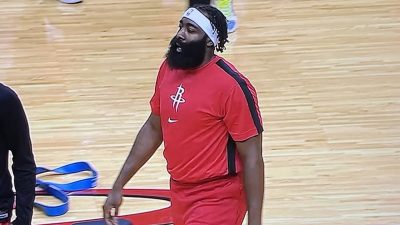

James Harden, who wasn’t a great fit for his uniform Tuesday night, sure wouldn’t fit Indianapolis if reports of demands in Houston are true.
If reports of his pathological need to be pampered are true, Houston Rockets guard James Harden doesn’t need to apply for a position with the Indiana Pacers – and neither should anyone else with similar requirements.
Tim McMahon’s post on ESPN.com detailed a variety of troubling capitulations the Rockets have made over his eight years with the team – including getting coaches fired, requiring trades, delaying flights on road trips, and setting the practice schedule. That kind of crap does not work in Indianapolis.
Here, people work for a living, understand who the boss is, and would be thrilled to earn one-percent of the cash the Rockets provide Harden. And they don’t much care for those who don’t.
Harden is the best offensive basketball player I have ever seen, but he has yet to win an NBA Championship. He is the tail that wags the dog in Houston without providing the return on investment necessary to demand and receive outrageous accommodations from the Rockets.
Harden’s behavior is the price some NBA teams are willing to pay as they embrace the star system of marketing the NBA has employed since the days of Magic, Bird, and Michael. The difference between that plater-centric system and today’s bizarro world in the NBA is that Magic, Bird, and Michael all devoted themselves to winning championships as they were exploited by the league to build its popularity. Harden and others like him devote themselves to personal rewards and freedoms at the expense of collective success.
It’s not like the Pacers are on Harden’s short list of teams to which he would welcome a trade, but regardless of his preternatural abilities to score and deliver the ball, the fit between Harden and Indy would be uncomfortable for both.
That needs to be understood by the Pacers – and I believe it is – whether assessing Harden or another player who values self over team as a potential member of this team and community. That’s just not the way Indy works. Paul George figured that out, and Victor Oladipo is in the middle of a decision as to whether he wants to be a teammate or star.
One of the very cool things that should attract famous athletes to the Pacers or Colts is the way people here allow them to go about their business without disruption. I have waited in line at a Taco Bell with Antonio Davis and his wife, stood next to Reggie Miller outside The Original Pancake House in Fishers for a significant chunk of time, sat in a booth adjacent to Peyton Manning at McAllister’s deli, and waited in a long line along with Adam Vinatieri to pay for gas at a Speedway. None were bothered.
That’s a slight exaggeration. At the McAllister’s (near Manning and three other Colts), I ate lunch with Fox 59’s sports director Chris Hagan. Between gulps of his giant sweet tea, Hagan recognized Manning, hopped up, and asked, “Do you know where the first McAllister’s was?” Manning answered that it was in Oxford, Mississippi. Hagan congratulated Manning and returned to our booth.
So to be ultra-accurate, the only person I have seen accosted by the public in Indy was Manning, and it was by Hagan.
The star system just doesn’t work well here. For those who crave VIP treatment, Indy is a bad choice. If there is a VIP room in an Indy club, it’s unnecessary and empty. For those who want to dig deep for their team and city, live in relative quiet, and enjoy the fruits of fame without dealing with the pestering rabble that accompanies it, Indy can become a loving home.
The Pacers may not be high or even on Harden’s list, but that works for Indy as a player with his requirements would never be high on this town’s list.
