Author Archives: Kent Sterling

Our greed, judgment, indifference, and misery are senseless and have to stop now!

We have reduced ourselves to protesting both the need to wear a mask and our right not to. What are we doing?

“About 50% get really cranky,” answered the Sam’s Club security guard tasked with reminding shoppers a mask is required attire for entrance.

I had forgotten my mask, and when she reminded me, I thanked her.  When I returned, I asked what percentage of people are upset when she reminds them.

Whatever your belief is about wearing a mask, treating people like inconveniences put on Earth to make your life more challenging is just bad policy.

Click here for your copy of “Oops – the Art of Learning from Mistakes and Adventures” by Kent Sterling

These are tough times.  People are on edge.  They are either terrified by the possibility of being exposed to COVID-19, or they are brazenly indifferent to it.  Each sect responds to the other with negative judgment.  Add the protests for racial equality and defunding the police, political leaders of both parties inciting discontent with their counterparts, and our unquenchable thirst to be annoyed, and 2020 has become a giant pain in the ass.

The correction is simple.  Just be nice.

Dave Thomas, the founder of Wendy’s, always had posters with that phrase hanging in his restaurants – “Just be nice!”  When people smile at you, smile back.  When people wave at you, wave back.  If no one smiles or waves, smile and wave anyway.

If you are having a bad day, try to make someone else’s day better.  It’s not all about you, dummy!  The world doesn’t spin at your convenience, and everyone in it was not put here to agree with you.

Here’s a thought – you might be wrong about some of the things you believe.  Somewhere over the past 30 years, we decided that being right is the most important thing we can be.  It’s inconceivable to each of us that our theories about life and how to live it are totally screwy, and yet many of us disagree on almost everything.

We talk more than we listen – and I mean actually listen rather than just await your turn to talk again.  We listen, we learn.  But learning means acknowledging we there is something we already do not know, which makes it difficult for some off us.

Admitting a mistake is an implausible notion, unless someone else is doing it.  Being caught making a mistake sends people into an out-of-control emotional tailspin.

We measure our worth as human beings based upon how many zeroes we have on our bank statement.  Our scoreboard has real numbers, and those who don’t measure up are seen as inferior.  Parents spend crazy money to send kids to colleges believing tuition is an investment that will pay off in cash, rather than wisdom and knowledge.  How silly.

These are dark times, but not because of out reaction to COVID-19 and racism.  Those are the symptoms, not the cause.  Sadly, the cause is far more insidious – our rampant insensitivity and greed.  And the cure is the reversal of our current attitude toward life itself.

We are here for 80 years, give or take.  No amount of money buys us immortality, and yet we continue to step on those around us to become more efficient earners of wealth for ourselves and others.  Instead of helping each other smile more, we deride givers of happiness and decency as saps who just don’t get it.

I usually write about sports, but I have had enough of callousness for this lifetime – a great deal of which I have exhibited myself.  I apologize for that.  If you are one of the thousands of drivers I have flipped off over the years, I apologize.  If I made you sad with an offhand remark I found amusing, I apologize.  If you felt I judged you as insignificant 10 seconds after we met, I apologize, although I was probably just distracted by something.

Life is so simple – yet we choose to complicate it by running a race no one really wins.  Dave Thomas has it right.  “Just be nice.”  I’m going to try it.

Crazy Jim Harbaugh agitates Ohio State’s Ryan Day just like a good radio host stirs up rivals and listeners

Jim Harbaugh might be straight up crazy, but he sure makes college football more fun. He was at it again yesterday.

I love Jim Harbaugh stories.  They make me happy because I empathize with his athletic director, who has to embrace or at least tolerate the level of crazy Harbaugh brings to his work as football coach at the University of Michigan.

Working with crazy people is exhausting no matter how good they are at their jobs.  As a program director of talk radio stations, I’ve found that sometimes the best hosts are also the craziest.  Let’s face it, just as it is not the wisest choice to tie your family’s financial health to the performance of pampered 18-22-year-old athletes, people who talk to themselves alone in a studio for hours at a stretch usually have a couple of screws loose.

Click here for your copy of “Oops – the Art of Learning from Mistakes and Adventures” by Kent Sterling

Coaches and hosts also have this in common – they require intense energy from management to make sure they don’t burn down their program or station.  Some coaches actually become radio hosts, although I doubt Harbaugh ever makes that switch.

Harbaugh hasn’t achieved success necessary to be considered the best coach in the Big 10, but he certainly brings a level of bananas that rivals any coach in college football history.  And he was at it again yesterday.

Here is the conversation that has been reported to have taken place between Harbaugh and Ohio State head coach Ryan Day during a Big 10 coaches conference call yesterday:

  • Harbaugh: (interrupting Day) “You’re breaking rules by having on-field instruction and drills.  I saw a picture of Al Washington (OSU’s linebackers coach) working with some of your linebackers.”
  • Day: “How about I worry about my team and you worry about yours?”
  • Day reportedly told his team a little later, “The Big Ten better have a mercy rule because we’re going to hang 100 on them (Michigan).”

I got goosebumps when I read this and cannot wait for October 24th, or whenever this game winds up being played.  Nothing like honest contempt to hype a matchup – especially an already contentious rivalry like Ohio State and Michigan – and Harbaugh and Day are clearly not meeting midway between Columbus and Ann Arbor for beers and wings.

As a sidebar to the this story, an interesting nugget was shared on al.com about how Harbaugh lost the recruiting battle for a five-star offensive lineman Isaiah Wilson.  During a visit to the his home, Wilson says Harbaugh did something odd,  “Remember when (Michigan) first got the deal with Jordan? He just wouldn’t take off his cleats. He came to my in-home visit with cleats on his feet. And I have hardwood floors, and he’s just walking around with cleats, bro.  We looked. My mom was coming in hot, asking ‘Why could he not have taken off his shoes?’ After that, it was over. Super weird.”

Sometimes, Harbaugh being ‘super weird’ works for Michigan.  Other times, not so much.  For college football fans – as well as psychiatrists – Harbaugh is money in the bank.  He’s always in the middle of some strange conflict with his boss, rivals, players, recruits, and pants.  And college football thrives on drama.

So does radio.  If Harbaugh ever leaves coaching, he would be a madman on the radio for some poor bastard of a program director who might not last six months as his boss.  Doubt it happens, but if Harbaugh turns to radio to make a buck, we’ll listen.  How could you not?

TJ Warren gets buckets for the Pacers at a level very few – including Michael Jordan – have

T.J. Warren is not charismatic or a media darling, but he’s getting buckets at a level very few ever have.

T.J. Warren has been a monster for the Indiana Pacers as they have rung up three straight drama free wins in the Orlando bubble, and the national media has barely mentioned him.

Quiet but driven, Warren went to work during the COVID-19 hiatus to extend his range and be ready for the moment basketball resumed.  Basketball has resumed, and Warren’s readiness has brought him to a unique place in basketball history.

Scoring at all levels, Warren has scored 119 points in those games while shooting better than 60% from both inside and outside the arc.  That he continues to find holes in opponents’ schemes to get open looks is both a tremendous credit to his basketball acumen and fitness and a scathing indictment of defenses.

Click here for your copy of “Oops – the Art of Learning from Mistakes and Adventures” by Kent Sterling

Warren’s efficiency is historic as he’s scored 108 points on 72 field goal attempts (removing the 11 free throw makes he’s tallied), which comes to an average of 1.5 points per shot.  Whether that has ever happened before for a non-center averaging 30 points per game I’m not sure, but I have never seen it.

How rare was Warren’s efficiency in his magical 53 points against the 76ers?

During Michael Jordan’s peerless career, His Airness scored 53 or more points 21 times (including the postseason).  In those games, he had only five games where he needed less than 30 field goal attempts.  Of those five games, he never made less than nine free throws.  Against the 76ers, Warren scored 53 points on 29 shots and four free throws.

In yesterday’s win against the Magic, Warren tallied a pedestrian 32 points compared to the 53 and 34 point efforts of the first two games, but it might have been his most impressive work in Orlando.  Those points came on just 17 shots with only two made free throws.  There are very few – if any – players who have ever done that.

It’s not just the shooting from beyond the arc that is carrying Warren to dizzying productivity.  His movement without the ball, especially on cuts to the basket, earns him four or five bunnies each game.  And don’t discount teammates who read Warren’s movement and deliver the ball on time and on target.

The Pacers have another game tomorrow night against the Phoenix Suns, who are likely to focus additional attention on the Pacer who is scoring 39.7 points per game in the bubble.  They would be crazy not to, right?  But the bucket getter will still get buckets because that is what he does.

No one is ready to crown Warren the undisputed king of roundball after these three games, but in a place like Indiana, he should be generating a hell of a lot more attention than he is.  This guy plays basketball in the way Hoosiers profess to love.  He moves constantly, forces nothing, and hits open shots in bulk.

T.J. Warren might not be the star upon whom the NBA and ESPN are willing to train their spotlight, but he might just be the star Pacers fans can appreciate better than most.

Penske makes tough decision – no fans at Indy 500; right or wrong, at least he wasn’t greedy

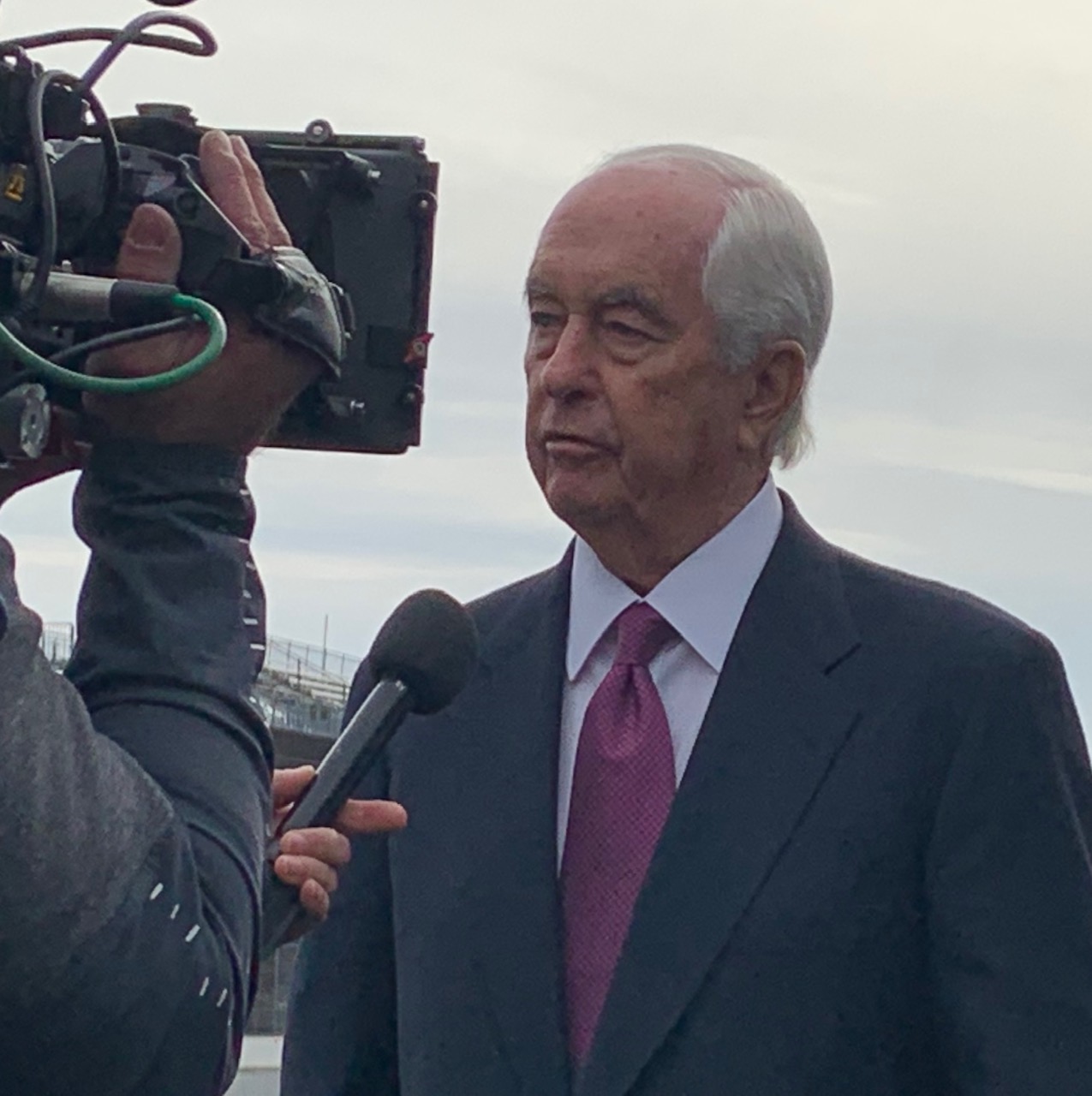
On the day it was announced Roger Penske would buy the Indianapolis Motor Speedway, he could not have imagined the series of events that led to today’s announcement.

Unintended consequences can be a serious pain in the ass, and the unintended consequence of banning fans from the Indianapolis Motor Speedway for the 104th Running of the Indianapolis 500 might be very unpleasant.

It’s understandable that new IMS owner Roger Penske and his lieutenants made the call to keep 75,000 people from congregating for a socially distant and masked race day party.  No one wants to be held accountable for an outbreak among mask rebels that could increase hospitalizations and fatalities due to this miserable and ongoing outbreak.

When William Shakespeare wrote, “Uneasy lies the head that wears the crown,” he meant men who make life and death decisions like this one.  “To open the gates or not to open the gates” is a mutation of another Shakespeare quote that speaks to choices without a clear correct path.  This choice on its face appears to be clear and easy, but it is anything but.

That is because like water finds its level, Indy 500 fans are going to find Indy 500 parties.  Instead of one party for 75,000, there will be over 1,000 parties with 75 people – or 3,000 parties with 25 people.  The number of parties and average number of attendees is not germane. This isn’t a math problem, nor is it an indictment of the decision makers at the IMS.   Just know there will be parties – lots of parties with more than a few people and no one but the host to monitor protocols.

Click here for your copy of “Oops – the Art of Learning from Mistakes and Adventures” by Kent Sterling

Which of the two choices allows for the better chance to limit COVID-19 spread is the question.  I’m sure Penske, Mark Miles, Doug Boles, and Allison Melangton sought the very best answers they could to that question.  They did not consult me because, again, I am not an epidemiologist.

The result will be a new and different kind of race day fun surrounding the Greatest Spectacle in  Racing.  Instead of one giant festival for well over a quarter of a million people, we will have too many to count remote celebrations of racing, speed, bravery, cheap beer, and Indianapolis’s identity as the Racing Capitol of the World.

It’s not the way anyone wanted it – least of all Penske, who chose the option that pays him zero dollars toward covering the expense of running the race.  I don’t know how big the check from NBC is for the broadcast rights to the race, but I’m certain it pales in comparison to those cut to the NFL, NCAA, Big 10, SEC, NASCAR, NBA, NHL, and Major League Baseball that have them jumping through all kinds of hoops to keep themselves solvent.

It would have been easy to take the cash for tickets, claim people were safer at the IMS where they can be monitored, and claim a small but hollow victory over COVID-19.

Penske didn’t do that.  I don’t know whether he made the right call to keep the virus from spreading or killing because I am not an epidemiologist, but I do know he didn’t make the greedy choice.  And that’s something you don’t see billionaires do very often.

How about Paul Finebaum shuts up about COVID-19 and how playing college football would be insane?

I wish the grim reaper of college football would shut the hell up and leave analysis of COVID-19 risk to the experts.

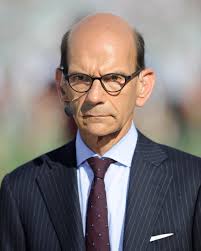
ESPN’s Paul Finebaum was the second grader who ran around the classroom screaming, “There’s no such thing as Santa Claus!” on the last day before Christmas break.  He’s also the guy who calls to tell you he heard your job is being eliminated.  Then as you are ready to start the final season of “Breaking Bad,” Finebaum casually mentions Walter White dies in the last episode while Jesse gets away.

He wants to be right, even if it means ruining your day.  Finebaum is a professional killjoy who is training the intellect with which he is so impressed on whether there will be a college football season.

Will there be NFL and college football this fall?  Should there be football?  Not being an epidemiologist, I don’t know.  Does it seem likely?  Who cares what I believe as – again – I am not an epidemiologist.  I know what I don’t know.

Like you, I watch, listen to, and read sports experts talk about games, teams, leagues, leadership, and the will to compete.  People on ESPN, The Athletic, sports talk radio stations, and other sports media venues understand that stuff – or at least they are accomplished at pretending to.  About viral spreads, they are clueless, but that doesn’t keep many from weighing in.

Click here for your copy of “Oops – the Art of Learning from Mistakes and Adventures” by Kent Sterling

When pundits venture outside their sweet spot of sports, my ears glaze over and my ears throb.  That’s especially true when predictions are dire.  Finebaum is one of the worst violators as he continually chastises conferences and the NCAA for even contemplating the possibility college football will be played in 2020.

Finebaum declares during every opportunity on ESPN that the motivator for playing college football is “Money, money, money!”  He chastises administrators for their greed while failing to acknowledge the revenue generated by college football pays for a hell of a lot of what goes on at many universities, including scholarships for athletes in non-revenue sports.  Just because money is a priority to athletic departments and conferences does not mean greed is the driver.

The Athletic’s Bob Kravitz has been a perpetrator of a little sports media doom and gloom as well.  Kravitz’s latest piece laments the uncertainty of the upcoming football season, while denying absurd allegations sports media roots for cancellations.  I love Bob, but whether football will be played is a decision beyond his pay grade based upon information beyond his ability (and mine) to fully understand.

Both Finebaum and Kravitz might be correct in their skepticism.  Maybe football can’t be played without mini-outbreaks of COVID-19 popping up everywhere.  Who knows?  Programs all over the country are trying to manage voluntary workouts without causing chaos, and that’s without students on campus, travel to away games, and full contact.

Bubbles are holding in the NBA, NHL, and MLS while baseball’s season is in crisis because of outbreaks within the St. Louis Cardinals and Miami Marlins organizations.  Bubbles seem to be a necessity for safe competition, but that evidence is anecdotal.  Who am I to make that declaration?  Who is Finebaum to argue medical facts – or even cite them?

I’m tired of people who don’t know more than I do about COVID-19 projecting their negativity into my living room and smart phone.  It’s hard enough to keep smiling through this tumult without being force fed reasons to frown during programming and on websites I rely upon as an escape from relentlessly bad or confusing insight about this virus while we await vaccines.

I’m not asking sports media types to be falsely rosy in their assessment of risk in continuing to work toward a football season, but is it too much to ask they stay in their lanes a little bit while allowing experts to give us what they believe is the actual news about COVID-19?

If NFL and college football seasons are canceled or postponed because spread is difficult to control as contact sports are played outside a bubble, so be it.  Let’s deal with that if that becomes a reality.  Jumping to a poorly informed grim conclusion about the upcoming season does no one any good.

There is no nobility in being correct about something so miserable, despite Finebaum’s obvious craving for that moment.

Pac-12 football players negotiate like children, so Pac-12 commissioner Larry Scott will treat them like children

Pac-12 football players have lost their young and mostly unformed minds.

They have authored a letter published in The Players Tribune with a series of demands the Pac-12 must acquiesce to if they are to play this season.  I am a big honk for student-athlete rights, but several of these demands are in direct opposition to binding contracts, NCAA rules, and common sense.

There are rules in negotiations – like “make a big initial ask and work toward reality.”  Four of the items in this infantile ultimatum go so far beyond a “big” initial ask that athletic directors and commissioner Larry Scott will never take the reasonable items seriously.

Click here for your copy of “Oops – the Art of Learning from Mistakes and Adventures” by Kent Sterling

Here are the four absurd demands (try to stifle your laughter at those involving coach’s salaries):

  • Larry Scott, administrators, and coaches to voluntarily and drastically reduce excessive pay.
  • End performance/academic bonuses.
  • In partnership with the Pac-12, 2% of conference revenue would be directed by players to support financial aid for low-income Black students, community initiatives, and development programs for college athletes on each campus.
  • Distribute 50% of each sport’s total conference revenue evenly among athletes in their respective sports.

These demands are straight up crackers, and if players hold the line on any of these, they will forfeit the chance to create reasonable evolution to include the more reasonable requirements, which include:

  • Allow option not to play during the pandemic without losing athletics eligibility or spot on our team’s roster.
  • Medical insurance selected by players for sports-related medical conditions, including COVID- 19 illness, to cover six years after college athletics eligibility ends.
  • Ability of players of all sports to transfer one time without punishment, and additionally in cases of abuse or serious negligence.
  • Six-year athletic scholarships to foster undergraduate and graduate degree completion.

The athletes articulated some other well-intentioned ideas, like the formation of a task force and the launch of a summit on racial equality, and then a few other issues that are being contested in the courts, Congress, and NCAA’s far back burner.

In another part of the letter, this phrase pops up, “NCAA sports exploit college athletes physically, economically and academically, and also disproportionately harm Black college athletes.”  There are many, including athletic directors and commissioner Scott, who would vehemently disagree.  They would replace “exploit” with “benefit.”

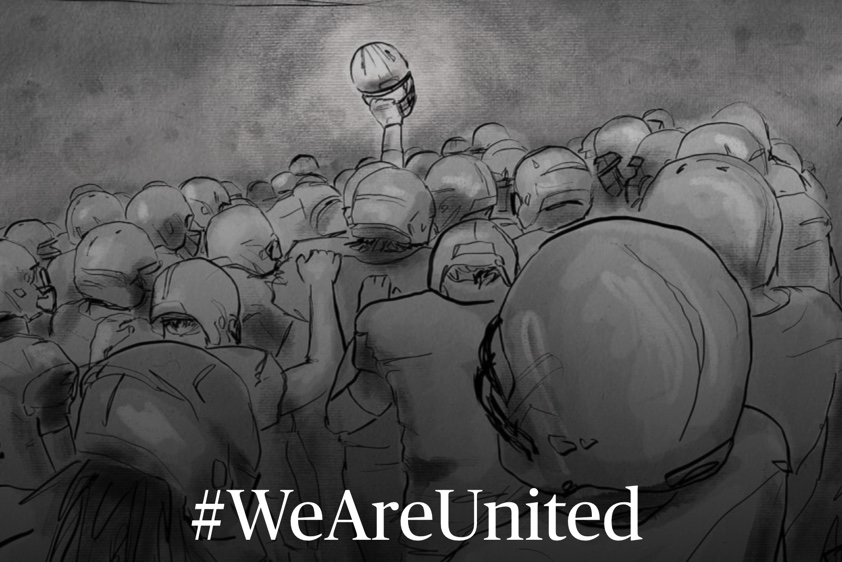
Student-athletes at Power Five universities have some righteous gripes, but painting themselves as downtrodden is not only inaccurate, it will turn sour many of those who believe in elements of their cause.  This is not about turning horrible into righteous.

Instead of aligning with executive director of the National College Players Association Ramogi Huma, student-athletes should find an advocate who understands how to win AND make headlines.  Huma has fought many battles, but won few.  It is time for athletes to get a seat at the table and fight to take steps up the ladder to fairness, but this mostly silly list of demands sets their cause back.

Pac-12 student-athletes are not going to hold to their threat to not play if their demands are not met, because there is not an administrator in college sports who would agree to pay them any cash beyond cost of attendance as allowed by the NCAA.  That is a non-starter, and will doom any short-term win that can be gained regarding scholarships and health insurance.

The best rule of negotiation is to never threaten would you are unable or unwilling to deliver.  Pac-12 student-athletes killed their chance to win concessions by violating that rule in their first volley.

In the end, the student-athletes will be treated like children because they negotiated like children.  Their education – provided by their schools as members of the Pac-12 continues.

How can we fix basketball’s final minute? It shouldn’t take 10 minutes to play one, should it?

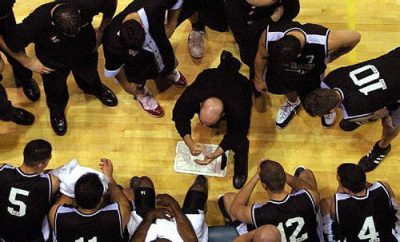
While the bald man in the center of disinterested players pretend to pay attention while he scribbles on a dry erase board, fans yawn, chat, and wait.

The final minute of a basketball game is where high drama should build to a crescendo as tall men and women exhaust themselves in the fight to win.  Instead, because of timeouts and replay reviews, the final minute can turn into a death march taking as many as 15 minutes.

I was reminded of this last night almost five months after the sporting world collapsed on March 12th while I watched the Indiana Fever hang on for a 106-100 victory.

Both the Fever and Mercury exhausted their timeouts during the final 37 seconds, and a replay review took two minutes of my life to determine an out of bounds call made on the floor was correct.  Those 37 seconds took 10 minutes!

Click here for your copy of “Oops – the Art of Learning from Mistakes and Adventures” by Kent Sterling

Timeouts in professional basketball allow teams to advance the ball, which serves as motivation   for coaches to use them, and so both Fever coach Marianne Stanley and Mercury coach Sandy Brondello took full advantage.  Sadly, between the timeout being called and the inbounds play from the advanced position, fans were forced to endure 90-seconds of conversation between coaches and their teams.

I watched the end of the game as much out of delay-driven spite as enjoyment of Fever Basketball.  Despite the six minutes of timeouts and the replay review during those final :37, I sat with my eyes trained on a laptop screen.  Sure, it was better than watching Cubs reliever Dillon Maples pitch against the Reds like a blindfolded second grader plays Pin the Tail on the Donkey at his birthday party, but it could have been really fun without the relentless stoppages.

Replay reviews, especially those to check the clock, are exceptionally onerous.  Referees want to get calls right, and that is laudable, but standing over a monitor advancing video frame-by-frame for two minutes defeats the original purpose – to correct obvious misses.  In the NBA, they have a replay headquarters where reviews are conducted.  Some guys in a room watch monitors to correct the clock from 8.4 seconds left to 8.6 seconds.  As they do it, fans stare blankly at the floor or television while excitement drains.

I’m not going to campaign for the implementation of the Elam Ending, which allows teams to play to a target score instead of the expiration of time, but something needs to be done to keep what should be the best part of the game from turning into the most tiresome.

Here are some ideas:

  • Brief stoppage to advance the ball.  If professional basketball feels an absolute compulsion to allow teams to advance the ball after a timeout, force teams to do it without convening at the bench.  Timeout is called, and the ball is advanced and inbounded inside of 15 seconds.
  • Eliminate timeouts entirely.  Who enjoys them?  Players?  No.  Fans?  No!  Coaches?  Yes, yes, and yes.  Coaches love their timeouts, so fans around whom the games are supposedly built are required to sit idly for a couple of minutes while a plan none of the players want to follow is diagrammed with a dry erase marker.  To whom does that makes sense?
  • Out of bounds instead of free throw.  Here’s an option that will stop teams from hack-a-whomever.  Teams can opt to in bound with a fresh shot clock if a player is fouled.  Remove the incentive, correct the behavior! (credit to Andrew Smith @crimsonace who suggested this on Twitter as a reply to this post.)
  • Get rid of replay.  Every once in a long while, a call is reversed that changes the outcome of the game, but there is a real cost of replay besides the delay.  That is the erosion of the quality of officiating.  It used to be that referees and umpires were in charge of making certain a game was conducted fairly.  Now, referees are required to rule by the book.  Gray area execution of rules is out.  Literal interpretation must be adhered to.  Are games more enjoyable to watch or play since replay was implemented?  No, not for anyone – even coaches.  Games take longer, and no one’s enjoyment is enhanced.  That’s the true effect of replay.

At some point, it will dawn on those who run pro and college basketball that the game needs to be built to satisfy and thrill fans instead of the coaches.  When that happens, a great game will get better, quicker, and more fun for everyone.

IHSAA does the right thing – fall sports are go in Indiana where possible

When that tweet was sent by the IHSAA, Indiana high school athletes and parents were thrilled because Indiana is a step closer to playing sports this fall.

Others are incensed that any state agency would endanger the lives of participants and those close to them by allowing them to play contact sports like football.  “Look at how the number of positive tests has increased over the last six weeks!” they say.  “This is irresponsible!”

Instead, let’s look at three other sets of numbers as they exist today, according to the Indiana COVID-19 Data Report as released by the Indiana State Department of Health:

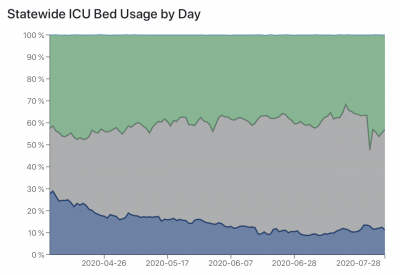
To the left is the ICU bed usage graph.  It shows the percentage of ICU beds being used by COVID-19 patients in blue.  The gray area shows the percentage of non-COVID patients.  Green represents empty ICU beds.  This shows that Indiana ICU beds are plentiful and that COVID patients are using 12.5% of the available beds.


This graph shows hospital admissions by day from the beginning of the outbreak through today.  The number bobbles up and down a little, but the overall trend is down since the peak

The third graph shows the positive test rate as a daily percentage.  Yesterday’s rate was 6.9% – a tad higher than the low that Indiana hit in mid-June, but much lower than 20%+ that was reached during  the first month of the outbreak


None of this is shared to portray the pandemic as over or our environment safe.  It isn’t safe. Nothing is 100% safe.  But it may temper fears that we remain in the throes of a pandemic run amok.  I am not an epidemiologist, but these graphs tell the story of a flattened curve in a way the total number of positive tests do not.

Combining this information with the understanding that 14-18 year-olds are likely much safer on the field, court, or course than in malls, pools, streets, and friends’ basements might explain the IHSAA’s position as prudent rather than irresponsible.

Click here for your copy of “Oops – the Art of Learning from Mistakes and Adventures” by Kent Sterling

Significant lessons learned during high school come from participation in extracurricular activities, and pulling the plug unless it is absolutely necessary won’t only strip participants of the activities, but the lessons too.  It would diminish their high school experience, and also what they will apply from it as adults.

Again, no one is advocating a disregard of safety standards that help prevent the spread and flatten the curve.  Athletes, coaches, staff, referees, and spectators (if any are allowed) should  practice social distancing, wash hands, limit travel, and wear masks where possible.

If individual school corporations want to shut down athletics, drama, marching band, and other activities because of a concern for local safety, that is their right and obligation.  In areas where COVID is not seen as an immediate threat to health and life, the opportunity to play should still exist for the good of the students.

Why would the IHSAA issue a statewide ban or delay of high school sports when the decision can be better made locally?

Good for the ISHAA getting it right.

Will college football and the NFL play? If they play, it will be because of player discipline and money

I’m not an epidemiologist, but I’m certain this is not social distancing!

What will college and professional football players be willing to sacrifice in order to play this fall?  That’s the question that will determine whether their seasons are lost or found.

College players are going to have to do the impossible – stay sequestered away from the general population of their universities for four months.  It sounds easy, but think back to how restless you were as a student.  Can you remember a weekend where you completely avoided parties or bars?  Can you imagine 100 college athletes each keeping a promise that they will not consort with girls or socialize outside the athletic community?

Remember that unlike the professionals, college players are not employees.  There is a level of authority coaches can utilize to compel players to behave, but without a hammer to enforce compliance, how can they keep football players away from the social fun of a campus?

Click here for your copy of “Oops – the Art of Learning from Mistakes and Adventures” by Kent Sterling

With each school determining its own safety protocols, what are the chances they will be able to  keep outbreaks from erupting?  If the chances appear slim and the future bleak, I can’t fault you for your pessimism.

I hate thinking that way, and I struggle to avoid looking at the mortality rates of healthy people age 18-22 and judging Covid-19 mostly harmless among the demographic playing college football.  I am not an epidemiologist, and judging the health concerns posed by any virus is beyond my pay grade, especially when doctors are having trouble understanding this scourge.  But I do know that “Rub some dirt on it,” does not work on viruses.

As for the NFL guys, they need to stay home.  No clubs, parties, travel, or silliness of any kind – despite the fun provided by limitless resources and fame-driven access.  And for those players, coaches, executives, and trainers who are married with children, they are going to have to hope their families do everything possible to avoid contact with Covid-19 or all is lost.

The difference between how Major League Baseball and the NBA has relaunched their seasons is instructive in trying to project the behavior that could lead football to a clean start and finish. Baseball players are all over the place violating the protocols established for player safety.  Conversely, because of trust between the NBA and NBPA, there is a respect for the bubble in Orlando that appears to be working.

If college and pro football want to begin and end the upcoming season on schedule, they are going to have to be a whole lot more like the NBA and not at all like baseball.  That’s going to be a tough hill to climb because of the sheer numbers.  There are three times as many football players in the Big 10 as basketball players in the NBA.  The NFL has four times the number of NBA players.  And perhaps most damning, baseball is built for social distancing.  Football is a hugging, sweating, collision-filled mess.

In the end, the decision to play college football will be whether to risk the health of football players in order to salvage the economic health of athletic departments and communities.  With the NFL, it’s a little more complicated because everyone loses financially if they don’t play.

These are insanely complicated and contentious times without a clear answer in any direction in society and the sports that reflect it.  Play and several may fall ill with the choice of a few dying, but the economics that benefit so many are save.  Keep players off the field, and they still might contract Covid-19, and the financial health of the NFL, university athletic departments, and college towns craters.

Good luck making that call.