Author Archives: Kent Sterling

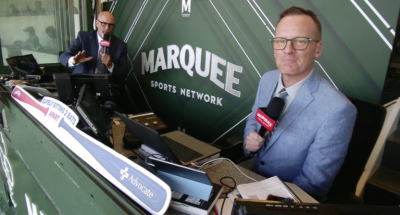
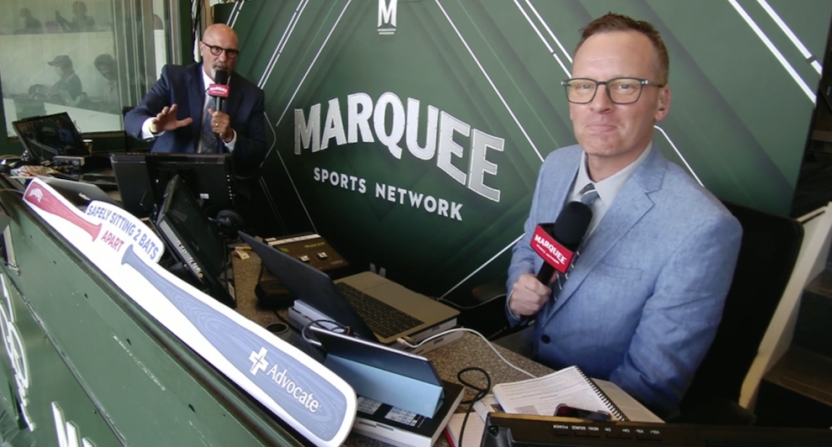
Suit clad Len Kasper and Jim Deshaies look uncomfortable in suits during Cubs broadcasts

If your Cubs viewing experience on Marquee is enhanced by Len and Jim wearing suits and ties, I cannot help you.

Even matching golf shirts are annoying to me as a uniform for broadcasters calling live sporting events, so what might you guess my response is to seeing Chicago Cubs announcers Len Kasper and Jim Deshaies wearing suits and ties every game?

Suits and ties are for attorneys and accountants, not a couple of guys paid to talk about a game played by knuckleheads in spikes, stirrups, and caps.  Len and Jim are on camera for roughly two minutes per game, but are forced to wear suits for the entire broadcast as though it helps them do their jobs at a higher level.

Click here for your copy of “Oops – the Art of Learning from Mistakes and Adventures” by Kent Sterling

Harry Caray, the guy responsible for the Cubs explosion in popularity in the 1980s and 1990s,  would wear Hawaiian shirts on occasion.  Hell, Harry did White Sox games from the outfield without any shirt at all!  Bean counters in the Cubs front office have to acknowledge that nothing continues to help the teams bottom line like the charismatic kook who passed away 22 years ago.
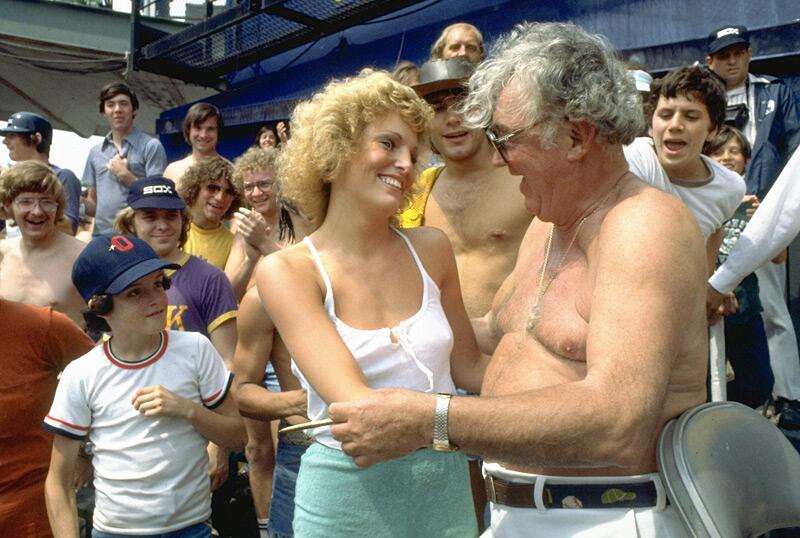
Here’s Harry Caray at Comiskey Park in 1978.

I would not be a fan of Kasper and Deshaies being topless in the booth – as counting Kasper’s ribs is likely is less pleasant than it sounds – but suits other than for special occasions serves no purpose.

Cubs fans expect an exceptionally bland and pro-Cubs broadcast now that the team owns and operates the network carrying the games, but extending this to a dress code in the press box is idiocy beyond sane boundaries.

This is not an indictment of classing up all broadcasts with fancy duds.  At NBA events, where broadcasters are within the seating bowl in full view of the fans, suits lend an air of public respectability.  But in baseball and football, where press box attendees and the ticketed public never cross paths, it’s a useless and heavy-handed effort by twits who love wearing suits to impose their discomfort upon those who would prefer modest efficiency to expensive formality.

Clothes should serve workers, not restrict them.  Len and Bob sound no different wearing suits, so what is the point?  Other than executives being heavy-handed twits, there is none.
Ban gambling on college sports? It can be made illegal, but it will still happen

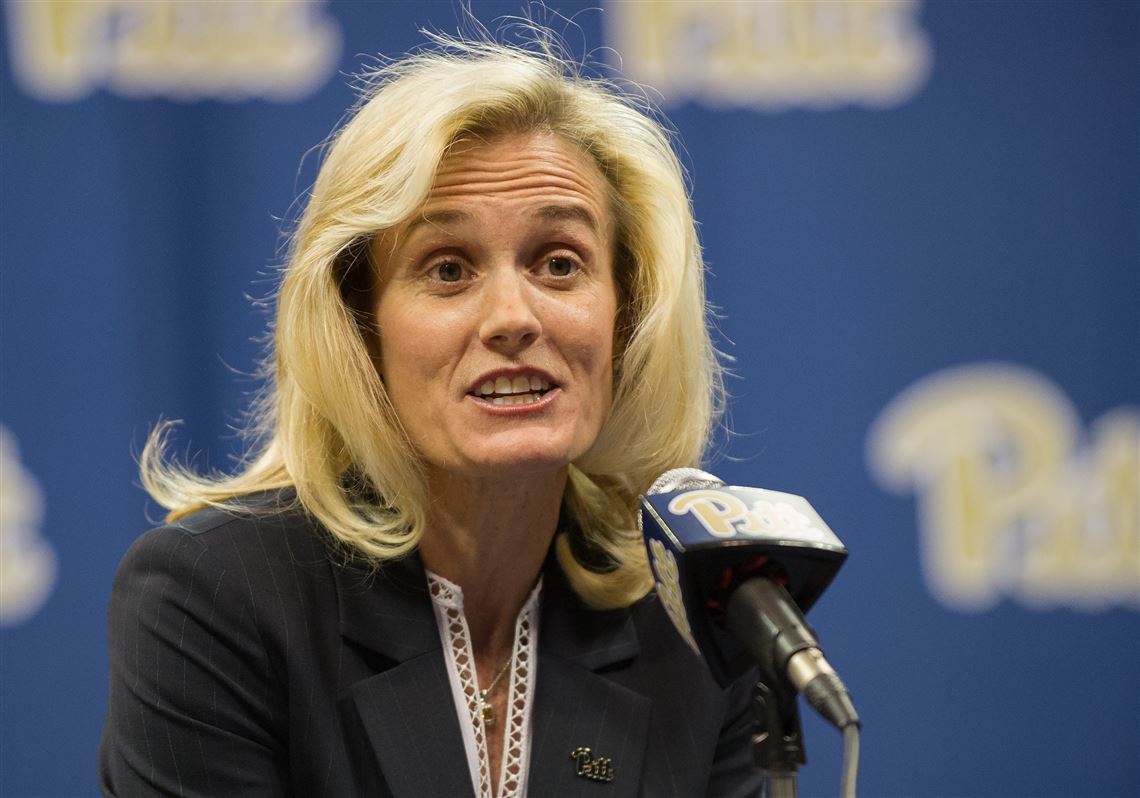
Pitt AD Heather Lyke would like gambling on college sports to be banned because the behavior worries her. Sadly for her, laws do not change behavior.

Gambling happens.  If there is a game, someone has money riding on the outcome.  Russian ping pong during the early parts of the pandemic taught us that.

Still, Heather Lyke, the athletic director at Pitt, testified before the Senate Judiciary Committee yesterday that she and every other AD in the ACC would like gambling on college athletics to be banned, “We urge Congress to directly address gambling on intercollegiate athletics and prohibit it,” Lyke told the committee.

Naive people always believe that legislating against an activity will cause it to cease.  All Lyke and her peers need to do is look at gambling prior to its legalization for proof that is not the way the world works.  She could also watch an episode or two of Breaking Bad to see that passing laws prohibiting the manufacture and use of meth did nothing to deter Walter White and Jesse Pinkman.  She could also visit Pittsburgh hotels where prostitutes ply their wares in the lobbies and bars.  Hell, murders are being committed in American cities in record numbers this month.  Murder is REALLY illegal.

Click here for your copy of “Oops – the Art of Learning from Mistakes and Adventures” by Kent Sterling

If anything, legalizing gambling has brought it out of the shadows and away from offshore websites where murky behavior has visited itself on college sports in the past.  As illogical as it might seem to Lyke, legalizing gambling actually reduces the likelihood of fixers working with athletes to corrupt a sport.  It allows the government to regulate it, making game fixing more difficult.

When administrators testify before bureaucrats, it’s a good bet what is offered will lack real world understanding of market economics and common sense.  It might make headlines, but it should never impact policy.  Behaviors can be made illegal, but they will never be eliminated or even curtailed.  Why?  Because the market overcomes law just as Covid-19 overcomes good intentions and water seeks its level.

And there will always be a market for gambling on college sports.


With tickets limited and health concerns great, IMS must lift the local TV blackout

The Indianapolis Motor Speedway won’t look exactly like this, but whatever it looks like on live and local TV in Indy will be a plus for those who cannot attend.

(Moments after this was published, it was announced the Indy 500 blackout has been lifted!  Thanks to the IMS folks for doing what is right.)

One month from tomorrow, the Indianapolis 500 will be run in front of 25% of the normal crowd.  That’s because Covid-19 has made it unsafe for the typical crowd of 300,000 to show up.

That leaves almost a quarter of a million people who would attend sitting at home wishing they were at the Indianapolis Motor Speedway.  Many are senior citizens with health issues that could cause Covid-19 to became fatal if contracted, and a significant number of them have attended the race most years since their childhoods.  It’s a big part of their lives, and concessions to Covid-19 are forcing them to stay home.

For these people – and in the name of logic – the Indianapolis Motor Speedway must suspend or eliminate the arcane local TV blackout that has kept Indy residents who cannot attend from watching the race live.

Click here for your copy of “Oops – the Art of Learning from Mistakes and Adventures” by Kent Sterling

While the rest of the world has embraced the theory that live TV coverage is the world’s best marketing tool, the Indianapolis Motor Speedway has prohibited the race from being shared through that medium.  Yes, the race is always shown on tape delay a few hours later, but that’s hardly the same – especially for those who are prevented by attending because they are afraid they will die as a result.

Let’s forget the marketing aspect of sharing the race live for young people who don’t yet understand the race how cool the Indy 500, and stick with the humane aspect of making sure the elderly and ill can watch.  Under no circumstance does the blackout make sense, but it is cruel during a pandemic that continues to cause mayhem.

It is especially nasty to keep longtime fans – and by longtime, I mean the thousands who have witnessed every Indy 500 beginning at some point in the 1950s – from watching the race live on TV if they feel it is unsafe to attend.

Those who run the Indianapolis Motor Speedway have made this call before.  When the 100th running sold out, they lifted the blackout so those who could not buy tickets would not be shut out.  It seems even more reasonable this time around given the bizarre circumstances.

I’m optimistic new owner Roger Penske will make the sensible, data-driven decision to make the race as widely available as possible in the future using media of many types, and the blackout will become an obscure footnote discussed by old-timers while future generations of Hoosiers learn about how cool the Indy 500 is through watching at home.

But this year, none of that matters because the immediate need is to serve elderly fans who have embraced the race through generations by buying tickets, swag, and making the it a huge part of their lives.  They have earned the ability to watch despite being unable to attend.

No other decision is acceptable.

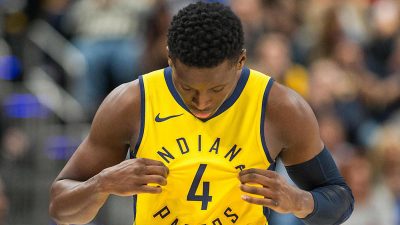
Will Victor Oladipo stay with the Pacers, leave on his own, or be pushed by recently jilted fans?

With Victor Oladipo deciding how much he loves Indiana, Indiana is also deciding how much it loves Oladipo.

When I dated girls in high school and felt the girl was likely to punt on our brief and awkward relationship, I fired a preemptive strike to end things.  I sense Pacers fans doing the same thing with Victor Oladipo, who is rumored to be looking toward free agency as an opportunity to join the Miami Heat.

Oladipo owns a home in south Florida, and there is some speculation that Heat wing Jimmy Butler is engineering some sort of talent grab on behalf of his current team.  Pacers fans are still bitter over Paul George forcing team president Kevin Pritchard to deal him for Oladipo and Domas Sabonis during the offseason prior to his free agent summer, so they are wary about Vic’s intentions.

Click here for your copy of “Oops – the Art of Learning from Mistakes and Adventures” by Kent Sterling

With Oladipo at that same moment in his career, some Pacers fans are preemptively turning away from their former favorite player – a player who loudly proclaimed “This is my city!” after a huge bucket to seal a win just two years ago.  With the echo of those words being drowned out by rumors of Oladipo’s wanderlust, his popularity is crashing in central Indiana.

Vic has not exactly bathed himself in glory through his handling of whether or not he will play as the Pacers season resumes in Orlando on August 1.  Two weeks ago, Oladipo declared he would not play because of concern for his surgically repaired quad tendon.  That seemed reasonable because his injury is rare and this is re-start is unusual at best.  There is a lot of money at stake based upon his health.

If healthy after this season, Oladipo will almost certainly receive an extension offer that approaches $30M per season over five years.  If injured, most of that cash would vanish. Playing puts at risk a veritable fortune.

Last week, Vic suddenly changed course and said he is strongly considering competing in Orlando.  This pivot occurred shortly after reports surfaced that the NBA may not allow teams to pay players if if they don’t suit up while healthy enough to compete.  If he plays, Oladipo gets approximately $3M.  If he doesn’t, he could get zilch.

Oladipo’s sudden shift paints him as greedy in the eyes of many fans.  They see him as a mercenary uncommitted to his team – and untethered to their city.  Oladipo has become the second coming of Paul George in their minds and hearts, and as Ian Hunter sings, “Once bitten, twice shy.”

There is a chance that through trying not to be jilted a second time in three years, Pacers fans are creating an environment that might compel Oladipo to seek refuge elsewhere.  This self-fulfilling prophecy is eerily similar to the premature death for high school relationships I ended only because I saw what I believed to be writing on the wall.

The lesson I gleaned from my high school idiocy is that a relationship ended by me is no better than a relationship ended by the girl.  It’s a relationship ended – period.  If the Pacers are going to keep all-star level players, fans are going to have to embrace them.  Occasionally, they will have to pay the price of being spurned for a franchise in a city that offers great economic opportunity and amenities.  We love Indy, but if you had $100M in the bank, you would probably want to put a boat in a body of water that is not the White River or Geist Reservoir.

Whether Oladipo stays or goes will rely upon a set of criteria known only to him, just as whether he plays in the re-start will be based upon either $3M or his love of the game – depending upon who you believe.

As you evaluate Oladipo’s commitment to the Pacers and Indianapolis, you might be wise to act upon what I learned in high school – pushing away an all-star is not more satisfying than fighting and losing.


Top 7 reasons I’m an Indianapolis Colts fan and recommend you become one

Assuming you are one of the Indiana residents who is a fan of the Chicago Bears, Cincinnati Bengals, or Detroit Loins despite the Colts being from your home state, I am going to do my best to convince you that the Colts are more deserving of your rabid loyalty than the team for whom you currently cheer.

I will do that without jeering Ryan Pace, Mike Brown, or whomever runs the Lions franchise.  This is not a comparative exercise, but one of looking at the Colts as so superior in many ways, only a fool would continue to back the losers from surrounding states.

Click here for your copy of “Oops – the Art of Learning from Mistakes and Adventures” by Kent Sterling

My reasons are not entirely about the on field product.  They reflect the amount of time I spend around the team at the practice facility, locker room, and media room where coach Frank Reich, the coordinators, and general manager Chris Ballard.  While most present a version of their best selves, the media still gets a reasonable idea who these guys are and whether they are worthy of your allegiance.

Here are 10 reasons the abdicate your position as fans of some other team and embrace the Colts as your new NFL favorites:

7 – It’s in your backyard.  Geography doesn’t need to be the biggest determining factor for franchise affinity, but it certainly should create a familiarity that makes it simple to migrate to the team your co-workers and neighbors back.

6 – Uniforms.  Back the the mid-1990s, a friend in Chicago opined that if he had to pick an NFL jersey to wear to work it would be the Colts.  He said they were the classiest, and I think he is 100% right.  While other teams have developed throwbacks and alternates to spur swag sales, the Colts have held firm with two simple and historic versions.  If it was good enough for Johnny Unitas and Peyton Manning, it’s good enough for Quentin Nelson and Darius Leonard – and you!

5 – Colts kept the Patriots out of two Super Bowls.  Whether the Bears, Lions, or Bengals are your favorite team, it is damn likely you hate the Patriots more than any other team – even the Packers and Steelers.  The Colts are the reason Tom Brady and Bill Belichick don’t have eight Super Bowl championships.  If the enemy of your enemy is your friend, then the Colts are good friends.

4 – Lucas Oil Stadium.  Not ostentatious but very comfortable, Lucas Oil Stadium is nearing 15 years old and it still feels new.  Tickets aren’t crazy expensive, and access is easy from any side of town or the many downtown hotels.  Like so many things in Indy – Lucas Oil Stadium just makes sense.

3 – Jim Irsay.  He’s not a dot-com billionaire or oil magnate – just the son of an owner who was raised inside the Colts locker room, became the GM, and has a hunger for championships that equals his quest for cash.  Sure, there are warts, but would you rather have Irsay, the McCaskeys, Fords, or Mike Brown as an owner?  If you choose anyone other than Irsay, you are not processing information rationally.

2 – Honesty.  Chris Ballard is self-effacing and transparent.  That conveys confidence to people inside and outside the locker room.  He appears to be a very real guy who happens to be gifted at evaluating football players as pieces that fit the Colts culture.  There is no haughty nonsense from Ballard in alibiing a bad draft choice or free agent signing.  If Ballard makes a mistake, he unmakes it as quickly as possible and accepts responsibility for it.  That humility is rare among NFL executives.

1 – (Speaking of) Humility.  I’m so sick and tired of self-immersed and pampered athletes, I can’t stand it.  Ludicrously rich athletes act as though they are the heads of their own churches rather than rich guys with crazy skills and abilities.  The Colts are down to earth, not just by comparison with other pro athletes, but with servers at Applebee’s, bank tellers, and computer programmers.  And I’m not talking about the end of the bench guys, but pro bowlers like Darius Leonard, Quentin Nelson, Jack Doyle, and every other guy in the room.  These are football players, not divas.  If you want self-importance, the Browns are right up the road.  If you want football players who are committed to each other, they wear horseshoes.

It would be nice if the Colts won 12 games to convince you they do things the right way, but last year’s issues give you an opportunity to jump on the bandwagon without looking like a frontrunner.

Jonathan Kuminga jumping to G League won’t hurt college basketball at all

THIS is college basketball and it isn’t going anywhere because Jonathan Kuminga will skip to the G League.

So a kid named Jonathan Kuminga is going to forego his opportunity to play as a freshman at Duke or Kentucky to earn cash in the G-League, which means people are going to declare college basketball a dying game.

Kuminga is the #4 ranked player in the 2020 high school class after reclassing from 2021, joining Jalen Green, Isaiah Todd, and Daishen Nix as straight to the G-League signees from 2020.  Whenever anyone leaps past college on their way to the pro’s, hysterics yelp about how the college game will miss these rare talents.

What they don’t understand is that college basketball is marketed in an entirely different way from the NBA.  The college game is about the affinity for the school, not the players.  The NBA markets stars instead of teams.  If you went to Indiana, Butler, or Purdue, you back those programs because you belong to their community.

Click here for your copy of “Oops – the Art of Learning from Mistakes and Adventures” by Kent Sterling

The anti-college honks point at a guy like Zion Williamson, and crow about how he benefitted college basketball for the five months he played for Duke.  Yes, Zion was a unique talent, but he was mostly unknown one month before the season began.  Playing for Duke helped build Zion’s brand every bit as much as Zion compelled interest during his lone season.

Look at the names of the four guys jumping straight to the G League.  Green, Kuminga, Nix, and Todd are virtual unknowns.  If they played in an event at the Best Choice Fieldhouse in Fishers, Indiana, there would be 200 people in the bleachers, including friends and family.  Not only are those four not household names like Zion became while playing at Duke, they are virtual no names.

College basketball is about the name on the front of the jersey, not the back.  In the NBA, the opposite is true, and that’s cool.  If players who want to make money immediately jump to the G League, that won’t bother college fans a bit.  The college game is built on a foundation of the affinity felt by current students, alums, and boosters who feel tethered to the school.

There are a few national programs, like Duke and Kentucky, who benefit from single season anomalies awaiting their millions in the pro’s, but the primary draw for the collegiate game is the school for which players play.

College basketball will not miss Green, Kuminga, Nix, and Todd because they were never a part of it.  I’m not going to judge those four and their families for skipping past college, but there is little doubt they had a chance to build their brand in a more dynamic way at the college of their choice.  Instead, they will earn up to a half-million toiling in front of an average of 2,465 fans (roughly what Lawrence North High School draws for its games) in Portland, ME; Grand Rapids, MI; Canton, OH; Fort Wayne, IN; or any of the other outposts with a franchise.

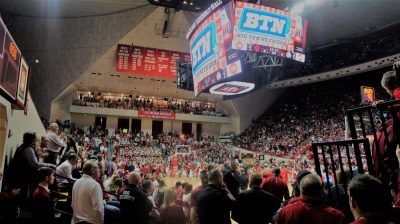
That’s not to deride the G League, and maybe more will show up to watch these four former prep stars play, but it will take a very long time and a lot of star power for the G League to equal the attendance or intensity of fans at Indiana, Butler, Purdue, Louisville, Kentucky, Kansas, Wisconsin, Virginia, Ohio State, Michigan State, or the other great programs that regularly sell out their arenas.

This is certainly going to be a different breed of college basketball season, which might have nudged a few of the four toward the G League, but the point is the same – college basketball is thriving, and the G League offering more cash for high school players to play in what would have been their freshman season will not change that.

Is Pacers guard Victor Oladipo reconsidering playing because of cash or competition?

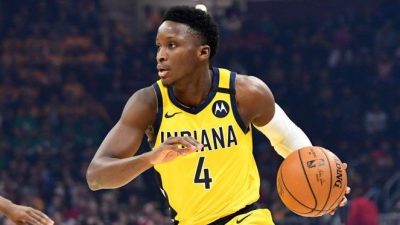
Whether Victor Oladipo plays for the Pacers has at least as much to do with $3 million as the health of his knee.

We got a little insight into the decision-making process of Victor Oladipo during yesterday’s Pacers media availability from Orlando.

Last week, Oladipo shared on social media his decision to forego playing when the season resumes on August 1st.  I understood that as a protective measure as he heads into the last season of his four-year, $84 million contract.  From a financial standpoint, the 2020-2021 season will be the most important of his career.

Then it was reported that the NBA and players union were arguing about whether Oladipo was eligible to be paid by the Pacers as a healthy scratch.  The money in question is in the neighborhood of $3 million.

Click here for your copy of “Oops – the Art of Learning from Mistakes and Adventures” by Kent Sterling

At the time, I understood Oladipo’s decision as a present day sacrifice toward future wealth.  With more than $100 million at stake, it was (and is) in Oladipo’s best interest for focus all energy toward a healthy next season instead of participating in this bizarre re-launch in Orlando.

Then Oladipo got to Orlando, practiced well, and was reported to be reconsidering his availability.  That has led to a debate as to whether he is motivated by greed or the need to compete.  It is such a good question, ESPN’s Rachel Nichols asked him this yesterday,  “Have you resolved with the league whether you’ll get paid if you don’t play – and how is all that going to factor in your decision making?”

Good question, and here is Oladipo’s answer in it’s repetitive entirety:

“No, I haven’t talked to them.  I don’t know.  That’s out of my control.  I don’t have any control of that.  Honestly, I don’t even know the amount or what goes into it.  I’m just focused on my knee.  I’m not really concerned about anything I can’t control.  It’s out of my control.  Other people handle that, I guess, whatever the case is.  But I just want to play basketball – plain and simple.  I want to make sure my knee is at its best ability, and I’m at my best ability when I go out there and to perform at a high level.  So that’s really what I’m focused on, Rachel, so I can’t really answer that question.  I’m sorry but I’m sure I could probably could figure it out, and I’ll make sure and let you guys know.”

Prior to listening to Oladipo’s answer, I was fairly certain he was giving serious thought to playing because he felt great in practice.  I took Oladipo at his word, until I listened to his words several times. Now, I’m convinced the $3 million is the only thing Oladipo covets because people telling the truth just don’t talk like that.

This was a rambling mishmash of words strung together without any coherent message, and that is what people fall back on when they don’t want to be transparent or overtly dishonest.  Oladipo obfuscated, and that makes it easy to assume he didn’t want to share the truth.

One thing Oladipo really wants people to know is that the situation is out of his control.  He uses that phrase four times in the first 53 words of his answer.  He is accurate in that the NBA and NBPA will determine whether he is eligible to be paid as a healthy scratch, but whether he plays and knowing how much money he will be due are entirely under his control.

I would have more respect for Oladipo if he sticks to his guns, passes on the $3 million (or donates it to a worthy charity, if he gets paid as a healthy scratch), and cheers from the bench as his teammates compete.

I’ve always given Oladipo the benefit of the doubt as he’s rambled to the media because I’ve liked him since he started working out in Bloomington as an incoming freshman, but given the answer to Nichols’ question it’s impossible to believe his potential return is about anything but $3 million.


Indiana tight end Peyton Hendershot reinstated five months after being charged with domestic battery

Tom Allen is a leader of men, and one of them put his hands on a woman without being shown the door.

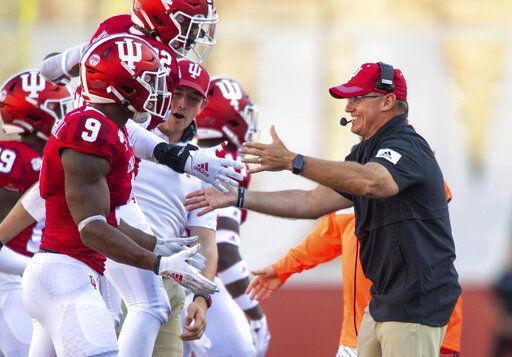
Indiana University tight end Peyton Hendershot has been fully reinstated to the football program, and I have a problem with that.

In February, Hendershot was arrested for felony residential entry and misdemeanor domestic battery, criminal mischief and criminal conversion as the result of an incident with his girlfriend where he questioned her faithfulness, took her smart phone, put his hands around her neck and shoved her against a wall.

He has toed the line since, according to head coach Tom Allen, “(Hendershot) has completed his team-sanctioned discipline. He has completed the conduct process that we went through for the student conduct as a student-athlete of Indiana University. He completed that. He’s closed his matter with the judicial system. We have a campus committee that determines when a student-athlete is reinstated to their team and to be able to be cleared and that is the case. He’s been completely cleared and he is back with the team now fully as he completed all the things that he was asked to do.”

Allen’s comments refer to a system that has been implemented to keep a coach out of the line of fire as media and others evaluate accountability for how consequences are imposed upon student-athletes who step out of line.  And I think it is weak.

If I was a stridently anti-domestic violence coach, there is no chance that a student-athlete (no matter how wonderful in every other way) who played for me (no matter how well) put his hands on a woman under any circumstance would play for me again.  He would be gone – period.

Hendershot set the tight end IU record for receptions in a season in 2019, so his credentials as a player are beyond reproach.  He’s important for the Hoosiers’ hopes for success this season (if there is one).  I don’t know Hendershot as a human being, but let’s assume he is a spectacular young man and that incident in February was an extreme departure from who he’s shown himself to be during every other moment he has spent at IU.

He’s gone, if I’m the coach.  End of conversation.

I would continue to make myself available as a mentor to Hendershot, and would work to find him another place to study and play, but there is no way a coach and leader tell 115 other young men on his team about the evils of domestic violence without feeling like a hypocrite.  I would rather lose every football game I coached than be a hypocritical leader.

If the athletic department was so adamant about sticking to their specific regimen for disciplinary issues that I had no role is assessing a significant penalty like kicking a player off the team for putting hands on a woman, I would resign.

My wife has tried to argue me off this rigid stance regarding Hendershot, telling me that maybe something happened that would explain to an extent what he did.  I told her there is no gray area in domestic violence in my world.  Hands on a women, we are done.  There are no acceptable mitigating factors.  I’m a big gray area guy, but not when it comes to this.

I don’t know enough about the inner workings at Indiana Athletics to definitively say I believe Allen failed in his role as the leader of the football program, but I do know how I feel about any man – let alone a huge man – touching a woman with violent intent, even in self-defense.

Allen’s slogan is “LEO” which stands for “Love Each Other.”  I don’t blame Allen for loving his players, even when they step way out of line as Hendershot did, but I do hold him accountable for passing on an opportunity to take a strong stand against those who hit women.

Quick comparison between Hulu Live TV and YouTube TV

I made the switch from YouTube TV to Hulu Live yesterday, and here are some thoughts about differences between the two services:

Price – Hulu $54.95 vs. YouTube TV $64.95 – This is what caused me to switch.  YouTube TV is bumping its price by $15 next month to cover the cost of adding a CBS owned package of networks that include MTV, VH1, CMT, BET, and four others.  I have not watched any of them since the 1980s, so I’m not enthusiastic about paying the upcharge.

Picture – For some reason, Hulu is clear and bright on my TVs.  It’s not a deal-breaker to have a softer picture as my eyes adjust to whatever it is watching, but if Hulu allows me to get the best picture out of a TV I probably overpaid for, I won’t argue.

Click here for your copy of “Oops – the Art of Learning from Mistakes and Adventures” by Kent Sterling

Network selection – Hulu has Marquee featuring Cubs games and most of the sports networks I want.  YouTube has the sports I need, minus Marquee.  Otherwise, of the other networks I watched on YouTube, Hulu is lacking AMC and Sundance.  AMC is going to be a problem at some point because Better Call Saul is a great show I will not miss.  It’s not available a la carte, so that will become a problem to solve in several months.  Neither has the NFL Network, and I would love that, but both are equal there.  NBA TV is only available on YouTube which is a bit of a bother now that I’m a Hulu subscriber.

Guide/Interface – YouTube allows customers to manage their guide however he or she chooses – alphabetical, clustering by type (sports, news, locals, movies, etc…), by how often you watch, or any other way you like.  Hulu has a “My Channels” tab where favorites can be housed.  YouTube’s guide is easy to manage.  Hulu’s is not.  This difference kept me from switching a few months ago when my son recommended I pull the trigger.

Storage – YouTube allows unlimited storage, while Hulu provides only 50 hours.  This is an issue for some, but not for me.  I rarely record because I view recorded content as an appointment I must keep – something I HAVE to do instead of something I CHOOSE to do.

Fubo and Sling are other services I considered, but Fubo’s does not have ESPN Networks yet, nor Marquee.  The pricing is also complex.  Fubo has the NFL Network, but that is but a big enough plus to force me to reconsider.  Sling seems like the Kmart of TV apps in that if I subscribed I would have immediate buyers remorse, like everything I have ever purchased at Kmart.

None of the services are perfect, but I couldn’t just allow YouTube TV bump its price for content I will never consume without consequence.  Hulu was the best of the bunch for me right now, but I have heard that CBS will try to force Hulu to add the same networks it has compelled YouTube to carry, which will result in a similar bump in monthly cost.

At that point, I may decide to shop at Kmart as I will not pay $15/month for content I will not use.

Switching to Hulu Live – first voice I heard on the Marquee Network was my own

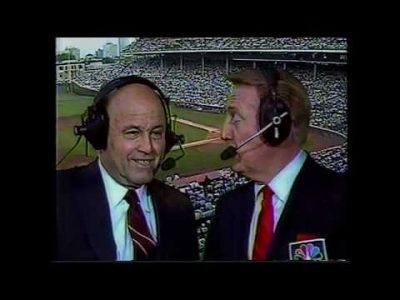
Back in 1988, Vin Scully and Joe Garagiola were on the call from Wrigley Field for the first real night game at Wrigley Field – as we heard this afternoon on the Marquee Network.

Sometimes, even during a gloomy summer of masks, half-open restaurants, and social distancing, life works just right.

Today, I switched TV providers from YouTube TV to Hulu Live.  The first show I found on the Cubs Marquee Network – included on Hulu but not YouTube TV – was the first night game game at Wrigley Field from August 9, 1988.  I attended that game, and the first voice I heard during the replay broadcast today was my own.

Mets catcher Gary Carter was stuck on 299 career home runs, and I built a significant dislike for  Carter during his career with the Expos and Mets (when he wrapped his career with the Dodgers, Giants, and Expos again, I pitied his eroding abilities so my dislike waned).  I turned the game on this afternoon while the game was in the top of the sixth with Carter at the plate, and heard “299! 299! 299!” I had to turn the TV up, but there was my psychotic chanting – faint but audible.

Click here for your copy of “Oops – the Art of Learning from Mistakes and Adventures” by Kent Sterling

I yelled “299!” incessantly from our seats in the 10th row behind the Cubs on deck circle every time Carter came to the plate.  A fan sitting in front of us asked why I hated Carter so much.  I told him, “Because he refers to himself in the third person.  He calls himself ‘The Kid’ all the time, and I don’t like self-important people.”  The guy smiled and nodded.  I think it pleased him that I had any reason at all besides the empty beer cups that were stacked in front of me.

Carter failed to hit his 300th home run that night, and I walked home believing I may have exerted some kind of a whammy on him.  That delusion was proven flawed two days later, as I sat in different box seats.  As I yelled “300!” for the last time, Carter stroked a solo shot into the left field bleachers off Al Nipper’s first pitch in the top of the second inning.

It was serendipity I was at the first night game.  The game the night before against the Phillies was rained out while I played softball at Welles Park.  Somehow, we made to the finals of our league tournament, and I would rather play than watch, so I opted for a game we lost just before the rains came.

Every Cubs fan who was anyone was at Wrigley for the pageantry of that first night game on August 8th, but August 9th was more like a real Cubs game with the fans who had all of the heart but none of the cash of the guys from the night before.

The Cubs won that first night game 6-4.  Frank DiPino got the win – one of the seven he notched in his two-plus seasons as a mediocre lefty out of the bullpen – and the Cubs climbed to within 12 games of the top spot in the NL East.

And now we watch that same game on the Marquee Network as the endless summer of Covid-19 continues and continues and continues.  Ten days from today, we are promised a shortened season of 60 Cubs games, but there won’t be fans anywhere but on the rooftops across Waveland and Sheffield Avenues.

I’m thinking of driving up for one of the first games.  I can sit in the Cubby Bear, feel a little of the atmosphere, laugh with friends (from a distance), and at least hear the crack of the bat as a little bit of normal creeps back into our lives.  Then it occurred to me that I don’t even know if the Cubby Bear will be open.

We long for that feeling from 1988, 1998, 2008, and 2018.  We want to bask in the splendor of a perfect afternoon or night at Wrigley, not live on the memories created 32 years ago on a beautiful night screaming “299!” at a hall of fame catcher because he called himself “The Kid.”