Author Archives: Kent Sterling

Either Boomer Esiason is wrong or some college football coaches are evil incarnate

If Boomer Esiason is right, college football is in a lot of trouble.

Clemson Football has 37 players who have tested positive for COVID-19 – roughly one-third of Dabo Swinney’s Tigers.  That’s a huge percentage if his program is paying attention to protocols for safety.

It’s easy to make an assumption or two, start connecting dots, and come up with an intriguing and (hopefully) ridiculous conspiracy theory about why Clemson’s infection rate has risen so alarmingly.  That kind of thinking makes for a good sports bar talking point.

Radio host and former ACC/NFL quarterback Boomer Esiason turned his show into a platform to discuss the strange idea of college football programs trying to create herd immunity through infecting players.

Click here for your copy of “Oops – the Art of Learning from Mistakes and Adventures” by Kent Sterling

“I have to be really careful here,” explained Esiason on national radio and TV.  “I don’t want to say that this is an accusation, (but) are they trying to herd immunity their teams?  So, these guys can get sick now, as opposed to during the college football season, if in fact there is one.  I’m telling you right now, I wouldn’t put it past any of those guys down there.”

The thought of purposefully creating an environment where student-athletes are exposed to a virus that has claimed more than 125,000 American lives is repugnant and horrifying, but Esiason sees it as possible if not likely.

What a terrifying indictment of college football and the men who coach it!

While it is true that COVID-19 is rarely fatal or the cause of longterm chaos in healthy men aged 18-23, but putting them at risk for contracting the virus now so they can create the antibodies that keep them immune during the upcoming season is insane.

If a coach has done such a thing, his athletic director needs to find out, dismiss him, and then the NCAA should ban him from coaching at an NCAA signatory for eternity for embracing a Third Reich level ends-justify-the-means philosophy.

That Esiason “wouldn’t put (attempting herd immunity through purposeful infection) past any of those guys down there,” means one of three things – Esiason took too many shots to the brain as a quarterback, he tried to create a hot-take segment out of whole cloth, or college coaches are so preoccupied with winning they would knowingly put the lives of their players at risk.

I hope Boomer was just trying to fill radio time.

With one day remaining as IU AD, Fred Glass has checked all boxes


Outgoing IU AD Fred Glass has gotten a lot right and very little wrong over the last 11 1/2 years

There has been a heaping helping of good and a small portion of not so good during the 11 1/12 years Indiana University Athletic Director Fred Glass has been on the job.

Glass has one day left until his resignation takes effect and Scott Dolson takes the role he has coveted through his tenure as Glass’s lieutenant.

The bar for excellence in the position has been set high by Glass, a leader who has been unwavering in making the welfare and success of the student-athletes his top priority.

Among the notable accomplishments during Glass’ tenure:

  • IU Athletics’ Graduation Success Rate has climbed from 77 percent to 91 percent and has equaled or established a new record score in each of the last seven years;
  • 25 team and 210 individual Big Ten championships;
  • 28 individual and one NCAA team championship;
  • 46 Big Ten Athletes of the Year;
  • 537 All-America honors;
  • 1,318 Academic All-Big Ten honors;
  • Introduced groundbreaking initiatives, including the Student-Athlete Bill of Rights and the Sexual Violence Disqualification Policy;
  • Created the Excellence Academy program, the most innovative and comprehensive personal development program in all of intercollegiate athletics;
  • Comprehensive overhaul of IU Athletics facilities has included:
    •    $49 million for Memorial Stadium North End Zone facility;
    •    $48 million for the Excellence Academy facility on Memorial Stadium’s south end;
    •    $45 million renovation of Simon Skjodt Assembly Hall;
    •    $24.6 million for construction of Cook Hall;
    •   A combined $50 million plus for construction of Wilkinson Hall, Bart Kaufman Field, The Pfau Course at Indiana University, and Andy Mohr Field.
  • No major NCAA rules violations.

That’s a hell of a list of achievements, and it explains the Medal for Excellence that Glass received today as a significant pat on the back from IU President Michael McRobbie for his tireless work.

Click here for your copy of “Oops – the Art of Learning from Mistakes and Adventures” by Kent Sterling

There are fans who wanted more from Indiana Football and Men’s Basketball during the Glass era, but arguing that IU should regularly go to the Big 10 Championship Game out of the East Division is insane.  Last fall, the Hoosiers finished the regular season with eight wins despite losing their starting quarterback early in the season.

As for IU Basketball, Glass inherited Tom Crean, who outgoing athletic director Rick Greenspan was inexplicably allowed to hire.  Glass is responsible for awarding Crean an extension in 2012 that included ludicrous level of buyout cash should a change have been made.  That deal served IU well for a year as the program won the Big 10, was ranked #1, and advanced to the Sweet 16 in 2013, but it became an albatross around the neck of the program as Crean wandered away from what caused the program’s resurgence is 2012-2013.

Since Crean was fired and replaced by Archie Miller, the growth has been slower than anyone wants, but it appears the corner is about to be turned with the 2020-2021 season.

In every public comment and private conversation I had with Glass, he passionately advocated for the best experience possible athletically and academically be provided to Indiana athletes.  That was clearly the priority that meant the most to him.  Every year, 850 student-athletes and their parents relied upon Glass to provide the tools for a safe and fruitful experience.  And at every opportunity he delivered.

Among his many accomplishments, I believe Glass will be proudest that he founded the Excellence Academy as a difference maker for IU athletes.  It provides all the support necessary to launch graduates into an adult world filled with unique challenges.

It’s rare that an executive leaves a highly visible position where he is credited with as many successes as Glass without racking up a nearly equal number of failures.  More often, the replacement is seen as a Godsend who makes a few easy corrections that establish some early popularity.

Dolson is going to have a tough time finding much Glass did that requires correction.  There are no fires to immediately extinguish, and the latest round of facility upgrades needed to test athletes have been completed.

As for Glass, he’ll take some time, find another challenge, and attack it.

NFL imposes silly and ineffective penalty against the cheating Patriots

No telling how many championships Bill Belichick would have won if his Patriots had not cheated, but there is no question they have cheated many, many times.

Clearly, the New England Patriots have not learned their lesson.  Another scandal has led to another penalty that validates the risks they routinely take to gain an unfair advantage.

This time the Patriots sent a video crew to Cleveland last December 8th to record the sidelines work of the Bengals a week ahead of their game in Cincinnati.  They were caught by the Bengals media relations staff and reported it to the NFL.

As a result, the NFL stripped a third round draft pick in 2021, fined the team $1.1 million, and banned the Patriots’ television production crew from shooting any games during the 2020 season.

That has to get their attention, right?

Spygate, Deflategate, Headsetgate, IR Gate, and a variety of additional -gates have shown the Patriots relentless disinclination to play within the rules.  Draft picks has been forfeited, fines levied, and players suspended, and yet the behavior continues.

Click here for your copy of “Oops – the Art of Learning from Mistakes and Adventures” by Kent Sterling

The Patriots have historically done everything they can to create an advantage, whether it is prohibited by NFL rules or not.  Occasionally, they get caught and are slapped on the wrist after offering up a denial that defies credulity.

We can assume there have been many, many times the Patriots have not been caught.  One of those are still discussed with considerable anger.  The Rams were convinced the Patriots videotaped their walkthrough prior to Super Bowl XXXVI.  The Patriots have always denied those claims, but those with the Rams back then still insist video surveillance is the only explanation for pre-snap adjustments by the Patriots to Rams plays they had never before run.

There is no question the Patriots have benefitted by cheating and will almost certainly continue to cheat.  The question is whether it is worth the time and trouble it would take for the NFL to compel them to stop – if such a thing is even possible.

The Patriots guarantee TV ratings, and it is impossible to tell the story of the first 20 years of this century without focusing on those six championships won through both nefarious and conventional means.

The question of what the Patriots would have been and what legacy coach Bill Belichick will enjoy in the annals of NFL history is impossible to answer without considering the role cheating played.  There are people who say, “If you ain’t cheating’, you ain’t trying.”  Maybe the Patriots just cheated more often and better than other teams, so a microscope has been trained on their operation.

One thing that is certain is that if the NFL wants to bring about a consequence that will compel respect and compliance, forfeiting a third round pick and demanding they stroke a $1,100,000 check will not do the job.  Been down that road enough times to know the result.

Roger Penske, please remove the local TV blackout for the #Indy500

When Roger Penske was introduced as the new owner of the Indianapolis Motor Speedway and all Hulman assets, I hoped he would look at the local TV blackout and say, “This is stupid. Let’s stop doing that!”

The absurd question behind live blackouts has always been, will fans buy the cow if the milk is free?  The more germane question is, who buys a cow if they have never tasted milk?  If people would choose to watch an event at home on TV instead of live, the event is in deep trouble.  To behave as though exposing the live show to the masses would be deleterious to ticket sales defies logic and math.

There is only one place remaining in the world that clings to the notion that not televising an live sporting event locally leads to greater attendance.  Everyone else in every organized sport has adopted the philosophy that the more people see an event on TV, the more they will want to pay to see it in person.

Click here for your copy of “Oops – the Art of Learning from Mistakes and Adventures” by Kent Sterling

And if the Indianapolis Motor Speedway doesn’t adjust its thinking quickly, the 104th Running of the Indy 500 will not be available to locals who want to watch the race but feel it is unwise to sit with approximately 150,000 others during a Coronavirus pandemic.

The Chicago Blackhawks were the last sports franchise that lifted the ban on televising home games 13 years ago.  Once the ban was lifted, attendance went up – way up.  That also coincided with a marked improvement in the quality of the team, so it’s not a perfect scenario for measuring the effect TV has a live gate, but live TV sure didn’t hurt!

The Indianapolis 500 is magnetic because there is a collective insanity in its very existence.  Men and women have always dreamed of going faster, farther, and higher regardless of the risk, and while all the barriers have likely been broken, there is still a compulsion within many to dare fate and put their feet to the floor.

Watching the 33 starters come flying out of turn four to take the green flag, then dive threewide into turn one at 220+ miles-an-hour is the most dramatic moment in sports, period.  There is nothing close.  There isn’t a person who’s witnessed it that wouldn’t pay to see it again.

There is an entire generation of kids in Indianapolis who have never seen the race, even on TV.  Maybe back in the day, kids would wait for the 7p start time to watch the replay RTV6 (now on WTHR-13), but not anymore.  They have better things to do than watch a three-and-a-half hour race that concluded at least two-hours prior.

The idea that an event can become more popular by limiting the access of people interested in watching it is borderline crazy.  The race sells more tickets than any single day sporting event on the planet, and the fear is that live TV would remove an important motivation for attendance.

The IMS is enormous.  There are more than four people at the race for every fan who packs into Lucas Oil Stadium for a sold-out Colts game.  And 16 Conseco Fieldhouses would be needed to hold all the race fans willing to plunk down a bunch of money to see the Indy 500.  The Pacers are challenged to fill one for NBA basketball.

Do you know why?  Because it’s the coolest f***ing thing you and I will ever see!

It’s time for new ownership to stop living in the Human-George Family’s fear of losing, and begin to embrace the fact that 300,000 people come to a hallowed piece of property every year for a reason other than they haven’t yet found something better to do.  Penske needs to understand that the Indianapolis 500 should focus on becoming more popular, not invest in keeping what they have.

The folks at the Speedway need to understand what everyone other than Bill Wirtz, late owner  of the Blackhawks, learned in the 1970s – that television builds a brand better than any device in history, and nowhere does the IndyCar brand need to be stronger than in Indianapolis.

The only winners in the live blackout game have always been the radio stations who carried the events live.  WIBC has long been the winner in this illogical blackout, especially since the exclusive radio rights were won by Emmis Communications almost a decade ago.  The radio broadcast on Emmis stations achieves nearly a 12-rating – not share, but rating.  (Share is the percentage of people listening to a station among all of those listening to the radio, and rating is the raw percentage of those in a community who are listening to a station.)  No large market radio station to my knowledge has achieved a 12-share for any broadcast in the last 30 years.

I love the radio broadcast and hope it lives forever, but it should not be the only way Indy 500 fans in central Indiana can experience the race if they don’t have a ticket.

That 300K attendance is a monolithic testimony to the power of the Indianapolis 500, but it would be dwarfed by the number of people who would witness the Indy 500 live on TV and develop an affinity for the event if it were televised live.  There would be thousands of Indy 500 parties across central Indiana in addition to the huge party in Speedway, Indiana.

Indianapolis would embrace the Indy 500 in much the same way Louisville embraces the Kentucky Derby, which is not blacked out locally.  For two weeks, Louisville stops being a mediocre town, and develops a New Orleans type outlook and swagger.  As pleasant as all the fooferah surrounding the Indy 500 and the 500 Festival is, it isn’t Louisville, and that’s because 80% of the community is locked out of enjoying the centerpiece event.

Kids should dream about being old enough to buy a ticket and go to the race.  Right now, they don’t even know it’s being held because they wonder how big a deal it is if it isn’t even on TV.

This is a perfect year to lift the blackout in the name of fairness for those whose lives would be at risk if they choose to attend.  It could be sold as an accommodation to those with underlying conditions from the munificent Roger Penske.  What it would really be is an admission that for decades the blackout has been anachronistic buffoonery.
Colts LB Darius Leonard shares his account of how he was wronged; deserves to be respected for doing it

Colts LB Darius Leonard is always friendly and honest in dealing with the media. That raw honesty was apparent in his IG video.

Indianapolis Colts linebacker Darius Leonard is one of my favorite people in the locker room.

Several times each week during the season the media is invited to talk to players at their lockers, and Leonard’s locker is usually crowded because he is insightful, honest, and popular with fans.  He’s also very patient, consenting to interview after interview if people like me request a one-on-one.

On the field, Leonard is a rampaging beast, but in the locker room he’s actually a sweet guy who speaks with thoughtful transparency.  Some professional athletes are slick, moody, and reluctant.  Not Leonard.

Click here for your copy of “Oops – the Art of Learning from Mistakes and Adventures” by Kent Sterling

When I saw that Leonard posted video on Instagram yesterday, I looked forward to watching it.  And then I was heartbroken when I did.  In the video, Leonard expressed anger and anguish over his treatment while eating with his family at a South Carolina Chiptotle restaurant.

In it, Leonard claims the manager kicked his group out of the restaurant after a white customer complained he was treated poorly by Leonard and his party, “(The manager) came up with a terrible attitude, asking us did we have a problem.  So, we’re all lost, trying to figure out what’s going on. He said that a white guy said we were verbally abusing him; talking trash to him. It was basically a lie…they wanted to call the police on us. That’s what being black in America is right now.”

Leonard continued, “We know that if that manager would have called the cops right then and there, we know what would have went down.  And it’s wrong. And y’all wonder why all the protests and all that is going on right now. We are tired of this… And y’all white people don’t understand what we go through. This is very frustrating…and y’all don’t feel our damn pain. If y’all sit in our shoes for one day and just walk outside and really feel what we go through, then y’all would understand. Some of you need to understand that we’re not just saying black lives are the only thing that matters. What we’re saying is we want to be treated equally. Just go sit down in public and eat without being bothered. That’s the shit that I’m talking about.

“That’s why people take a knee,” Leonard said. “That’s why people are protesting. That’s why people are upset.”

This was unscripted and raw – totally Leonard.  It is a scathing rebuke of the inequities in our society and a plea for movement toward fairness and decency in a country that offers them generously only to a very specific demographic.

Leonards comments were a stirring call for long overdue understanding and empathy that have been withheld by whites in America.

Stephen Holder wrote a piece at The Athletic about the incident and video, and I was shocked and dismayed by many of the comments.  I won’t dignify them by sharing their calls for proof, assertions that Leonard is whining, or equating experiences as a white man being mocked as a kid to what Darius says he goes through each day.

Leonard did exactly the right thing – diffuse the situation by leaving before police were called, and then hold those responsible through social media, which has become the best weapon for fighting back against unchecked ignorance.

Incidents of racism require a bright light be shined on them so the behavior can be corrected.  Racism cannot be allowed to be business as usual in South Carolina, Indiana, Minnesota, or anywhere else in America.

And if you are tired of stories about racism being “all over the news,” imagine how tired you would be of racism if you were black.

Please, MLB, NFL, and NBA – do not pump fake fan noise into game broadcasts this summer and fall

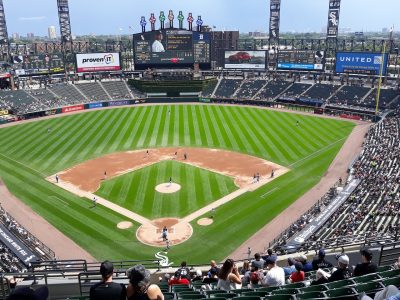
One great argument against fake crowd noise during baseball telecasts is there have been small crowds and only occasional ripples of noise at the home of the Chicago White Sox since 2005.

Laugh tracks have been stripped from virtually every sitcom on TV.  Back in the day TV programmers added laughter to shows because they felt without it, people would not be smart enough to tell what was funny.  Then they grew up and gave audiences a little respect.

Major League Baseball and the National Football League – along with the networks that carry their products – are in meetings this morning discussing whether to add crowd noise to broadcasts of games played this summer and fall in mostly empty stadiums because of virus spread concerns.  Maybe the NBA is doing the same, but I tend to give more credit to Adam Silver as a commissioner than either too-smart-for-the-room Rob Manfred or Roger Goodell.

Click here for your copy of “Oops – the Art of Learning from Mistakes and Adventures” by Kent Sterling

The PGA has continued without fans, which means there are no annoying rubes yelling “You da man!” every time a player hits a drive.  I will be eternally grateful that golf and CBS have decided to allow the silence of the fan-free course to exist without artificial cheers.  Same thing with NASCAR and IndyCar.

You see, we are not idiots.  The crowd, if anything, is an annoyance during games.  They stand, yell, and heckle with impunity as though their behavior has any effect whatsoever on the game. It doesn’t affect players – or the TV audience.  No one watching a game ever said, “I watch for the noise.”

I’ve asked a lot of former professional athletes about how fans affect them.  I’ve spoken to only one who said they seriously rattled or motivated him.  He was a first baseman who was forced to play the outfield when he came up to the majors.  People in the bleachers at Wrigley Field were merciless, so the guy went 5-for-11 with 3 home runs and committed no errors that series.

I watch the Korean Baseball Organization game ESPN broadcasts each morning.  The stuffed animals planted in the seats behind home plate make no sound, and the Koreans and ESPN don’t pump fake noise in.  I find the broadcasts enjoyable despite not knowing any of the players – other than thoroughly despicable former Cubs shortstop/second baseman Addison Russell.

When major league sports restart, fans are going to watch.  That’s what we do.  And for those who need an adjustment period for the lack of audio ambience, it will take about 10 minutes to get used to it.

There is no reason to micromanage the experience of watching by manually inserting silly noises to more closely replicate what games used to sound like.  Life is not the same right now, and falsely presenting sports as though it is denigrates fans who know otherwise.

We need sane leaders in government and business to lead us through these strange days by giving us the truth – unaltered, unfiltered, and unrepentant.  What we do not need is strange to be sold to us as normal.

MLB, NFL, and NBA need to treat adults like adults and forego contrivances, just as TV producers and networks finally did as they correctly assumed we are capable of laughing when something is funny, rather than when we are cued.

Should Cubs fans pay for Marquee or sit this season out – the debate begins

To watch or not to watch – that is the question.

Baseball’s resumption in one month presents a huge question for Cubs fans.  Do we trust content providers like Comcast and YouTube to get a deal done with the Marquee Network, change providers, or forego Cubs baseball for the 60-game sprint to the playoffs.

I have been without televised Cubs games for only a short unhappy period of my life in the late 1970s, just prior to the quick spread of cable television that brought WGN-TV to southern Indiana.  It was a difficult period that was made a bit more tolerable by a radio station in New Albany joining the Cubs Radio Network.

Since then, the combination of Comcast Sports Chicago, WGN, WNDY, and WISH-TV have made Cubs baseball easy to watch virtually every game of every season wherever I lived.  Now, the Cubs have taken their product in house, and they are playing hardball with networks, holding firm on price to maximize their investment.

Baseball will return July 23 or 24, so providers and Marquee have one month to test each other’s resolve or risk alienating fans – which seems to have become a hobby of Cubs owner Tom Ricketts.

Click here for your copy of “Oops – the Art of Learning from Mistakes and Adventures” by Kent Sterling

As it stands right now, Hulu and AT&T carry Marquee, which has filled time over the last three months with showings of old Cubs games and documentaries about the Cubs.  Comcast, YouTube TV, and Sling have decided to hold firm on costs for their customers by refusing to pay Marquee’s price.  Marquee does not offer an OTT option where subscribers could pay $9.95 each month for a standalone app.

Now I’m quite agitated by nonsensical negotiations between Rob Manfred and Tony Clark that meandered to an utterly predictable conclusion on Sunday, but I’m not certain I am agitated enough to make a spite-driven decision to avoid Cubs games this season.

I am being forced by the Cubs unending greed to negotiate with myself – a summer of baseball hanging in the balance.

My brain is sitting across a conference table from my heart demanding I see the wisdom of ignoring my love for the Cubs in favor of financial health, and my heart whines about a half century of loyalty to a team through thick and thin being held hostage for a measly $5 monthly upcharge.

Changing providers would be a pain in the ass, and ultimately more expensive.  Right now, I pay $49.95 per month for YouTube TV and another chunk of cash for Comcast high speed internet.  I could keep Comcast and switch to Hulu for an additional $5, or switch both TV and internet to AT&T and save money in the short term while facing a serious hike down the line.

Cubs fans in Chicagoland and throughout the midwest are having that same internal argument.  The answer for many will be determined by the level of animosity felt for how MLB owners have handled this recent labor discord, and more specifically our lack of tolerance for Ricketts’ unquenchable thirst for our cash.

This is a big decision, not just for Cubs fans but for Ricketts too.  A full summer without the Cubs will make it much easier for fans to stay away from the Marquee Network AND Wrigley Field in 2021 and beyond.  Free TV has been an incredible marketing tool for the Cubs since the 1950s.  That era has ended, driven by a need to leverage every penny possible out of fans’ loyalty to their team.

So what do we do?  The deadline for our negotiations comes one month from today.  The yelling in my brain has just started, and I’m already tired of it.

Paul George says more words that no one challenges and Pacers fans shouldn’t believe

For Paul George, home is where he tells his tales.

Former Indiana Pacers forward Paul George was always unselfish with his time and words.  Sadly, they had no meaning.

To my endless discredit, it took me five conversations to figure that out.  As it turns out, somehow I’m way ahead of the game because people are still asking him questions, and inexplicably also listening to the answers.

George’s shaky grasp on reality continues to be evident every time he talks about his time with the Pacers.  In a podcast, hosted by Quentin Richardson and Darius Miles, George said, “I ain’t gonna say the names because I’m going to keep their business private, I’m a just say it like this, I had at the time, the best power forward saying he wanted to come to Indy and team up with me.”

No one outside Indiana holds George accountable for his silly blather, so the hosts smiled and nodded.  George continued with more nonsense, “They’re like, ‘we’re a mid-major, we’re a small market, like, we can’t do it, we’re a small market, we can’t afford that.’  I’m like, ‘the best power forward wants to come play here, like, y’all can’t make that work?’ They didn’t want to do it.”

And so according to George, he called his agent and said, “Man, they don’t get it. Get me up outta here.  They don’t want to win.”

Click here for your copy of “Oops – the Art of Learning from Mistakes and Adventures” by Kent Sterling

As we know, the Pacers traded George to the Oklahoma City Thunder for future all-stars Victor Oladipo and Domas Sabonis.  The Pacers continue to make progress toward what they hope is a championship, and George was dealt at his request in 2019 to the Clippers, but not before telling OKC fans (in 2018), “If ya’ll didn’t quite get it, let me say it again: I’m here to stay.”

George has failed to win a playoff series since 2014, and so have the Pacers.  The good news for the Pacers is that they have won at a higher percentage during each of the last three seasons than they did during each of George’s last three years in Indy.

If you have some spare time and want to fill them by listening to a tall man spout gibberish, here are some of George’s greatest hits.

This is Paul George telling Thunder fans that he is in OKC to stay:

Here’s George after signing an extension talking about never feeling more at home than he does in Indianapolis:

Here’s George with the Knuckleheads telling more tall tales:

It’s like George decided one day he wanted to join a club, so he created a brand and found out later there actually is no club – just a bunch of fictitious brands roaming social media.

College Basketball will continue to thrive regardless of the G-League and end of one-and-done culture

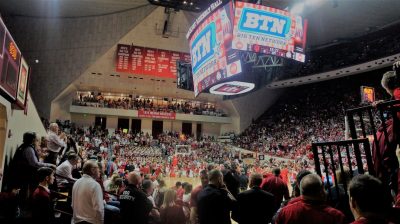
Regardless of the one-and-done rule, Indiana’s Simon Skjodt Assembly Hall will look like this on game nights.

College basketball is going to be fine, regardless of some excellent players opting to bounce straight to professional basketball.

No one has ever graduated from Fort Wayne Mad Ants University or Agua Caliente Clippers of Ontario College, and so few people outside Fort Wayne and Ontario have ever heard of these G League franchises.

Every year, Big 10 schools graduate roughly 100,000 students who remain tethered to their schools via many links, men’s basketball and football programs being the easiest to access.  Most remain engaged for the rest of their lives.  That’s a substantial fan generator to which the G League has no access.

Click here for your copy of “Oops – the Art of Learning from Mistakes and Adventures” by Kent Sterling

Coaches often say, “It’s about the name on the front of the jersey, not the name on the back!”  That’s especially true for college sports fans.  They love the school, and all marketing is school based.  I went to Indiana, so I buy IU hoodies, hats, and tickets.  That’s the way this works.  On Saturdays and Sundays, I watch a lot of pro and college basketball, but I never miss an IU game.

If Zion Williamson had slipped college in favor of a lucrative pro deal, do you know how many Duke fans would have been lost?  Not surprisingly, the answer is zero.  When Zion decided to leave after one year at Duke, guess how many Duke fans decided to abandon the Blue Devils.  Yep, zero.

College hoops is about geography, alums, and students.  The NBA is star driven.

Speaking of geography – the NBA’s Central Division has franchises in Detroit, Milwaukee, Chicago, Cleveland, and Indianapolis.  Those five cities have another thing in common – none is the home of a Power Five basketball program.  Well, Northwestern is in Evanston and that’s very close to Chicago, but c’mon, it’s Northwestern!

People in Bloomington, West Lafayette, Champaign, Madison, Columbus, Iowa City, Louisville, Lexington, Cincinnati, Knoxville, and Nashville have no NBA team.  College hoops and football have a near monopoly on the attention of sports fans in those cities and towns.

People who whine about college basketball dying on the vine because of the potential loss of players forget that until 2005, high school players were eligible for the NBA Draft without ever attending college for one minute.

College basketball thrived without that last group of nine who bounced from the preps in that year’s draft.  Martell Webster, C.J. Miles, Monta Ellis, Gerald Green, Andrew Bynum, Ricky Sanchez, Lou Williams, Andray Blatche, and Amir Johnson might have thrilled us for the 2005-2006 college season had they chosen to pledge a school, but only if they played for our team.

Players leaping past the college experience into the G League might actually make college basketball more enjoyable for fans because those players who are ready for the pro’s for tantalize fans with their skills for a single year before moving to the millions that await in the NBA.

Romeo Langford and several other one-and-dones from 2019 did exactly what freshman are supposed to do; they struggled.  Indiana did not move measurably toward excellence because of Langford’s contributions, but Indiana fans all over the world still poured into Assembly Hall and watched the Hoosiers on TV.  And then he left for the NBA because cash was what he was about in the first place.  And Hoosiers still came.

If college basketball at the Power Five Conference level shifts its focus from professional basketball prep to an activity enjoyed by bonafide student-athletes, fans will have the chance to become enamored of players for a longer period of time, and the quality of play will improve because as coaches other than Mike Krzyzewski and John Calipari will tell you, they want to “get old and stay old.”

College basketball and the NBA have co-existed quite nicely and will continue to, regardless of when players become eligible to earn a paycheck for their efforts.  Reports of the dimming of college basketball’s popularity were, are and will be greatly exaggerated.

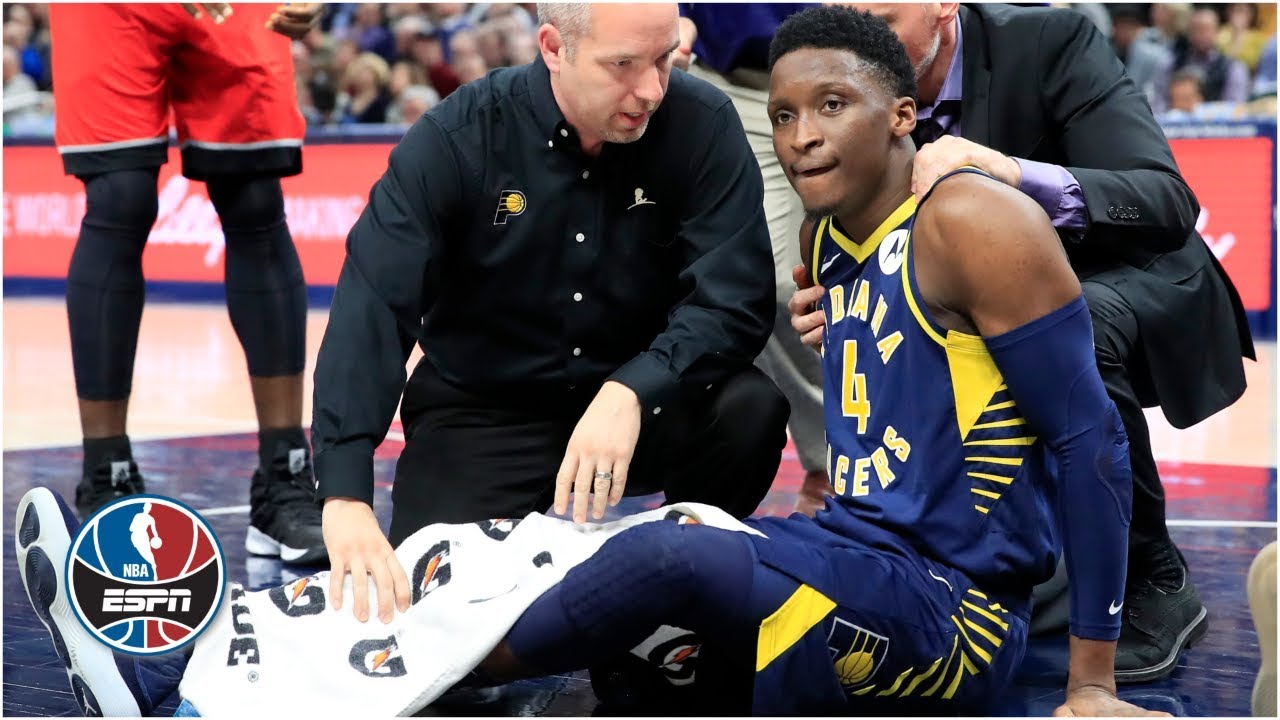
How weird are these times? If Pacers guard Victor Oladipo decides to pass up rest of season, I get it

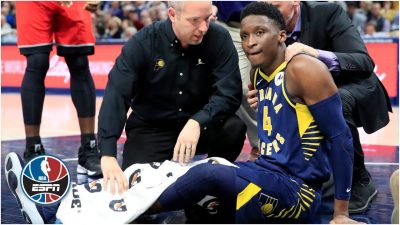
Victor Oladipo remembers this moment and his rehab well enough to not want to repeat it.

Victor Oladipo has a serious decision to make.

I’m a big fan of employees showing up for work and for teammates doing whatever is needed to answer the bell as a unit, but if Oladipo decides he is done with basketball until tipoff of the 2020-2021 season he gets a pass.

Thirteen games into a comeback after surgery to repair a torn quadriceps, Oladipo is pondering the wisdom of returning to play for eight regular season games in Orlando which will put a bow on this weird season interrupted.

Click here for your copy of “Oops – the Art of Learning from Mistakes and Adventures” by Kent Sterling

Sitting would cost Oladipo just over two-million dollars, plus whatever he might make in the playoffs.  About his return, he told ESPN’s Adrian Wojnarowski, “I know there’s risk going into it with the unique situation that I’m in – being off so long and trying to ramp it up that fast. I’ve just got to be smart, that’s all.”

Oladipo is not a fool, and only a fool would ignore the financial component of this choice.  Next year will be the last on his current contract paying him $21-million per year.  Taking a chance on the recurrence of an injury during a weird return in a Coronavirus mandated bubble less than one year from the most impactful financial moment of his life is enough to give pause for reflection.

Healthy, Oladipo could command a massive contract.  If he suffers a setback, the penalty could be more than $100-million.

Two-million bucks is a lot of money to you, me, Oladipo, and Pacers owner Herb Simon, but $100-million is that times 50.  I’m no math genius, but if someone offered me the choice between two and 100, I take the 100!

Everyone wants to be a great teammate, but no one on the Pacers would begrudge Oladipo a business decision given the circumstance.  Washington Wizards Davis Bertans has opted out with the full support of his employers, and Portland forward Trevor Ariza will also sit in order to take advantage of a month long visitation window with his 12-year-old son.

There will be others who choose to avoid the rest of the season, so Oladipo won’t be an outlier whatever he decides.

When basketball resumes July 30th, the Pacers will be tied with the Philadelphia 76ers for fifth in the Eastern Conference, two games ahead of fourth place Miami.  No fans will be in the stands, the games will be weird, and the playoffs will produce an strange champion.  The Pacers are not expected to contend, although who knows given the quirky circumstances.

Sensible people can question the wisdom of playing while a flareup of Coronavirus occurs in Florida and racial protests are in full flower during a moment in history when the tide may finally turn against racism.  Some players will embrace the moment to play, and others will balk in favor of safety, family, and rallies.  If Oladipo is among them, that’s cool by me.

The last three months have been odd, to say the least,  Decisions are being made based upon a totally unique set of factors and considerations.  That some might feel compelled to not view throwing a leather ball through an orange hoop as critically important right now might just reflect well upon them.

Life is different.  Basketball will be different.  That makes our decision to judge whether a player is right or wrong to play of sit much more difficult – so difficult that it’s probably wise for us to pass instead of shoot.