Author Archives: Kent Sterling

College basketball players transferring short-circuits the greatest opportunity for growth and wealth #iubb #BoilerUp

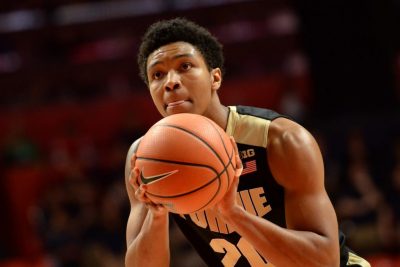
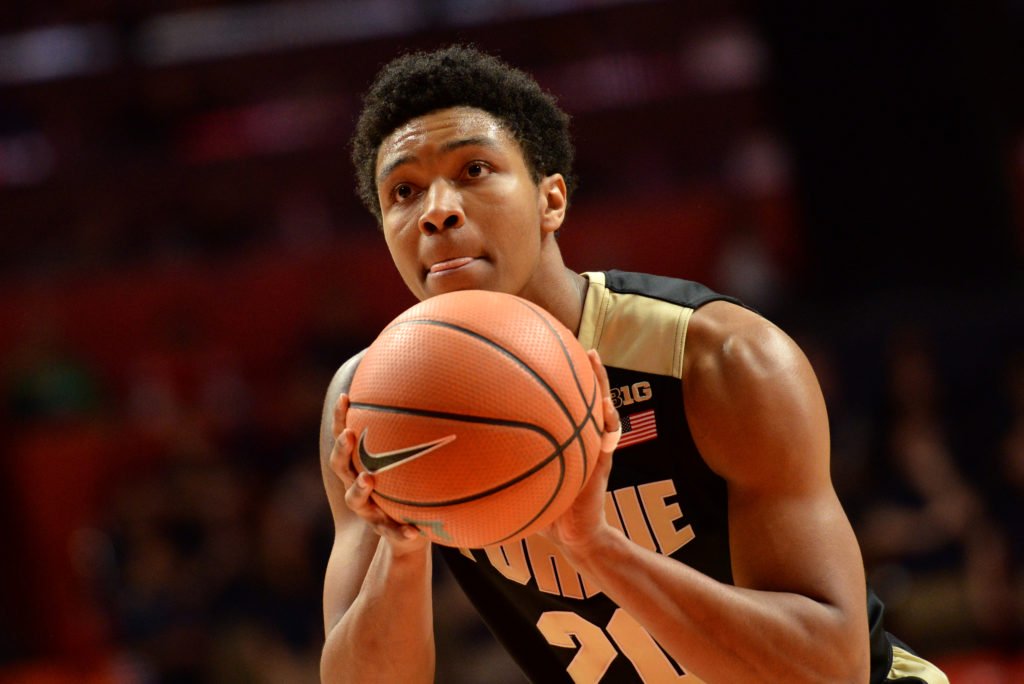
Roughly 700 college basketball players transfer each year. Purdue’s Nojel Eastern chose to leave for Michigan, and now he’s looking for another new program.

Be careful what you wish for, you just might get it.  That’s the word to the wise who consider transferring from their current college basketball program to a new address.

There are very few players recruited at the power five conference level who don’t believe they are just a few years away from earning tens of millions of dollars as NBA stars.  As that reality drifts further and further from reality, players and their families decide the problem isn’t personal – it’s  geographical.

And so they pack a bag, open their recruiting, and hear from coaches who promise the opportunity that may open the magic door to generational wealth.  All have stories of dominating guys who are already in the NBA, and they believe the right situation to show who they are is all that is needed.

Click here for your copy of “Oops – the Art of Learning from Mistakes and Adventures” by Kent Sterling

In the bargain, they lose the opportunity to build relationships, overcome adversity, and show that education is also a priority.

Many adults regret hustling through life as though it’s about a destination and not the journey, Athletes who move to a place that promises a chance for prosperity that had all but evaporated at his original school will add their names to that huge group.

Over the last three NBA Drafts, 153 college players have been selected.  Of those 153, 49 were one-and-done.  That leaves 104 draftees who played long enough to transfer – or roughly 35 per year – from the pool of 4,602 scholarships that are available every year in Division One college basketball.  An average of 696 players have transferred during the last three years.

That math suggests student-athletes who play into their second year of college ball have a very limited chance to play in the NBA, and those who transfer are unlikely in the extreme to find their way into the NBA.

It’s up to each player and his family to use the four years of eligibility allowed by the NCAA.  If it becomes clear that a player is being shuffled to the end of the bench, leaving for a school where minutes are available can make sense.  Other than those limited instances, a little tenacity goes a long way.

Adversity is a great teacher.  Even if the result is not what was desired, digging deep into one’s soul to fight and fight despite insurmountable odds builds a behavioral skill set that will pay dividends for a lifetime.  Understanding that life is filled with challenges that require resolve is critical to surviving, thriving, and then leading another generation into a lifetime of confident determination.

There is also the greatest benefit to attending college that may be forfeited through transferring – relationships.  Making lifelong friends, maybe meeting a spouse, and staying long enough to build a root system on a single campus are rewards not to be ignored even for people who think about college in purely pragmatic terms.

It’s not that transferring is inherently a bad idea or always short-sighted.  It’s can put a kid in a better position to enjoy the fruits of his labors – especially as a grad-transfer.  But serving as an escape hatch in response to adversity, transferring short-circuits the greatest lessons and benefits of being a college athlete.

Indiana coach Bob Knight used to say that college is like hitting a curveball.  Students who excelled in high school need to adjust to the increased work load and lack of oversight.  It takes discipline to succeed as a college student, and it takes guts to look in the mirror and decide that what is staring back needs to change.  For those who embrace the opportunity to stand in the batters box and gauge the break of the pitch, college can be life-changing for the good.  Others who decide they prefer the easy path of waiting for fastballs, cheat themselves of a huge opportunity for growth.

Transferring isn’t bad for everyone, but it’s a tool that is used far too often by college basketball players who hope to play in the NBA.
 

Time for fans to refuse to be ignored – and boycott Major League Baseball

It’s time to take back our game.  Baseball has dicked around long enough with our hearts.

When baseball resumes, keep your money in your pockets.  Hold baseball owners and players accountable for their indifference to you by refusing to line their pockets with your cash.

For the history of our national pastime, owners have assumed that fans would continue to show up, and show up, and show up, no matter the inane crap they pulled during negotiations with players.  There have been strikes, lockouts, cheating, intentionally lengthened games, and other tactics to maximize profits at the expense of players and fans.

Click here for your copy of “Oops – the Art of Learning from Mistakes and Adventures” by Kent Sterling

The difference between the fans and players is that we have no collective seat at the table – no standing during talks.  Our feelings are of no interest.  We are allowed to fund teams and players contracts by buying tickets, beer, hotdogs, jersey, and hats, but our beliefs about the game are beyond the interests of the principles.

During the COVID-19 delay, the owners are kicking the can down the road to save money.  The players want to make as much money as they can by playing ASAP.  Fans wait patiently to be allowed to watch games that may never happen.

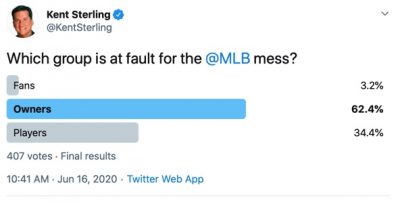
I put out the above twitter poll yesterday that asked who we blame for the unpleasantness that has led us the potential for the first year without professional baseball since 1868.  I added “fans” as a response for my own amusement, but when 3.2% responded that fans are the cause of this impasse, I began to think.

You know what?  Those 3.2% got it exactly right.

In a scene during The Right Stuff, astronaut Gus Grissom says about the U.S space program, “No bucks – no Buck Rogers!”  That works for baseball too.  Without fans’ eyeballs and dollars, baseball would only be played in parks by children.  As long as fans sit idly by as owners and players squabble about our money, this idiocy will continue.

It might just be time to do something else with out time and other sports to support.  Granted, owners in the NBA and NFL are also billionaires, and players are also millionaires, but they seem to have a much better grasp on how they might trick us into believing we are important.  Baseball is unique in its overt obliviousness to fans’ presence, let alone concern.

As long as we spend our cash on their product without critical thought, baseball will refuse to acknowledge fans as anything but necessary nuisances.

Flipping the script will require one of two things –

  • an organized revolt, or
  • individuals simultaneously so off put they refuse to spend

The organized revolt will never happen.  As pissed as I am at baseball, I have much better things to do with my time than march in protest outside Wrigley Field or Great American Ballpark.  The bizarre wing nuts who would show up would bring more harm to our cause through their presence than to fortify it.  Let’s forget about protests.

So it’s up to a significant number of individuals to hit the tipping point together, and refuse to buy tickets and swag.  I love an afternoon at Wrigley Field as much as anyone and more than most, but until the spiritual foundation of the game reaches the same level of import to owners and players as the financial, I’m out.

There are front offices – like the Reds and Cardinals – who value fans at a much higher level than the Cubs, but a stand is a stand.  And I haven’t heard Reds owner Bob Castellini or Cards owner Bill DeWitt Jr. apologize, so to hell with them too.

As a guy who spent more than $20,000 on Cubs season tickets, I know what it’s like to write that big ass check and then refuse after being treated with indifference.  It’s liberating and fun.  I highly encourage it.

It’s time to reassert our position at the table as the source of revenue to the owners and players who refuse to consider us seriously as partners.

If Major League Baseball is played in 2020, it will be in mostly empty stadiums as we continue to try to stop the spread of COVID-19.  Maybe next year they will be mostly empty because we decide to spend our money on something that makes us feel better than going to a ballgame.

Players strike.  Owners lockout.  The time has come for us to boycott.

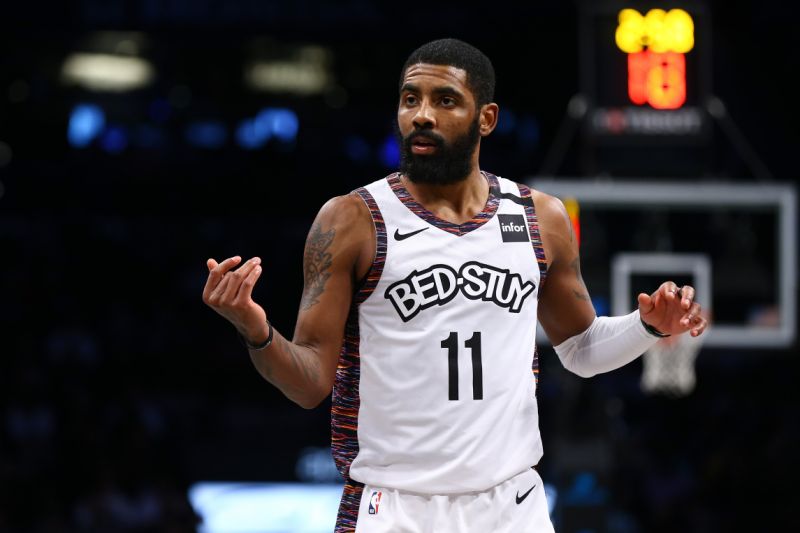
If true, Kyrie Irving’s desire to form a new basketball league is well-intentioned lunacy

If reports are true that Kyrie Irving is thinking seriously about forming a league to compete with the NBA, he needs to rethink his plan.

If Kyrie Irving wanted more minority owners and GMs in the NBA, he should have signed as a free agent last summer with a team that has one.

Instead, Irving signed with Brooklyn, whose GM is New Zealander Sean Marks and owner is Taiwanese/Canadian Joe Tsai.  Irving’s contract runs through 2023, so he’ll have another chance to affect change then.

And now there are reports that he is telling teammates that they should form their own league.

Look, I get it.  Black players are the reason the NBA is successful, and white people are the principle owners of 29 out of 30 league franchises.  Reflexively, that makes a for us/by us version of the NBA sound righteous.

Click here for your copy of “Oops – the Art of Learning from Mistakes and Adventures” by Kent Sterling

A quick glance at the pragmatics tells a different story.

Irving is 28-years-old and by the time he turns 31, he will have been paid $230 million to play basketball.  His endorsements are paying him at least another $20 million per year, and that number is going to do nothing but go up.

Most other players may not earn like Irving, but the average salary of an NBA player is a very respectable $7.7 million.  Luring other NBA level talent to jump over to a start-up operation where the compensation would pale in comparison is a non-starter.

The NBA coupled with social media is one of the most dynamic global marketing platforms in history, and that equates to power and more cash as an influencer for NBA players – especially those with Irving’s profile.

That’s a lot of cash and cache to walk away from in favor of a financial and social experiment almost certain to fail.

The list of rival leagues that ultimately failed to compete with or were absorbed into historically well-established operations is long – the Federal League (baseball), AFL (football), ABA (Basketball), WFL (football), USFL (football), XFL (football), AAF (football), and on and on.

Putting together a league is exceptionally complex with many areas of investment and attention.  The odds of being a short-term success are nil, and long-term sustainability is unprecedented.  Even the cost of a six-team league would be massive.  Challenging a global market leader like the NBA head-to-head would open a huge financial sink hole regardless of how deep the new league’s pockets are.

Couple the catastrophic financial risk of the new league with the fact that the NBA is a business that appears to operate in a spirit of relative fairness and partnership with players, and the notion is outrageous.  Owners and commissioner Adam Silver appear to understand and embrace players’ ability to discuss and encourage social change.

The only way a new league could possibly have a chance at viability would be for LeBron James to participate.  James drives ratings and attendance.  He moves merchandise in bulk.  And he is also way too smart to participate in this giant boondoggle.

There are ways to accomplish what NBA players covet, but they already enjoy the perfect platform and the means to capitalize on it.  A new league is unneeded if Irving uses correctly his position in this one.


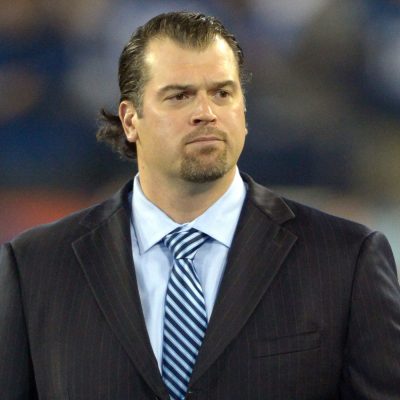
Upon further review, former Colts GM Ryan Grigson was not nearly the tool some believe

Upon further review, Ryan Grigson is not the worst general manager in the history of the NFL. Far from it.

Like all sports loving Hoosiers, I spend my time in the car between noon and three listening to Dan Dakich on 1070 the Fan, and he has long been a staunch defender of Ryan Grigson’s record as the general manager of the Indianapolis Colts.

Dan has carved out an island of his very own where it comes to Grigson’s legacy, so it’s time to try to figure out exactly how good or bad Grigson was – or at least approximate the value of his moves during his five years running the show on West 56th Street.

Before you scan the numbers, I decided to use pro-football-reference’s Approximate Value as the primary statistic to compare players, drafts, and free agent signings because it is used to grade all positions and the number is easy to find on a website I use often.

Click here for your copy of “Oops – the Art of Learning from Mistakes and Adventures” by Kent Sterling

Grigson conducted five drafts for the Colts from 2012 to 2016.  Approximate Value points for each Colts draftee is in parentheses after their name.  The total for each draft class is shown after the year.  Let’s look at them as collections of individuals (players still with the Colts are in bold):

2012 – 190 AV

  • #1 Andrew Luck (71)
  • #34 Coby Fleener (25)
  • #64 Dwayne Allen (12)
  • #92 T.Y. Hilton (66)
  • #136 Josh Chapman (8)
  • #170 Vick Ballard (5)
  • #206 LaVon Brazill (3)
  • #208 Justin Anderson (0)
  • #214 Tim Fugger (0)
  • #253 Chandler Harnish (0)

2013 – 31 AV

  • #24 Bjoern Werner (10)
  • #86 Hugh Thornton (15)
  • #121Khaled Holmes (4)
  • #139 Montori Hughes (2)
  • #192 John Boyett (0)
  • #230 Kerwynn Williams (6)
  • #254 Justice Cunningham (0)

2014 – 46 AV

  • #59 Jack Mewhort (21)
  • #90 Donte Moncrief (18)
  • #166 Jonathan Newsome (4)
  • #203 Andrew Jackson (1)
  • #232 Ulrick John (2)

2015 – 73 AV

  • #29 Phillip Dorsett (14)
  • #65 D’Joun Smith (0)
  • #93 Henry Anderson (19)
  • #109 Clayton Geathers (13)
  • #151 David Parry (13)
  • #205 Josh Robinson (0)
  • #207 Amarlo Herrera (0)
  • #255 Denzelle Good (14)

2016 – 98 AV

  • #18 Ryan Kelly (26)
  • #57 T.J. Green (5)
  • #82 Le’Raven Clark (8)
  • #116 Hassan Ridgeway (8)
  • #125 Antonio Morrison (13)
  • #155 Joe Haeg (17)
  • #239 Trevor Bates (1)
  • #248 Austin Blythe (19)

I’ve attached the approximate value totals for each draft following the year, but I don’t believe that to be of great importance.  I don’t care how many single digit guys you draft as long as you hit some big numbers.  The line of demarkation for me is 25.  If a player reaches an AV of 25, he was a serious contributor.

For context, former Colts GM Bill Polian drafted 28 players who hit the 25 threshold during his 14 drafts. My basic math skills tells me he average two per draft.  Grigson drafted a total of four of those difference makers – three being among his first four selections in the 2012 Draft.

As for the other 31 teams, only the San Francisco 49ers drafted as few as four players with AVs of 25 or more during those five seasons.  Eight teams drafted 10 or more players that reached that level of value.  Some of the successful teams by this metric won a lot of games – Chiefs, Ravens, Packers and Rams.  Some of the others, not so much.  Those are the Bucs, Lions, Bears, and Cowboys.

Let’s talk about free agents (this is an incomplete list hitting some highlights and lowlights):

The Good – Frank Gore was a breath of fresh air in the locker room and on the field.  Great guy, and great running back is still churning.

Safety Mike Adams was signed late during the 2014 offseason as older safeties often are.  He was cheap, reliable, and a very good guy.

D’Qwell Jackson and Jerrell Freeman were both good finds for Grigson at linebacker.  Jackson was a leader in the locker room who lost a step late in his run here.  Freeman came from the CFL to play well for the Colts before signing with the Bears and flaming out.

Slot corner Darius Butler was claimed off the scrap heap after being waived after camp by the Panthers and made Indy his home fore six seasons.

Grigson signed tight end Jack Doyle after he was waived by the Titans immediately prior to the 2013 season.

The Bad – Wide receiver Andre Johnson was as done as everyone felt he might be when signed prior to the 2015 season.  At the age of 34, Johnson pulled down only 41 of 77 targets for just over 500 years.

DT Arthur Jones was signed to a five-years/$33M deal for very little time on the field and even less production.

Donald Thomas was signed to be a road grating left guard.  Played two games after a quad tear that recurred the following training camp.

Gosder Cherilus became another offensive lineman who made it through only two seasons of the five he signed for.

Safety LaRon Landry crapped out after signing a four-years/$24M deal.

It bears mention that the free agent deals for Jones, Landry, Chjerilus and others did not guarantee the entire amount of what they signed for.  Some money was guaranteed – and some not.

There were a few trades.  Most notable were the deals that sent Jerry Hughes to the Bills for Kelvin Sheppard, who played one OK season for the Colts, and acquiring cornerback Vontae Davis in exchange for a second round pick.

Given that Davis compiled 35 approximate value points in his six seasons with the Colts, Grigson should earn an extra check for using a draft pick to gain a player with a 25+ AV score.

Let’s talk about the big trade many cite as a reason the Colts were run by some kind of idiot:  Grigson traded the Colts first round pick (26th) in 2014 for running back Trent Richardson.  At the time, the trade looked reasonable because the 2014 draft looked to be mediocre to poor after the shelf midway through the first round.  Looking back, those experts were right.  While Richardson was a hungry bust, it was likely anyone taken at 26 would have been an equal or bigger bust.  None of the eight players taken 26-33 has made an impact for the team that drafted them.

Here are some facts about the Colts from 2012-2016: those five teams totaled 49 wins and 31 losses.  There are a lot of GMs working in the NFL today that envy a record 18 games over .500.  Three of his teams went to the playoffs, and he was an NFL Executive of the Year once.  He never assembled a team that posted a losing record.

It was a huge positive for Grigson that his first pick was a quarterback like Andrew Luck, rather than a stiff like Sam Bradford, who was taken first overall by the Rams two years earlier.  Luck covered a lot of roster acne, but are we supposed to debit Grigson’s account because of his timing?

I started writing this post believing that in the end I would say Dan overstates Grigson’s case because he has empathy for the guy.  Grigson had the balls to run a team, did his best, and never lost.  People who have run an operation tend to have great empathy for those like them – and rightly so.  Dan ran Bowling Green Basketball for 10 years.  Running a business, department, or team is lonely, and kicking a guy once he’s out the door is classless.  People who have been in that position are loathe to do that.

Grigson was not polished with the media, and his last four drafts were not anything to write home about.  But he was not nearly the train wreck as a GM that some portray him to be.  In some ways, Dan is right.  In other ways, Dan is empathetic.

One specific way Dan is right is that kicking Grigson around like some boob who had no business in the Colts Complex is not supported by the facts.  After his final four drafts, the timing appeared good for a change, but Grigson’s five seasons left a pretty damn solid legacy of winning football.


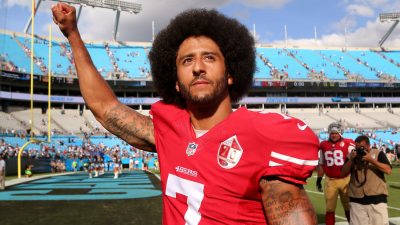
Colin Kaepernick is a top activist, but facts and stats show he is a mediocre quarterback

Colin Kaepernick would almost certainly have to accept a backup role if he wants to return to the NFL.

Former 49ers quarterback Colin Kaepernick has been out of work since 2016 in large part due to his taking a knee during the National Anthem prior to games.  But it’s not the only reason.

NFL Commissioner Roger Goodell said last night that he supports Kaepernick’s return to the NFL.  As it is likely a majority of NFL players will follow Kaepernick’s example of taking a knee during the Anthem to protest police violence against unarmed black men, Kaepernick’s stigma as an activist will no longer be a barrier against his employment.  General managers will decide his status based upon quarterback ability.

Click here for your copy of “Oops – the Art of Learning from Mistakes and Adventures” by Kent Sterling

Whether he can still play after three seasons of dormancy will be determined in workouts.  Whether he could play when he was still with the 49ers is on tape and in the numbers.

Let’s look at the numbers.

  • As a starter, Kaepernick built a 28-30 record, including a 1-10 record during 2016 – his final season.
  • His final two seasons, Kaepernick’s QBRs were 43.4 – ranking 30th; and 49.5 – ranking 22nd among QBs. (50 is supposed to be calculated as an average rating).
  • In 58 starts, Kaepernick threw for an average of of 1.24 touchdowns per game.  As a comparison over a similar period in the same era, Andrew Luck averaged two TDs per game.  In 2015 and 2016, Kaepernick ranked 30th and 13th in touchdown percentage.
  • Even in 2013 when the 49ers nearly won a Super Bowl, Kaepernick was good not great.  The offense was run first because the defense, which ranked in the top 10 in almost every statistical category, was dominant.  The running game ranked third in attempts and yards and fourth in TDs.
  • Kaepernick ranked eighth in QBR and 10th in passer rating in 2013.
  • At his best, which came in 2013, Kaepernick was a good starting quarterback who fit coach Jim Harbaugh’s system.  And to be fair during his final season, he was much better than the 1-10 record the 49ers mounted with him as a starter.  He got too much credit in 2013 and too much blame for 2016.

Roughly half of the NFL teams would benefit from Kaepernick as a back-up, but there are precious few if any where he fits as a starter – regardless of whatever baggage he might bring to a franchise – especially now that the baggage will be diffused by hundreds of players across many sports.

Kaepernick is now clearly on the right side of history for protesting against police brutality.  We may be entering an era where the typical response to the National Anthem changes permanently from standing at attention to taking a knee to honor our flag, our country, and the fight for justice among people who have been preyed upon for 400 years – all because of Kaepernick.

Whether that makes Kaepernick slam dunk employable at the level of his choosing is a different issue.  Will he be satisfied with a prove-it deal to carry a clipboard and hope for an opportunity?  His answer to that question will determine whether 2020 will be yet another year when Kaepernick sits or suits up.


Love the Cubs but loathe the Ricketts as owners – The Cubby Bear is a perfect compromise

The answer to baseball’s current state of idiocy might just be across the street from Wrigley Field’s gates.

Billionaires care most about money.  That’s why they are billionaires.  Major League Baseball franchise owners are billionaires, so why does it surprise anyone that they are united it their refusal to pony up $20 million each to get players back on the field?

The discord between owners and the players union is easy to explain.  Each side wants more money, and neither is willing to sit across from each other and give ground.  The logic is shortsighted, but very simple.

Owners continue to propose the same percentage of revenue they expect to collect and vary the number of games.  The players, not being idiots, understand the owners’ game and want salaries prorated at a level agreed to during negotiations that took place in March.  Owners say they can’t afford it, and players ask for proof of poverty.  Owners present a redacted financial statement, and the players don’t buy it.

Click here for your copy of “Oops – the Art of Learning from Mistakes and Adventures” by Kent Sterling

Both sides have enough money to wait out the other through this unprecedented summer, and the owners have commissioner Rob Manfred in their very comfortable pockets.  He has the power to mandate players go back to work for a 48-game season at the rate the players agreed to.  That’s the hammer that owners will rely on to start the season and get to the lucrative expanded playoffs.

The fallout will be two-fold – already disenfranchised fans are being beaten over the head with a bat of indifference.  The bruises from this pummeling will be slow to heel.  And, the entrenched distrust between owners and the players union will only deepen as we are just over one year from the expiration of the current collective bargaining agreement.

What are the odds that baseball will get out of its own way to ratify a new CBA without a work stoppage if they can’t come to an agreement during a pandemic to resume play at a time when the country badly needs a distraction?

The owners could have embraced this moment, viewed the extra $20 million per team as an investment in the future health of the game, but greed drowns out every other impulse in billionaires.  If owners were circumspect and concerned about the more global aspect of the game, they would be thousandaires like most of their fans.

Fans don’t have a seat at the negotiating table, but they wield a substantial weapon that might eventually cost owners and players a hell of a lot more than $20 million per team.  We have pens that write checks to cover season ticket costs, and if those pens are unused, baseball may have a reckoning that reels franchise values and player contracts into closer alignment with the financial realities fans deal with.

Sure, going to Wrigley Field is fun.  I love the memories I’ve built over a lifetime as a Cubs fan, but until I believe Tom Ricketts is anything but an greedy opportunist, I’m out.  Every time I’ve been to Wrigley during the Ricketts era of ownership, the feeling of Tom’s hand in my pocket was unshakeable.  Around every corner was a contrivance designed to separate my money from my wallet.

It’s time for both owners and players to understand who really has the power in baseball, and to suffer a consequence for their indifference to our plight during these difficult times.  I’m opting out of all Cubs related purchases.

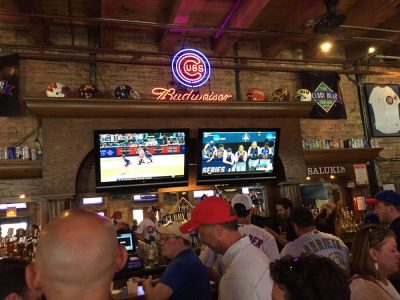
Now, I love Chicago and the Cubs, but maybe I can find a cheap alternative to Wrigley Field.  Maybe can head to the corner of Addison and Sheffield without dropping $75 on a ticket and $11.50 for a beer.  On the corner opposite the Wrigley Field marquee is a spacious bar called “The Cubby Bear.”  Games are on TV, concessions are much less expensive, and the fans are just as friendly as they are inside the park.  And neither Ricketts nor the players get a dime of what I spend.

For owners and players, that’s how you negotiate, and if enough fans do likewise, you’ll need to learn that.

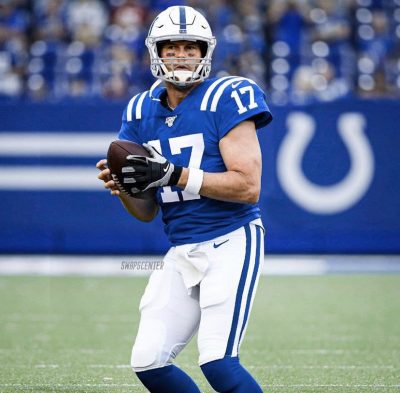
Colts QB Philip Rivers can’t turn back the clock, but has to find a way to slow it down

Philip Rivers needs to play as well as he ever has for 15 more Sundays and one Thursday, but that’s asking a lot.

Colts quarterback Philip Rivers needs to find a way to stop the clock, but God doesn’t allow us three timeouts and a two-minute warning.

He’ll turn 39 in December, and last year played like it.

Tom Brady and Drew Brees are outliers in their ability to perform well past the age of decline, and Rivers will try to join them in 2020.

Here’s what Rivers said this week about those who watched him last season as he led the Chargers to a 5-11 record, “Shoot, let’s turn on the tape and watch all the good things.’ Yes, there were some bad plays last year. There were certainly some throws I want back and certainly some very costly mistakes.

Click here for your copy of “Oops – the Art of Learning from Mistakes and Adventures” by Kent Sterling

“I own up to all of those, but I just think there was so much good, and I still – shoot, I had some throws last year that were probably as good as I’ve had in my whole career,” Rivers proclaimed.

What Rivers doesn’t realize is that this is exactly the way age robs athletes of their magic.  It’s not a steady decline over time.  The erosion of ability happens in fits and spurts before it finally abandons ship forever.

One day, suddenly your body does not do what your brain asks it, but then everything is back to normal each day for the next two weeks.  Then there is another day of disconnection between mind and body.  A year later, those weird and unpleasant days of physical awkwardness happen once a week.  And then twice a week.  And then the weird days become normal and the magical days occasional.

Finally, we sit at the bar with friends telling stories about what we used to be able to do.

For Rivers to look at his great throws as a standard he will be able to reach consistently in 2020 without experiencing any of the difficulties that led to 20 interceptions in 2019 is going to be hard to manage.

A lot has been made of the Chargers poor offensive line play as an explanation for his those picks last year, but 12 of the 20 came from a clean pocket.

I’m not saying it’s impossible for Rivers to find his mojo with this change of environment behind a better o-line, just that it does not happen very often.

Aging is miserable.  Saying goodbye to athleticism we took for granted in our youth is a bitter and irrevocable experience.  It happens to all of us. Time is undefeated.  Peyton Manning and Johnny Unitas couldn’t beat it.  Michael Jordan and Ted Williams lost too.  Seemingly ageless warriors like George Blanda and Greg Maddux eventually faded.

Rivers hopes he can forestall that ordeal for another year or two.  He wants more than anything for one final season of slinging a football on time and on target.  Maybe he gets that, or maybe the sad and inevitable downturn continues and his days of mastery dwindle.

One argument in Rivers favor is that he never won games because he could run or throw with uncommon zip.  He has always won on guile and competitive fire.  Fortunately, guile and fire can burn well beyond athleticism.  Hell, Larry Bird still dreams he can win championships.  Then he wakes up and feels the aches in his 63-year-old carcass.

The Colts wagered $25-million Rivers has one more 16-week run of dexterity, and fans hope that the Rivers of 2020 can compete as the quarterback he was in 2007 and 2008 when he eliminated their team from the playoffs.

But 2007 and 2008 were a long time ago.

Whether the Colts climb back to the top of the AFC South is almost entirely dependent upon Rivers’ ability to wring one more year of high quality play out of his flawed body.  He doesn’t need to turn back the clock – it just needs to move forward very slowly.

NASCAR truck driver Ray Ciccarelli sets a new standard for ignorance on social media

I would rather look at Richard Petty Racing’s new paint scheme rather than Ray Ciccarelli’s face, so here it is.

Sometimes people are so wrong, it gets funny.  Then there are times when the level of wrong goes beyond funny to reach a level of horrific sadness.  And then there is NASCAR trucks driver Ray Ciccarelli.

NASCAR has used the recent racial protests and tumult to finally ban the confederate flag, and Ciccarelli does not like it.

“Well, it’s been a fun ride and dream come true but if this is the direction NASCAR is headed, we will not participate after 2020 season is over,” Ciccarelli posted on Facebook,  “I don’t believe in kneeling during Anthem nor taken ppl right to fly what ever flag they love.  I could care less about the Confederate Flag, but there are ppl that do and it doesn’t make them a racist all you are doing is (expletive) one group to cater to another and i ain’t spend the money we are to participate in any political BS!!  So everything is for SALE!!”

Oof!  There are people who refuse to listen to others and migrate from a corrupt philosophy toward enlightenment, and then there is Ciccarelli.  Black lives clearly do not matter much to Ciccarelli.

Click here for your copy of “Oops – the Art of Learning from Mistakes and Adventures” by Kent Sterling

There are those who refuse to move from the wrong side of history, and then there there is Ciccarelli, who has dug a hole on the wrong side of history and buried himself in it.

What Ciccarelli doesn’t realize is he is actually acting as an agent for the Black Lives Matter movement by serving as an anachronistic irritant – an example of the idiocy that has perpetuated racism in America for nearly 400 years.  Even racists look at Ciccarelli and say, “Wow.  That’s going too far.”

But don’t hate the man because of his message of ignorance.  Let’s continue to try to help racists like Ciccarelli see the wisdom of listening and adjusting rather than pummel them into hiding.  In plain sight, they can be helped.  If they retreat into the shadows to commiserate with the likeminded, they will be much harder to find.

NASCAR will not miss Ciccarelli as a driver.  He’s run 18  truck races over the past three years with one top 10 finish.  As a man, this is addition by subtraction.

There will be kneeling by NFL teams and Colts; if you need to prepare to empathize, you have two months

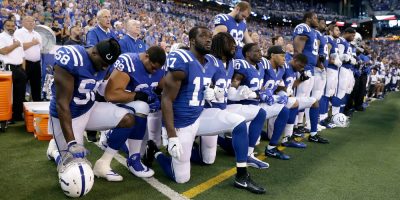
Next time when we see this, try to think of why Colts are kneeling rather than fixate on what it means to you.

Kneeling during the National Anthem prior to sporting events is going to happen, and it will not be done only by widely scattered outliers.

Entire teams of blacks and whites will take a knee in solidarity to protest all forms of racism.  They will be joined by coaches, staff, and even fans.  It will happen across many if not all sports.

If you need a couple of months to prepare for that, the NBA will not start play until July 31.  Take a deep breath, brace yourself, and ask why players will take a knee.  As you listen to those who offer explanations, maybe you will grow to understand.  Through that empathy, your fury might abate.

Click here for your copy of “Oops – the Art of Learning from Mistakes and Adventures” by Kent Sterling

For some, outrage will counter the silent and peaceful protest.  People, mostly white, will respond like Archie Bunker did when threatened by his son-in-law on episodes of All in the Family by shouting, “America, Love it or leave it!”

This time, instead of Meathead raising his voice as the representative of a defensive minority, the majority will provide a calm explanation.  Instead of reflexively describing America and all things American as “great,” protesters will encourage listening and empathy.  They will embolden others to lift those in need rather than use their backs as a ladder to wealth and satisfaction.

Because we enjoy separating ourselves into good and evil, we will have yet another dispute the media will capitalize on to drive us apart.  North vs. South, Blue vs. Red, Black vs. White, Coke vs. Diet Coke, Vegan vs. Carnivorous, Blue Collar vs. White Collar, Northside vs. Southside, Mask vs. No Mask, Hoosiers vs. Boilermakers, and dozens of other conflicts define us every bit as much as those issues which unite us.

Both sides will be demonized by the others.  Kneelers don’t respect the flag and military.  Those who don’t kneel are racists or at the very least poor listeners with cold hearts.  I’m getting exhausted imagining it.

My hope is that each of us does nothing more than listen to each other with an open heart and open mind, and then do whatever he or she believes is right.  That seems like a reasonable place to start.

Racism is not going to end because teams kneel or don’t.  It’s going to come down to our ability to trust and respect one another enough to empathize rather than judge.  The only road to a post-racist society is through tolerance and trust.  If we can’t find respect for one another, all other conversations and demonstrations are moot.

In 2017, when eight Indianapolis Colts players took a knee during the National Anthem, I asked safety Malik Hooker why he knelt.  Hooker said he would prefer to keep that to himself.  I was disappointed in his response for a variety of reasons; the most important of which was that he didn’t trust enough to share what might have been a meaningful thought about race.

I hope the Hookers of 2020 trust enough to know that people aren’t playing gotcha.

And I hope that those who stand for the Anthem are afforded the same opportunity to explain their decision without instant anger, blame, and judgment.  We need to allow the latitude for people to exercise their right to free speech regardless of our opinion of their stance.

How sweet would it be for people to see a demonstration of a belief that differs from theirs, and respond with a thumbs up or some other affirmation.  Then we’ll know we are headed in the right direction.

This conflict, as with all the others, originated with a failure to communicate honestly and listen with empathy.  It will end with the opposite behaviors.

Maybe this set of impending protests will have a different end because we have almost two months to prepare emotionally for them.

While NBA, NFL, and MLS prepare to ball, Major League Baseball continues to bicker

When these commissioners get together for a holiday dinner, the guy on the left is seated at the kid’s table.

Baseball is wearing me out through its apparent indifference to fans, but I likely won’t feel a lot better about it when they finally start playing.

The MLB Players Association made a counter offer yesterday to the owners counter offer, and so it will go until finally commissioner Rob Manfred orders players back for a 48 game season.

The stumbling block in these inane negotiations is that players want to be paid a prorated portion of the cash their contracts call for over a 162-game season, regardless of how many games are played.  The owners want to pay players 50% of the revenue they expect to generate through media deals because fans will not be allowed in stadiums.  The more games that are played, the more money owners claim they will lose.  The fewer games played, the less cash players will get.

Millionaires arguing with billionaires.  Fun.

Click here for your copy of “Oops – the Art of Learning from Mistakes and Adventures” by Kent Sterling

The issue that gnaws at fans is the lack of urgency expressed by each side’s intractability.  Each step taken by the players and owners has been entirely predictable.  The offers are disingenuous, and responses have been formulaic.

The question most germane to my interest in baseball is whether the players play because they love to compete at the game or because they love earning millions of dollars.  Is it cash or yearning to win.  I have no interest in watching grown men play a kid’s game because it is insanely lucrative.  If baseball players love the game and happen to get paid sick amounts of cash for the privilege, I’m good with that.

This round of negotiations has painted players as a group who don’t give a damn about the game or fans, and owners whose only interest is money.

Silly haggling wouldn’t be so galling if other leagues appeared to be anywhere near as greedy and myopic as Major League Baseball.  Major League Soccer announced this morning it will return to play on July 8 with an all-skate tournament in Orlando.  The NBA will be back with the continuation of its regular season on July 31.  The NFL is unlikely to miss a beat because of the serendipitous timing of the Coronavirus outbreak.

Baseball could have embraced a July where it rose above greed and contentiousness to dominate news cycles for a month in the way it used to for an entire summer, but it chooses to bicker instead of ball.

America’s Pastime stopped being America’s Pastime a long time ago as avarice, doping, and the slowing of the pace of play caused fans to view the game as a quaint distraction rather than must see TV.  As commissioners Adam Silver and Roger Goodell work to expand the popularity of their respective leagues, Rob Manfred seems content to preside over baseball’s slow death.

Everyone paying attention knows the right answer.  Get back on the field as soon as possible.  If owners and players take a bit of a financial haircut in order to grow baseball’s popularity in this unprecedented spring and summer, the game and its revenue with grow for future years.  That is called not wasting a crisis.  Baseball, though, seems intent on not only wasting a crisis but using it to harm itself.

These moments require leadership, and as usual, the MLB’s commissioner’s desk is being manned by a leader lacking ability to solve real problems and lead his game to another generation of great fan engagement.

Baseball has become a slower game over the years, and now MLB has established itself as slowest-witted of the major leagues.

Manfred has surely become used to appearing doltish compared to Silver and Goodell, but who would have thought MLS commissioner Don Garber would outshine him by such a magnitude during this crisis?