Author Archives: Kent Sterling

Do white media managers do enough for blacks who earn their shot? I’m not sure I did

Michael Grady has become an important sports media voice in America. Should it have happened more quickly?

This is the time of self-evaluation for white managers.

Looking at our own thought processes toward inclusiveness as passive or racist is not fun, but this is the perfect time to do it.

If not today, when?

As a radio program director and executive producer, I have hired dozens of people, and always believed I did it fairly.  Seeing beyond race was always important to me, because radio staffs tend to be built to mirror the complexion of listeners.  If you believe the NFL needs the more robust Rooney Rule it enacted this offseason, American talk radio could really use some enlightenment.

Over the past couple of weeks, I’ve tried to assess whether I was as aggressive as I should have been as I tried to include minorities on my staffs.  One of my proudest hires regardless of race is Michael Grady.  Michael started his media journey as a weekend board-operator I hired for WIBC while he was a student at Vincennes University.

Michael showed himself an adept learner and very reliable employee as he ran the board, and he quickly became the producer of Network Indiana Sportstalk.  In that role, Michael ran the board and did sports updates on-air every 30 minutes.  He never called in sick or took time off, which I appreciated because finding a person versatile enough to handle all the responsibilities of that job while being available from 8p-12a on Friday and Saturday nights was difficult.

Click here for your copy of “Oops – the Art of Learning from Mistakes and Adventures” by Kent Sterling

Bob Lovell was (and is) the host of the show, and he poked his head in my office repeatedly to say, “You know, Michael is the most talented guy in this building.”  At the time, I thought Bob was stumping for his guy.  We had a lot of talented people at Emmis, and Michael was a 24-year-old still finding his way – or so I thought.

After a couple of years, Michael was certainly ready for a full-time job, and the position of WIBC’s morning show producer became available.  As the assistant program director, it was my responsibility to make the hire, but I decided to allow the morning show hosts and program director to vote on the two finalists.  Michael was one of the finalists, and I favored him.  The other four voted for the other candidate.  He got the job.

I learned during that search that in order to manage a direct report, a manager needs to make the hire.  Turning it into a team project is weak and counter productive.  It’s not that the other candidate was an ill fit or projected to be bad at the job – he wasn’t.  But for some reason my effort to champion Michael’s case fell on deaf ears.

Was my advocacy as strong as it should have been?  I don’t know.  The other candidate was white.  He got the job.  Should I have dismissed the vote and hired Michael regardless?  The vote yielded a decision I disagreed with, so should I have stood on the conference table and shouted Michael’s qualifications until the others went along with me?  I don’t know that either.

A year later, we decided it was time to slide WIBC’s content from 1070 AM to 93,1 FM, and that prompted the decision to flip the 1070 AM signal to sportstalk.  Tom Severino, our general manager, told me I would become the program director.  He asked what my first decision would be.  I said, “Hire Michael Grady as my executive producer.”

We needed hosts, but it never occurred to me to consider Michael for that position.  He was verbally adept, smart, and diligent, but I didn’t believe he was ready to host because it’s important to have some life experience to share along with an understanding of sports.  Instead of finding out what level of life experience Michael had to share, I thought his career would be better served if deployed in management.  Was that the right thing to do?

I also loved Michael’s voice and delivery, so I folded imaging 1070 the Fan into his responsibilities.  When I needed a play-by-play voice for the Wooden Tradition game we produced and broadcast, I asked Michael if he wanted to do it.  He said he did.

The honest truth is that I asked Michael to do the games because he had excelled at every task I assigned, and I wanted to find a challenge he might not be ready for.  I sat next to Michael during the games just in case he needed a little help or guidance.  Again, he wasn’t just good at a very difficult one-off play-by-play event – he was superb.

When the Indiana Pacers called to ask if I knew anyone who might want to work during games interacting with fans during timeouts, I said, “I got your guy – Michael Grady.”  Michael was great at that to the point he earned promotions which made him the public address announcer for Pacers games.

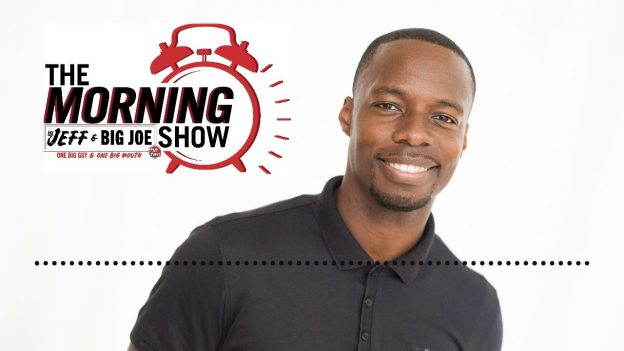
After I was replaced at Emmis, management paired Michael with Big Joe Staysniak for a two-hour daily show from 10a-12p.  Again, Michael excelled.

He is now with the YES Network in New York City working Brooklyn Nets and New York Yankees games.

His career is a great success story, and I’ve always been proud to have played a small role in his career path.  But I’ve also had this aching concern over the years that I was not as aggressive as I should have been in moving Michael into roles that he was suited for.  Until recently, I excused that worry because it all worked out for the best.

In the last two weeks, I’ve spent a lot of time evaluating my behavior as a manager.  Have I been a force for good, or should I have done more?  Should I have made unilateral calls to accelerate Michael’s progress?  Does Michael’s ascension validate my decisions, or damn them as too long in coming?

When I was at Emmis, we had a parade of interns who have gone on to successful media careers.  To my recollection, none were black.  Should I have mandated we seek out minorities for some of those positions?  I would today, but didn’t then.  Why didn’t I?

This is not to publicly flog myself for being flawed in my inclusiveness, but to look in a mirror and assess my behavior.  This is not white guilt; it is white introspection.  It’s important for every manager to look in the mirror.  Self-examination is what is called for as we evaluate our methodology for ensuring fairness in hiring and representation.

My dual aims were always to do what was best for the company and each employee.  I could have done more.  I should have done more.

Next time, I will do more.
Justin Smith will play at Arkansas – the land of chicken farmers and cat hoarders

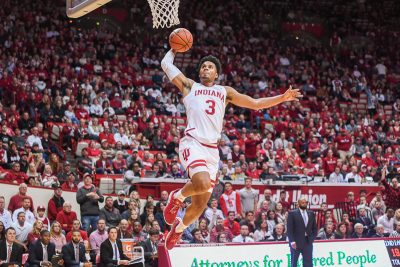
This is the kind of shot Justin Smith could absolutely hit, and he will take it to Fayetteville.

Former Indiana forward Justin Smith has landed.  He will take his talents to Fayetteville as a member of the Arkansas Razorbacks for his final season of eligibility.

I hope Smith finds what he is looking for, but I’m at a loss as to why he left Bloomington for a program like Arkansas.  The Hoosiers are on the come, while Arkansas is stuck in the middle of a mediocre SEC, as it has been since Nolan Richardson’s “40-minutes of hell” teams.

Arkansas finished last season 20-12 with a conference mark of 7-11, good for 10th place.  They were likely to be on the outside looking in for the NCAA Tournament.

Smith will join talented teammates Mason Jones and Isiah Joe if they return to school.  Both have declared for the NBA Draft, but if they return for another year with coach Eric Musselman, Arkansas could be better than they were last year.  In ESPN’s way-too-early mock NCAA Tournament brackets, the Razorbacks are listed as a nine-seed.

Click here for your copy of “Oops – the Art of Learning from Mistakes and Adventures” by Kent Sterling

There is another issue in Fayetteville that is peculiar to the city – the stench of the many chicken farms in the area.  It hits like a wave of manure scented tear gas as you get off the plane at the airport just northwest of town, and it never dissipates completely on the drive to campus.

As a personal aside, when I visited Fayetteville for a summer basketball tournament, I went to the Walmart on a Friday night at 10 p.m. to grab some food for my son and some of his teammates.  I hurried to the express lane, where a girthy fellow was offloaded 70-80 cans of cat food from his cart to the register.  I won’t judge the extreme volume of cat food, but if you are going to use the express lane, the 12-or-less number of items is not waived because you have 70-80 of the same item.

It’s quite likely Smith was fed without wandering into a Walmart filled with chicken farmers who embrace an aggressive cat culture, but still this was a town without much in the way of attributes that would demand a soon-to-be college senior to leave a beautiful city like Bloomington and a team that might be ready to win.

Smith will bring versatility on the defensive and and a wayward shot beyond eight feet.

Maybe the rim are wider down in Fayetteville.  Who knows?

Of course, Indiana fans wish Smith nothing but the best, but have to acknowledge that Archie Miller likely won’t have much trouble replacing his meager offensive contributions.  Having three guys on the floor at the same time who couldn’t shoot from beyond 10 feet was not conducive to efficient scoring, so the Hoosiers should take a step forward offensively.

Should NBA return as planned? Pacers PG Malcolm Brogdon says he sees both sides

Malcolm Brogdon gets it.

The NBA will return to the court on July 31st in Orlando for 22 of the league’s 30 teams.  They will play eight regular season games each and then the playoffs will begin for the traditional 16 teams.

Unlike Major League Baseball, whose greedy owners and players seem at loggerheads as to when or whether their game will return, the NBA has appeared to be a well-oiled and harmonious machine.

The truth is that the harmony is as much wise financial strategy as desire to get back on the court to thrill fans starving for sports.

Indiana Pacers point guard Malcolm Brogdon, explained his perspective on Black Lives Matter protests, and the ability to earn and share enormous wealth during a Zoom meeting with media on Friday afternoon, “The guys across the NBA have very, very mixed feelings, and it’s very polarized.  Some guys are like, ‘I’m not playing. I don’t want to play.  This is not the right time – they are trying to distract us from what’s going on and the real issues.  I’m not going to prioritize basketball over people’s health in general.'”

Brogdon continued, “Then there’s the other other group that’s like, ‘Being a black man, we have way less opportunities to make this type of money in our lifetime, and the things we can do with this money to impact the world and impact our families – generational wealth – to impact the community is far greater than sitting out, not getting paid, and not actually have the means to help people.'”

Click here for your copy of “Oops – the Art of Learning from Mistakes and Adventures” by Kent Sterling

There is a good reason Brogdon’s nickname is The President.  He understands both sides of this issue, but knows they are not mutually exclusive.  The decision is not whether to not play and protest or to play and cash checks.  Players will be able to play, protest, earn, and redistribute toward foundations dedicated to initiatives that can lift blacks around the world.

This is one of those moments when the answers to all questions can be a resounding “Yes!”

“Right now I definitely lean towards having the money because, you know, with my philanthropic outreach and the stuff I want to do and the stuff I’m doing right now, you have to have finances to do that; you have to have a platform to do that,” Brogdon explained.  “Right now with basketball, we have the ability to make statements, to use our leverage, to bring about whatever change we want while also playing basketball, so that’s definitely where I’m leaning.”

That is a guy who gets it.  Brogdon advocates doing all the right things rather than making an unecessary choice.  Conversely, baseball owners and players wrap themselves in inglorious greed as they choose their own agenda rather than embrace the popularity of their game.  Instead of trying to increase the size of the baseball pie, the dopes are going to go on a pie-free diet to spite the other side.

When the Pacers traded for Brogdon, they knew what they were getting – a versatile defender who can function well offensively in the point guard position, and so much more.  While other teams search for effective leadership, the Pacers have a player whose life after basketball is likely to be far more important to society than his life on the court.

It’s to Brogdon credit that he said something Friday that would have made headlines if not for his excellent explanation.  “Players divided about whether to return!” might have gotten ESPN through a couple of news cycles.  Instead, we learned that Brogdon is an adept listener, speaker, and media strategist

The Pacers got themselves a hell of a bargain in their sign-and-trade to acquire Brogdon from the Milwaukee Bucks.  He’s a solid player and better role model and man.


Big Joe Staysniak suspended – there was a more creative and productive way to handle this

Emmis Communications has suspended Big Joe Staysniak for one week without pay for his comments Wednesday about race.

This is what traditionally happens in talk radio when comments by a host elicit outrage – get the host off the air to show there are consequences for uttering a series of statements that enflame the community.

I wish Emmis had chosen another path.  It’s not like Big Joe just wandered in off the street and needed to learn a lesson about where the lines in Indianapolis talk radio are.  He’s been at Emmis for 26 years – first as a Colts player, then afternoon sports sidekick with Dave “the King” Wilson, then morning show co-host with Terri Stacy, and now on 1070 the Fan.

Joe was even managed by me for a time.  We worked together for more than 15 years.  I know Joe very well, and consider him a friend.  I do not consider Joe a racist, and I assume management at Emmis doesn’t either, or his absence would be permanent.

Instead of the suspension, I wish Emmis had mandated Joe remain on the show for a week of testimony about race by blacks who suffer through spiritual and physical trauma caused by racism.   It would have been more constructive both for Big Joe and listeners of 1070 the Fan to listen to people tell their stories.

Click here for your copy of “Oops – the Art of Learning from Mistakes and Adventures” by Kent Sterling

As an example, yesterday, 1070 the Fan welcomed back Joe’s former co-host Michael Grady for a magnificent 24 minute segment.  Michael communicated with listeners and directly with Joe about the challenges blacks in America face, and the next steps needed to move beyond them.  It was phenomenal radio – enlightening, challenging, and thoroughly worthy of Emmis and those who trust 1070 the Fan as a touchpoint to sports and society.

Michael spoke of embracing “difficult conversations” to learn about the challenges black men and women face on a daily basis.

Having  Joe continue to co-host next week through a series of “difficult conversations” designed to educate about race – almost like on-air sensitivity training – would have served Joe and Indianapolis radio listeners very well.  If Joe had not said what he did on Wednesday, we never would have heard Michael on Thursday, and what a great loss that would be.

Joe is a good man, husband, father, and friend who grew up the son of a police officer.  His beliefs about humanity revolve around working your way through every challenge.  Want to get stronger, lift more weights.  Want to earn more money, sell more goods and services.  Want to avoid the police, do nothing illegal.  That philosophy has worked for Joe, but talking about the challenges others experience requires the ability to imagine walking a mile in their shoes.

Joe is very comfortable in his own shoes.

These are tough times for everyone.  Admitting that I have been wrong for virtually my entire life about not confronting racist attitudes has been humbling for me.  I thought it was enough to try to make sure I was not a racist.  It’s not.  Through watching the singularly gruesome murder of George Floyd and listening to others discuss it and other murders of unarmed blacks, I decided a change in my behavior is necessary.

How good would it be for Big Joe go through a similar adjustment, and how impactful would it have been for listeners to hear it happen?  It would have been amazing.

Hopefully, Joe takes this time off to reflect and be more circumspect in his thinking.  If he does, he will come out of this a better man and host, but it is a shame we won’t get to witness and participate in that transformation.

Why were Drew Brees and Big Joe Staysniak wrong? Here’s my answer – and Michael Grady’s eloquent call for empathy

You can read what I write, or just scroll to the bottom for the good stuff from Michael Grady.

Because I am in the middle of two dozen social media and text exchanges where I have been asked, “What’s wrong with what Drew Brees said?” and “What’s wrong with what Big Joe Staysniak said?” I assume others are asking the same questions.  I’ll offer an answer here.

They were wrong because this is a time for each of us to ask the uncomfortable questions of how am I wrong, how can I be better, and how am I part of the systemic problem of racism in America.

This is not the time to talk about how smart, loyal, diligent, resilient, and right we are.

The problem of racism cannot be fixed by white people digging in their heels and telling blacks they “need to pull themselves up by their bootstraps” when times are tough.  There has been plenty of that for the past 150 years, and here we still are.

Racism has been a shameful and significant portion of America’s quilt for centuries, and evolving toward its end requires a change in attitude by whites, not blacks.  The game has been rigged against blacks forever, and the game’s rules need to change.  That requires a change in each of us.

Click here for your copy of “Oops – the Art of Learning from Mistakes and Adventures” by Kent Sterling

Listening needs to become a serious part of that change.  It’s time white people stopped extolling their virtues and participated in a solution that shows the respect blacks are due, and that respect starts with paying attention.  That engagement needs to occur consistently – not for a day, week, month, or year, but forever.

This is not the time to chant “All lives matter” because white lives have ALWAYS mattered.  If you are white, you have never experienced a moment when you felt marginalized or depressed by a system created to keep you from succeeding.  Have you ever been pulled over by a policeman just because of the color of your skin?  Have you ever been passed over for a promotion because you were white.  Have you ever heard muttering about your presence because you were white?  If you are black, these are longstanding and miserable realities.

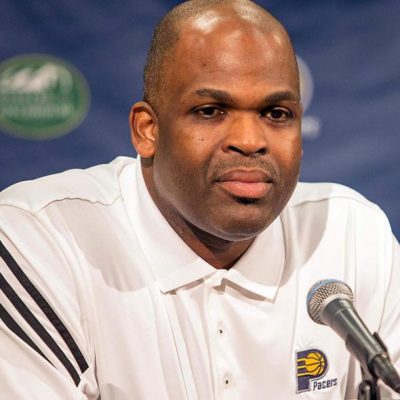
Human beings love to hear how “great” we are.  Americans love to cheer their country as the “greatest in the world.”  Pacers coach Nate McMillan made his feelings known about a “great” America in a statement released on team letterhead earlier this week, “America can and should live up to the standard of Great,” it reads in part.  “We all can and should be proud to call ourselves Americans. A great America is not something people of color have ever known, and it’s time to change that.”

The time has come for white Americans to stop patting themselves on the back, and start looking for ways we can purposefully evolve toward being better version of ourselves.

Instead of dismissing blacks as weak because of self-victimization, we should listen to their perspective – really listen.  That’s when understanding and growth can begin.

You know what’s weak?  Extolling our own virtues because of measurables that have nothing to do with the quality of our character.  Weak is pretending you have already won a race when life is not a race to be won, but a series of daily challenges to become the best and most caring versions of ourselves we can.  Weak is planting your flag and setting up camp atop a mountain of self-righteousness instead of venturing to other hills where you can help others find their path.

Because of a confluence of strange events – the cancellation of everything because of Coronavirus and the subhuman murder of George Floyd – we have both time to reflect and outrage needed to take a big step forward toward understanding the stupidity of blathering our tainted truths rather than listening to how they have affected blacks for 350 years.

That’s why Drew Brees apologized for what he said on Instagram, and that’s what was communicated by Michael Grady to Big Joe yesterday in one of the best 24 minute segments ever heard on 1070 the Fan.

Because he says it more eloquently than I could ever write it, here’s a link to the podcast of Michael’s comments:

1070 the Fan’s Big Joe Staysniak learned a few things yesterday, and that’s a good thing

1070 the Fan host Big Joe Staysniak learned some things yesterday, and that is a good thing.

A couple of days ago, I wrote that I would no longer allow friendship or familiarity keep me quiet about being honest, even if it means calling out friends’ racism or ignorance.  And it won’t.

On 1070 the Fan yesterday morning, Joe Staysniak made a series of statements that some might believe reflected racism.  Those comments have been clipped and posted on IndyStar.com, and they paint a picture of Joe that is less than flattering.

I’ve known Joe for 25 years.  I worked with him for 15 years, managed him, drank beer with him, laughed with him, and enjoyed his company.  He is a friend of mine.  His wife Pam is a wonderful person whom I also consider a friend.

I do not consider Joe to be a racist.

Joe is an extreme pragmatist who is not very empathetic toward others.  He believes we are the authors of our own problems, and solutions are available if we are willing to pay the price.  That goes for whites, blacks, latinos, muslims, taoists, men, women, children, Irish, Germans, Brazilians, Polish, and every other subset of humanity.

Click here for your copy of “Oops – the Art of Learning from Mistakes and Adventures” by Kent Sterling

That’s Joe’s ideology, not racism, and he is steadfast in his belief that answers to life’s problems are the responsibility of those who suffer because of them.  Yesterday, he called for blacks who are calling for change to “stop being a victim.”  He explained blacks being pulled over by police by saying, “…you have to look at why.  Is that racism or is that the time of day? Is that the car they’re driving? Are lights out? Are turn signals working?”

Reflexively, it’s easy to view those comments as racist, and if I didn’t know Joe well, I may believe that myself.  But because I know him, I ascribe it to his myopic viewpoint about self-determination and his ingrained trust for the police.

Joe’s father and brother were police officers, and he is stridently pro-police.  He believes the acts of a few police officers are damning the entire profession by association; that the vast majority of police officers are exercising no agenda other than to serve, protect, and return home to their families safe.

Today, Joe was mildly contrite in explaining his comments, “What I do here everyday comes from the heart. What I do here everyday is meant to help not hurt.  What I do here everyday is maybe bring you a little different perspective.

“And this is maybe the most important part. I don’t think of myself as being a divider or anything like that. I obviously don’t think of myself as ignorant although I throw the word around a lot. And some listeners yesterday threw it right back at me as far as how ignorant I am to certain things and that’s fair.”

I can say these things about Joe with total confidence: Joe speaks from the heart – always.  He is unfailingly honest in voicing his beliefs, as he was yesterday.  Joe is an affable guy who would rather laugh with people than argue with them.  It is also true that no one believes himself to be a divider.  Even the most malevolent of us don’t wake up thinking, “How can I cause more division in our society today?”  Joe is anything but malevolent, and I’m sure he believes listeners hearing a honest disagreement can help them understand.

One area where  Joe and many of us need to improve ourselves is in our ability to truly listen with an open heart – to look in the mirror and acknowledge that perhaps someone else is right too.

Sometimes, talk radio hosts inform and sometimes they entertain.  On rare occasions, they learn.  I’m hoping that yesterday Joe learned, and the end of his comment from today’s show gives reason to believe that is the case, “…listeners yesterday threw it right back at me as far as how ignorant I am to certain things and that’s fair.”

In order for people to grow, they need to be given a bit of a break when they make the mistakes that lead to acquiring wisdom.  Joe got wiser through yesterday’s show and its fallout.

That’s a good thing as our society struggles to adapt and empathize to what we hope becomes a post-racist America.

Don’t blame Joe for speaking his mind.  Credit him for growing because of it.

Colts QB Philip Rivers threw 20 picks in 2019 – how many were caused by late game heaves?

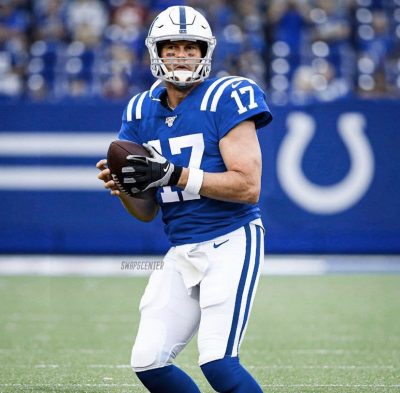
Philip Rivers benefits from a deeper look into last season’s failures. We’ll see what the truth is in three months, but in the meantime a little optimism is a fun indulgence on a June Wednesday.

Statistics don’t lie, but they can mislead.

Here are some real numbers that many, including me, have cited to tamp down optimism among Colts fans who believe they are ready to go back to the Super Bowl.

Philip Rivers threw 20 interceptions last season for the 5-11 Chargers.  That’s a lot of turnovers and a lot of losses – certainly more than might be optimal for an aging quarterback for a team hoping to make a run to the playoffs.

Rivers has led the Chargers to the postseason just one time over the past six seasons, so a little cynicism seemed like a good place to start in appraising the effect he might have for the Colts.  As time has passed, I’m trying to be a little more diligent in finding reasons for optimism.

Click here for your copy of “Oops – the Art of Learning from Mistakes and Adventures” by Kent Sterling

A look beyond the numbers is needed, though, to be fair to both Rivers and general manager Chris Ballard, the guy who signed Rivers to a one-year, $25 million deal.

It’s true that Rivers threw 20 picks, but let’s take a deeper look at numbers which are also true:

  • 18 of Rivers 20 interceptions were thrown in Chargers losses.
  • 15 occurred when the Chargers trailed.
  • Six were thrown in the final two minutes of games the Chargers trailed.  In four of those games, the Chargers trailed in a one-possession game.
  • Nine total were thrown in the fourth quarter – with only one of those coming when the Chargers led (against the Colts in the season opener).
  • Two of the three picks thrown by Rivers when the Chargers led came against against the Chiefs during one five minute span.
  • Eight picks each were intended for Mike Williams and Keenan Allen.

We can all agree it would be a lot better for a quarterback to complete passes late in games than throw the ball to opponents, but heaving a high risk jump ball is often the only chance a team has to win late in the game – particularly with a substandard offensive line.  Stripping the  six picks that came in the final two minutes of games the Chargers trailed is not unreasonable given the situation.  That leaves us with 12.

Being even more aggressive by knocking down the two other picks that occurred during the fourth quarter of games the Chargers trailed isn’t an absurd overreach, so I’ll split the baby by taking off the pick that came against the Vikings with the Chargers down 39-10.  That pick was thrown at an urgent moment when the game was lost unless something spectacular happened.  That’s 11 picks.

Let’s chuck the picks from the wins, given Rivers’ ability to overcome them.  Now we’ve shaved the number to 9.

Single digit picks give a team the chance to win enough games to get to the playoffs.

My effort to revise history is an exercise that all quarterbacks would benefit from, and it doesn’t elevate Rivers into the upper echelon of the NFL’s gun slingers.  But it does show that Rivers was a victim of his circumstances at least as much as his age or inaccuracy.

This doesn’t mean the Colts are going to the Super Bowl – just that optimism might be as silly as it originally appeared.  That’s true especially if the kicking game rebounds to previous levels, whether the kicker is Chase McLaughlin, Roberto Blankenship, or dark horse candidate Adam Vinatieri.

it will be more than three months from now that Rivers will throw a meaningful pass.  That will give us more time to unearth rationale for optimism and perform arithmetic gymnastics to embrace the notion of the Colts improving at the level so many in Indy believe possible.

I’ll keep looking.

Here is the list of Rivers picks and the circumstances for each (end of game 50/50 balls in bold):

  1. vs. Colts – leading 24-16 4Q 8:39 left (Win)
  2. vs. Detroit – trailing 13-10 4Q 1:10 left (Lost)
  3. vs. Denver – trailing 14-0 1Q 2:33 left (Lost)
  4. vs. Denver – trailing 17-0 3Q 2:14 left (Lost)
  5. vs. Pitt – trailing 7-0 1Q 8:59 left (Lost)
  6. vs. Pitt – trailing 24-17 4Q 0:54 left (Lost)
  7. vs. Chicago – tied 0-0 1Q 0:48 left (Win)
  8. vs. Oak – tied 0-0 1Q 12:05 left (Lost)
  9. vs. Oak – trailing 3-0 1Q 6:14 left (Lost)
  10. vs. Oak – trailing 26-24 4Q 0:27 left (Lost)
  11. vs. KC –  leading 3-0 2Q 12:05 left (Lost)
  12. vs. KC –  leading 3-0 2Q 6:14 left (Lost)
  13. vs. KC – trailing 24-17 4Q 4:20 left (Lost)
  14. vs. KC – trailing 24-17 4Q 0:24 left (Lost)
  15. vs. Denver – trailing 7-0 1Q 3:18 left (Lost)
  16. vs. Minn – trailing 12-10 2Q 2:06 left (Lost)
  17. vs. Minn – trailing 39-10 4Q 7:20 left (Lost)
  18. vs. Minn – trailing 39-10 4Q 1:59 left (Lost)
  19. vs. KC – trailing 10-7 2Q 0:35 left (Lost)
  20. vs. KC – trailing 31-21 4Q 1:06 left (Lost)

Nate McMillan gets honest with an exasperated denunciation of American racism

They call Nate McMillan “The Sarge” and today he led us.

Indiana Pacers coach Nate McMillan got real today in his statement about race relations and the murder of George Floyd.

In the past, there have been two types of statements from sports teams and leaders about societal issues.  The first is pablum – tasteless, valueless, irrefutable nonsense.  “Love thy neighbor” qualifies.  Alabama football coach Nick Saban shared one of those yesterday.  The second are heartfelt admissions of a problem with a vague call for solutions.  Frank Reich and Tony Dungy gave us humanity in their messages of that type yesterday.

McMillan gave us our first look at a third type today – a scorched earth condemnation of a society that too often has briefly been brought to a boil over violence against unarmed black men without any subsequent systemic change.

We’ve seen moments of raw honesty when coaches are prompted by a question to strip bare their emotions to bring extreme heat against a person or group. I can never remember reading anything similar to McMillan’s message released by the Pacers today:

The recent killing of George Floyd, an unarmed black man, is nothing shy of inexcusable and my whole heart feels for his family in their difficult time of grief.

Unfortunately, this pain is far too common for the black community in America, the place we claim to be so great. Enough is enough.

What is so Great about oppression, pain, and suffering? What is so Great about hatred, violence, and racism? For as long as I can remember, the black community has had to piece itself back together time and time again through the agony of injustice. There is no place for racism. Violence is not the answer. It’s time for everyone to take a look in the mirror and take action to remove the divisive stigma that lingers over the nation. 

America can and should live up to the standard of Great. We all can and should be proud to call ourselves Americans. A great America is not something people of color have ever known, and it’s time to change that.  It will take the effort of everybody. No matter your color or complexion, religious beliefs, occupation, or age, you must know that YOU matter. Your voice matters. Your actions matter. There is a tremendous strength in numbers and we all must join together to create a united front for accountability, justice, and peace.

We need leadership that is for all people. We need leadership who will listen. We need leadership that cares. We need leadership that is inclusive. We need leadership with a heart.

For far too long the racism and flaws of the system have been ignored. In order for America to reach the status of great, we all must be better. We have to do our part to lift each other up. We must change our hearts. We must change our laws. We must create a systemic change.

I encourage you to be the change you want to see. Let’s make a new America our home and a place we can ALL be proud of.

The well-reasoned rage shared by McMillan is a needed dose of reality.  Reading it might have brought you an uncomfortable moment or two, but the message is dead on accurate.  Instead of talking about how great America has been and is – all of us need to take inventory of our shortcomings and address them – NOW.

America should not be a country of talkers, but of doers.  Let’s be done with lip service designed to temporarily quell protests that evolve into riots.  We need to deal with the societal and entrenched dismissal of some human lives as disposable and others as unworthy of respect.

McMillan’s statement, whether you agree with it or not, IS worthy of our respect, and his willingness to share it to be admired.  The Pacers decision to release it on their letterhead is to be commended.

And if you don’t agree with it, you need to read it again – and again.  If you still don’t agree with it, acknowledging you a part of the problem is your next step.

Then maybe we can finally get someplace in this fight for equality and mutual respect.

If baseball can’t stop profiteering, why not go to the Cubby Bear instead of Wrigley Field?

Baseball needs to get its head out of its ass or suffer the consequences.

Our society craves a feeling of shared sacrifice and empathy for one another.  Between the riots and Coronavirus, many feel isolated, agitated, and downright afraid of what might happen next.  Baseball has responded by bickering over how many millions of dollars men will be paid for playing baseball and owning baseball teams during this tumultuous summer.

Under normal circumstances, fans tend to forgive sports leagues and player unions for posturing during negotiations.  We understand that contentiousness and selfishness are parts of the process as fair middle ground is found for the division of a giant pile of money.

Click here for your copy of “Oops – the Art of Learning from Mistakes and Adventures” by Kent Sterling

These are not normal times, but it appears Major League Baseball is unaware of that.  And why should they be aware.  The owners are all billionaires and players earn on average $4.4-million per year.  Shelter in place is not much of an inconvenience when you made more money last season than 95% of Americans will earn during their lives.

Why is this different for baseball compared to football, you might wonder.

Baseball has a problem that doesn’t exist for the NFL.  Actually, there are a bunch of differences between the leagues, but let’s stick with the one that can cause direct financial problems for franchises, and that is the decision each season ticket holder makes to write a check – or not.

Season tickets for NFL games cover 10 games – eight regular season and two preseason games.  In baseball, there are 81 contests.  That disparity in number of events elevates the cost of tickets.  If you buy two season tickets (not great seats) to watch your favorite NFL team, you can cover it with $1,000.  For Chicago Cubs baseball, you’re talking more than $10K for bleacher seats.

Writing a check with four zeroes makes an ordinary man’s hand shake.

I’m speaking from experience.  We bought Cubs season tickets for three years – four bleacher seats for nights and weekends (62 games).  For the first year, the Cubs treated me like a valued customer.  Second year, the price went up 20%, and the amenities ended.  Third year, another 20% and utter indifference from our ticket representative.

The decision to not send another generous chunk of cash to the Ricketts Family prior to the 2018 season was relatively easy.  I’m sure the Cubs quickly replaced our investment with another fan who craved Cubs baseball.

The scales for businesses and fans who invest in tickets need to continue to tip ever so slightly in favor of renewal, or fans taken for granted by franchises like the Cubs are going to decide to keep their money or spend elsewhere.  Stadiums will be mostly empty, and not for fear of Coronavirus spread.

That’s why it’s of grave importance that MLB owners and the players union don’t view this as an ordinary moment in a negotiation, but an opportunity to validate the hope among fans that we are all in this together; that we share a craving of a return of something normal in this time of chaos.

Protracted and acrimonious negotiations give fans yet another reason to unplug from baseball, and I’m afraid the pendulum may never swing back.  Games are too long, commercial messages inundate us, and concessions are insanely expensive.  Around every corner is another ownership driven contrivance to separate us from our cash and no one seems concerned with how off-putting that can be.

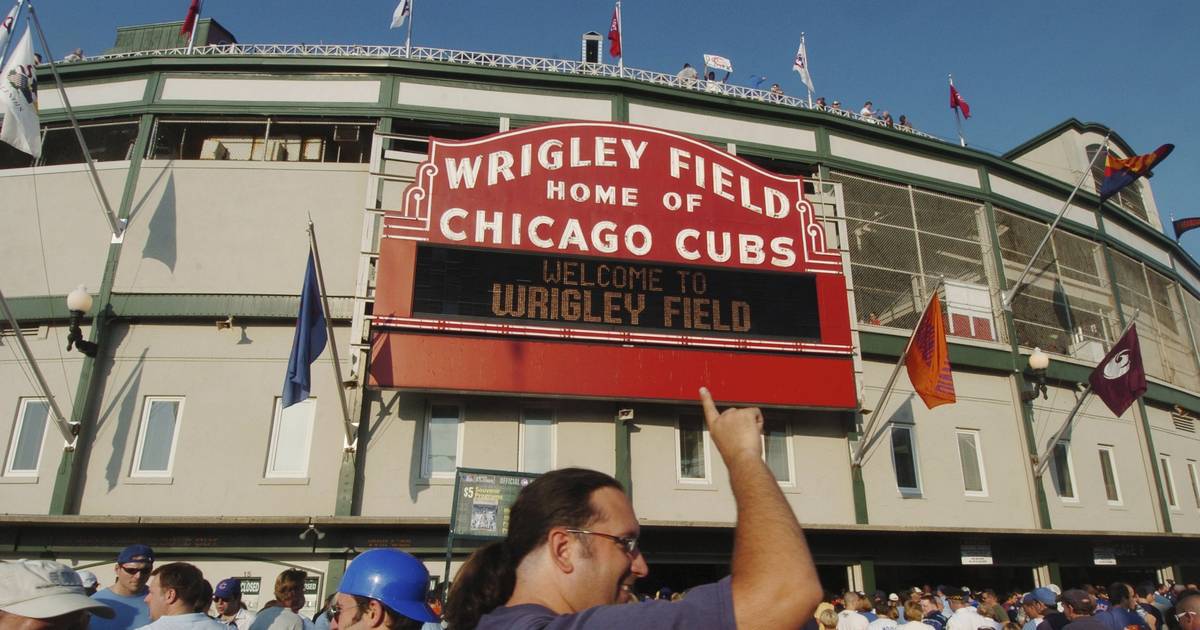
The Cubby Bear is a bar immediately across the intersection of Addison and Clark Streets from the giant red marquee that welcomes Cubs fans to the stadium of their childhood.  There is no cover charge on a game day, and beers are a reasonable $5.  At some point, fans are going to decide $72 tickets and $11 beers is a price too high for the privilege of watching a slow game in a park owned by a family primarily interested in profit with dugouts chock full of selfish millionaires.

That’s a problem for baseball.  The question is not whether there will be baseball this summer; it’s whether owners and players are smart enough to avoid causing their own long-term demise in order to get there?