Author Archives: Kent Sterling

Indianapolis sets an peaceful but passionate example for America during a time of chaos

Police and protesters walked together last night as tempers cooled, bullets remained in chambers, and fires went unset. (photo by RTV6)

There are times when people nationally look at Indiana as a backward state where societal mores reflect ignorance.  Last night was not one of those times.

As America rages against the racism that led to George Floyd’s death, Indiana has been a beacon of passionate reason while many in other cities used protests as cover to steal sneakers and TVs, or simply set things on fire.

On ESPN, Indiana Pacers point guard Malcolm Brogdon spoke eloquently about the need to remain outraged and Indianapolis Colts coach Frank Reich’s words about injustice have been featured on the network’s crawl.  Former Colts coach Tony Dungy, Butler basketball coach LaVall Jordan, and Indiana University athletic director Fred Glass have shared their profound feelings as well.

Click here for your copy of “Oops – the Art of Learning from Mistakes and Adventures” by Kent Sterling

Last night in Indianapolis, protesters and police came together peacefully near the governor’s residence to find enough middle ground to keep things from devolving into violence.  They defied momentum that drives fear and hate – two emotions that create wealth and political success in America.

In this time of chaos, Indiana seems to be a bastion of passionate reason, willingness to listen, and a desire to solve problems rather than double down and create more chaos through shooting at each other and burning businesses.

Indiana hasn’t always behaved with empathy and decency,  From being governed in the 1920s by a Klansmen in the state legislature and governor’s mansion to the Religious Freedom Restoration Act (2015), there have been moments where Indiana appeared less than enlightened in its beliefs.

It appears this will not be remembered as one of those times.

Burning buildings and looting will not bring George Floyd back or correct the ignorance and stupidity that caused his murder, but neither will calm retreat back into the relative safety of our homes.

Indianapolis seems to have found a middle ground where police and protesters can coexist to not only promote their own agendas, but find areas of common ground that allow them to work together to solve the core problem of mutual distrust.

Maybe I’m living in wildly optimistic hope here, but I would love to believe that Indianapolis can be seen as a city where empathy triumphs over enmity.  We aren’t perfect.  Hell, sometimes we aren’t even good.  But this is a time where we can be an example of love triumphing over seemingly intractable hatred and ignorance.

Instead of America pointing at Indiana with derision and mockery, our behavior today and tomorrow can lead to a massive change in perspective.  More importantly, it can serve as a beacon of hope for cities less capable of loving each other.

Time for whites to be as angry as African Americans about the stupidity of racism

this protest by Colin Kaepernick bothered me. I am more bothered by the obvious and odious issue he was bringing attention to.

Racism has always baffled me, so I ignored it.

That’s what I do when I am confronted with humanity’s insistence upon making our world less pleasant and loving.  It’s as though we want to make our lives more challenging through self-imposed trials and challenges.

Racism doesn’t make sense, so while I was horrified by the killing of George Floyd by a Minneapolis policeman, I have not acted.  When I hear of blacks being targeted by police, I grieve for the loss of their hopes for fair treatment.  The riots that followed are tragic expressions of righteous anger by some and a thirst for anarchy by opportunists.

Click here for your copy of “Oops – the Art of Learning from Mistakes and Adventures” by Kent Sterling

For many whites, the source of racism isn’t simply a need to hate.  People are insistent upon succeeding – whatever that means to them – and elevating themselves by standing on the backs of others is one strategy to gain an advantage.  From a pragmatic perspective, racism appears to be little more than the race of the majority suppressing a minority race to lift itself.  It’s a morally bankrupt ideology, but it continues to be expressed and felt in a variety of ways.

White people are at a distinct disadvantage when discussing racism because we have no idea what it feels like to be preyed upon in the way African Americans are.  Efforts to empathize are well-intended but ultimately fail because imagining what it’s like to be discriminated against and actually being someone is fundamentally different.

My strategy in dealing with racism has been to quietly reject it.  I try to treat all people equally, believing that racism is best fought on a micro level, one person at a time.  Obviously, that’s not getting the job done.  Racism is not going to fade because non-racists continue to treat all people as equals.  It’s the racists that need to change.

So the question becomes, how do we compel racists to alter their core belief that blacks are a sub-class rather than part of humanity?  We’ve tried shame, logic, and occasional moments of enlightenment when racists were prosecuted for crimes driven by their hatred or pragmatism.  We wind up with an unending series of atrocities and protests/riots.

Furious riots in Ferguson, Watts, Detroit, and Minneapolis have exploded, been extinguished, and nothing has changed.  Blacks are still targeted, persecuted, and killed because of the color of their skin.  Dr. Martin Luther King and Malcolm X led movements against racism and were assassinated.  Great thinkers and writers like James Baldwin and Alex Haley have made us think.  Athletes like Colin Kaepernick, John Carlos, and Tommie Smith made us angry before we understood that the only thing that gets our attention is what pisses us off.

Nothing has changed.

The time has come for us to take racism as a personal affront – an expression of extreme narrow-mindedness and stupidity that requires an immediate and loud response.  When people insult our wives, mothers, and children, our emotions flare and defensive reflexes are engaged.  Whether through physical or loud verbal confrontation, we bring a consequence upon those who enrage us.

We need to engage with those who express hatred toward minorities with the same zeal we reserve for our family and friends.  If we are all brothers, then let’s safeguard one another as we would family members.

Not sure punching racists would change minds, but at this point it’s more important to not repeat mistakes than to coddle these fools, and white people dismissing racism as “not my fight” has been an American mistake dating back to the 1600s.

I used to think that racism would certainly cycle out of our society during my lifetime, despite 400 years of history that screamed the opposite, so now I’m going to do something about it in the small way I can.  Racist yammering and actions I witness will be met with great vengeance and furious anger.

In the past, racists believed they had safe harbor in my presence because I’m white.  Those days are over.  I’m done editing out racism from conversations rather than confronting it.

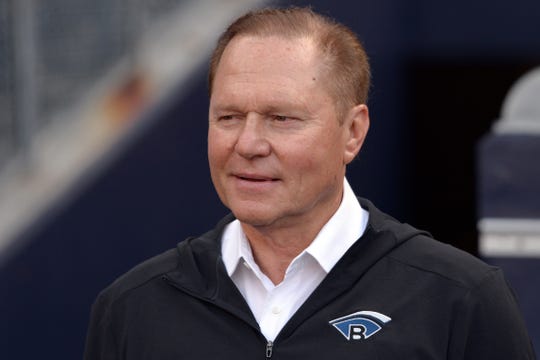
Advice from Scott Boras might just kill baseball

Baseball Agent Scott Boras has a very specific skill set that works for his clients, but his most recent advice might cost players jobs and millions of dollars.

Nothing good will come from baseball not being played this summer, and nothing good will come from the perception of greed that owners and players project through negotiations that will continue for the next week or two as the 2020 season hangs in the balance.

Player agent Scott Boras has made a very handsome living for a very long time zealously representing baseball players as salaries have exploded.  He’s all about cash, and players need a guy like Boras to make sure they earn top dollar for playing baseball.  Many would play for free, but because of guys like Boras, they don’t.

Click here for your copy of “Oops – the Art of Learning from Mistakes and Adventures” by Kent Sterling

Yesterday, Boras sent an email to his clients that expressed his position regarding the talks that will either bring baseball back – or kill it for this strange year.  “Remember, games cannot be played without you.  Players should not agree to further pay cuts to bail out the owners. Let owners take some of their record revenues and profits from the past several years and pay you the prorated salaries you agreed to accept or let them borrow against the asset values they created from the use of those profits players generated.”

The intractability represented by Boras’s words, if acted upon, virtually dooms baseball to a zombie year where the game goes away – both literally and in fans’ consciousness.  The NFL is likely to not miss a beat, despite a likelihood that fans in stadiums will at the very least be reduced.  The NHL has a plan to return, and the NBA is almost certain to formalize a plan today that will bring basketball back in late July.

That leaves baseball as the lone outlier to shutter for a full season – if players and owners can’t find a path to reconciliation.  There is a very real danger that fans would decide to allocate resources elsewhere in 2021 and beyond if the 2020 season is completely scrubbed.

Under the best of circumstances with 20% unemployment, marketing budgets slashed, and profit margins disappearing, discretionary dollars will be at a premium for the next year or two as the economy rebuilds.  The easiest cut from family and corporate budgets is overpriced tickets to events that are equal parts fun and a pain in the ass to attend.

These are potentially dire times for baseball, and not budging during negotiations will cause hard feelings – not just among owners and players, but between fans and the game itself.  With other leagues behaving rationally, fans are likely to continue to gravitate toward football and basketball, and away from what used to be our national pastime.

Work stoppages have been survived in all sports prior to this.  It’s always been assumed fans would return and hard feelings would soften, but these are different times, tougher times.  Millions of Americans have seen their meager incomes slashed or eliminated, and the optics of players refusing to accept millions of dollars to play baseball and distract us from our very different and isolated lives would be remembered for a long time.

Athletes need greedy people to represent them on occasion.  Owners need to play hardball to ensure a significant return on investment.  During normal times, fans understand watching the sausage being made in these negotiations can be ugly.  These are not ordinary times.  These are tough times – emotionally and financially – and those who keep fans in mind will be remembered favorably.  Those who don’t will be remembered too.

Baseball has an opportunity to look beyond itself and embrace its role as a national healer, or repel a shrinking fanbase through expressions of unchecked greed.

Following Boras’s advice has made a lot of baseball players millions and millions of dollars for several decades.  This time, though, his advice might cause longterm harm that reduces baseball to a second tier major league which would cost them many more millions.

The time is right for both owners and players to suspend their normal selfish agendas and embrace a desire to do what’s right for society.  That simple and selfless act would ensure consumer trust as restrictions are reduced and normal life returns.

If baseball cannot find its way back to the diamond this summer, some fans will never find their way back to the ballparks.

10 radical rule changes – corner threes, kickoffs, replay, and 3-2 counts are gone!

Corner threes – like this one from P.J. Tucker – have to go

Let’s get creative with rules of major league sports.  Leagues hate changing rules because they almost always result in a backlash from fans and participants, but I have no such aversion to angering people.

With that in mind, here are 10 rule changes that would likely generate great angst if they were adopted.  In time, people would embrace these major shifts that prize logic over tradition:

Instant replay should be abolished in all sports.  If a bunch of well-trained people can’t get the call right, that’s the way it goes.  Slowing play to a snail’s pace to get the clock right to the tenth of a second or evaluate a bang-bang play at first is not worth the occasional corrections.  The NFL is eliminating challenges related to pass interference, which is a step in the right direction, but it needs to say adios to all challenges.

College coaches should be paid at the same scale as professors.  If players are students, aren’t coaches teachers?  Of course they are, and if paying students on the same scale as pro athletes is wrong, college coaches should not be paid on the level of pro coaches.  As a concession to coaches, I would allow tenure to be granted to them, so schools would have difficulty firing them.

Click here for your copy of “Oops – the Art of Learning from Mistakes and Adventures” by Kent Sterling

Three balls for a walk and two strikes for a strikeout.  How many times do we need to watch Cubs lefty Jon Lester run an 0-2 count to 3-2 to realize that watching pitchers nibble their way to full counts wastes our time.  In 2019, the average length of a Major League Baseball game expanded to a record 3:10.  That’s 40 minutes too long.  Shortening counts would shorten games while extending the number of innings a starter might throw and would likely keep pitchers from dealing with great fatigue – a primary cause of injury.

Eliminate the charge call in basketball.  Does it make any sense for a defensive player with his hands covering his junk to slide into the path of a 240-pound athlete sprinting toward the basket?  Of course not.  It’s not real defense, and it invites injury for both players.  The call for contact is either a block or play on.

Extend championship boxing matches back to 15 rounds.  How many great fights prior to trimming the length of championship contests to 12 rounds would have been ordinary if they ended after the 12th?  The Thrilla in Manilla, Ali vs. Frazier I, Duran vs. Leonard, Pryor vs. Arguello, Leonard vs. Hearns, and many others predating those epic battles would not be remembered as all-time greats.  Sure, it puts fighters at serious health risk, but what about boxing is actually safe?

All putts inside three feet are good.  Pro’s almost never miss at that distance, and amateurs only feel like crap when they miss them.  Three feet is long enough that most pro’s and amateurs mark and then putt in turn.  That extends the length of a round, and we need to quicken pace on the golf course somehow, so conceding three footers is an immediate must do.

Eliminate kickoffs.  Teams, coaches, players, and the NFL itself continues to work to resolve kickoffs with touchbacks.  Let’s just embrace the fact that kickoffs are dangerous and antiquated time wasters that exist only to separate commercials.  No one will miss them – at least not for long.

Ditch the DH.  Major League Baseball continues to try to reduce pitchers to arms without responsibilities elsewhere.  The American League underestimated fans in 1973 by adopting the rule that eliminated the need for pitchers to grab a bat and bunt or swing away.  Strategy went out the window and the careers of hitters who could no longer defend were extended.  Fans that enjoy baseball as a thinking man’s game confined their interest to the National League, and owners learned that no one in their right mind paid to watch Harold Baines or Edgar Martinez hit anyway.  The DH provides a solution in search of a problem.

No more postgame handshake lines.  Expecting competitive athletes to drop all that angst to wish their opponents well within seconds of the end of a game asks far too much of kids and adults.  I was in a handshake line after a high school soccer game when a teammate was sucker punched, and my son was in another one after a high school basketball game.  This well-intentioned indulgence puts kids in harm’s way with the only benefit being a mandate of false sportsmanship.

Widen the NBA basketball court by five feet.  Analytics tells us corner threes are the most efficient shot in basketball other than a dunk.  That is because the three-point line is only 22-feet from the basket in the corners, compared to 23-feet, nine inches elsewhere.  Who wants to watch the endless torrent of corner threes we see in the NBA?  The five foot widening would allow for the line to be uniform at all points, and end that barrage.  The reason for this being unpopular is the elimination of a row of premium seats and the cash they generate.

Tell me I didn’t just make damn near every American sport better!

Passionate & idiotic @UCLA Student Council wrong about NCAA and college athletics

The line between adult and child glowed brightly today as the UCLA Student Council approved an incendiary resolution that was then sent to a variety of California and university officials.

It reads in part, “As we look at the rampant negligence and mistreatment of student-athletes in NCAA sports, it’s clear that colleges can not be trusted with policing themselves on any health recommendations passed down by state or local officials.”

Okay, UCLA Student Council, tell us what you really think.

All children believe they would live better lives without the intercession of adults who are not nearly as gifted in seeing the right path in every issue.  Kids’ eyes are unclouded by experience, circumspection, or an understanding that actions bring consequences.

Click here for your copy of “Oops – the Art of Learning from Mistakes and Adventures” by Kent Sterling

As they grow older and wiser, children become adults aware that life is more complicated than they thought – or wanted it to be.  That’s why kids go to college – because they are not ready to understand how empathy and business intersect to drive decision-making.

Filled with righteous indignation and a penchant for strong language, the UCLA Student Council reminds us all – again – why children are not allowed to run for offices that convey real power to draft actual legislation.  There is a reason Americans have to be 25 to serve in congress, 30 to serve in the senate, and 35 to be inaugurated as president.  People who have yet to reach those thresholds view them as unfair.  The rest of us understand.

There is a lot to unpack in the resolution, but nothing in it is worthy of the effort, unless it’s to embarrass the authors and those who endorse it.  The paragraph I quoted earlier in this post would be maddening in its wrongheadedness and naïveté if it was taken seriously.

Two immediately recognizable problems:

  • Student-athletes are neither neglected or mistreated.  They are monetized, educated, fed, housed, and pampered.
  • Many times it is the health recommendations passed down by state or local officials that can not be trusted, rather than school officials trusted to enforce them.

Here are some cruel truths members of the student council at UCLA will grow to embrace as they bank experiences and move from the cheap seats where they can carp about injustice into positions of actual responsibility:

  • There is more to life than being right or wrong.
  • Crafting change is rarely done by children who hit adults over their heads with verbal two-by-fours.
  • In 30 years, the members of UCLA’s current student council will laugh at their brash ignorance, while ignoring a similarly passionate resolution authored by the 2050 student council.

That’s how life works.  We walk out on skinny limbs because we don’t know they break.  We process that information, and move forward toward thicker and less interesting positions while preparing another generation for the tedium of clinging to the trunk.  We learn there are great reasons for the status quo despite its flaws.

Ideology is for children.  Adults embrace pragmatism.

God bless the UCLA Student Council for being outraged.  That’s what college students should be.  Then they should get pissed off and yell at adults who appear impervious to their specific brand of logic.  Maybe once in a great while they say something worth listening to.

Then they grow up to become the adults they used to yell at.

And so it goes.

Will money finally doom baseball’s popularity – or can owners and players rise about greed?

Can baseball’s owners and players show an appreciation for fans rather than embrace their inner-greed while stadiums are empty?

Nothing like billionaires arguing with millionaires to reveal how little any of them have in common with the rabble responsible for their wealth.

We pay for tickets, buy beer and hotdogs, watch on TV, wear jerseys, and turn our kids into like-minded zealots for our favorite teams.  We are the straw that stirs baseball’s economic drink, and most of the time we don’t mind being played for saps.

And then the players and owners, who normally smile as they coexist as co-conspirators in this lucrative and preposterous eco-system, get greedy and reveal themselves as mercenaries.  They bicker over how their spoils should be divided as fans wonder just what the hell baseball means to them anyway.

Click here for your copy of “Oops – the Art of Learning from Mistakes and Adventures” by Kent Sterling

There’s nothing like a crisis to confess the character of men, and Coronavirus has brought a scenario where Major League Baseball has been forced to suspend operations while trying to find a way to re-boot the season as a media-only enterprise without fans in in America’s ballparks.

A lack of gate has required owners to propose a severe reduction in salaries of players – some at the top of the food chain (Mike Trout, Bryce Harper, and others who make more than $20M per year) are being asked to take an 80% haircut from what they would have earned during a normal season.  As you might imagine, no one is happy about that level of pay reduction, but Trout would still earn almost $6M for playing an 82-game season.

While Trout and other players might chafe at losing out on up to $31M, and owners lack enthusiasm for digging into their own pockets to pay more, fans who consider themselves fortunate to have a job paying less than 1% of Trout’s reconfigured pay ($57,000) have little patience for either side.

This is nothing new.  Fans have complained about players and owners being tone deaf about financial concerns for decades.  I remember a conversation I had with a Chicago radio news anchor in 1990 about baseball salaries.  Chris was a huge baseball fan, but was done with the game because free agents at the top of the market had the temerity to demand over two-million per year.

That was 30 years ago and the amount of cash was roughly 1/18th of what Trout is under contract to receive as the best player in the game.  Still, attendance in 2019 held mostly steady, declining slightly from 69.7 million in 2018 to 68.5 million.  Whether people will continue to buy tickets to watch baseball and spend a significant chunk of cash on overpriced concessions in 2021 will be determined by how MLB comports itself during this challenging time.

When a vaccine or herd immunity renders our lives somewhat normal again, will we forget and forgive the piggish players and miserly owners for their suddenly transparent avarice?

Maybe the optics of a group of men who play a game for absurd amounts of cash during a time of 15-17% unemployment leaves a residue that turns fans toward less frivolous pursuits.

I don’t believe our society is capable of bringing about that sort of severe reckoning for a game that has been suckling at fans’ teats in exchange for a viewing experience that has become too long and tedious to be enjoyed.

The popularity of the NFL and NBA seem to be inured against fan angst, but the MLB needs to be very careful to avoid a tipping point where fans finally decide enough is enough.  Challenges presented by Coronavirus if answered by greedy posturing might push enough fans away from baseball to cause a much deserved reboot of priorities for both owners and players.

Owners and players have enjoyed tremendous popularity and wealth, but fans’ dollars are not a birthright.  They need to be earned both in times of prosperity and hardship.  Any fool can win when the sun shines.  Let’s see how much baseball cares about fans as this storm distracts them.

College Basketball transfers short-circuit a wonderful lesson about sports and life

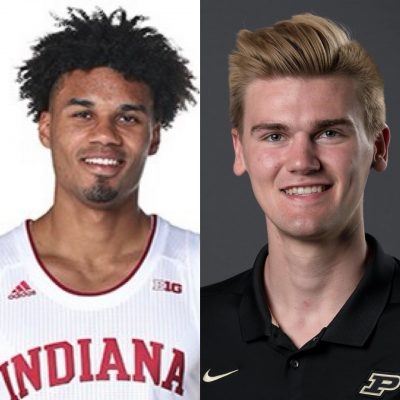
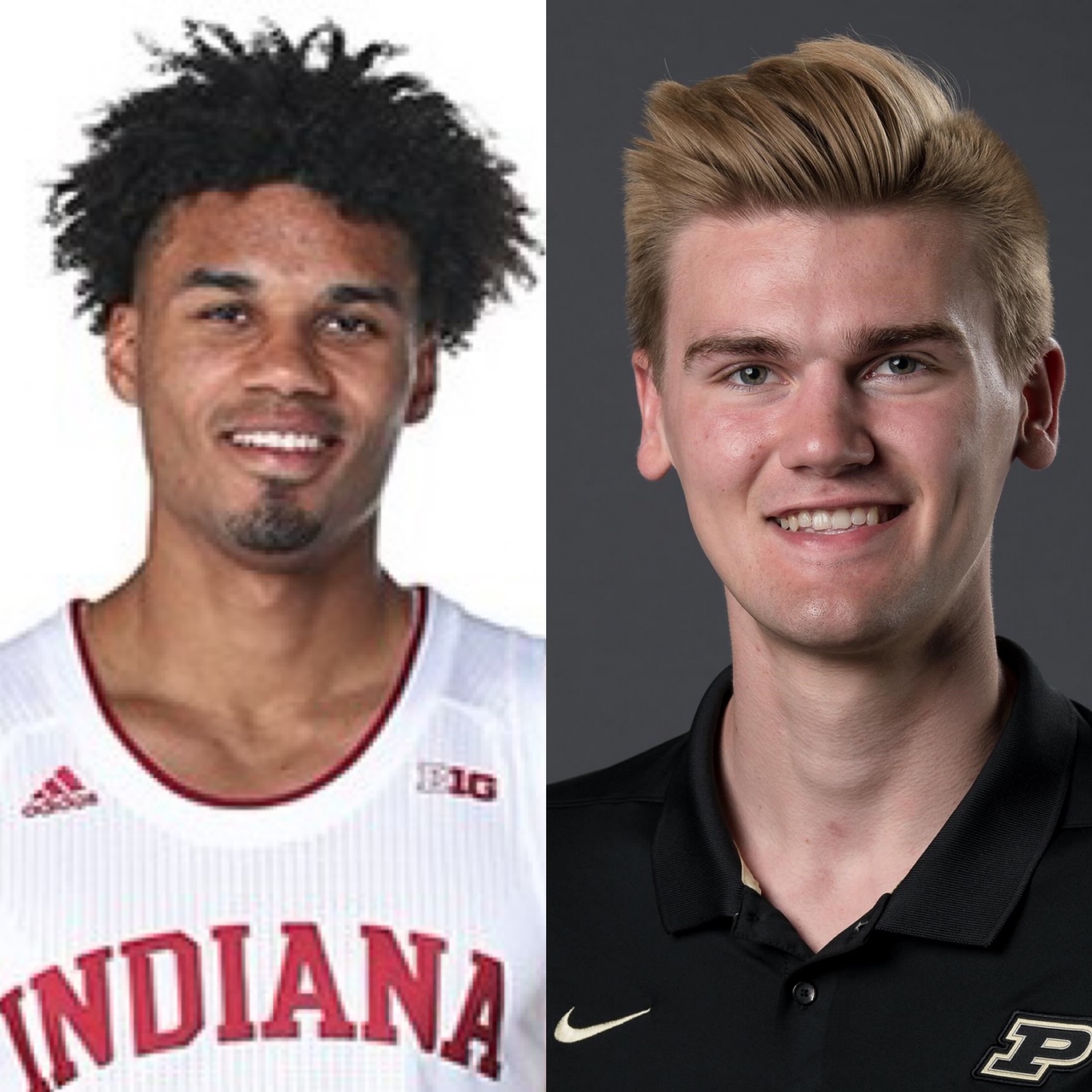
Justin Smith and Matt Haarms have decided to seek glory elsewhere rather than realize life is about others, not their individual glory.

The question of allowing graduate  transfers to compete without loss of eligibility is very complicated because transferring is rarely beneficial for a student-athlete or his sport.

Our childhoods are about dreams – what we aspire to be.  Adolescence teaches us what we cannot become and how we need to adjust our sites toward what we can accomplish.  Adulthood makes it clear our best work is devoted to helping others become functional adults who are willing to help others.

All kids with a modicum of athletic talent dream of becoming a quarterback, small forward, midfielder, or shortstop for their favorite team.  At some point, it dawns upon us that desire and willingness to work takes us only so far.  For many, it happens in middle school.  For others, it takes a little longer.

Click here for your copy of “Oops – the Art of Learning from Mistakes and Adventures” by Kent Sterling

As we look at the growing numbers of college basketball transfers, it seems as though they are hanging on to their dreams a little bit longer than reality suggests they should.  They flee adversity and embrace another voice that allows them to kick their NBA, NFL, MLB, and MLS aspirations down the road just a little bit longer.

They cheat themselves of that glorious moment when participating in sports becomes about helping the group succeed rather than the momentary joy of individual accomplishment.

There is no question it’s better for student-athletes to stick it out – to answer adversity with grit and tenacity instead of packing a bag and changing addresses.  Quitting becomes habitual, and transferring is a resignation.

So if it’s better for the student-athlete to stick it out and it’s better for the game for them to remain at one place for four years, why does the NCAA continue to allow graduates to leave their school to play somewhere else with immediate eligibility?

The answer is complicated.

Sometimes wisdom needs to come hard to those who refuse to accept it when it’s served easy.  It’s not up to the NCAA or anyone else to legislate against mistakes that serve as the best teachers.  Freedom to screw up is really what college is all about, and the NCAA gives student-athletes the freedom to screw up big, wind up struggling with the same issues at a different school, and learn the issue wasn’t a school or coach.  It was the guy staring back at him in the mirror.

The NCAA even considered allowing undergraduate student-athletes to transfer without sitting for a year.  That plan was correctly tabled because the disruption to college sports and its players would have been too severe.  We love mistakes, but mandating a degree before gaining the freedom to wander without penalty is the right answer.

Some college athletes love to hear praise.  They covet the guidance from those who make it easy physically and emotionally.  Others want challenges from coaches.  They feed off the input of those they can prove wrong.  Guess which of those two types of athletes succeed in sports and life at a higher level.  Guess which transfer more often.

Competing as a college athlete is difficult.  It requires a willingness to work exceptionally hard without any promise of an immediate return on that investment.  In that way, it mirrors life.  The concept of fairness does not exist in college sports or business.  It works out for some and doesn’t for others until we realize the true measure of a life is not the money earned, house or car owned, or titles won.  It’s about the impact you have upon others whose lives are enriched by your efforts.

It’s a rare individual who shows up on campus buying into the concept of giving, but many graduate with that wisdom.  That’s the value of college sports for those smart enough to embrace it.

Transferring has yet to help anyone gain that insight, and that’s why it should be rejected as a concept by those who are tempted to take flight instead of fight.  But removing the option to transfer as a graduate would do nothing to engrain that lesson.

That’s why transferring should remain legal but rarely utilized.

Lessons from New Albany High School radio teacher Lee Kelly will reverberate forever

Lee Kelly at the 70th anniversary celebration of WNAS with two of the many students he impacted as a mentor, teacher, and friend.

Lee Kelly passed away today.  He was my teacher, as he was for so many New Albany High School students during nearly 40 years running WNAS, America’s first high school radio station.

I was a high strung kid with more energy than brains, and Lee was a patient man who understood his students even better than he knew radio.  Without him, I wouldn’t have had much of a chance at New Albany – or in radio.

Radio is a social medium, and Lee was a social man.  Most days, his students sat and talked while playing music for people who ventured to the very left end of the radio dial.  He held us accountable for our idiocy without condescension.  Some of us took radio a little more seriously than others, but all of us respected Lee’s guidance.

Click here for your copy of “Oops – the Art of Learning from Mistakes and Adventures” by Kent Sterling

He kicked me out of radio many times as I struggled to learn where the line between harmless silliness and abject irresponsibility existed.

My junior year, we had radio in third period.  Lee taught at Floyd Central High School during first and second period, and so we were unsupervised for the first 20 minutes of class.  A classmate named David Sappenfield and I would regularly take those 20 minutes to drive to the Honey Creme Donut Shop to grab a dozen maple glazed for the class.  It seemed like the kind of thing professional radio people would do.

Obviously, students venturing off campus during class to buy donuts was not a teacher endorsed activity.  One day, Lee asked where we got the donuts.  I told him we take the time during his drive each morning to grab them.  Lee gently told us to stop by appealing to our reason and decency.  Sadly, we didn’t have a lot of reason or decency when we were 16.  We continued our donut runs, but worked to hide the sweet evidence.

A few weeks went by without incident until one Friday when Lee must have gotten an early start.  Sap and I drove past Lee and sheepishly waved as he pulled into the parking lot.  We were flat busted but continued to Honey Creme because we had nothing to lose, and we felt a couple of donuts might help mellow Lee’s anger a bit.

We underestimated Lee’s anger while overestimating his love of sweets.  When I walked into the radio room and offered Lee a donut, he grabbed a dictionary, threw it at the wall, and barked, “Sterling! Go see Mr. Jensen and see if he can’t find you another class to take third period!”

I didn’t go see Mr. Jensen.  If Lee wanted me gone, he was going to have to do it himself.  He never did.  Again and again, I provided reasons for him to cast me out, and he found reasons to forgive and teach.  My level of immaturity was no match for Lee’s fortitude and understanding.

We fell out of touch for decades, but Lee was always in my thoughts as I tried to figure out how I overcame youthful exuberance to become a mostly productive adult, husband, and father.

I finally saw Lee again as New Albany’s basketball team played at Carmel five years ago.  For years I thought about what I needed to say to him to express my thanks, and this was my chance.  After the game I finally thanked Lee for everything he taught me about radio and life.  He smiled through one last silly and unnecessary communication from his student.

Lee helped shepherd over 1,000 students through his radio classes at New Albany High School, and those who needed a firm but kind guiding hand became better adults for his being in their lives.  That’s what great teachers do, and Lee was a great teacher.

High school isn’t about just about theorems, Chaucer, Latin, Avogadro’s number, and dangling participles.  It’s about learning to live as members of a society and appreciate that the universe doesn’t spin around us.  If we’re lucky, a teacher helps ferry us from myopic selfishness to empathetic wholesomeness.

I still have my moments of self-immersion, but Lee helped me migrate through a perilous time when I could easily have wobbled off my precarious perch on a constantly gyrating beam.

Lee has passed on from this place, but his impact will survive generations as his kindness and guidance reverberate through his graduates to those they help and on and on and on.

It’s a shame Lee won’t be around any longer to help others as he helped generations of New Albany students.  Expanding his legacy forward falls to his students, and that will mean more than a simple thank you at a basketball game.

Indiana Football plans to allows student-athletes to return “early to mid-June”

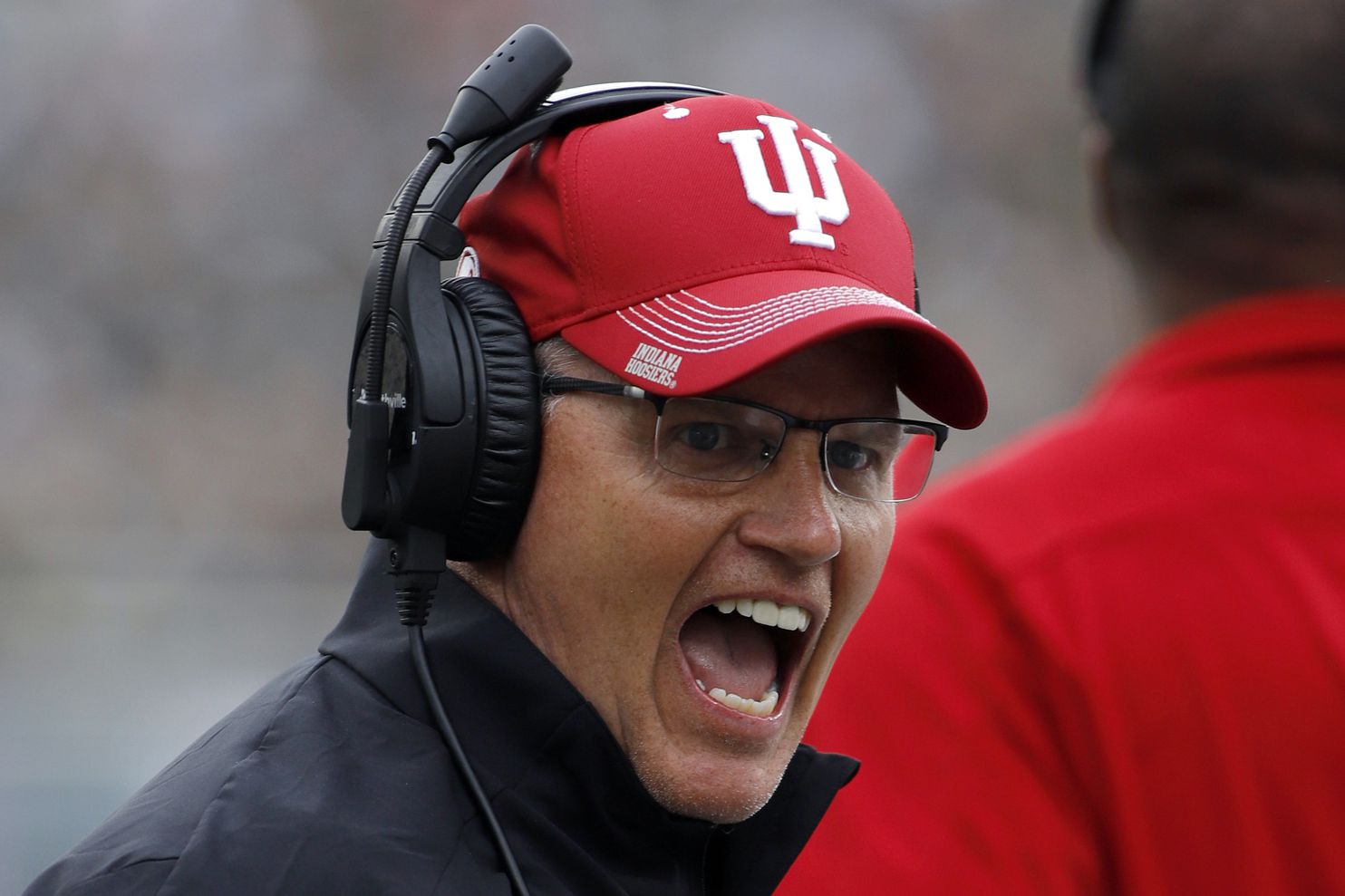
Tom Allen’s Hoosiers will be back in Bloomington in two or three weeks, based upon medical guidance.

A letter from football coach Tom Allen to parents of his players outlines the program’s plans for going back to work in preparation for the 2020 season.

Allen wrote in part, “Currently, we are seeking to begin team activities early-to-mid June…we have been advised to bring players back in three phases.  Each phase will include a specific number of players, based on the stipulations of medical professionals.”

Players will only be allowed to work with strength staff as they begin to come back to Bloomington.

Click here for your copy of “Oops – the Art of Learning from Mistakes and Adventures” by Kent Sterling

Allen emphasizes in the letter that safety is the top priority, “The health and well-being of our players is our number one priority. Even though this current situation has created a lot of anxiety and many unanswered questions, I strongly believe that we have developed a comprehensive plan to systematically return our team to campus.”

Academic work will be virtual and continue to be important for a variety of reasons, one mentioned by Allen is pragmatic and obvious, “It is especially important that our players continue to focus on their academics throughout the summer terms in order to remain eligible in the (f)all.”

And, of course, the letter is signed “Tom Allen #LEO.”

These are strange times for college football programs.  All are trying to protect the health of players, coaches, and support staff, but also want to assess the environment to find competitive advantages.  Every coach knows that if he doesn’t find the right combination of tactics to prepare his team just a little bit better than conference peers, his team will fail this fall.

One of the tired quotes of the Coronavirus era is, “Never waste a crisis,” but it’s appropriate as we look ahead to the 2020 college football season.  A program like Indiana’s has a chance to level the playing field during a bizarre offseason like this through exactly the right combination of aggressive preparation and strict safety protocols.

That work will begin in “early to mid-June.”

Justin Smith transferring from Indiana to try to fulfill potential elsewhere

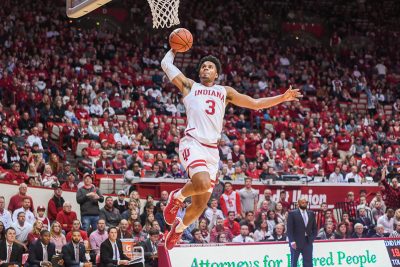
Justin Smith soars for a dunk at Assembly Hall, and now he will fly from Bloomington to another school and basketball program.

Justin Smith is leaving Indiana Basketball because he believes the grass will be greener somewhere else.  Some believe where a kid plays is a bigger problem than who the player is, so it’s easier for them to project blame and move on than accept responsibility and hunker down.

A reckoning comes eventually for those who are responsible for their own woes.  If Smith is one of those, he will learn from the choice he announced today.  Many learn how to fight through adversity in college.  Others learn how to fight through adversity because they failed to do it during their college years.

Click here for your copy of “Oops – the Art of Learning from Mistakes and Adventures” by Kent Sterling

For those keeping track at home, Indiana and Purdue are now tied at two transfers each.  Smith’s former Indiana teammate Damezi Anderson announced was leaving IU to attend Loyola a few weeks ago, and Nojel Eastern and Matt Haarms left the Boilermakers earlier in the offseason for Michigan and Brigham Young respectively.

It’s up to athletes to figure out how to use their four years of eligibility, and these guys each felt they had a better chance to live their dreams elsewhere.  After all, it’s a lot easier to change your address than your willingness to work through adversity.

There that word is again – adversity.  Young people run from it like an elderly and overweight diabetic flees a mask-free man on a coughing jag at Kroger.  Sadly, the ability to deal head-on with adversity is the very best outcome possible for athletes.  That’s the good stuff – the character-building stuff that a great college experience instills.

Smith has always been gifted in a variety of ways.  He’s exceptionally athletic and off-the-scale smart.  His weakness, going back to his days at Stevenson High School in suburban Chicago, is consistently competing to his potential.  Two-time national champion and current Dallas Maverick Jalen Brunson was a high school teammate of Smith’s.  When I asked him about Smith, Brunson said, “Man, if the switch ever flips for Justin, watch out!”

The switch didn’t flip at Indiana, so the challenge of unlocking Smith’s potential will no longer frustrate Archie Miller.  Another coach with a scholarship to give and a hole at the three will use Smith to his advantage – or try.

As is the case with Anderson, Haarms, and Eastern, we wish Smith the best and hope his visions of excellence come true – whether they are athletic or academic.

The ease with which players can transfer after they earn degrees has come under fire recently.  Smith has earned his degree after three years, so he will enjoy immediate eligibility at his new school.  Many would like to see a consequence – like a mandated red shirt year – that might discourage those who give serious thought to changing schools.  Making transferring more difficult might encourage players to fight rather than fly.

I like the transfer rule as is.  Legislating against freedoms that lead to a potentially bad decisions is not the business of the NCAA.  If students earns degrees, their side of the bargain has been fulfilled and the freedom to use an immediate grad eligible year should be allowed.  If it doesn’t work out, lesson learned.

Transferring is not always a good idea, but making mistakes is how we learn, whether we are 21-years-old or 81-years-old.

Smith will roll someplace else, play, study, and hopefully make the most of his new opportunity.  And it’s up to those remaining at Indiana to excel despite Smith’s abdication as a senior leader with tremendous potential.

That’s life in college basketball.  Some sink, and others swim; some fight, and others fly; some win, and others lose, some thrive because of their decisions, and others teach because of their mistakes.