Author Archives: Kent Sterling

Justin Smith transferring from Indiana to try to fulfill potential elsewhere

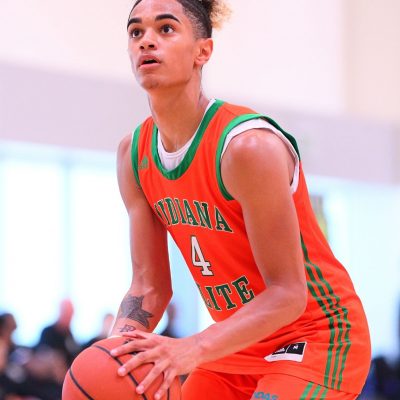
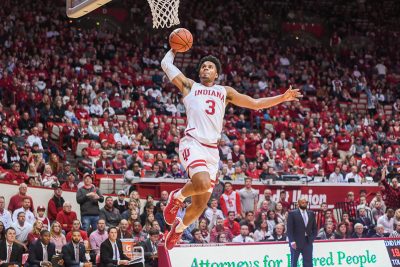
Justin Smith soars for a dunk at Assembly Hall, and now he will fly from Bloomington to another school and basketball program.

Justin Smith is leaving Indiana Basketball because he believes the grass will be greener somewhere else.  Some believe where a kid plays is a bigger problem than who the player is, so it’s easier for them to project blame and move on than accept responsibility and hunker down.

A reckoning comes eventually for those who are responsible for their own woes.  If Smith is one of those, he will learn from the choice he announced today.  Many learn how to fight through adversity in college.  Others learn how to fight through adversity because they failed to do it during their college years.

Click here for your copy of “Oops – the Art of Learning from Mistakes and Adventures” by Kent Sterling

For those keeping track at home, Indiana and Purdue are now tied at two transfers each.  Smith’s former Indiana teammate Damezi Anderson announced was leaving IU to attend Loyola a few weeks ago, and Nojel Eastern and Matt Haarms left the Boilermakers earlier in the offseason for Michigan and Brigham Young respectively.

It’s up to athletes to figure out how to use their four years of eligibility, and these guys each felt they had a better chance to live their dreams elsewhere.  After all, it’s a lot easier to change your address than your willingness to work through adversity.

There that word is again – adversity.  Young people run from it like an elderly and overweight diabetic flees a mask-free man on a coughing jag at Kroger.  Sadly, the ability to deal head-on with adversity is the very best outcome possible for athletes.  That’s the good stuff – the character-building stuff that a great college experience instills.

Smith has always been gifted in a variety of ways.  He’s exceptionally athletic and off-the-scale smart.  His weakness, going back to his days at Stevenson High School in suburban Chicago, is consistently competing to his potential.  Two-time national champion and current Dallas Maverick Jalen Brunson was a high school teammate of Smith’s.  When I asked him about Smith, Brunson said, “Man, if the switch ever flips for Justin, watch out!”

The switch didn’t flip at Indiana, so the challenge of unlocking Smith’s potential will no longer frustrate Archie Miller.  Another coach with a scholarship to give and a hole at the three will use Smith to his advantage – or try.

As is the case with Anderson, Haarms, and Eastern, we wish Smith the best and hope his visions of excellence come true – whether they are athletic or academic.

The ease with which players can transfer after they earn degrees has come under fire recently.  Smith has earned his degree after three years, so he will enjoy immediate eligibility at his new school.  Many would like to see a consequence – like a mandated red shirt year – that might discourage those who give serious thought to changing schools.  Making transferring more difficult might encourage players to fight rather than fly.

I like the transfer rule as is.  Legislating against freedoms that lead to a potentially bad decisions is not the business of the NCAA.  If students earns degrees, their side of the bargain has been fulfilled and the freedom to use an immediate grad eligible year should be allowed.  If it doesn’t work out, lesson learned.

Transferring is not always a good idea, but making mistakes is how we learn, whether we are 21-years-old or 81-years-old.

Smith will roll someplace else, play, study, and hopefully make the most of his new opportunity.  And it’s up to those remaining at Indiana to excel despite Smith’s abdication as a senior leader with tremendous potential.

That’s life in college basketball.  Some sink, and others swim; some fight, and others fly; some win, and others lose, some thrive because of their decisions, and others teach because of their mistakes.

Indy 500 weekend traditions on hold, but celebrating still encouraged!

Just because there won’t be craziness at the Indianapolis Motor Speedway this Sunday doesn’t mean you can’t get crazy without it!

Right about now every year, Indy 500 fans in central Indiana are stocking up on food and beverages.  When asked, they refuse to divulge their secret route to the variety of entrances that surround the Indianapolis Motor Speedway.  The most ambitious are trying to figure out how to be included in a police escort to the grounds so they avoid massive traffic jams entirely.

Not this year.

The hallowed yard of bricks that marks the start/finish line will not be crossed 200 times by cars traveling at nearly 240 miles per hour.  They will not be kissed by the winning driver and team.  More than 300,000 fans will not converge upon the aptly named town of Speedway for the Greatest Spectacle in Racing.

The 104th Running of the Indianapolis 500 is not scheduled to be run on the day before Memorial Day for the first time since 1973.  Because of Coronavirus, the race has been postponed to August 23rd, and so Indianapolis will need to figure out just what to do with Memorial Day Weekend without the Carb Day drunkfest and concert, the 500 Festival Parade, Jim Cornelison singing “(Back Home Again in) Indiana”, and the race.

People in the midwest will not be prodded and cajoled by Hoosiers extolling the virtues of this singularly thrilling afternoon of insane speeds in front of the biggest crowd in the history of sports.  This year, those calls, emails, texts, and social media posts will not bewilder those who just don’t get it – the people who have never attended an Indy 500.

Fans will not be making hourly checks on the weather forecast for race day, which is a good thing because right now the chances for storms stand at 40% during the time the 500 would normally be run.  No reason to drive ourselves crazy as we flip from Chuck Lofton to Randy Ollis to Star Derry in the morning and Brian Wilkes, Kevin Gregory, and Angela Buchman at night.

We will wait for one day shy of three months for our opportunity to come together for this utterly unique annual celebration of speed, tradition, and the opposite of social distancing.  Fans hope that by August 23rd this pandemic will have drifted into irrelevance, and six-foot buffers will no longer be required.  That seems a long shot today, but there is always hope.

This Memorial Day weekend, we will remember all the thrills, spills, and long afternoons watching cars, people, and the skies from previous Memorial Day weekend Sundays.  There won’t be any lines of people waiting their turns at the restroom troughs, WIBC Morning Show with predictably dire traffic reports, and TV interviews with drivers in their garages and motor homes.

These are strange days.  Our lives and the traditions we use to mark the seasons are on hold for now.  We are left with our memories and imaginations to keep us entertained as we count the days before Stage 3 of Indiana re-opening becomes Stage 4 and then Stage 5.

Our lives will continue moving forward far less quickly than an Indy Car – even during a pace lap.  But as we miss the Indianapolis 500, we know this too shall pass, hopefully like Josef Newgarden slingshotting around Pippa Mann.

In the meantime, fill a cooler, load up a grill with red meat, invite some friends to your home, and celebrate like hell.  Coronavirus can cause the Indy 500 to be delayed 91 days, but it can’t keep us from enjoying every single day until then.


Without great luck, brilliant coaches like Celtics and Butler’s Brad Stevens might still be anonymous

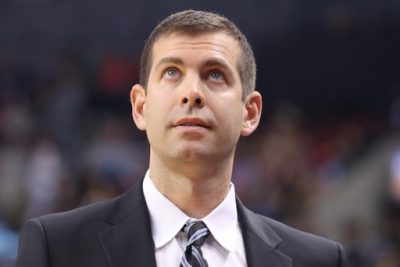
Brad Steven is brilliant, but he was also very fortunate as he built his career as the brightest young coach in basketball.

Building a career as a college or professional basketball coach is tough – really tough.  The combination of luck, timing, work ethic, and strategic acumen needed to get ahead is dizzying, and I don’t wish a career in that business on anyone.

There is no more cited example of how young coaches make good than Boston Celtics coach Brad Stevens.  He’s brilliant, friendly, humble, and was an early adaptor of analytics.  People point at Stevens as though young men and women who follow his lead should be able to get to where he is.

Click here for your copy of “Oops – the Art of Learning from Mistakes and Adventures” by Kent Sterling

Even for a guy as smart and charismatic as Stevens to get to where he is, it took an amazing series of occurrences that had very little to do with his qualities as a coach.  There are plenty of obvious quirks of fate we could discuss, like Todd Lickliter leaving Butler for Iowa to open the door for his’ ascension to head coach for the Bulldogs, but let’s dig into an arcane series of events at Indiana University, without which Stevens career might have stalled.

Back in 2005, Indiana University’s basketball team foundered under Mike Davis and fan engagement cratered.  The Hoosiers hosted an NIT game against Vanderbilt in front of a crowd of friends and family at Assembly Hall.  The writing was on the wall that Davis’s tenure as head coach was coming to an end, but athletic director Rick Greenspan stuck with his beleaguered coach for another year.

Davis was not focusing much attention on recruiting at Indiana high schools, famously telling Mike Conley Sr. during a morning workout at Lawrence North High School that he was only interested in Greg Oden, not his son.  Both Oden and Conley Jr. attended Ohio State and led the Buckeyes to a 35-4 record, a Big 10 regular season championship, a Big 10 Tourney championship, and a national championship appearance in their only season in Columbus.

The 2007 high school class in Indiana was loaded with Division One talent too.  They were ignored by Davis as well.  So as Davis was retained for the 2005-2006 season, Butler and Purdue went to work building relationships with families in that group.

By the time Kelvin Sampson replaced Davis after a 2005-2006 season, the 2007 recruiting class was already a long way toward making their decisions about where they would play and study in college.

Stevens was one of the assistant coaches working exceptionally hard to gain commitments from that group.  He attended every game my son’s summer team played during the summer of 2005, as he recruited Matt Howard and Zach Hahn.  I never saw an Indiana coach at any of those games.

Sampson was able to work with Eric Gordon to get the future NBA star to decommit from Illinois and join the Hoosiers, but it was too late for the rest of that very talented group that had already become very friendly with the coaches representing other in-state programs.  Howard and Hahn committed to Butler, while JaJuan Johnson, Robbie Hummel, E’Twaun Moore, and Scott Martin pledged Purdue as Matt Painter rebuilt the Boilermakers.

Lickliter left Butler for Iowa in the spring of 2007, and Stevens was hired to replace him.  In part because Stevens outworked every other college coach, his first class of recruits would set the table for unprecedented success at Hinkle Fieldhouse.

In 2010 and 2011, Butler played in the national championship game with Howard and Hahn.  They also had a couple of other future pro’s in Brownsburg’s Gordon Hayward (2010) and Shelvin Mack.

If Indiana had replaced Davis after the 2005 season that ended in that first round NIT loss to Vanderbilt, there is every chance Greenspan would have tabbed a coach that could have built a relationship with Howard, some of the guys who went to Purdue, and perhaps Hayward a year later.

Indiana would have thrived.  Butler (and Purdue) might have taken a big step backward.

Let’s look at the sequence of dominoes as they might have fallen if Greenspan fired Davis in 2005 and hired a coach who recruited Indiana hard.

  • Stevens likely doesn’t get Howard.
  • If Stevens doesn’t get Howard, Butler doesn’t play in back-to-back national championship games.
  • If Butler doesn’t play in back-to-back national championship games, Butler doesn’t move from the Horizon League to the A-10 to the Big East.
  • If none of that happens, Stevens is not hired to coach the Boston Celtics.

Now, that’s a lot of ifs.  It’s possible that Howard would have gone to Butler regardless of who became Indiana’s coach.  It’s possible Stevens would have found a plan B that might have elevated the program in the way that Howard did – although I don’t know who that might have been – and Stevens doesn’t either.

The point is that a lot of things have to go right, even for a great coach like Stevens to find his way up the bench to display his excellence in the way required to follow in the footsteps of Barry Collier, Thad Matta, Todd Lickliter, Red Auerbach, Tommy Heinsohn, Bill Fitch, K.C. Jones, and Doc Rivers.

There are assistant coaches stuck on benches who through no fault of their own will never be in a position to take full advantage of their genius in the way Stevens has.

We tend to look at the guys who earn millions as college basketball coaches and envy them.  Don’t forget to take a good look at the guys whispering in the ears of those millionaires.  Some are every bit as smart, decent, and friendly as Stevens, but have yet to be given the opportunity to show it.

Five reasons to be optimistic Colts are ready to take first step toward Super Bowl LV

May is not the time for NFL realists to shine.  Now is when dreams of a Lombardi Trophy dance in the imaginations of all 32 fanbases, even if 31 of them will be wrong.

Colts fans are no different.  It’s easy to list reasons why the Colts will continue to live inside the bulging middle of the NFL and outside the successful edge among those teams likely to play deep into January.  But what the hell fun is that?  We invest plenty of time and energy during the season to talk about reality.

I would much rather write about the arguments that justify a some optimism the Colts will be back on the NFL’s biggest stage in early February.

Click here for your copy of “Oops – the Art of Learning from Mistakes and Adventures” by Kent Sterling

In that spirit, here are the five arguments that the Colts have a shot to take down the Chiefs as the beasts of the AFC:

5 – Tom Brady has moved to the NFC.  Brady has represented the AFC as a starting quarterback in an astounding nine Super Bowls in 19 seasons.  There is some doubt as to whether he was a more important component to the Patriots success than Bill Belichick, but Brady being gone cannot be a bad things when his replacement will likely be an unproved guy named Jarrett Stidham.

4 – Drafting Jonathan Taylor.  I know Terrell Davis was the last running back to be named Super Bowl MVP 22 years ago, and that the running back position has lost its luster over the years, but Taylor has the size and speed (226 lbs./4.39 40-yard dash) to be a dynamic offensive weapon behind a road-grating offensive line.  Taylor and Marlon Mack should be a unique one-punch punch for an offensive that wants and needs to run the football.

3 – Addition of DeForest Buckner.  Since the retirement of Robert Mathis, the Colts have had a tough time putting pressure on opposing quarterbacks.  With the addition of Buckner as a three-technique, opposing offensive will have to dedicate more than one blocker to stopping him.  That should open lanes for Justin Houston, Ben Banogu, and Kemoko Turay.  More pressure on opposing QBs means more bad throws that might be caught by Colts DBs.

2 – Improved kicking game.  I hate kicking Adam Vinatieri while he’s down, but his injury-plagued 2019 was costly for the Colts.  His work directly cost the Colts three wins against the Chargers, Steelers, and Titans.  No kicker is perfect, and perfection should not be expected – even of Vinatieri – but a typical season from the GOAT would have lifted the Colts from 7-9 to 10-6.  It remains to be seen whether a healthy Vinatieri, the return of Chase McLaughlin, or rookie Rodrigo Blankenship will kick for the Colts, but if production from that position improves, results will too.

1 – Philip Rivers is an upgrade over Jacoby Brissett.  Brissett doesn’t throw a lot of interceptions, but he doesn’t make a lot of plays either.  It didn’t take long for defenses to adjust to Brissett’s proclivity for throwing short passes.  Brissett’s yards per completion (6.7) ranked 30th among starters between Daniel Jones and Mason Rudolph.  Rivers ranked 11th between Drew Brees and Deshaun Watson.  Brissett’s safety first decision making pulled defenses tighter to the line of scrimmage and kept the Colts from running the football as well as they might have if he popped it deep more often.  Rivers makes plays – good and bad.  Brissett avoided both.

Bonus – One of the NFL’s easiest schedules.  This is a little bit nutty as it assumes facts not yet in evidence.  No one knows how good, bad, or mediocre any of the teams in the NFL will be on May 20, 2020, so projecting schedule difficulty is a fool’s errand.  The Colts get to play the Jaguars and Texans twice each – that’s good.  They also play the AFC and NFC North, which means an opportunity to compete with the Bengals, Browns, Steelers, Bears, and Lions.  There are winnable games against the Jets and Raiders.  Unless my math skills have degraded, that should tally to 11 games in which the Colts should be favored.  Sadly, the Titans are on the schedule twice along with games against the Ravens, Vikings, and Packers.

The Colts will need great health for any of this to mean a damn thing.  If T.Y. Hilton, Anthony Castonzo, or Quenton Nelson gets hurt, all hope for a special season will fade very quickly, and I will deny any and all responsibility for the existence of this post.

The Colts look like a team with a basement of a 7-9 repeat of 2019, and a ceiling of 10-6, but maybe, if everything goes right, they can find their way into a groove that leads to Raymond James Stadium in Tampa for Super Bowl LV.

Bill Self and Mark Gottfried deserve quick and severe justice for blatant cheating, but the NCAA spins in slow circles

The NCAA has transcripts of phone conversations that show beyond any rational doubt that University of Kansas basketball coach Bill Self was at least aware of major violations his program committed.

Because of its labyrinthian enforcement and punishment protocols, Self is not only still the Kansas coach, it’s damn likely he will remain so until he decides it is time to do something else with his life.

The NCAA has concluded its investigation, finding that Kansas and Self are responsible for five Level One (the most serious level) violations.  Kansas has responded to the findings, and the NCAA has responded to the response.  If you think it’s over now – that’s all there is to enforcing NCAA rules – you underestimate the NCAA’s ability to complicate things.

Click here for your copy of “Oops – the Art of Learning from Mistakes and Adventures” by Kent Sterling

Now, the Kansas case will be run through the Independent Accountability Resolution Process developed by Condoleeza Rice and her commission of earnest muddlers.

Here’s a thumbnail of how the IARP works:

The Infractions Referral Committee will decide whether to send the file to the Complex Case Unit.  Then, based upon the CCU’s findings, the penalty phase will be handled by the Independent Resolution Panel.

This sounds like a Monty Python sketch making fun of the inanity of bureaucracy, but it’s not satire.  The NCAA built this wild trapeze to allow college basketball’s problems to turn dazzling airborne somersaults while being conveyed from one platform to another and back again without actually going anywhere.

For people who crave justice served to coaches who violate rules enacted needed to keep college basketball fair, a lack of resolution is very frustrating.  Realists understand that people in charge at Power Five schools are repulsed by enforcement and punishment for blue bloods because it does nothing but diminish the popularity and profitability of the game.

College basketball is a business, and while it sucks that programs like Kansas violate rules in order to gain an advantage over programs that don’t, the cost of holding them accountable is too high.  So the NCAA convenes a silly tribunal of career bureaucrats to develop a maze of committees where infractions can wither before fan disinterest renders them trivial.

Look at North Carolina State, a not-quite blue blood member of the ACC.  The NCAA has found that assistant coach Orlando Early provided Dennis Smith and his people over $46,000 when the Wolfpack recruited him in 2015.  Smith played one year before jumping to the NBA in 2017.

Yesterday, it was announced the Complex Case Unit will handle the next step toward holding the university and coaches accountable.  Early has not coached at NC State since 2017 and head coach Mark Gottfried moved on to Cal State Northridge in 2018, but the NCAA is still plodding toward resolution?

Where is the disincentive to cheat in this ludicrous system?  The only big time programs that are ever held accountable are those whose self-report and accept the NCAA’s penalties without a fight.

Indiana told the NCAA all about the impermissible phone calls Kelvin Sampson and assistant Rob Senderoff made, then accepted sanctions even after showing Sampson and Senderoff the door.  The program paid dearly while Sampson and Senderoff are currently head coaches at Houston and Kent State.

Louisville also took matters into its own hands as it dealt with entrenched cheating by Rick Pitino’s staff that involved prostitutes for players and recruits and cash payments to the father of at least one recruit.  U of L fired Pitino and megalomaniac athletic director Tom Jurich.  The NCAA vacated Louisville’s National Championship and issued other penalties for violations related to the hookers.  The gavel hasn’t yet fallen on the Cardinals for assistant coach Kenny Johnson giving cash to Brian Bowen’s dad.

If the NCAA really wanted to fix corruption in college basketball, it would have authorized people concerned with justice to develop a system of accountability rather than impanel a council of pencil pushers who have made serving on committees and cabinets their life’s work.

The NCAA will one day conclude the work necessary to finally render judgment against Kansas and North Carolina State, but those responsible will have been paid many millions more for success earned through the cheating the NCAA claims to condemn.

In the meantime, people who value rules and justice will bitch and moan about the hypocrisy of a rule book no one is interested in enforcing.

So it has always been – and will always be.

As one of the very best NBA executives in history, Donnie Walsh needs a banner

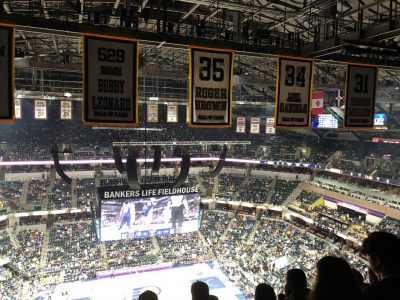
There is a banner missing from the rafters of Bankers Life Fieldhouse. All-time great NBA executive Donnie Walsh deserves one too.

The rafters of Bankers Life Fieldhouse are filled with names and numbers of the most important people in Pacers Sports & Entertainment history.  It’s time for Donnie Walsh to take his rightful place among them.

Reggie Miller is up there.  Members of the three ABA championship teams are alongside him.  Slick Leonard has a banner.  So do Mel Simon and Tamika Catchings.  Without each of those people, the Pacers and WNBA Indiana Fever would likely either not exist at all – or would be in a different city.

Walsh’s influence over the Pacers is as profound as any.  Miller is only a Pacers hall of famer because Walsh drafted him in 1987.  The Pacers built popularity through the 1990s because Walsh filled the Pacers roster with talented players who fit Larry Brown’s scheme.  He hired Larry Brown and Larry Bird as coaches, and led the team that designed and built the Fieldhouse – still America’s best basketball arena.

Click here for your copy of “Oops – the Art of Learning from Mistakes and Adventures” by Kent Sterling

When the Indiana Pacers elevated Donnie Walsh from assistant coach to general manager in 1986, they set a course for sustained success that is unique in in the NBA.  From 1990 through 2006, the Pacers made the playoffs every year but one.

During that span, the Pacers advanced to the NBA Finals once and the Eastern Conference Finals six times.  The Pacers have not won fewer than 32 games in any season since 1990.   Just as important, Walsh brought other revenue streams into the building that have helped bridge the financial gap between the Pacers as a small market team and those in bigger cities that don’t need to be quite so creative to keep a smile of the face of NBA franchise owners.

Walsh built a roster, culture, and business model that brought consistent popularity and profits to the Pacers.  He’s a patient and smart man who understands the concept of hiring quality people and rewarding them, and he remains an important resource for the franchise.

Every practice I attend, there is Walsh sitting on the far end of the court watching as the sage but still very engaged architect of basketball teams – one of the best ever to build a roster.  He talks to front office management about what he sees, and hopes one day to see the Pacers win the championship that has eluded them from the time they migrated from the ABA to the NBA.

The idea that Walsh should be honored with a banner never occurred to me until Pacers radio play-by-play voice Mark Boyle mention it on the Dan Dakich Show yesterday as they discussed the 1998 Eastern Conference Finals matchup between the Pacers and Bulls that was a big part of Sunday’s finale of The Last Dance.  As with a lot of things Mark says, it makes perfect sense.

As with many successful managers, Walsh likes deflect praise toward staff.  If a man can be modest to a fault, Walsh is exactly that.  It’s time to give him his due despite his insistence he doesn’t need to be honored.

Here is an extended interview with Walsh that tells his story.  The best part of working in media is the chance to sit with incredibly smart people and learn from them.  Walsh was – and is – honest and fascinating:

https://soundcloud.com/sports1430/donnie-walsh

Khristian Lander will be a Hoosier one year early; let’s hope he’s ready #iubb

Khristian Lander is coming to Indiana one year earlier than planned.

Khristian Lander is re-classing from 2021 to 2020, which means the recruit who was set to be Archie Miller’s jewel of the 2021 recruiting class will be a freshman for the upcoming season.

It’s none of my business really, and I cannot rationally explain my interest in this young man’s decision, but I would like to know why he slid his collegiate career forward by one year.  I mean, what’s the hurry, Murray?

I worry about people who are in such a rush to get to adulthood that they miss adolescence – you know that awkward stage between childhood and adulthood where you learn where life’s boundaries are.  Going straight from kid to man can be problematic – especially for athletes who are subjected to the kind of pampering that comes with being a basketball player at IU.

Click here for your copy of “Oops – the Art of Learning from Mistakes and Adventures” by Kent Sterling

If Lander’s decision is money-based, I understand it.  If he’s worried about Coronavirus eradicating his senior season at Evansville Reitz, I get that too.  If he sees this coming year – likely IU’s last with Trayce Jackson-Davis – as a chance to be a part of something special, there’s nothing wrong with that.

I’m not judging.  I’m just curious because I’m a human being who’s been in a hurry too, and I want him to enjoy the experiences he seems intent upon sprinting past or leaping over.  Life is short enough without skipping steps and rites of passage.

Maybe it’s Lander’s family who wants the cash that might await him in the NBA.  Maybe not.  I don’t know his family, but chasing cash is just as silly as treating your 18th year as an inconvenience.

When I see Lander re-classing, I think of what I wrote seven years ago about Noah Vonleh, who did the same thing to get to Indiana a year early in 2013.  Vonleh is still only 24-years-old and has earned $15-million playing for six different teams in six years after one season at Indiana.

Maybe Vonleh would have torn his ACL during his senior year in high school or additional seasons in Bloomington and sacrificed his chance to earn what he has.  But it is also true that if Vonleh had stuck around in high school or IU, he might have developed a little bit differently both on court and off, and would be valuable enough to not be quite so well travelled.

Again, I don’t know the right answer for specific individuals like Lander, but I hope his choice is proven the correct one.  Hell, Vonleh has earned more money before turning 25 than 99.8% of Americans will earn in their lifetimes, so if it’s about money – Vonleh wins.

But there is more to life than money as a worthy goal in life.

I wish Lander well and hope he finds what he seeks.  I also wish for him the wisdom to slow down from time to time, appreciate the scenery of his own journey, and get where he wants to go anyway.

Kentucky fires cheerleading coaches for allowing nude, drunk, and obscene behavior

“Nude, lewd, and drunk” might be printed on Kentucky’s state motto, but that’s no way to go through life, kids.  Adults who encouraged that behavior at the University of Kentucky were fired today.

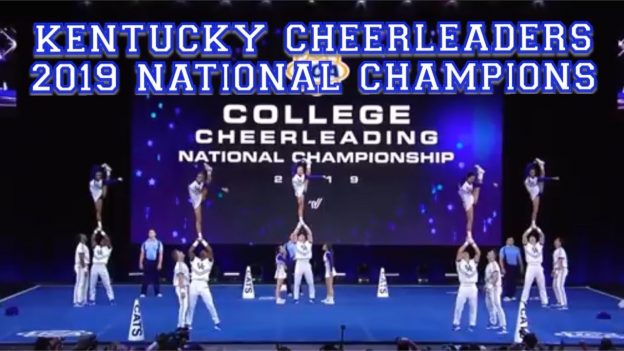
The firings were at the expense of coaches who run the University of Kentucky’s competitive cheerleading program.  For those of you who are unaware, there are competitive cheerleading teams who do not lead cheers for football and basketball teams.  UK’s squad has won 24 national championships in the last 35 years.

A three-month university investigation revealed “…coaches failed to stop a culture of hazing, alcohol use and public nudity at off-campus activities where they were present,” said Eric N. Monday, UK’s executive vice president for finance and administration.

Click here for your copy of “Oops – the Art of Learning from Mistakes and Adventures” by Kent Sterling

For a better idea of what happened, watch this video, add Everclear and obscene chants, and remove clothing:

Jobs can never be perfect enough for some people.  Earning a boatload of cash for coaching college cheerleaders was insufficient for Jomo Thompson and his staff.  No, they had to encourage or allow drinking and nudity during a team retreat at Lake Cumberland.

Like Seinfeld character George Costanza, who flew to close to the sun on wings of pastrami as he combined carnal activity with eating sandwiches, the Kentucky cheerleading coaches wandered beyond acceptable behavior as they watched their athletes perform gymnastics while inebriated and bottomless or topless.

Adults who fail to adhere to the “Creepy Rule” will always find their way to unemployment.  The “Creepy Rule” – for those who are unaware – states “if you engage in behavior that you would judge as creepy if you witnessed another person engage in it, you have become a creep yourself.”

There are benchmarks in life that must be honored.  College students should not socialize with high school students, and adults should never socialize as peers with college students.  This is especially true for university employees.

That lesson should not need to be reinforced through employer action, but evidently it did at UK.

For Michael Jordan, sacrifice and loneliness were a small price for being a 6X champion

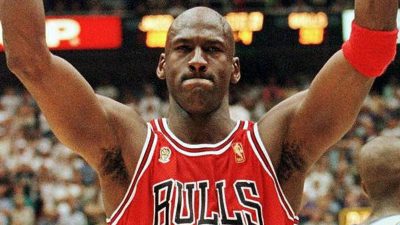
Winning once is never enough for a real champion. Michael Jordan covets the seventh title that went unwon rather than celebrating the six he did win.

Is it worth going into the emptiness of emotional darkness and denying yourself the affection of peers in the pursuit of championships?

That’s the question that lingers from watching ESPN’s The Last Dance.  Michael Jordan was at home in that lonely darkness.  He understood it was necessary to work with singular focus and demand the same level of work and sacrifice from others.

Not only did Jordan willfully dive into that cold and loveless chasm to wring the most out of his singular athletic gifts – he pulled teammates with him.  And he did it again and again and again and again and again and again.  Six times, Jordan shackled his teammates together and leaped into that cold abyss.

Click here for your copy of “Oops – the Art of Learning from Mistakes and Adventures” by Kent Sterling

“That’s who I am.  That’s how I play the game.  If you don’t want to play that way, don’t play that way,” Jordan said as he nearly broke down before calling for a break.  Jordan’s emotions speak to his craving of championships and the sacrifices involved in their quest.

It’s easy for those on the outside to question the desire of current professional athletes as they choose to avoid the renunciation of empathy necessary to win.  For some, making millions – as most do in the NBA – is enough.  Providing for family and living the dream as a pro athlete is plenty for most reasonable people.  Some work tirelessly themselves.  Precious few demand others join them in a march to collective greatness.  Two threepeats in the same decade doesn’t happen very often because it’s a rare group that embraces a challenge of that magnitude.

That’s why The Last Dance was made.  Jordan’s sacrifice and strength of will is rare.  Maybe Bill Russell was also a similarly demanding leader, but the list of great leaders with six or more rings is short.

If you have spent a moment in that airless vacuum of competitive zeal, you know how difficult it is to maintain.  Most never go there because it requires a suspension of decency and politeness.  Through the last five Sundays, we got a rare glimpse inside what it feels like to stay inside it from the moment you awaken until the moment you fail asleep for a decade.

With Jordan, it’s even more remarkable because he was such a physical freak and charismatic figure that he could have made hundreds of millions in endorsements while smiling his way through his career as a popular and fun-loving teammate without six titles.

Everyone would rather win than lose, but Jordan was willing to go farther to get there than anyone during his era, and those six championship trophies testify to his singular willingness to sacrifice.

If winning championships was easy, everyone would do it.  The point of differentiation in the 1990s was the question Jordan was willing to answer in the affirmative: is winning is worth everything necessary to reach that competitive summit?

The Last Dance was a fascinating look into the mind of a gifted and flawed maniac was demanded maximum effort and sacrifice from himself and everyone around him.  Jordan was a jerk in the moment but glorious in the longterm as a teammate while his Bulls built a legacy of dominance that continues to resonate today.

Was it worth the pain, sacrifice, and ridicule?  Depends upon who and what you are.  For Jordan, the answer is an obvious yes because we see in the final episode of The Last Dance that Jordan spends more time and energy coveting the unwon seventh title than celebrating the six he did.  For his teammates, most continue to be remembered and earn a handsome living at least in part because of Jordan’s influence.

That’s why he was – and is – a champion.