Author Archives: Kent Sterling

Nojel Eastern denied himself an opportunity to grow by indulging in hope at Michigan

Nojel Eastern said goodbye to West Lafayette – and to his opportunity to embrace important life lessons.

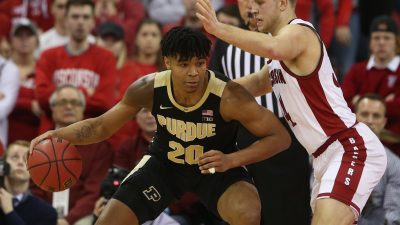
Nojel Eastern decided to transfer from Purdue.  He communicated that decision on Tuesday.  Yesterday (Thursday) it was revealed that he will play for Michigan.  This morning on “Breakfast with Kent,” I mocked Eastern’s shooting, saying “If Juwan Howard promised Eastern a green light to shoot, I hope he uses it liberally when Michigan plays Purdue and Indiana.”

Maybe it’s a little bit petty to rag on the almost 21-year-old who is a victim of equal parts bad judgment and wrongheaded counsel.  The kid is just trying to live his dream, after all.  But I’m done patting a kid on the ass for screwing up.  Giving kids a pass for dopey decision-making has landed us where we are in college sports.

There isn’t a college basketball player or parent of a college basketball player – not a single one – who believes himself or his or her son is not capable of playing in the NBA.  Those who fail believe they were victims of bad coaching or circumstances.  Each has memories of a matchup against an NBA-bound player where he dominated.

Some of the kids who are told the NBA is not in their future transfer in order to change their circumstances, and others fight through the adversity to improve.  Almost none find their way onto an NBA roster.

Eastern is one of those guys who has either decided on his own or been encouraged to bounce to a program where his talents will be respected and nurtured.  Whether that encouragement came from his parents, potential agent, or Howard, is unimportant.  What matters is that quitting is a hard habit to break.

In response to a kid transferring, I used to say or write things like “to each their own” and “we wish him the best.”  I’m done with that glad-handing crap.  Granted, we learn from our own mistakes.  Hell, I wrote a book about mine!  But it’s time to share perspectives we have gathered over a lifetime of experience to point out the idiocy of a decision like Eastern’s, and if that means appearing mildly petty for lobbing a barb at him – that’s a small price to pay.

College students don’t like to be referred to as “kids,” so let’s welcome them into adulthood by holding them accountable for their ignorance.

Eastern cannot shoot the basketball – from the foul line, three-point arc, or anywhere in between.  That disqualifies him as a potential NBA player.  The correction for poor shooting is tireless work alone in a gym.  Purdue’s gyms are outfitted with 10 foot rims and wooden floors just as they are at Michigan.  If Eastern believes relocation is going to be the magic elixir to basketballs falling through the hoop at a higher rate, he’s mistaken.

The time has come for more raw truth and less pablum in dealing with kids.  They need honesty whether they are willing to accept it or not.

Playing in the NBA is a result for a precious few with rare combination of athletic ability, health, and work ethic.  Hope is not one of the qualities that get you there.  Everyone hopes to play in the NBA.

I hoped to play short for the Chicago Cubs.  Guess what happened.

I’ll tell you what playing in the NBA is not – a life’s work.  It’s what 450 people at a time each year get to do; it’s not who those 450 people are.  Eastern had a chance to grit his teeth and fight for his dream.  Instead, he chose to flee to Ann Arbor.

The lessons he would have learned through sticking it out as a Boilermaker would have served him for a lifetime.  It would have been a great example for his children – and their children.  Instead, he bailed because hope resonates with him more than grinding does.

The grass is rarely greener on the other side of the fence and the rims will never be wider in Ann Arbor.

If Eastern couldn’t grow up in West Lafayette, I hope wisdom comes to him at Michigan.  If a little mockery helps shine a light, then I’ll take my shot.
Should Colts give T.Y. Hilton a contract extension? Not before Hilton proves he can play 16 games in 2020

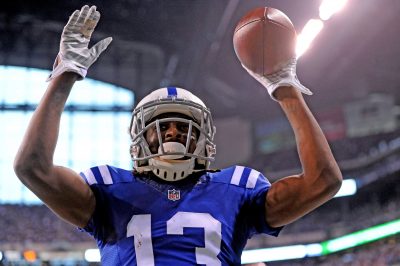
T.Y. Hilton is worth a lot of money to the Colts, but only if he’s healthy in 2020.

With the draft over and free agency mostly done, Indianapolis Colts GM Chris Ballard has one more big decision to make this offseason – should the Colts meet receiver T.Y. Hilton’s price to sign him to an extension.

Ballard should wait until the 2020 season is in the books to pull the trigger on a new deal unless Hilton is so eager that he would accept a below market number to stay in Indy for another couple of years.

Hilton wasn’t specific in yesterday’s conference call with the media about the kind of cash or term he needs to be able to continue his ascension on the ladder of the Colts all-time great receivers, but he left no doubt he wants to be here, “I mean I want to be a Colt for life, but it takes two sides. It is up to Mr. Irsay and Chris to get the job done. So for me, I want to be a Colt. So, you heard it from me.”

Click here for your copy of “Oops – the Art of Learning from Mistakes and Adventures” by Kent Sterling

Hilton was reliable and productive though the first seven seasons of his career as a Colt, and then last year happened.  After four trips to the Pro Bowl and one glorious season when he led the NFL in receiving yards, Hilton faltered in 2019 with only 45 catches for 501 yards in 10 games.

Ballard’s task is to assess if last year’s statistical cratering was an anomaly – or a glimpse of the future.  Was it Hilton’s ankles and calf tear, or did Jacoby Brissett fail to see “The Ghost?”  Will Philip Rivers deliver the ball to Hilton in a way that exploits his ability to create space behind the defense?

This season, Hilton will collect $14,542,000 in the final year of the five-year extension that went into effect in 2016.  There serious doubt whether at this point in his career Hilton is worth that kind of jack.  The version of Hilton who caught 91 balls in 2016 would be a bargain at that price. The 2019 Hilton would be vastly overpaid, and to carry that number moving into 2021 and 2022 would be irresponsible.

To make matters more complicated, this weird offseason has made it very difficult to get a handle on Hilton’s well-being and development.  That’s why they pay general managers are lot of money.

Hilton acknowledges injuries have been an issue, but is ready to prove himself worthy, “I mean my work speaks for itself. When I’m out there I know what I can do. But these last two years I’ve been a little banged up so this year if they want me to prove it, I’ll prove it.”

Fans like to look at what has been, and they throw around terms like “deserve” as they champion the cause of extending contracts for a team’s most popular players.  Sadly, for a guy like Hilton, fans have no voice in the decision.  GMs make their decisions by looking at what’s most likely to come, and what has been is only a part of that process.

At his best, Hilton is a dynamic playmaker who forces a defense to adjust to his presence.  Last year (and at the end of the 2018 season), injuries corrupted his ability to perform at a high level – especially when it mattered most.

Ballard would be foolish to ignore 2018 and 2019, but he would be equally ill-advised by tossing out the first six seasons.

Best to check his bet, and wait for 2020 to force his hand in one direction or another.

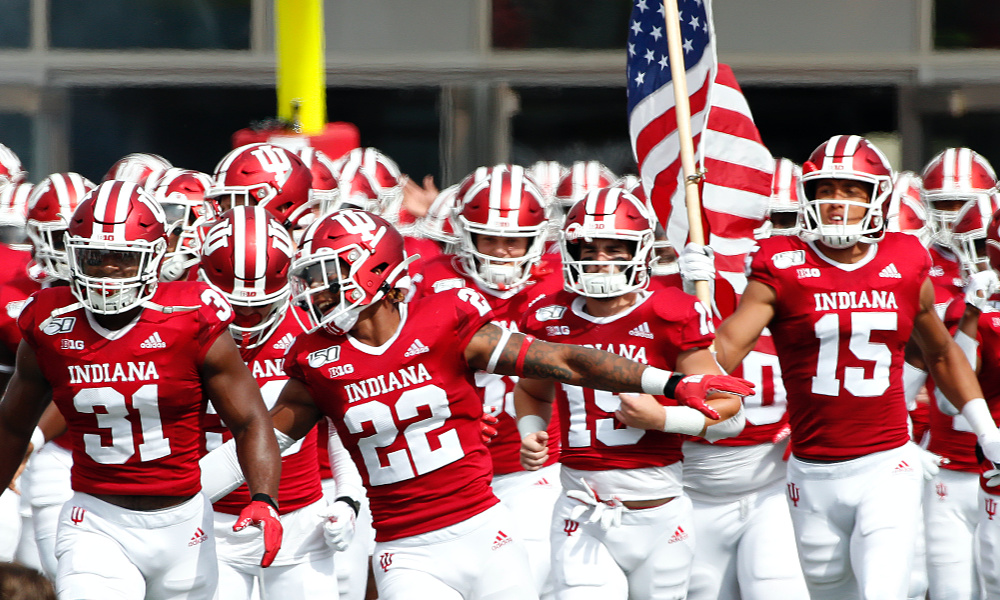
College football will be played this fall because the consequences for not playing are immense #iufb

College football will be played this fall because its rewards outweigh the potential consequences.

Here comes college football!

There is zero chance Power Five schools will act as one to punt the upcoming college football season.  Players want to play, coaches want to coach, and school/conference administrators want money.  There is no constituency tethered to college football that would champion a cancellation or suspension of the season, so all that is left is for college football to be played as scheduled.

NCAA president Mark Emmert made a lot of sense yesterday when he said he will cede the responsibility to establish a start date for the resumption of sports to university presidents and state governments.  Why would Emmert want his organization to get involved as the healthcare clearing house for each individual university?  He’s way too smart for that.

Click here for your copy of “Oops – the Art of Learning from Mistakes and Adventures” by Kent Sterling

That abdication of responsibility will leave the decisions to schools who are much more likely to view a resumption of college football as being critical to the survival of their athletic departments.  At the macro level, decisions are based upon what’s best for the most challenged.  In the micro, the decision is “What is best for me?”

Coronavirus is a problem of unique proportions depending upon geography and population density.  It’s a huge life-threatening issue in the New York metropolitan area.  In Iowa, Texas, and other midwestern states, it’s not nearly as big a deal.  Even by safety-first epidemiology standards, college sports will be seen as reasonably non-perilous in most regions.

Some schools will open.  Others will continue to exist in a virtual environment.  It’s assumed schools that do not open to students will not open to student-athletes, but where is that rule written?  Never underestimate to extent to which universities will express their greed by employing student-athletes to keep cash registers ringing!

And it isn’t just greed, but a desire to maintain scholarship levels by continuing to welcome massive amounts of media money into their budgets.  Any interruption of that revenue would be difficult for many schools to accept without making cuts.  The MAC has already cancelled or adjusted its tournaments in anticipation of budgetary shortfalls.


Adjusting fan levels – or eliminating them – is a conversation for another day.  We have no idea what the hell the world will look in August and September.  Just two months ago, we crammed ourselves in Bankers Life Fieldhouse for the Indiana vs. Nebraska game of the Big 10 Men’s Basketball Tournament, and no one that night dreamed we would be subjected to a second month of stay-at-home orders.  What will be allowed or necessary in another two months is guesswork at best.

What is beyond guessing is the need for cash into the coffers of athletic departments of Power Five universities.  College football will be played mostly as scheduled – with a few exceptions from those schools who react to this pandemic with well-intentioned hysteria.

But make no mistake, the need to return to normal financial conditions requires college football be played.  Without it, athletic departments will face dire consequences far worse than a few athletes developing Coronavirus symptoms.

Nojel Eastern decides it might be time to pursue his NBA dreams elsewhere

Nojel Eastern appears ready to follow classmate Matt Haarms out the door in West Lafayette.

College athletes get four seasons to compete, and Purdue Basketball player Nojel Eastern appears eager to use his fourth somewhere else.  I don’t get it.

When I saw the release announcing Eastern is entering the portal, I tried to make sense of it somehow, someway.  College athletes often feel the grass is greener somewhere else, but the marriage of Eastern’s strengths and those coveted by Purdue coach Matt Painter appeared to be in sync.

Click here for your copy of “Oops – the Art of Learning from Mistakes and Adventures” by Kent Sterling

Eastern is a defense-first player with limited offensive abilities.  He can’t shoot threes (0-7 since his freshman year) and is a sub-par free throw shooter (48.5% last year).  Eastern’s high water mark as a scorer came during his sophomore campaign when he averaged 7.5 points per game.

Despite that less than impressive offensive resume’, Eastern started 62 of 67 games the last two years because Painter loves his defense.  At 6’7″, 225 lbs., Eastern is capable of guarding all five spots against some teams.

There are many power five programs for whom Eastern’s offensive inabilities would damper his chances to get on the floor at all, but at Purdue he’s been a rotational player since arriving on campus.

Some college players – and their families – have NBA dreams when they are recruited to a Big 10 school.  In fact, most do.  Maybe Eastern, who declared for the NBA Draft a couple of weeks ago.  That allows him to seek advice from scouts, agents, and others with opinions about his draft status.  Clearly, he did not like what he heard and would like to see if a change of scenery will help him live his dream.

Purdue looked like they would have a couple of senior leaders in 2021 to try to get the rest of the roster ready for a resurgent season.  Matt Haarms left for BYU last month, and now Eastern appears to be headed elsewhere, although he can return if he chooses.

Former IU assistant Kenny Johnson fired at LaSalle for what everyone knew he did at Louisville

Kenny Johnson was fired by LaSalle after Louisville, who already fired Johnson, received a Notice of Allegations naming Johnson as author of a serious violation that LaSalle knew about when they hired him.

Some mistakes are never truly forgotten or forgiven, but rarely does a coach get fired twice for the same infraction as LaSalle assistant Kenny Johnson was yesterday.

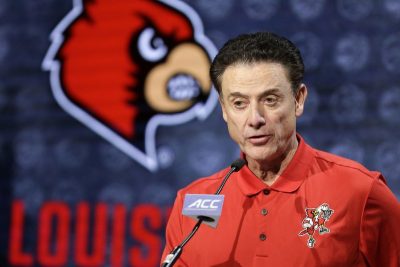
Johnson was an assistant at Louisville prior to being hired at LaSalle.  While on Rick Pitino’s staff, according to testimony from the father of recruit Brian Bowen, he gave $1,300 in cash to Bowen the elder outside the Galt House to cover a portion of his rent.

Louisville fired Johnson as a result of that testimony.  In fact, Louisville dismissed virtually their entire leadership flowchart from Johnson up because of the violations revealed during Bowen’s testimony.

As you might guess, the story was well reported.  If you google “Kenny Johnson fired by Louisville,” 689,000 results are listed.  It seems unlikely in the extreme LaSalle University was unaware of Johnson’s payment to Bowen when they hired him.  Yet LaSalle fired him because his named appeared in the Notice of Allegations Louisville received last week from the NCAA.

If it was a good idea to hire Johnson two years ago, why is it suddenly a bad idea to retain him today.  I’m not defending Johnson’s actions, but what’s the difference between Johnson in 2018 and Johnson last week – an NCAA NOA?

Johnson’s plight shows exactly why college basketball continues to fight its image problem.  Louisville defied rules at an embarrassing level, and Johnson was hired by another school despite his role because the NCAA took two years to take testimony given under oath and turn it into an NOA.

Yikes.

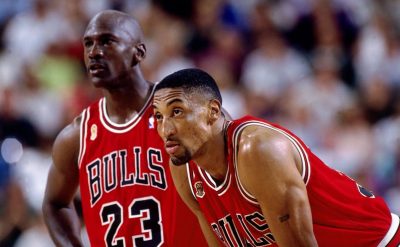
Michael Jordan wins one more time as Scottie Pippen is sacrificed in The Last Dance

There is a rule in drama that for every hero, there must be a villain.  That’s just the way it is, and no one messes with that construct if they want to sell tickets or get great ratings.

The Last Dance has followed that rule through all eight episodes we have seen so far.  Michael Jordan is – obviously – the hero.  He’s the warrior, the indomitable force, the leader who drags the rest of the roster kicking, screaming, and punching to magnificence.  Jordan is manly, indifferent to pain, and is shown as Ruthian, right down to the cigar.


So the producers needed a villain.  Steve Kerr, who punched Jordan in practice, is a candidate. But who would believe Kerr as a villain?  Horace Grant showed villainous promise as the guy Jordan believes leaked inside the locker room drama to Sam Smith, the author of The Jordan Rules, but he wasn’t with the Bulls during the season the documentary is supposedly built to chronicle.  Toni Kukoc is foreign, which is a solid trait for a bad guy, but he seems a relentlessly nice man.  Dennis Rodman is more comic relief than true outlaw.

That leaves Scottie Pippen, the gifted Robin to Jordan’s Batman, to fill the role as the contrast to Jordan’s manly greatness.  Enough good is said about Pippen, the ultimate NBA wingman, that the producers can sleep at night, but his overall contribution to this documentary is to provide Jordan yet another obstacle to overcome.

The migraine against the Pistons was the first affront to Jordan’s quest for a championship and stands in stark contrast to Jordan’s flu game against the Jazz in 1997.  Pippen struggled through his headache for 42 minutes in the game seven loss in Detroit, hitting one one of his 10 shots.  When Jordan had the flu during game five of the 1997 NBA Finals – or food poisoning, depending on the story you believe – he overcame it to score 38 points in the Bulls two point win.

Then in 1994 as Jordan played baseball, Pippen failed to lead as Jordan would have by balking at being the in-bounder on an out of bounds play designed for Kukoc with 1.8 seconds left in a pivotal game three.  The Bulls were tied with the Knicks and needed a win to avoid falling in a 3-0 series hole.  Pete Myers reported for the intractable and moody Pippen, Kukoc hit the shot, and the Bulls eventually lost the series in seven games.

Pippen then executed what amounted to a health related hold out in the season The Last Dance chronicles.  Unhappy with his contract, Pippen decided not to screw up his offseason by enduring needed foot surgery until the season was nearly ready to begin.  He missed the first 35 games, and Jordan said Pippen’s behavior was “selfish” in an earlier episode.

Jordan is shown soldiering on as the Bulls leader without Pippen.  The Bulls were in first place in the East with a 24-11 record in the games Pippen missed.

Those three chapters in Bulls history are factual, and they were depicted accurately in the documentary.  Nothing has been false through eight episodes, but the narrative is overtly pro-Jordan and Pippen’s reputation has been sacrificed to lift Jordan’s heroism to Herculean levels.

Displaying Jordan as the gallant and self-sacrificing warrior is driving viewership to level a pro-Pippen film could never reach.  Let’s face it, curiosity about Pippen will never drive interest in anything.  Making him a carbancle serves its dramatic purpose, and if Pippen is damaged, who really cares about Pippen anyway.  After all, when was the last time a kid saved up for a pair of Air Pippens?

Jordan describes himself as a guy who “wins at all costs.”  That compulsion clearly didn’t end when he hung up his Nikes.  The winner in The Last Dance is Jordan by a large margin.

Did anyone believe it would be otherwise?

Single prime time game for Colts is perfect; we don’t need NFL to tell us Indy is a great town

Give me one prime time game and Indianapolis over Chicago – any time!

People are upset the Indianapolis Colts will be showcased on prime time only once during the upcoming NFL season.  They are insulted that one prime time game will be played in Nashville, Tennessee, and not in our hometown.

But I am thrilled.

From a pragmatic perspective, it was unreasonable to expect more.  The Colts play in a small market, have no stars, and finished with a 7-9 record in 2019.  What part of that equation yields great television ratings?

That’s the game for the networks and NFL.  It’s not about football; it’s all math.  Ratings equal revenue, and revenue is what ESPN, NBC, Fox, CBS, and the NFL Network covet.

Click here for your copy of “Oops – the Art of Learning from Mistakes and Adventures” by Kent Sterling

Okay, so that’s the pragmatic argument against the Colts playing a bunch of prime time games like Tampa, Kansas City, and Chicago.  Revenue potential is the name of the game – not the grading of cities and their people.

My love for the schedule is driven by my feelings about Sundays at 1 p.m. being reserved for Colts football.  When the Colts play at a different time, I don’t know what to do with myself.  Watching Carolina vs. Atlanta or the Jets at Miami is not what I want for three hours of entertainment in the middle of a Sunday.

A few years ago, my son’s friends would come over for “Sundays at the Sterlings.”  We had betting sheets and Taco Bell for everyone, but only when the Colts played at 1 p.m. on Sundays.  Thursday, Sunday, and Monday nights were school nights, so our fun was restricted to Sunday afternoons.

When I was a kid in Chicago, Sundays at noon meant kickoff for the Bears as long as they weren’t playing on the west coast or making one of their rare Monday Night Football appearances.

I’m a creature of habit, and my primary habit on autumn Sunday afternoons is watching my NFL team of choice beat the hell out of interlopers from another town.

As far the belief that the rest of America doesn’t care about Indianapolis – the rest of America cares about Indianapolis in the exact same proportion people in Indianapolis care about Columbus, Ohio, or St. Louis, Missouri, which is to say zero.  We care about our city, and others care about their city.

Indianapolis is a hell of a great city.  I’m from Chicago originally, and I speak from experience when I tell people from both cities that the quality of life is much better in Indianapolis.  People here empathize with their neighbors at a level Chicagoans cannot begin to contemplate.  Chicago is built upon a foundation of graft and corruption, while Indianapolis is built on a desire to embrace sports and kindness as their chief economic drivers.

There are flaws in Indianapolis, just as there are wonders in Chicago.  But overall – give me Indy’s flaws over Chicago’s magic every time.

The point is not to crap on Chicago, but to tell those in Indy that there is no need for the NFL to ordain our city as worthy, whatever that is.  It’s the people in Indianapolis that make it special, and Roger Goodell’s stamp of approval is beyond unnecessary to stamp us as virtuous.

The NFL’s schedule works for me and those like me who love watching Colts games at 1 p.m.  I’m pleased with one prime time game.  I’m envious of only Detroit and Washington, who have no prime time games.

Instead for feeling ignored by the NFL and its network partners, Colts fans should feel graced for the opportunity to plan Sunday afternoons around Colts games.

And as for feelings of inadequacy, I suggest a two-year sabbatical as a resident of Chicago.  You will never feel shamed for living here again.  You will feel, as I do, that Indy’s status as a great town is beyond debate, and best kept a secret so Chicagoans don’t flood our town with their cynicism, indifference, and corruption.

Only certainty about sports returning during Coronavirus Pandemic is we will yell at each other about it

Every morning I host Breakfast with Kent – a sports related live video – first on Facebook Live and then again on Periscope/Twitter.

At the onset of the Coronavirus pandemic, I stayed away from discussing it in any form.  Today, I swerved into that polarizing topic because major league sports are in the process of trying to resume competition.  It seemed impossible to avoid.

During the Facebook version of Breakfast with Kent, everything was cool.  Comments are rarely shared on Facebook live videos because the form really isn’t interactive.  Periscope is a different animal, and so I was inundated with comments representing both sides of a spirited debate.

Click here for your copy of “Oops – the Art of Learning from Mistakes and Adventures” by Kent Sterling

Half felt strongly any resumption of live sports endangers athletes and fans.  They believed playing games will communicate to society a lack of respect for Coronavirus and cause increased deaths.  The other half expressed a passionate indifference for the virus and the threat it poses.  They want normalcy.

I argued with both positions because those who want sports to resume don’t want people to die any more that those who hope sports wait for a vaccine enjoy sitting at home.  As is the case with almost all hotly debated issues, wisdom lies somewhere in the middle.

There are two sciences at play in this Coronavirus debate, and both need to be respected.  Epidemiology is the study of incidence, distribution, and possible control of disease (I looked that up to make sure I stated it precisely).  Economics is the study of the production, consumption, and transfer of wealth (I looked that up too).  Those sciences are at odds with one another during this weird time.

Without health, money and the things it can buy are impossible to enjoy.  Without money, good health is difficult to maintain.  See, our society is not quite as simple as quarantine until everyone is vaccinated.  It’s also not good to open everything up without considering the toll that takes upon those most vulnerable to the spread of the virus.

People yell at each other on social media about hunger versus disease as though one is a better option.  And in traditional media, well, they don’t get ratings by informing within the gray area.  Media stakes out a claim to the far left or far right as it panders to those who align with each specific outlets.  Hard truths aren’t advanced because no one wants to hear them.  That means we cannot trust national news, which is incredibly sad.

These are strange and tough times requiring the acceptance of unpleasant realities and sacrifices.  That will likely mean games without fans, and an increase in the spread of the virus.  Many of those who return to work will contract the virus, and some will die.  Our economy will improve, but not enough to please the very pragmatic among us.

Sports are going to return at some point in an imperfect fashion.  That will please many and anger a bunch of others.  That’s our world right now, but there is a difference between getting mad at a situation or decision and attacking those with whom we disagree.

Today, there are protesters in Michigan and Texas furious with their state government enforcing a violation of their rights to earn a living and feed their families.  When sports return, there will be protests expressing fury with leagues elevating financial concerns over health.

Humanity has a long legacy of demeaning those who believe something other than us – whomever “us” is.  Fox News viewers deride MSNBC viewers as weak and soft.  MSNBC fans believe Fox News patrons are heartless Donald Trump sycophants.  Neither are correct in their blanket condemnations.

It would be poetic to claim the greatest victim of Coronavirus is our civility, but that would require identifying the point in our history when we were willing to look beyond our differences to find common ground.

The day Indiana kids forced Derrick Rose to quit, and how they continue to win at life

The Stars won the game and tournament over Derrick Rose, and they are winning at life too.

“They are going to crush you,” said the father of one of the players that Derrick Rose’s Meanstreets team had crushed in the semifinals of the 2006 Adidas May Classic at Assembly Hall in Bloomington.

Under my breath, I told him to kiss my ass.  Aloud, I said, “We’ll see.”

The Spiece Central Stars had been here before.  Playing against the best of the class of 2007, this team of underrated, team-first players won plenty of trophies.  This was yet another challenge against a team built around a top-five recruit.

An hour later, Rose stood a mid-court with the ball on his hip watching the clock count down the final 12 minutes of the game.  His brother Reggie, serving as coach, yelled repeatedly to no one in particular, “We got done what we came here to do!”  The score was 63-19 in favor of the ironically named Stars, who moved, screened, blocked out, defended, and hit shots until Meanstreets and Rose quit.

Click here for your copy of “Oops – the Art of Learning from Mistakes and Adventures” by Kent Sterling

The Stars featured one player who logged NBA minutes.  JaJuan Johnson played 36 games for the Boston Celtics after being selected 27th in the 2011 Draft.  But the basketball they played was built around a desire to win rather than fortify recruiting rankings, so they won a lot of games and tournaments over more talented but selfish players.

Derrick Rose is still playing in the NBA, having earned $121-million over a mostly disappointing 12-year career.

Yesterday, a tweet about Rose’s 2006 summer team drew a response from Zach Hahn, one of the Stars players, who is the head basketball coach at Center Grove High School in the south suburbs of Indianapolis:

That moment from 14 years ago is worth remembering because the style of play and the lessons learned from playing as collaborators with a singular goal of winning has served the Stars quite well.  Several, including Zach, have built a career instilling the same lessons to kids that helped shaped them into the productive adults they are today.

Fourteen years later, the Stars are coaches, lawyers, IT executives, financial advisors, and CFOs.  JaJuan is still playing professional basketball.

This team remains a lasting example of the good that can come from the often maligned experience of playing summer basketball.  Through their experiences, successful behaviors were instilled and reinforced.  Team-first collaboration led to 23 tournament wins and became a habit that led to success in college basketball and beyond.

Summer basketball is not about playing in the NBA or earning a college scholarship.  Those are the tangible results for some of those lucky enough to have been blessed with great health and athleticism.  The lasting impact of the lessons of basketball are in the discipline of working tirelessly toward individual mastery of skills and the glory of collaboration as part of a unit functioning to create open shots on the offensive ends and deny good looks on the other end.

Those lessons convert quite nicely to adulthood.  “Singular excellence implemented toward collective success” is about as concise and perfect a description of basketball as there is.  It’s also exactly how successful businesses operate.

Trophies tarnish and memories of championships fade over decades, but experiences that build character last a lifetime.  That can be the outcome of summer basketball in programs run correctly, and the Stars program provided that experience for some guys who gave great effort that led to short term on-court success and long term growth off of it.

Yeah, Rose has earned millions, and if that’s your measuring stick, go ahead and name him the winner of that tournament.  But not only did the Stars with that game and tournament, but their lives and those they touch have been immeasurably impacted by the time and spirit they dedicated to basketball and each other.

Louisville did the wrong thing for the right reasons, and it continues to pay

Just because Rick Pitino was fired almost three years ago doesn’t mean the NCAA is done penalizing his former employer for his sins.

Cheating in college basketball recruiting is abhorrent because it elevates the result of the game over what should truly matter – the lessons that basketball instills in players and reinforces in fans.

It’s not that winning isn’t important, but the magic of the game is the tug of war that exists between the selfish and selfless.  Players gain excellence through work in isolation, but become champions only through reliance upon teammates and coaches.

Winning motivates effort and cooperation, but the ultimate reward is wisdom – not banners.

Louisville cheated.  There is no question about the guilt of the program in supplying prostitutes to players and recruits, and in arranging for payments to recruits through relatives.  In the quest for championships, Louisville lost its way.

Click here for your copy of “Oops – the Art of Learning from Mistakes and Adventures” by Kent Sterling

Already ashamed of the publication of the book Breaking Cardinal Rules (2014) by Katina Powell and Dick Cady which detailed the prostitution story, Louisville responded to evidence of a Louisville assistant coach handing cash to the father of a recruit by finally firing both coach Rick Pitino and athletic director Tom Jurich.

That was in 2017.

The NCAA was compelled to act as well – first in 2018 as an answer to prostitutes providing their special brand of “impermissible benefits” to players, and then yesterday a Notice of Allegations was delivered to university employees who were not employed there when Louisville got sloppy under Pitino and Jurich.

The penalties, including the vacating of the 2013 NCAA Championship, levied against Louisville so far have been limited to violations related to the prostitutes.  Next up will come the dings assessed because of the payment to a recruit’s dad.

Given the deliberate pace of the NCAA’s work, those penalties may come in 2021 – nearly four years after those responsible were terminated.

That’s justice?  Lawyers often say “Justice delayed is justice denied.”  No organization delays and denies justice with the plodding pace of the NCAA!

Meanwhile, Kansas and LSU continue to be rewarded for refusing to deal with its own smoking guns – the wiretaps that reasonable people believe proves coaches Bill Self and Will Wade were complicit in arranging payments to recruits.  Whether Kansas and LSU are reluctant to act because of a fear of being sued by their employees or they are intractably amoral is anyone’s guess, but as a practical matter it’s beyond argument they have handled their situation more sensibly than Louisville.

The playbook for beating the NCAA is plain to see in the examples set by Kansas/LSU – cheat, deny, fight.  Louisville’s mistake was to knuckle under by trying to do the right thing.  They didn’t want the reputation of their city’s university sullied by the actions of Pitino and Jurich, so both were canned.  Kansas and LSU understand kicking the can down the road makes more sense than slitting their own throats.

This is all very bad news for those who appreciate rules and consequences applied to those who violate them.  Rules are being enforced by an organization comprised of schools who author the corruption the rules are designed to prevent.  The NCAA is an organization so paradoxical, O. Henry must have created it.

It’s a shame that wins and losses in college basketball have become so important that grown men in sweat suits run around trying to subvert rules that should be unnecessary.  The game is the thing, and the lessons it teaches are the result that matters.

But how do we get coaches to understand that while breaking the rules enhances the likelihood of winning, it cheats the game and invalidates the result?