Author Archives: Kent Sterling

Bernie Miklasz out at 101ESPN – St. Louis and radio will be worse for his brief absence.

Bernie Miklasz is great at what he does, but now he’ll have to do it somewhere other than 101ESPN in St. Louis.

Anytime someone gets fired, we tend to eulogize them as though they have passed away.  They haven’t, so I am not going to mourn the temporary loss of Bernie Miklasz as a St. Louis sports media fixture.

Miklasz was relieved of his position at 101ESPN Radio Friday.  That’s where I had the privilege of serving as his program director for two years from 2011-2013.  I can’t say that I managed Miklasz because I don’t believe anyone actually manages him.

The thing about Miklasz – and from this point forward I’m going to call him Bernie because I’ve never called him “Miklasz” or heard anyone else do that – is that he is so withering in the demands he enforces on himself that managing him to do more at a higher level would be futile and cruel.

Click here for your copy of “Oops – the Art of Learning from Mistakes and Adventures” by Kent Sterling

There are staff changes that can benefit both the business and the person who was gassed.  This is not one of those changes.  Radio stations do not improve because a talent like Bernie is taken off the schedule.  His loss diminishes both 101ESPN and St. Louis as a sports town.

For Bernie, this change can be a very good thing.  He might finally be forced to relax for a few days.  For 40 years, Bernie has driven himself to think, write, and speak about sports.  He brings a rare wisdom and diligence to his work that comes from the same relentlessness that drives the athletes and leaders he covers, and the time may have finally come where he allows himself a deep breath and moment or relaxation.

For two years, Bernie and I met once a week to talk about his show.  My only goal was to establish trust so I could get Bernie to stop grinding so hard.  I listened to Bernie more that I spoke to him because not only would I get more out of his words than my own, but I believed he would too.

We talked a lot about H.L. Mencken during those meetings.  Mencken was “the sage of Baltimore” – Bernie’s hometown.  His work inspired Bernie, and so I learned some things about Mencken so I could better understand Bernie.

There are two Mencken quotes that capture Bernie very nicely:

  • “The most dangerous man to any government is the man who is able to think things out for himself, without regard to the prevailing superstitions and taboos.”
  • “Every normal man must be tempted, at times, to spit upon his hands, hoist the black flag, and begin slitting throats.”

Bernie isn’t normal, but he knows how to strip back the pretty paint and expose the raw truth.  He has always been unafraid to avoid prevailing wisdom in favor of his own.  Instead of concerning himself with being popular, Bernie captures unvarnished ethos.  He cannot be won over with glad tidings from smiling baseball managers and football/basketball/hockey coaches.  Bernie is very content to embrace Mencken’s legacy of exposing stupidity and cowardice regardless of who it offends.

We need truth tellers in our society, and that is the shame of 101ESPN deciding to move on this morning without Bernie.  St. Louisans are poorer for his absence.  Bernie will be richer for this pause where he can gather the energy needed to unleash his uncanny abilities for another employer.

I’ll always be thankful for the opportunity to get to know Bernie, and for the lessons he shared during our conversations.  St. Louis is a better city for having had Bernie to read and listen to for more than 30 years, and I’m a better man for having briefly worked with him.

Someone is going to call Bernie very soon so he can again do what he does better than most – spit on his hands, hoist the black flag, and begin slitting throats.
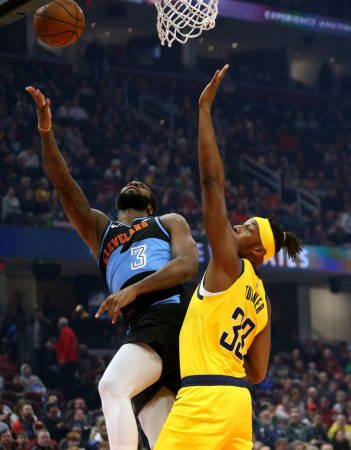
 

Two months ago, Pacers beat the Cavs; two months from now, we don’t know what will happen

This is what the world looked like on the last day of February. Who knew the final day of April would be what it is? To debate what we believe September will bring is asinine.

On the last day of February, the Indiana Pacers beat the Cleveland Cavaliers 113-104 in front on 19,432 fans at Quicken Loan Arena.  T.J. Warren scored 30, and both Domas Sabonis and Myles Turned posted double-doubles.

The following day, Indiana lost by a single point 67-66 to Illinois at the State Farm Center in front of 15,544 orange clad fans.  Kofi Cockburn’s six blocks made scoring inside tough for the Hoosiers, so Indiana fans anguished over the Hoosiers spot on the bubble for an NCAA Tournament bid.

Two months later, sports are gone from our lives.  Gamblers have been forced to resort to wagering on Russian ping pong and claiming races at Gulfstream, Oaklawn, Remington, Tampa, Fonner, Will Rogers, and Los Alamitos.

NASCAR has shifted from roaring cars to video games, and the NBA 2K League will tip off its season next week.  NBA and Major League Baseball executives and players have no idea when they might start training so their seasons might be saved.

Click here for your copy of “Oops – the Art of Learning from Mistakes and Adventures” by Kent Sterling

Fans and media are looking ahead to the fall and pondering the possibility of college and NFL football to be played – in front of live fans or empty stadiums.  The discussions quickly become contentious.

Those who campaign for a resumption of life as we knew it are depicted as heartless and greedy.  They are seen as willing to sacrifice the lives of others in order to get their football fix.  People who want to shutter stadiums until an effective vaccine is developed and deployed are hysterics who need to understand that people die of all kinds of things.

Today’s truth is that we have no idea what the world will look like in two months, and that instead of whining about people who don’t share our personal views about how we should respond to the challenges presented by Coronavirus, we should acknowledge decisions regarding the fall sports calendar require information unavailable today.

There is nothing weak about admitting we don’t know what the future holds.  In fact, not knowing the future – while disturbing – is the only part of our lives that is utterly predictable.  Yelling at each other about a set of facts we do not yet have access to may be fun, but it is also futile.  Instead of inventing a future about which we can vehemently disagree, maybe we should accept the reality that a lot of impossible to predict things can happen in two months.

Our lives have been interrupted in a bizarre way.  Financial health has been altered just as our physical lives have been threatened.  Most of the diversions that provide relief from routines have been suspended.

These are not good times.  But they are not made better by our compulsion to create disagreements from possibilities that may never come to pass.

College football may start on time in front of live fans, or it may not start at all.  The NFL may need to delay its start for a few weeks – or not.  Maybe both will need to furlough operations for the entire season.

We don’t know.

The facts necessary to make those decisions are unknowable today.  That makes us uncomfortable, but embracing that discomfort beats the hell out of responding with anger toward those who disagree.

Maybe the lesson of this unsettling period will be to accept the things we cannot change,
courage to change the things we can, and the wisdom to know the difference.  That’s the Serenity Prayer.

Serenity would serve us a lot better than our current state of acrimony as we debate what the world might look like in two months.

Daishen Nix skips college basketball year in waiting – and college hoops will be better for it

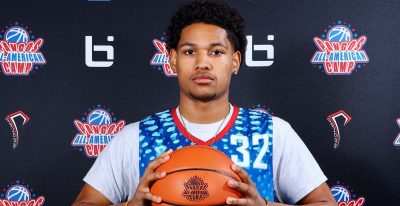
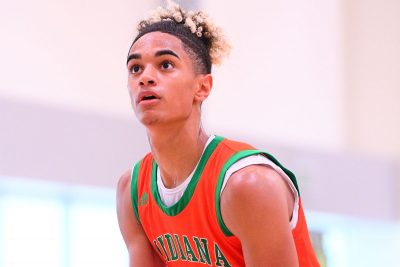
This is Daishen Nix. He’s going to the G League. You will not watch G League games because he plays there.

Five star recruit Daishen Nix has decommitted from UCLA, and will join the growing number of NBA hopefuls who will jump straight from high school to the G-League.

Some are predicting a bleak future for college basketball because talented teens like Nix are shifting holding areas from college programs to the NBA’s feeder league.  Not me.  I’m thrilled.

I’m confused by the notion that pro ready collegians like Zion Williamson are more valuable to for college hoops as they wait for the millions awaiting them in the NBA than the more traditional four-year players who will never sniff an NBA contract.

Click here for your copy of “Oops – the Art of Learning from Mistakes and Adventures” by Kent Sterling

College basketball is about programs – not stars.  At Indiana, who was more important and better loved by Hoosiers fans – Romeo Langford or Jordan Hulls?  How about comparing the impact of Eric Gordon versus Christian Watford?

Neither Langford nor Gordon would have played a minute of college basketball if NBA rules allowed high school seniors to go straight to the league rather than participate in a sham year of college.  Of course, that rule benefits the NBA much more than the college basketball.  The best players are showcased and branded through their year of college ball, and the year of experience toward max contract eligibility is pushed forward a year.

The NBA wasn’t born yesterday.  The only people harmed by the one-and-done rule have been players who are forced to bide their time playing for a school from which most of them will never graduate.  Now, they can go to the G League to earn more than they would have made in college but less than an NBA contract pays.

Somehow, someway, many predict it’s the college game that will be hurt by the absence of freshmen like Jalen Green, Isaiah Todd, and Nix.  The truth is, even the most ardent basketball fans would know any of these three if they bumped into them on Franklin Street in Chapel Hill or Kirkwood Avenue in Bloomington.

So we can agree that college fans won’t miss what they don’t know, right?

Okay, the argument must be that because these young men are really talented, G League teams will somehow gain popularity.  Let’s see how many problems with that theory I can come up with in 90 seconds:

  • No one belongs to Fort Wayne.  Nothing against the Mad Ants, but for two years I lived in a dorm across 17th Street from Assembly Hall.
  • Whether Green, Todd, and Nix are crazy talented or not, I have no love for them.  Hell, I have only a vague understanding that they exist.
  • I don’t know what a Mad Ant, Blue Coat, or a Skyhawk is, but I see a Hoosier when I look in the mirror.
  • March Madness is my favorite sporting event, but I have watched only two G League playoff games in my life.
  • I can name every basketball coach in the Big 10, but only one coach in the G league – Steve Gansey from the Pacers affiliate in the G League.
  • Until 2005, high school players could go straight to the NBA, and college basketball continued to grow.
  • Roughly one-half million college students attend a Big 10 university and develop a deep loyalty to that institution.  That entrenched affinity does not exist in the G League no matter how talented the 19-year-olds are.
  • The college basketball programs I detest outnumber the G League franchises whose existence I am aware of.

Pretty good list for a minute and a half!

I feel very comfortable that the popularity of college basketball will continue to expand with rosters entirely comprised of players who are both students striving to earn a degree in four year and athletes working hard to reach their potential.

If players who go to college excel to the point where NBA teams covet them – I have no problem with their leaving for millions.  That’s fine, but I would like every college player to be bonafide members of their university’s community of students before declaring for the draft.

That might be pie in the sky thinking, but the point is that college basketball is going to thrive with traditional one-and-dones running through the G League instead of the college game.

With a gun to its head, NCAA moves forward to do right thing – finally

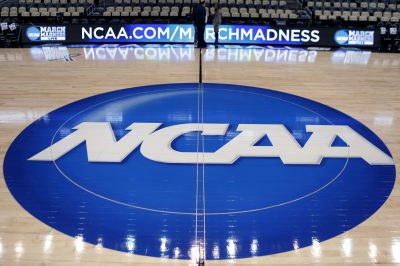
Nothing screams “The NCAA has it twisted and backwards” like the headline to its announcement on likely changes to its rules governing a student-athlete’s ability to profit for his or her brand value:

“The NCAA’s highest governing body has taken unprecedented steps to allow college athletes to be compensated for their name, image and likeness”

What is unprecedented is the pace at which the NCAA has embraced the very American and logical idea that human beings should be free to monetize their image.

For decades, the argument that a student-athlete should be able to market him or herself was answered with laughter by NCAA executives and university athletic directors and coaches.  The reason was self-serving and obvious – every marketing dollar paid to a student-athlete by a company or business owner is a dollar not paid to a university or coach.

Click here for your copy of “Oops – the Art of Learning from Mistakes and Adventures” by Kent Sterling

Cash has been the chief priority of coaches and athletic departments since the beginning of college sports, and opposition to the thought of athletes as independent marketers has shown their greed.

That would still be the case if not for the Ed O’Bannon lawsuit and state legislation that threatens to strip the NCAA’s power to enforce rules prohibiting student-athletes from earning cash for use of their likeness.

Funny how lawsuits and the threat of state governments going rogue to strip the NCAA of power suddenly shook some sense into the college sports power structure.

“The pain of change must always outweigh the pain of the status quo for change to occur,” is one of the immutable rules of human behavior.  So let’s not twist this into the NCAA finally seeing the light of what is good and right.  The NCAA is not suddenly ready to act to correct its own self-serving legislation for any reason other than the California State Legislature and U.S. Congress being ready to put a gun to its very arrogant and greedy head.

There are a few restrictions to recommendations from the NCAA Board of Governors:

  • Student-athletes will not be able to use the logos of schools or conferences in their endorsements.
  • They can’t stump for companies doing business in areas legislated against by the NCAA – gambling services and casinos, for instance.
  • Schools cannot use opportunities to monetize likeness as a recruiting enhancement (like that will be adhered to!).

Athletes will be able to contract with agents for the sole purpose of executing deals, which is only logical.

And let’s be honest about this too – the NCAA accommodating compensation for an athlete’s name, image, and likeness is going to affect very few student athletes.  Take Indiana University for instance:

How many IU football players would you recognize if you bumped into them on the street?  Any?  Basketball at Indiana is different.  Trayce Jackson-Davis and Rob Phinisee have brand value, as do a few others.

Schools in the SEC would see the opposite dynamic – football would be huge with basketball generating minimal interest among advertisers.

There will be a lot of hand-wringing about the potential for corruption as this process begins, but as long as we remember that some college football and men’s basketball programs are already acknowledged as being corrupt, college athletics should be able to adapt quickly and easily to student-athletes getting a small piece of the sponsorship pie.

There are headaches that coaches will need to deal with – like jealousies among teammates – but people making millions should be able to handle that, right?  Plus, that income disparity  exists in every level of professional sports and business as well.  That’s the way life works – the best get paid the most.

It’s all going to be okay.

Trayce Jackson-Davis returning to Indiana – good for IU and for him

“Trayce Jackson-Davis announces he will return to Indiana,” reads the headline at 247sports.  In other self-evident news, Americans are tired of staying at home to avoid spreading the Coronavirus.

Maybe Jackson-Davis had been asked repeatedly whether he had decided whether he would jump to the NBA after his freshman year, and felt the need to end the questioning through making this announcement via Twitter:

Nothing wrong with clarity, but did anyone expect Jackson-Davis to seriously consider blowing off another season in Bloomington in order to become an undrafted free agent looking forward to a year or more in the G-League or roll to Europe.

Click here for your copy of “Oops – the Art of Learning from Mistakes and Adventures” by Kent Sterling

Scouts say Jackson-Davis can play in the NBA if he builds muscle and develop a three-point shot. There is a big difference between a really good Big 10 freshman and an NBA power forward, and that was reflected in mock drafts that were unanimous in not listing Jackson-Davis as a selection.

Regardless of any of the ways those in the NBA believe Jackson-Davis needs to evolve to earn millions, what’s the hurry?

Life will get serious soon enough.  Professional opportunities will come.  Why not take another year, learn the game, build muscle and competence shooting threes, enjoy life as a college student, and then move on to what’s next?

It works for everyone else.

The NBA made the decision for Jackson-Davis easy by not expressing a hell of a lot of interest in welcoming him into their very exclusive fraternity, but those 30 general managers might have done him a favor.

Adulthood lasts a long time once you are in it, and there is no going back.  Some grown-ups try to re-litigate their childhood when they turn 40.  Maybe by going back for his sophomore year, Jackson-Davis can make his mistakes now and reduce his impulse to do that in 20 years.

People say jumping early allows NBA players to get to their second contract earlier.  Is that really where we are as a society?  People with millions need more millions quicker?  Maybe I’m a romantic, but earning enough money to buy all the roses without taking some time to smell them is idiotic.

Life isn’t a race to be sprinted through – it’s to be savored.  Jackson-Davis will savor at least one more year in Bloomington.

Good for him.

And it’s good for Indiana Basketball – a program lurching forward bit by bit each year under Archie Miller.  IU will return all five starters and three key bench players.  Miller will also welcome at least three freshmen who will vie for minutes.

Indiana might finally have hit the tipping point into repeatable success that has been absent in Bloomington for a quarter century, and Jackson-Davis will be a big part of the reason.

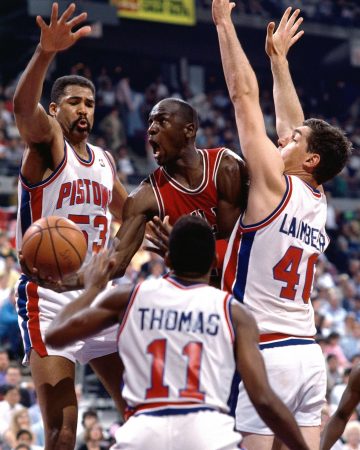
Almost 30 years after the Pistons walked off early, we still talk about it as we watch The Last Dance

Millions watch The Last Dance because the Michael Jordan and the Bulls played basketball the hard way 30 years ago.

Postgame handshake lines are moronic and theatrical exercises for fans who want to believe the results of games aren’t important enough to make or ruin anyone’s day.  Fans just can’t embrace the idea that basketball opponents dislike one another as they compete – or after.

So when the Bad Boy Detroit Pistons failed to congratulate Michael Jordan and the Bulls for finally eliminating them from the playoffs in their fourth attempt, fans felt they were poor sports.  In the moment, I had no idea why anyone cared.  The Pistons lost as they won – without apology or class.

The Pistons were not nice people.  Bill Laimbeer was the head thug, Isiah Thomas was willing to do whatever it took to win, and Dennis Rodman seemed insane.  Getting swept by the same team whose asses they had kicked the previous three years was too much for them to bear, so the Pistons left the court with 7.9 seconds left in the final game.

Click here for your copy of “Oops – the Art of Learning from Mistakes and Adventures” by Kent Sterling

As a Chicagoan, I loved it.  Not only had the Bulls humiliated the defending champs, they broke their spirit.  The Pistons hadn’t just lost a series; the Bulls took their will.  Hard feelings over the lack of a handshake?  Not for Bulls fans.

The Bulls went on to win six straight NBA Championships when Jordan played a full season, and they have their hatred for the Pistons to thank for it.  Without getting knocked down again and again by Laimbeer, Mahorn, and company, the Jordan and the Bulls would never have embraced the weight work needed to reach their potential.

Then because of the Bad Boys, NBA rules changed.  Today, hard fouls draw fines and suspensions.  Those rule changes have all but cleansed professional basketball of the rough play that aggravated fans.

The unintended consequence of penalizing players for committing hard fouls is that the NBA has become a lovefest.  People watching ESPN’s The Last Dance are seeing basketball played differently.


Professional basketball has become a genteel game played by gentlemen, and so we are left to watch The Last Dance for a taste of hard edged hooping between teams who didn’t like each other – and still don’t.

There is nothing like genuine dislike to make sports interesting.  The NBA keeps growing and growing, so it’s hard to be overly critical of a style of play where players are allowed access to the rim without being knocked senseless, but it was memorable and fun enough back in the day that The Last Dance commands our attention like few shows in ESPN history.

Dislike makes basketball – or any sport – more fun to watch once we get past our immediate repulsion.  Conflict equals drama, and we like drama.  The thrill of victory, and the agony of defeat – remember that?  There is no motivator like agony and no reward like victory.

Watching the Bulls lose to the tougher Pistons was agonizing, and then watching them become the tougher team as they swept the Pistons was glorious fun.

The Last Dance is a love letter to an era of basketball when winning meant everything.  Instead of today’s quest for branding and popularity, basketball the way the Bulls and Bad Boys played it was about beating an opponent – whatever that took.

I miss those Bulls teams I loved and admired, and I also miss those Bad Boys I admired and hated.  Mostly I miss basketball played in a way that I don’t have to guess whether teams crave winning above all else.

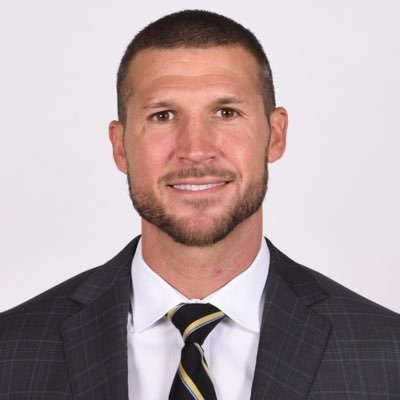
Paul Corsaro named UIndy head coach; another Indiana HS class of 2007 kid makes good

Paul Corsaro is the latest in the Class of 2007 to employ lessons learned in youth basketball to achieve success as an adult.

The Class of 2007 was a special incubator of talent – on the basketball court and off.

Watching my son Ryan compete with and against the best of that class from the time he was nine was a gift and privilege.  It seemed like every kid had special talent, and not only was every game a war, every workout and practice was intense because beating their rivals was so important.

These were nine-year-olds battling like hell to be the best.  NINE-YEAR-OLDS!

As the competition increased from year to year and the endless grind of the workouts was embraced by most of these kids, I believed I was watching something unique.  Then I thought I was enamored of these kids and teams because I was so immersed in the experience of watching them.

Click here for your copy of “Oops – the Art of Learning from Mistakes and Adventures” by Kent Sterling

Fifty of these young Hoosiers played Division One basketball, and I thought that was a great testament and reward for their work.  What I didn’t realize was that the real rewards would continue to stack atop one another as they became adults.

The NBA credentials for this class are beyond dispute.  Eric Gordon, Jeff Teague, E’Twaun Moore, Robbie Hummel, and JaJuan Johnson have earned a total of $361 million over the course of their careers, not including the cash many have made in Europe.

When Paul Corsaro was named head coach of the University of Indianapolis basketball program, I thought felt three things – one, happiness for Paul, a good kid who was always played with great toughness and smarts; two, shock that an AD was smart enough to see how special he will be as a coach; three; another member of this class is showing the success driven by the hard work capabilities he learned by competing against other gritty and talented kids in his class.

Coaches coming out of that class are almost as impressive as the players.  Zach Hahn has enjoyed great success as Center Groves head coach.  His summer teammate John Ashworth has proven himself an outstanding leader at Decatur Central.  Another member of that team, Ben Botts is an assistant to James Whitford at Ball State.  Terron Bibbs, yet another teammate, is the head women’s coach at the University of West London.  Others are building outstanding careers as lawyers, health care IT managers, financial advisors, and CFOs.

When people carp about the perils of youth basketball, I look at these young men whose work ethic was forged through competition on the court.  I wonder just what the hell those people are talking about.  Maybe times have changed in the last 15 years.  Maybe that class was exceptional.  All I know is that these guys pushed each other so hard, they still benefit from it.

The basketball experiences of the kids in this class are in part responsible for a remarkable record of consistent excellence in a variety of fields.  These guys answered challenges with hard work when they were children, and they continue to as adults.

Habits forged through testing each other weekend after weekend instilled the habits that have driven great success elsewhere.  That’s the payoff for playing youth sports.  It’s not about the NBA, MLB, or NFL.  It’s about acquiring the attitudinal toolbox necessary to succeed as adults.

The reward for hard work is more hard work, and these members of the class of 2007 learned all about hard work through their desire to develop as basketball players just a little bit more quickly than their peers.  Work hard – get better – beat rivals – repeat.

The Wabash Valley Red Devils pushed the Indy Wolves who pushed Riverside who pushed the Valpo Venom Vipers who pushed the Delaware Dynamite who pushed the Henry County Hoopsters.

And now, as coaches, lawyers, executives, and broadcasters, they continue to push themselves to excel.  Some are still playing basketball for a lot of cash because they understand how to work hard and smart.  Others are winning in another field for the same reason.

That’s the greatness of youth basketball, and the reward structure for those who play it.  Only the very special are going to make millions as players, but all can thrive in a variety of exploits because of its lessons.

That includes Corsaro, who is going to instill work ethic in another generation of kids, as he leads the Greyhounds program.

Khristian Lander – and all HS juniors – need to slow down and enjoy the ride

Khristian Lander needs to learn that adulthood comes quickly enough without rushing through adolescence.

There is a reason most high school students don’t jump straight into their profession.  They need to mature toward becoming adults.

The worst part of maturation is that the last people to know they needs maturity are the people themselves.  Add Khristian Lander to the long list of high school juniors who believe they know more than they do.

Lander is a top 10 ranked basketball recruit in the class of 2021, and is committed to play at Indiana University.  He may re-class to 2020 and become a freshman this fall.  Like many high school students, Lander is in a hurry to move through the maturity process to enjoy what is next.

Click here for your copy of “Oops – the Art of Learning from Mistakes and Adventures” by Kent Sterling

He’s young, so this is not to blame Lander for failing to recognize his shortcomings, but he needs to take a deep breath, enjoy the moment, and understand that trying to quicken the entrance to adulthood cheapens it.

Boys want to become men, and when they do – men understand that learning never stops.  The “there” Lander wants to get to does not exist.  No human being ever stops making mistakes or learning from them.  There is no destination in life, just a journey.

Lander made a mistake without realizing it in answering a question posed to him by Jeff Rabjohns at Peegs.com, “I feel I’ll be a leader as soon as I get there (to IU). I have a high IQ as a player, and I feel I can come in and be effective.”

That is what Lander has heard others say, so he said it.  He might even believe it.  Over time, he will learn that it’s total nonsense.  Former Pacers forward Paul George, whose lack of maturity is well chronicled, told me something eerily similar when he signed a contract extension.  It was silly then – and it remains silly.

Here is an immutable truth about leadership – there are no leaders without followers.  If Lander believes he’ll walk into Simon Skjodt Assembly Hall and immediately gain Al Durham, Justin Smith, and Joey Brunk as willing disciples before learning where the crapper is, he’s delusional.

Two things people cannot define for themselves are intellect and leadership capabilities.  Any fool can say he or she is smart and a leader.  Deeds define those two characteristics.  Lander needs to walk the walk and stop with the talk.

When high school students speak to the media, all comments should be about teammates, coaches, family, and team goals.  When asked to describe themselves, high school students always step on the same land mine.  They claim what they aspire to.  That’s what people who lack self-awareness do, and 17-year-olds always lack self-awareness.

Maybe Lander does have a great basketball IQ and perhaps he will lead IU Basketball as many others have before him, but it won’t be because he speaks it into truth.  It will be because he begins the process of grasping the importance of service and learning with the same enthusiasm he has embraced while developing his game.

Basketball and life are about the balance of what we need versus the needs of others.  Seventeen-year-olds don’t understand that concept and they shouldn’t.  Legendary coach and TV analyst Al McGuire used to say, “The best thing about freshman is that they become sophomores.”  I assume many coaches said it before McGuire because it’s one thing all coaches – minus John Calipari – agree upon.

That’s true about high school juniors too.  They become seniors and then freshmen before being sophomores.

Lander should relax, learn, and enjoy the ride.  Charging through the acquisition of wisdom short-circuits the process.  Until Lander begins to understand the games of basketball and life, he should confine his comments to something other than thoughts about himself.  Maybe better yet, wait to talk until he has something to say.

That’s true for every high school junior who believes he or she knows something about life and those who live it.

Silly stories about meeting celebrities – #11 – Mel Torme treats me like a star while I treat him like an intern

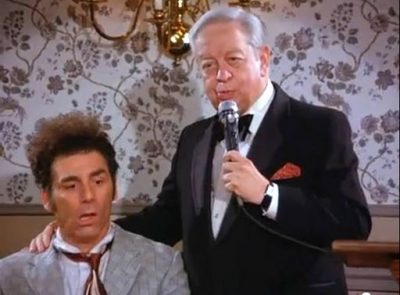
People under 60 remember Mel Torme from his appearance on Seinfeld.  I remember him as a nice guy who was on “Seinfeld.”

My dad didn’t like a lot of people, and he always seemed to find a reason to dislike or mock celebrities other than Don Rickles.  He seemed to like Jackie Gleason and Richard Pryor too, but the list of entertainers, authors, or newspeople he tolerated was very short.

When I worked as an intern at WGN Radio in Chicago, my goal was to get autographs for Dad from every celebrity he disliked who visited our studios.  As long as Gleason, Pryor, or Rickles didn’t walk through the door, that meant just about everyone.

Click here for your copy of “Oops – the Art of Learning from Mistakes and Adventures” by Kent Sterling

Roy Leonard did middays at WGN then, and he had a great reputation as one of the best interviewers of celebrities in media, so in-studio visits from famous people occurred often.

The policy at the station was pretty straight forward – if you wanted an autograph, ask Roy’s secretary, a friendly fellow named Michael Jordan.  He was Chicago’s second most famous guy with that name, and he was very accommodating.

One morning, I found out jazz singer and Chicago native Mel Torme would be visiting Roy.  Not surprisingly, Dad did not like Torme.  Any time he showed up on TV, Dad entertained us by blasting Torme for a variety of things – especially his predisposition to wearing tuxedos or ascots.  Then he turned the channel.

I asked Michael if he could get Torme to sign a headshot or index card “To Clark.”  Michael said that Torme was always happy to sign and he would be happy to make the ask.

Back in the sports office, I went to work doing the things that interns do – lining up interviews, writing sportscasts, and planning that weekend’s Bears pregame.  I was on the phone with my back to the sports office door when I felt a tap on my shoulder blade.  The call was important, so I held up my finger toward the source of the tap as I continued my conversation.

There was another tap.  This time, I waved dismissively toward the person who had the temerity to interrupt my work.  Another tap on the shoulder quickly followed, and I ended the call and spun to face this brazen interloper.

It was a smiling Mel Torme, “I am so sorry to interrupt your call, but I wanted to get the name of the person for whom I’m signing correct.  Is it C-l-a-r-k?”

I told Torme he had it right, and then apologized profusely.  The sports office was usually empty in the morning – other than fellow interns.  I assumed it was either Mitch or Christine – not Mel Torme.  Had I known it was Mel Torme, I would have been far more polite from the jump.

I felt especially bad because the autographed picture would not be a prized keepsake for an admirer, but an unwanted and confusing parcel for a man who disliked him.  I wanted to turn back the clock and un-ask Michael to get Torme to sign.

Dad got the picture and was likely very confused.  I don’t remember any acknowledgement of the picture after he received it.  I would get other autographs through my time at WGN, but never met anyone as gracious and tolerant as Mel Torme.

Since then, I’ve always tried to treat interns like they were Mel Torme, rather than treating people like Mel Torme like interns.

Does Gronk’s return mean Colts QB Andrew Luck will follow suit?

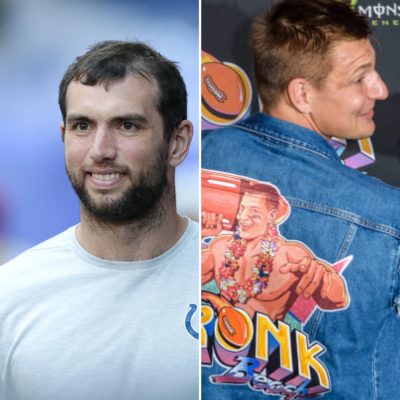
Does anyone really believe Andrew Luck and Rob Gronkowski will process information in the same way?

Rob Gronkowski is coming out of retirement to play with Tom Brady again in Tampa, so media and fans reflexively wonder about whether former Colts quarterback Andrew Luck might follow suit to return to the Colts..

He will not, and I’ll tell you why – he is a smart guy.

Luck has a Stanford brain, and Stanford brains don’t look at a successful application of a solution to a problem as a reason to re-engage in the behavior that caused the problem.  Gronkowski went to Arizona, not Stanford, so let’s not equate these two brains.

Let me break it down a simpler way:

Andrew Luck suffered a ruptured kidney, concussions, and torn cartilage in his throwing shoulder during his seven-year career.  He explained his decision to retire this way, “For the last four years or so, I’ve been in this cycle of injury, pain, rehab. And it’s been unceasing, and I’ve felt stuck in it. And the only way I see out is to no longer play football. It’s taken my joy of this game away.”

Click here for your copy of “Oops – the Art of Learning from Mistakes and Adventures” by Kent Sterling

Since he retired eight months ago, Luck feels better physically and mentally.  He’s enjoying life minus the “unceasing” injury, pain, and rehab.  For so many, that would mean a return of the itch – that compulsion to compete; to rejoin the challenge of preparation and performance that the NFL demands.

For a Stanford brain that processes information properly, a return to health minus football validates the decision to leave the game.

According to Spotrac, Luck has earned over $109 million.  Minus taxes and his meager expenses, Luck is probably sitting on $50 million, plus the marketing money he pocketed.  That removes cash as an incentive to return.

To break down Luck’s process further, coming back means the same pain and rehab that drove him to retire, money he doesn’t need, and fame he never coveted.  Staying retired means more time with his wife and daughter, limited pain, no rehab, all the money he can ever spend, but no football – which would be a reality soon enough anyway.

That’s a level of math even this Indiana University graduate can understand.