Author Archives: Kent Sterling

If Jerry Krause had punched Michael Jordan in 1995, the NBA might have changed forever

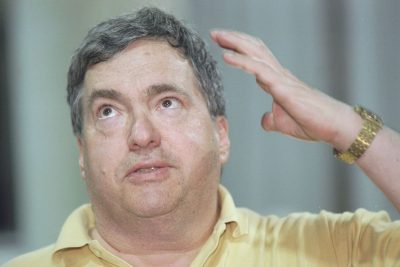
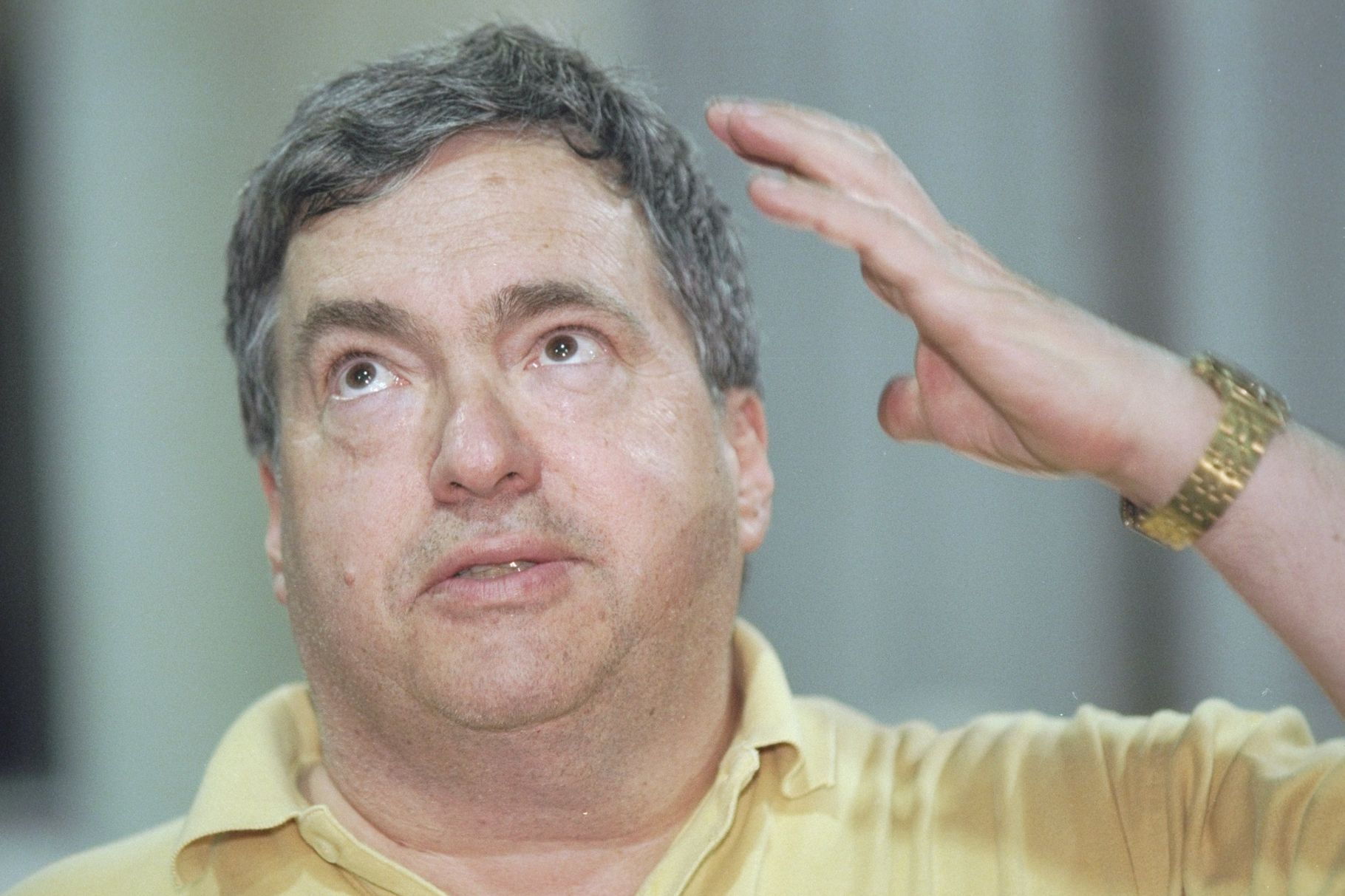
“It suddenly occurred to me that I don’t have to take this unending torrent of crap from this guy, and if he hits me back – so be it!” said Bulls GM Jerry Krause.

This is a story depicting an event that never happened in 1995 but should have:

Thursday, December 28, 1995

Both general manager Jerry Krause and Michael Jordan confirmed rumors of a one-sided and bizarre physical confrontation between the portly executive and the three-time MVP.

“I had enough from Michael, so I swung,” the physically unimposing Krause told the media today.  “Michael is the best basketball player in the world, but I’m not going to allow anyone to belittle me.  Come at me, I’m going to answer.  I’m done being called ‘Crumbs.'”

Click here for your copy of “Oops – the Art of Learning from Mistakes and Adventures” by Kent Sterling

Jordan smiled as he recounted the event and what prompted it, “Hey, I respect Jerry for what he did.  I sure as hell wouldn’t have taken the crap I’ve given him all these years.  Calling him ‘Crumbs’ was over the line, but if a man isn’t going to show me where the line is – of course I’m going to wind up crossing it.  Hell, I lived on the other side of that line for a long time, but now I know where it is.”

Phil Jackson refused to play favorites when he answered questions about the incident, “We’re a family, and Jerry is a part of the family.  Families fight once in a while, and Jerry had all he could take.  Let’s be honest, Michael isn’t going to miss any time because of a punch from Jerry,” Jackson said.  “Michael goes up against the biggest and best athletes in the world every time he plays.  Jerry was just sticking up for himself in the best way he knew, but Michael is going to be OK.

“This is ultimately a good thing.  The taunting was getting out of hand,” Jackson said.  “Jerry is atypical looking from an athletic perspective, but he’s still a human being who deserves respect, and he asserted that standing yesterday.”

It’s well known that Krause has been a bit of a punching bag for verbals taunts from Jordan and teammate Scottie Pippen for years.

“I took it for a long time because they are athletes and I am an executive for the team,” Krause explained.  “It’s not my place to deal with the players as professional peers because we operate in different worlds. But as a man, I am a peer, and there is an amount of s**t I simply won’t eat.”

The Bulls play the Pacers tomorrow night at the United Center, and Jordan is expected to be in the lineup.  “Yeah, I’ll play.  Laimbeer and Dennis did worse to me for years.  Dennis and I are teammates now working toward the goal of winning more championships – as are Jerry and me.  Families fight.  It’s cool.  Nice short right though!”

Jordan rejected the notion that he considered retaliation, “I deserved it, and to be honest, I kind of hoped this day would come.  Even at the second he hit me, I kind of thought, ‘Good for you, Jerry.’  Maybe I was a little stunned he hit me, but it didn’t make me mad – not even a little bit.  I respect a guy who says he’s had enough crap thrown at him.”

*********

As a result of the fracas, Krause was no longer taunted by Jordan and Pippen, and Krause’s insecurities were less an issue.  The relationship between Jackson and Krause improved, and so pressure applied by Krause to owner Jerry Reinsdorf about replaced Jackson abated.

The Bulls won the next three championships as they did in reality, and then they won another in 1999 as Michael Jordan enjoyed one final valedictory swing through the league.  Pippen stayed with the Bulls through his retirement as Krause never threatened to trade him and signed him to an extension after the 1997 championship.  Jackson also stayed with the Bulls, depriving the Lakers of one of the best coaches in NBA history.

As a result, the Pacers won the 2000 championship in a less than thrilling sweep of the Utah Jazz.

Of course, none of this came to pass.  Krause never hit anyone.  He wasn’t wired to answer bullying with physical force.  He was an able administrator who built rosters around Michael Jordan.  He is simultaneously and justifiably underrated and overrated as an executive who won six championships with the greatest player in the history of the game – a player he inherited.
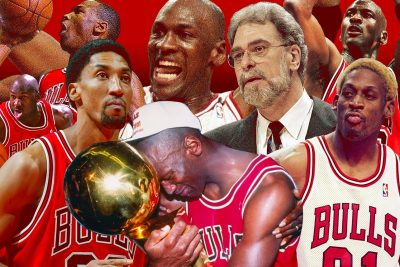
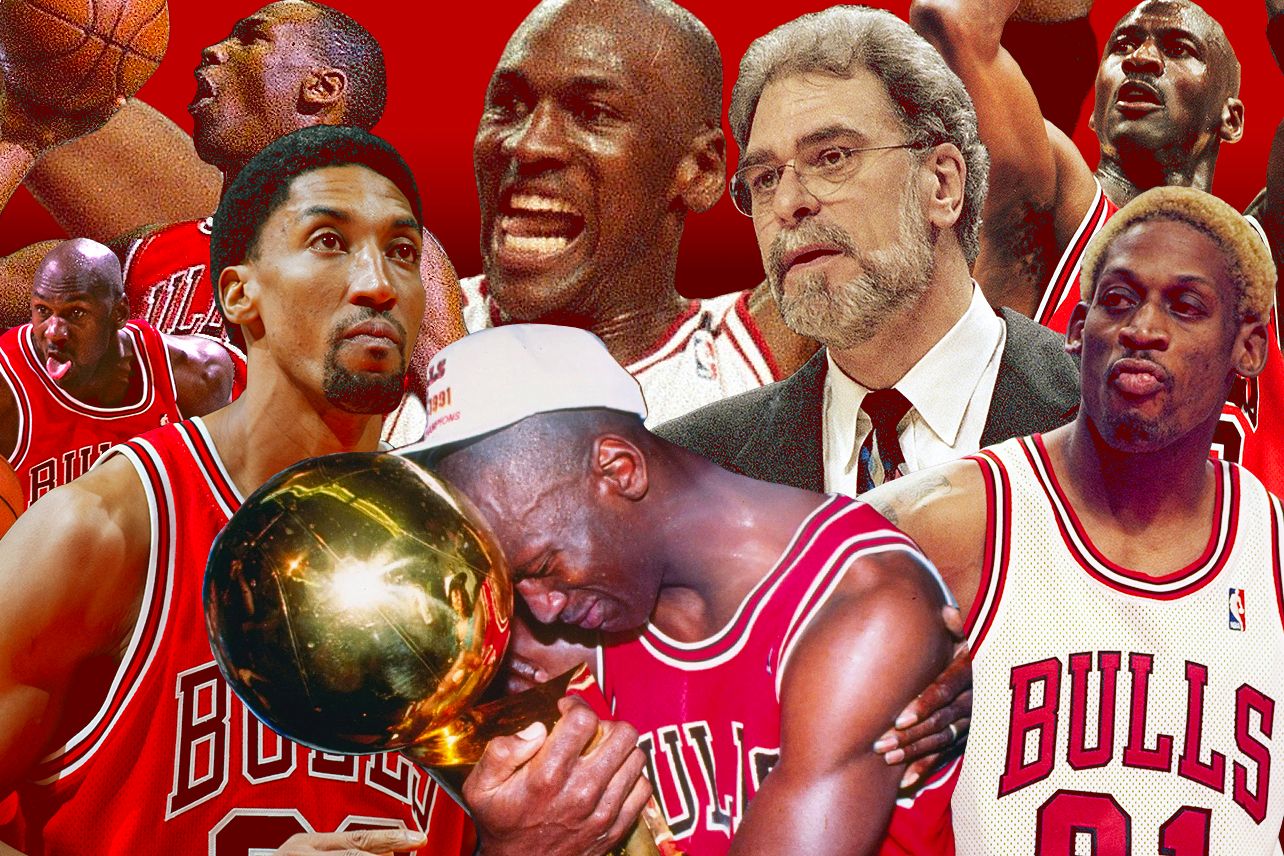
Scottie Pippen is the most interesting flawed character in “The Last Dance”

The first two episodes of The Last Dance lived up to incredibly high expectations as it showed the 1997-1998 Chicago Bulls – warts and all.

The Last Dance takes a fascinating look at the final season of one of the most compelling teams in the history of the professional – the 1997-1998 Chicago Bulls.

Michael Jordan is reaffirmed as a relentless and demanding leader.  General manager Jerry Krause is portrayed as a socially inept oaf whose arrogance almost derailed that final championship run.  And Scottie Pippen was petulant and unhappy with what he perceived to be a lack of loyalty from his employer.

Somehow, Pippen’s story wound up being the most memorable and interesting.

Click here for your copy of “Oops – the Art of Learning from Mistakes and Adventures” by Kent Sterling

Pippen enjoyed a summer off in 1997 before finally having needed foot surgery just before the beginning of the season because he felt Krause was shopping him and because owner Jerry Reinsdorf refused to renegotiate the seven-year deal he signed in 1991.

The deal that Pippen asked for in 1991 paid him $19,445,000 over seven years.  The made Pippen one of the most egregiously underpaid players in the NBA, but Pippen signed the deal over Reinsdorf’s objection.  He told Pippen at the time the deal was a mistake, but there would be no renegotiation at the time Pippen realized it.

Pippen also failed to understand his role as a commodity for the Bulls.  Employers enjoy portraying themselves as a family, and young employees buy that lie.  Businesses are not families, and employees – first and foremost – are assets.  If an asset is better utilized in an exchange with another business, then management would be irresponsible to not make the deal.

Krause, while indelicate to the point of idiocy in the way he spoke publicly about trades and contracts, was 100% right.  Athletes are acquired and disposed of regularly, and those who covet security and the power of self-determination are in the wrong business.

And those who sign long-term deals that guarantee financial security for their family need to understand a signature conveys agreement with the terms of the deal.  Pippen signed a seven-year deal, not a six year deal with an option for a seventh.  Contracts mean something.

Pippen always seemed to have a childish lack of understanding of basketball and business compared to Jordan.  While Jordan needed Pippen to win six championships, Pippen needed Jordan more – much more.

Few can compare to Jordan on or off the court.  He is not only the best player ever, but one of the best business people.  Jordan understood that the greatest portion of his wealth would be generated through marketing where earnings are unrestricted by salary cap.  Pippen focused on all the wrong details.  He responded to problems with anger rather than solutions.

In 1994, Pippen was charged with a misdemeanor gun charge after Chicago PD found a 38-caliber handgun in his Range Rover.  Pippen said at the time he had the gun in his vehicle because he was concerned people might recognize and rob him.  His SUV carried a vanity plate “DA PIP.”

That’s Pippen.  He could have changed the plate to one without his name – or carry a gun.  The best solution to the problem was self-evident, but his response only threatened to create a new set of problems.

Part of the fascination with The Last Dance is to see how this great team composed of flawed parts came together to forge a championship run that has been unequaled in the last half century of American professional sports.

Krause – awkward and horrifying in his insecurity and arrogance.  Jordan – relentless in his demanding leadership.  Pippen – petulant and bitter as the all-time best NBA wingman.  Dennis Rodman – agonizingly self-destructive in all facets of life other than rebounding.  Phil Jackson – self-acknowledged genius conductor of this wacky orchestra.

Eight more episode.  Can’t wait.

Jalen Green bypassing college won’t hurt college hoops one little bit

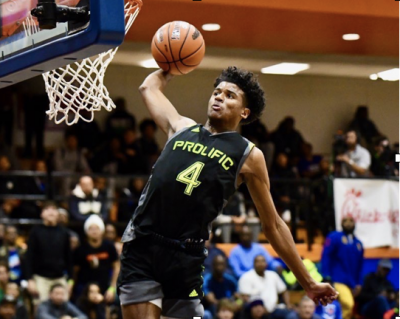
Jalen Green will never throw down for a college program, and that will not hurt college basketball even a little bit.

Jalen Green is the best high school basketball player in the country, and he’s going to jump straight to the pro’s rather than cool his heels in college for eight months while waiting to play in the NBA.

Isaiah Todd, a five-star recruit who had previously committed to Michigan, made the same decision earlier this week.

This has resulted in normally smart people gnashing their teeth over how college basketball can possibly survive without the star power of players like Green and Todd.  Yahoo Sports college basketball writer Pete Thamel wrote this yesterday, “The symbolic loss of Green is much more important than the singular loss of Green, as the creation of a new avenue for top prospects by Silver is a crushing blow to the sport of college basketball.”

Click here for your copy of “Oops – the Art of Learning from Mistakes and Adventures” by Kent Sterling

There are few people writing about anything, much less sports, who are smarter than Thamel. But it’s hard to be more wrong than he is.  Green’s loss will not damage college basketball singularly or symbolically.

The NBA is about star power.  Whether LeBron James played for the Cavs, Heat, Cavs again, or Lakers, people buy his jerseys and pay a premium to watch him.  The same is true for Steph Curry and about a half dozen other NBA players.  Back in the 1980s, it dawned on the NBA to marketing around stars like Michael Jordan, Magic Johnson, Larry Bird, and Julius Erving instead of teams.  Smart.

College basketball’s popularity will never be about stars for two very good reasons.  The first and most important is that fans are tethered to programs, not players.  If you earned a degree from Indiana University or live in southern Indiana, it’s likely you will live the rest of your life as an IU fan.  The same is true for most popular college basketball programs.

Secondly, college basketball churns through players like that’s its job – because it is.  College attendance is a transitional exploit for not-quite-adults.  The vast majority of college basketball players stick around for four years, develop their game, and hopefully earn a meaningful degree before moving on to being a professional at something other than basketball.  NBA stars stick around for 15 years as global brands.

There can be a reasonable conversation about whether jumping to the NBA early is a good move for a student-athlete, but it’s a decision that is made by a small sliver of those playing college basketball.

If Green wants to spend his swing year in the G-League earning $500K, I’m all for it.  Guys went pro out of high school every year before the NBA instituted an age restriction that ended draft eligibility.  In 2005, the last year this was allowed, nine prep stars were selected in the NBA Draft.  College basketball rolled on because it doesn’t require Monta Ellis or C.J. Miles to thrive.  It has Indiana, Kentucky, Butler, Purdue, Duke, and Kansas.

It’s kind of like A.J. Foyt has always said about the Indianapolis 500, “A.J. Foyt didn’t make the the Indy 500; the Indy 500 made A.J. Foyt.”  Stars don’t make college basketball; college basketball makes stars.  Fans cheer programs for a lifetime – not players for one to four years.

It’s more likely that the loss of athletes who have no interest in playing college basketball as they await eligibility for the draft will enhance the popularity of the sport.  The familiarity and adulation developed over a four-year period is far more important to the health of a program than players who count the days as freshmen until they can earn NBA level cash.

Jordan Hulls and Calbert Cheaney will always be more beloved as Hoosiers than Eric Gordon or Romeo Langford.  No one buys tickets to see IU play at Assembly Hall because Langford wore candy stripes before leaving for the NBA.  Hell, Langford’s classmate Rob Phinisee will be remembered more fondly than Langford inn Bloomington despite there being only a small chance he ever plays a minute in the NBA.

College basketball is big enough to withstand the pay-me-now whims of a few 18-year-olds like Jalen Green because the sport is about the name on the front of the jersey – not the back.

Indy’s economic health depends upon large groups of fans watching games; we need games back!

All those people – all that money. All those taxes, all those teachers, police, and firefighters.

Those of us who are not economists or epidemiologists are in the midst of a moment in history we find difficult to understand.

We don’t want any more people to dies of the Coronavirus.  That much is easy.  If social distancing helps keep our neighbors safe, it’s a small price to pay.  The word “mitigation” is used constantly by Dr. Fauci and Dr. Birx in their explanations of how viruses can be stopped.  If we mitigate until there is a vaccine, we can save lives – many thousands of lives.

Click here for your copy of “Oops – the Art of Learning from Mistakes and Adventures” by Kent Sterling

Then we look at our bank accounts.  Uh-oh.  Our sources of income are withering because of this social distancing.  We might be mitigating ourselves into foreclosures or evictions.  Even worse for cities and towns where we live, we aren’t spending money because we aren’t making money.  That means sales and income taxes that fund our police and fire departments as well as our schools aren’t collected.

Mitigation requires that people stay home.  That means no congregation, and those who work in the service industry have no one to serve and no taxes to pay because they have no income.  They file for unemployment, which further depletes state government reservoirs of cash, and so it goes until economic bedrock comes.

Over a half century ago, a bunch of smart people gathered in Indianapolis to establish a goal for the city that would fuel the economy and build a brand for a city without one.  They landed on sports.  The goal was to build a city that could host a Summer Olympics.  All decisions were made through the prism of becoming the “Amateur Sports Capitol of the World.”

Despite realizing an Olympics was an unrealistic dream, the results of building a city around sports set Indy on a path of tremendous growth.  The Pacers migrated from the ABA to the NBA.  The Colts relocated to Indy from Baltimore.  The NCAA moved here and hosts a major event here at least once each year.  Market Square Arena and the Hoosier Dome were built, and were replaced by Bankers Life Fieldhouse and Lucas Oil Stadium.  Hotels and restaurants fill downtown.  Super Bowl XLVI was hosted here, and the NBA All Star Weekend is scheduled in Indy next February with a Final Four coming six or seven weeks later.

And how about the 300,000 people who stream into Speedway to watch the Indianapolis 500 every year?  Thousands of Hoosiers reap a tidy harvest from the world’s largest single day sporting event!

If sports as an economic driver is put on hold for more than a year while a Coronavirus vaccine is developed, tested, approved, mass produced, and dispensed, Indianapolis will radically change during the wait.

It’s even worse for college towns.  Knoxville, Bloomington, West Lafayette, South Bend, Columbia (MO), Columbus (OH), Ann Arbor (MI), and dozens of similar towns are utterly reliant upon the colleges and their athletic events to draw thousands of fans and millions of dollars.  Without the college students, their economies would wither in weeks.

But we don’t want people to die of the Coronavirus either.  Is the answer masks for everyone, a health pass issued by the state, rushing through protocols for a vaccine, massive antibody testing and plasma treatments, or a year’s worth of government subsidies for businesses?  I don’t know.  Like you, I am neither an epidemiologist nor an economist.

I do know this, people going places as a group brings cash to cities and towns that builds roads and schools, and pays teachers, policemen, and firefighters.  Life without those publicly funded necessities would be chaos.  Unless you’re a minimalist who wants to live off the grid, this is not the kind of society you want.

We are in the midst of a time that needs a hero – a person much smarter than we are to find a cure or vaccine within the next three months because the consequence of waiting longer than that puts us in an impossible position.

No one wants to risk the lives of an “acceptable” number of loved ones with underlying health issues in order to get the economy rolling again.

Without a hero, that’s exactly where we are headed.

Silly stories about meeting celebrities – #10 – Smokin’ Joe Frazier charges us $5 apiece for pictures

Silly pictures with silly guys standing next to Smoking’ Joe Frazier – a boxer who was decidedly not silly.

The great Paulie Balst moved to Atlanta in the mid-1990s, and that meant a group of friends felt compelled to visit not long after.

Julie, Ryan, and I came from Indianapolis.  Ross and Julie Sheffield rolled down from Chicago.  There might have been others.  Who knows?  This was a substantial group with substantial appetites that drove us to a dinner at Chicago Pizza a few blocks from Balst’s upscale apartment.

This wasn’t the Chicago’s Pizza we have in Indianapolis.  There was no all-you-can-eat buffet in this place.  This was a fully functional large sports bar that happened to have pizza on the menu.

On this Friday night, we had a responsible mindset to go easy because we had a round of golf to play early the next morning.  Those plans didn’t last long, as we correctly assessed the night as infinitely more fun than we would have on the golf course – whether we shot 75 or 95.  We ate, drank, and laughed for hours, until Paulie pointed and said, “That guy looks like Joe Frazier!  We need to get a picture.”

Click here for your copy of “Oops – the Art of Learning from Mistakes and Adventures” by Kent Sterling

Joe Frazier was a boxer whose first and third fights against Muhammad Ali are thought to be among the very best of the last half century.  The final fight of the trilogy, the Thrilla in Manila is still shown regularly on ESPN, and established both Frazier and Ali as societal icons of the era.

Ali painted Frazier as the villain.  That was excellent for marketing their fights, but unfair to Frazier as a human being who was never anything less than an absolute pro as a competitor and person.

These were the days before iPhones, so cameras were a little scarce.  Ross had one back at the apartment and Balst encouraged him to go get it quickly, “How often is Smokin’ Joe Frazier going to walk into a bar where we are?”

Ross dutifully drove the few blocks back and forth to bring us the camera, so fueled with a little liquid courage, Balst and I made our way through the crowd to get our picture with the former heavyweight champ.

We found Frazier standing by the bar surrounded of a group of big guys, whose presence seemed to deter lesser boobs who might approach for an autograph or picture.  There was no chance we were going to turn away.”Hey, champ, can we get a picture?” I asked.

“Talk to my man,” responded Frazier, who pointed toward the guy standing immediately to Frazier’s left.

“Hey, Joe’s man, can we get a picture with the champ?” I asked.

“Five dollars,” barked Joe’s man.

“Five dollars?” I asked to confirm the amount.  Joe’s man nodded.  “I’ll take two!” I said as I handed Joe’s man a $10 bill.

Paulie took my picture with the champ first, and then I reciprocated for Paulie.  Mine was a straight forward picture with Frazier and I appearing to to friendly.  Balst’s was more theatrical with Balst pretending Frazier had just hit him with his devastating right cross.

We shook hands with both Frazier and his man and proudly returned to our table.  Frazier likely returned to his friends and never gave Balst or me another thought.  The $10 likely bought a couple of cocktails, which were gone in moments.

The picture of Frazier and me still hangs in my den, and the pic of Balst and the champ hangs on our refrigerator.

Not only did Frazier loses twice to Ali – he lost the negotiation with Balst and me too.  Those pictures are worth much more than $5 each to me.

Baseball’s perfect seven seconds

The pitch from a teammate we called Guido cut toward the inside corner as I tried to see something that might give me a hint as to which direction Marty might hit it.

With a runner on second with one out in a game we led 3-2 in the bottom of the seventh inning, I played three steps closer to the infield than normal for a hitter like Marty.  If he singled in front of me, I had a good chance to throw the runner at second out at the plate.  Buzz wasn’t fast runner, but he would almost certainly try to score the tying run on a base hit.

Marty had a closed stance and rarely opened his hips, so I always shaded him toward the right side of centerfield where my job was to turn anything hit in the air into an out.  Despite getting a single finger from a catcher we called Pink, it appeared Guido took a little off the pitch.  Maybe he had gotten a little tired, as he was two outs from a rare complete game.

Thinking fastball himself with the count 2-0, Marty was a tad out in front of the pitch.  I adjusted my lean toward right field into a step toward left.  The ball hit the barrel and jumped into the dark night.  The angle appeared similar to that of the countless home runs I had seen hit to left center field during Cubs games at Wrigley Field televised by WGN, but I saw that Marty had been forced to wait just a moment before releasing his hands to make contact.  This would not be a home run, but a fly ball that would die just in front of the billboards that served as the fence.

In perfect condition, with legs that could run and jump forever, I glided quickly toward the spot on warning track where I knew the towering fly ball would fall gently into my mitt.  The runner on second would never dare tag up and try to take third with only one out in a one-run game, would he?

I never tried to sprint full out after fly balls.  Keeping my head still while tracking the ball was critical to correctly predicting exactly where it was headed.  A 95% glide was much more effective than a 100% sprint.

Yelling “I got it! I got it!” until I heard the left fielder divert course, I adjusted my angle to try to get behind the ball so my momentum could carry me toward a strong throw to third.

I looked up to see the perfect white sphere float across that perfect black sky.  This was that moment of perfect enjoyment as an outfielder’s guess to where the ball will fall is proven right  – that instant that he knows the batter is out long before the ball is caught.

After playing for years and shagging thousands of fly balls during batting practice and games, that moment came early enough for me to slow time to a near stop so I could appreciate it as I ran through the situation one more time, “Buzz is the runner on second,” I reminded myself.  “He’s not fast, but he tends to be aggressive.  Have to turn it loose.  No one else is on, so airmail the cut-off man so he can’t get in the way and screw it up.  Put it on the bag and teach Buzz a lesson.  If he doesn’t go, still put it on the bag so he knows not to test me next time.”

The quiet interlude as I tracked the fly ball turned noisy and violent as I turned slightly forward immediately prior to the ball landing against the leather of my mitt.  Because I was already moving toward third base as I transferred the ball from mitt to throwing hand, a step was saved.  I aimed six feet left of third base as my throws tended to tail to the right.  I released with all the force I had.

An outfielder watching a throw leave his hand and head toward where he intended is like the inverse of tracking a fly ball.  Once it’s gone, there is nothing to think about or do but hope.  The work is done.  All that occupies your mind is the hope your arm was able to what you told it and that it will land 200 feet away in exactly the spot you intended.

Similar to a golf shot, when it’s good, you know it.  When it’s not good, that’s clear too.

This was good.

Right trajectory over the top of Paul, our shortstop and cutoff man.  Perfect line too.  Buzz was running as I hoped he would, and if Charlie caught the ball clean, the game would be over.

The ball beat Buzz as he started his slide.  Charlie caught it, and Buzz accommodated by sliding into his mitt.

Those seven seconds between that pitch and the out to end the game might be the best of my life.

Silly stories about meeting celebrities – #9 – the day Harry Caray treated my son like gold

Harry Caray was the king of Chicago in 1991, so when a friend offered me a chance to have my three-year-old son meet him at Goose Island Brewery, I jumped at the chance.

There were four things Ryan would watch on TV when he was little – Indiana University Basketball, Michael Jordan, car commercials, and Cubs baseball.  The first day one-month-old Ryan was allowed out of our apartment, which was walking distance from Wrigley Field, we took him to see the Cubs get swept in a doubleheader.  He loved the Cubs as a kid as much as he does today as an adult.

At the time, I took improvisation classes at Second City, and one of my classmates was a funny and generous guy named Duncan.  Duncan, an Anheuser-Busch rep, knew of my love for the Cubs and he had gotten to know Ryan a little bit too.  One Saturday after class, Duncan mentioned that he had some passes to a meet and greet for Anheuser-Busch distributors with Harry at Goose Island.

Click here for your copy of “Oops – the Art of Learning from Mistakes and Adventures” by Kent Sterling

I asked Ryan if he would like to come with me, and he was excited to meet the Cubs broadcaster.  Ryan was only three at the time, but Julie and I always treated Ryan like he was a miniature adult.  His say so was as important as anyone’s in our house.  At fast food restaurants, we encouraged him to order for himself, so he became conditioned to dealing with grown-ups – to the extent that counter staff at Taco Bell could be considered adults.

We drove our giant Oldsmobile to Goose Island and presented our passes.  There weren’t any other kids, which I anticipated, because this was a free beer event at a brewery not a day care teacher gathering.  Most would have felt awkward hauling a toddler into Goose Island, but I didn’t do awkward in 1991.  Ryan didn’t either.  We still don’t.

It didn’t take long to find Harry.  As always, he had a crowd of Budweiser distributors standing around him.  Harry held his can of Bud with the full label facing out as people posed for pictures.  There might have been days when Harry struggled saying “Assenmacher,” but he understood how to showcase a product for those who paid him to do it.  I’m not sure a human being has ever sold more beer to a city than Harry moved in Chicago.  As you might guess, he was very popular among the distributors.

I was not optimistic that Ryan would get to meet Harry at all.  It was likely that Ryan would have to settle for seeing Harry from a distance.  Anheuser-Busch was paying Harry to schmooze, not hang with a kid who just turned three.

Harry was in the middle of a story when he saw Ryan 30-feet away.  He interrupted his own story, “Excuse me.  I’ll be right back.”  Harry walked over to where we stood, bent down, and asked, “Hey, young man!  Do you like baseball?”  Ryan said he did, and that kicked off a two-minute conversation between the icon and an anonymous little guy who loved him and the Cubs.

Ryan shook Harry’s hand before he returned to the throng and finished his story.

People associate Harry with drinking and joviality, saying names backwards, and staying out until dawn, but he also had an enormous soft spot for children.  On that summer afternoon at Goose Island, he made Ryan feel just as special as those with whom he crossed paths on Rush Street at two in the morning.

Professional and college sports will change when they return – maybe for the better

Filling Bankers Life Fieldhouse again will depend upon the Pacers rebuilding their business model to show fans they are loved for more than their cash.

Just as Americans respecting social distancing guidelines will hasten a return to normalcy, professional and collegiate sports leagues, franchises, and programs need to use this time  to ensure their continued profitability and existence.

Meetings and teleconferences are being held at the headquarters of teams and leagues all over the country trying to mitigate the longterm damage the Coronavirus pandemic may cause.  All levels of fan engagement must be stripped to the studs and rebuilt.  The previous methodology used to extract cash from fans is just not going to cut it anymore.

Click here for your copy of “Oops – the Art of Learning from Mistakes and Adventures” by Kent Sterling

Fans, even ardent fans, are reassessing their priorities.  As Americans “hunker down,” they are making decisions about expenses at an entirely new level.  The decision to renew season tickets was difficult before anyone had heard of Coronavirus, but now that we have recalibrated priorities and discovered new interests, the weight on the side of the scale that prompts us to spend our money elsewhere – or simply stash it in savings – has increased.

With an almost complete absence of live sports to watch live or on TV, and nothing but Russian ping pong to bet on, fans are reading, doing puzzles as a family, and learning how to play guitar.  Instead of watching others participate, we are doing that ourselves.

If there are any weaknesses in the customer interface at arenas, ballparks, or stadia, they will become magnified when fans return.  Whether it’s safety from the virus, concessions cost, or staff friendliness, every aspect of the fan experience will be scrutinized by those who choose to invest their hard-earned cash in an excursion to a single game or a season’s worth of events.

Teams will strip down every moment for fans to make sure they feel appreciated and not preyed upon or exploited.

When I decided not to renew my Chicago Cubs season tickets, there were several factors in play.  The first was the annual 20% increase in price.  The Cubs relentlessly squeezed me because they had a significant wait list for season tickets.  Greed had no short term penalty, so up the prices went.

Second, the perks became less special every year.  In 2015, the Cubs asked if we would like to come down on the field for batting practice.  That was cool for the four of us.  I received periodic emails asking if I would like an additional experience – a Wrigley Field tour or some small piece of swag.  In 2017, all that interaction and opportunity was gone.  The Cubs won the 2016 World Series, so who needs to make the boob in Indianapolis feel a little more special?

The Cubs indifference made the decision to not write the check for 2019 very simple.

Teams facing this crisis need to avoid the perception that they are fueled only by greed.  Fans need to feel their love for a team is reciprocal.  Teams need to adopt a service-based philosophy, rather than use every opportunity to separate the last available dollar from every business leader, father and mother, or lonely fan who make the choice to invest in a night out.

Nature always finds a balance, and this virus is an unwelcome part of that process.  Prior to the pandemic, people spent ridiculous stacks of cash on frivolous entertainment options.  That money helped sports become a great sources of wealth for players, coaches, executives, owners, and sports media talent and executives – perhaps too much wealth.

This pause in our normal lives has provided a window for well-run companies to tear down their operations and then rebuild them into more responsive, friendlier versions of themselves.

Whether professional and collegiate sports thrive behind the same popularity they enjoyed just five weeks ago when the world came to a sudden stop after Utah Jazz center Rudy Gobert tested positive depends upon everyone associated with their operations contributing to a fan-friendly, less greedy business model.

Silly stories about meeting celebrities – #8 – Awkward praise and a broken camera don’t bother Don Knotts

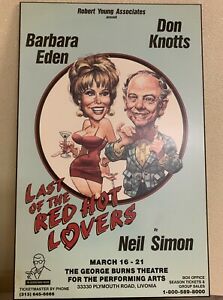
Don Knotts career as an actor came to this in 1993 – and this came to Indianapolis.

Don Knotts played Barney Fife on the Andy Griffith Show for five years in the 1960s and won five Emmys for his work.  He was on top of the world as one of the most beloved comedic actors in TV history – then.

By the 1990s, Knotts career had plummeted to the point where he was touring with Barbara Eden of I Dream of Jeannie fame in a production of the Neil Simon comedy The Last of the Red Hot Lovers, which made a brief stop in Indianapolis.

To promote the show, Knotts was scheduled to visit to WIBC Radio’s morning show.  This was not long after I began working at the radio station, and I was excited to meet the guy who played Deputy Fife.

I don’t like asking for autographs – it seems like something kids should do – not adults – but I wanted some kind of commemoration of our crossing paths, so I decided to get a picture taken with Knotts.

I needed to somehow make it unique.

Click here for your copy of “Oops – the Art of Learning from Mistakes and Adventures” by Kent Sterling

My wife was a great softball player as a kid, and once received a giant trophy for hitting three home runs and driving 14 runs in a single game.  It was the biggest trophy either of us had, so I brought it to work as a prop for the picture.  I would ask Knotts the pose for a picture of him presenting me the trophy.

Knotts was painfully shy during the interview, indulging all of Jeff Pigeon and Terri Stacy’s questions about the Griffith show and his films The Ghost and Mr. Chicken and The Incredible Mr. Limpit.  As Knotts walked out of the studio, I told him I would escort him to his car, but asked if he would allow a picture.  He said sure.

I told him about the trophy presentation, and he was cool with that too.  I gave the Kodak Instamatic camera to a producer and stood with one arm around Knotts and the other holding the trophy as though he had just given it to me.  “The camera won’t work,” the producer said.  I put down the trophy and tried to fiddle with the camera.  Hoping we had it fixed, we tried again.  No luck.

“I’m sorry Mr. Knotts,” I said as I tried to advance the film.

“No problem,” Knotts said repeatedly as I failed in my efforts to fix the camera.  He stood there holding my wife’s giant trophy for 10 minutes without rolling his eyes or behaving in any way as though we were inconveniencing him.  Barney Fife would have been bouncing off the walls, yipping and yapping about the buffoon with the broken camera.  Knotts smiled blankly again and again waiting for the shutter to engage.

Finally, I threw the camera in the trash, and told Knotts he was off the hook for the picture.  His expression showed neither relief, frustration, nor amusement.

I walked him into the elevator, and the silence was intolerable.  I needed some kind of interaction – some evidence that the guy I watched in reruns was in there someplace.  “I just want to tell you that your work was brilliant,” I gushed.  “No actor has ever made more people laugh through inhabiting a character so completely.”  That moronic commendation wasn’t enough as we rode the slowest elevator in America from the third floor to the first.  I felt compelled to say something else to fill the uncomfortable quiet until the door finally opened,  “You were money in the bank!”

Money in the bank?  What!  Who says that?  What the hell did I expect Knotts to does a response to ‘money in the bank?’

Knotts smiled vaguely without making eye contact as we finally exited.  He got into the waiting car and left to go through that same song and dance at TV and radio stations all over Indianapolis.  People would praise his work from 28 years before as he prepared for a night in a half-full theater with a woman occupying the same moment in a career arc that peaked for both many years before.

I used the trophy for many other pictures with celebrities whose desire to continue working carried them to Indianapolis.  Some showed good humor and others got angry.  None were as totally inscrutable as Knotts.  Was he aloof, heroically patient, or medicated?  I have no idea.

Maybe he was comfortable in the knowledge that his superb and sublimely hysterical portrayal of Barney Fife would always define him.  Who knows?

I just wish the camera had worked and I had a picture of the strangest interlude with a celebrity I’ve ever experienced.

Silly stories about meeting celebrities – #7 – Drinking beer in Chicago with Chris Farley

In the early 1990s, I was immersed in trying to learn how to improvise.  Second City was the home of improvisational comedy, so I took classes there and tried to find out as much about it as I could from those who earned a living doing it.

That led me to U.S. Blues, a bar a block south of Second City owned in part by Dan Aykroyd and frequented by many of the actors who working at the iconic theater.

I had been there before, as much because of the cool location as the clientele.  US Blues was down an alley and then a staircase led to a cellar.  It was more like a small speakeasy than a modern bar.  Steve Beshekas ran the place and tended bar.  He was a friend of the late John Belushi, and made good conversation.

Click here for your copy of “Oops – the Art of Learning from Mistakes and Adventures” by Kent Sterling

On a Wednesday night after class, I popped in, and there were four people in the bar.  Beshekas behind the bar, two guys sitting at the bar, and a fourth at a small table.  I introduced myself to the two guys at the bar, and one was Tim O’Malley, a longtime cast member at Second City.  Like many had done before me, I’m sure, I asked O’Malley about improvisation.  Very nicely, with an almost invisible eye roll, O’Malley left his stool and walked me over to the big guy sitting alone at the table, “Chris, I want you to meet Kent.  He’s taking improv classes and has some questions.  Kent, Chris is in the main stage cast too.”

The big guy smiled and said, “Hi, I’m Chris Farley.”

Clearly, O’Malley had passed me off – either as a joke or because Farley was a friendly guy who didn’t mind talking to a pain in the ass with a bunch of the same silly questions as the thousands of other dreamers who came to Chicago hope to be the next John Belushi – minus the overdose.

I didn’t know who Chris was at the time, but he told me about how cool it was that Bill Murray had been in the bar a few nights before filming a little vignette that played during the pregame for the All Star Game at Wrigley Field the previous night.  He was jacked to meet Murray, who was his comedic hero.

We talked about his time in Madison and Marquette, how improv was the most fun he ever had, and how his path led to Second City.  He was a sweet guy who asked about my family and what my life was like.  We sat for a couple of hours, drank a few beers, and had a good conversation.

This behavior of chatting up strangers is as unusual for me as being launched into space.  Approaching people I’ve never met in a bar is not my cup of tea, but I wanted to learn about improv.  These guys were where I wanted to be, so I bit the bullet.  I assume strangers are even less eager to talk to me than I am to them, but Farley made it fun and easy.  We told stories and laughed until it was time for me to head home to Julie and Ryan.

I remember thinking that Farley was too normal to be successful in a cut-throat business like sketch comedy.

The next time I went to U.S. Blues, Farley was there again.  This was four weeks after our conversation, and there was a crowd in the bar that night.  I sat at the bar, and Bashekas said, “Farley found out he’s been cast on SNL.”

That’s the holy grail for Second City actors.  They all dream of getting the call from Lorne Michaels to join the cast.  There has been a steady pipeline from Second City to SNL since the original cast.  Belushi, Aykroyd, and Gilda Radner were from Second City, and Murray joined the cast during season two.  Dozens of others have followed.

This was Farley’s dream, and he celebrated like it.  Every seven minutes, he would do a shot of tequila, insult O’Malley, and then duck into the back room.  I didn’t know what the hell was going on in back, but this was a different Farley.  He wasn’t sweet at all.  He was frenetic, caustic, and entirely unappealing.

I stayed for an hour out of curiosity, and then bolted.  I’m pretty good at reading a room, and there were things going on in that place I wanted no part of.

You know the rest of the story.  Farley became a star on SNL with characters like Matt Foley and Bears super fan Todd O’Connor.  He starred in Tommy Boy and Black Sheep as he fell down a Belushian hole of opiate addiction which killed him in late 1997.

I don’t know enough about Farley or addiction to have an answer for how the sweet guy who was so jacked to meet his idol skyrocketed to intense fame and then died of an overdose in just seven-and-a-half years.

I just know that on that one Wednesday in 1990, Chris Farley was good company.