Author Archives: Kent Sterling

Entercom makes cuts that will hurt the company more than those who were fired

Entercom CEO David Field made cuts yesterday, and his email to staff promises there will be more.

Entercom fired a bunch of radio professionals yesterday.  Believe it or not, that saddens me more for the company than the individuals who were told to pack a box.

Big media companies, despite their insistence to the contrary, are mostly the same.  They are too big to quickly pivot or embrace that their most important product is their personnel.  Radio is not about systems – it’s about person to person connection between hosts/jocks with a vast amount of individual consumers.

The hosts and jocks who were sent into professional weightlessness yesterday still have the ability to communicate, work ethic, and innate friendliness that made them successful at Entercom.  They lose nothing other than the very one-sided partnership they enjoyed with an employer who profited disproportionately because of their gifts.

Click here for your copy of “Oops – the Art of Learning from Mistakes and Adventures” by Kent Sterling

Entercom became less special through that willful loss of human equity, and they will find it harder to profit because of their absence once the new normal of the American economy is established.

Radio, and all media, has long been in the process of trying to grow profits through trimming expenses rather than expanding avenues for additional revenue.  It takes creativity and intelligence to expand and create wealth.  It takes nothing more than a red pen and a human resources department to cut payroll by 20% every year.

That’s not to castigate Entercom for the cuts, but to call attention to two things.  First, the displaced employees will be fine.  Their talent to communicate and make friends is commutable to many other businesses.

Second, big is not always better.  Deregulation of media that allowed individual corporations to own hundreds of TV and radio stations as well as newspapers was great for the owners whose growth expanded exponentially in the 1990s, but terrible for long-term business and consumers.  That’s the topic of a long post of its own, but trust me, the products of individual radio and TV stations, and newspapers have suffered tremendously because of deregulation.

Entercom did what it had to do to maintain financial viability, and according to an email from CEO David Field yesterday, more cuts are coming, “We are doing everything in our power to minimize the number of layoffs through shared sacrifice across the organization, but we will still need to eliminate or furlough a significant number of positions.”

I take David at his word, and understand that Entercom is not alone.  iHeart made massive cuts two months ago and Cumulus has been in the process of gutting its work force for years.

During the kind of significant interruption in cash flow the Coronavirus crisis has caused, the first expense to get cut by businesses is marketing.  Cancellations of ad buys have been a reality for a couple of weeks, and they continue.  No money coming in – no money to pay talent. Pay cuts of 20-30% for retained employees have bought a little time, but if this pause in business as usual becomes long-term reality, the people cut yesterday will be the lucky ones because they will have a head start on the rest who will follow them into job searches.

There is the possibility of a silver lining surrounding these dark economic clouds for radio companies – profits will dwindle to the point that Entercom, iHeart, and Cumulus may decide selling stations is a better strategy than gutting them.  They will sell to people committed to operating stations six and seven at a time, and the medium will become vibrant and cool again.

That’s a long shot, but we can dream, right?
Colts are not elite in any area, and result might not improve over 2019

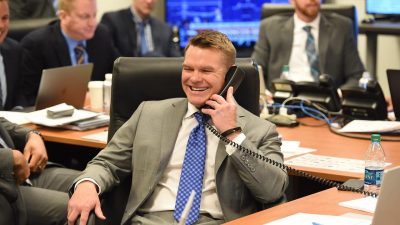
Colts fans hope Chris Ballard will be smiling this broadly in three weeks as the NFL Draft begins.

This is no time to be negative about sports.  Coronavirus news is crazy right now, and people need a reason to believe that brighter days are ahead for their favorite sports teams because we still have a couple of weeks before we’ll know just how bad the real world stuff will get.

But that doesn’t mean we should ignore reality and assume that absolute best case scenario about everything related to the Indianapolis Colts.

Click here for your copy of “Oops – the Art of Learning from Mistakes and Adventures” by Kent Sterling

Fans and media in Indy are talking about the Colts as though the AFC South belongs to them.  Colts GM Chris Ballard has been busy this offseason signing free agents, making a big trade, and getting ready for the NFL Draft just three weeks for tonight, but has that work really made them a division favorite?

First, the positive stuff…

The offensive line returns intact.  That’s good, but it isn’t quite like this is a crew that never misses a block.  Mark Glowinski is an average starting guard at best.  Braden Smith is a good right tackle.  Ryan Kelly, Quenton Nelson, and Anthony Castonzo are as good collectively as any center, left guard, and left tackle in the NFL.

Now, the rest…

Offensive weapons will need to utilize that line to move the ball and score points.  Philip Rivers will be the starting quarterback instead of Jacoby Brissett.  This has fans and some media excited, but I can’t figure out why.  The 38-year-old led the Chargers for a 5-11 record, threw 20 interceptions, and was sacked 34 times in 2019.  “Anyone can have a bad year,” you say?  True, but Rivers is 77-83 over the last decade, posting double-digit wins just once in that time.  He led the NFL in picks twice and has been to the playoffs once in the last six seasons.  I keep squinting and standing on my head as I watch Rivers’ tape, but I’ve yet to see him look like a potential Super Bowl level quarterback.  Maybe that’s because he’s never played in a Super Bowl.

The best thing about the receivers Rivers will throw to is that we don’t know who they will be yet.  T.Y. Hilton is a gutsy veteran for whom injuries have become a problem over the last two years.  In 2019, Hilton posted career lows in almost every meaningful stat, including games (10), catches (45), and yards (501).  The rest of the WRs are a hodge lodge of mediocres and injured guys.  There is still plenty of time before the season to draft or sign upgrades, so judging Colts receivers is premature.  No way Ballard rolls with this position group as it’s currently structured.

Running backs aren’t bad, but they aren’t a roster strength either.  Marlon Mack was good last year with over 1,000 yards and a 4.4 yards per carry average.  Nyheim Hines is a weapon as a receiver.  Jordan Wilkins takes a long run to the house once or twice a year.  If you ranked the Colts RBs against the rest of the NFL, they would be in the top half of the league, but not by much.

Jack Doyle is the tight end.  Mo Alie-Cox is still around too. This position will be upgraded before the season begins.

An NFL offense needs to know where it can get a few yards to score or moves the chains, just as an NBA offense needs a guy they can isolate and get late scores.  The Colts don’t have that guy. When the Colts were rolling in the 2000s – a decade in which they played in two Super Bowls – they had Peyton Manning, Marvin Harrison, Reggie Wayne, Dallas Clark, and Edgerrin James among others.  No one on the Colts roster today comes close to the dynamism of those players.

The defense…

The defense picked up the DT Ballard believes it needs in DeForest Buckner.  We have been told many times, the three-technique makes Matt Eberflus’s defense go.  Buckner is a prototype three technique, but not a game-wrecker like Aaron Donald.  DE Justin Houston posted a team high 11 sacks, but Jabaal Sheard is a free agent and unlikely to return.  Veteran corners Xavier Rhodes and T.J. Carrie have been signed, and the linebackers return intact.

While Darius Leonard is a known commodity, whether the defense can drive this team to success will depend upon the health and development of Kemoko Turay, Ben Banogu, Bobby Okereke, Malik Hooker, and Rock Ya-Sin.  That group becomes dynamic, and the Colts might be as good as fans predict.

Special teams are an unknown because no one knows today whether Adam Vinatieri will return.  Rigoberto Sanchez is a hell of a punter, and that’s a good thing, but this aspect of the roster can’t be evaluated until we know who the kicker will be in 2020.

I’m not saying the Colts are going to suck, but if you look at the 7-9 from 2019 and the additions and subtractions made to this point in the offseason, there is no logic to drive the belief the playoffs are in their immediate future.

There is still plenty of time and a draft to get things squared away, but right now the Colts are not a division winning football team.

Coronavirus is giving businesses AND employees a pause moment to make dreams come true

Conference rooms are empty today, but after the Coronavirus passes, they will be filled with those who have ideas about how to build revenue and – gulp – cut expenses.

Never waste a crisis.  Pretty good baseline rule of thumb for businesses right now.

The Coronavirus has caused thousands of businesses to hit the pause button, which gives managers and owners time to get creative, which puts at risk the jobs for everyone working beneath them.

My experience is almost entirely limited to media companies, but this blueprint is used in a bunch of corporations.

Click here for your copy of “Oops – the Art of Learning from Mistakes and Adventures” by Kent Sterling

Here’s how it works: because upper-management is sitting around at home with little to do, they assign projects to middle-management.  One of those assignments will be, “Please send me a list of 10 action steps that will combine to raise our revenue by a minimum of 20%.”  Another will be, “Please send a list of 10 efficiencies that will allow us to trim expenses by a minimum of 20%.”

When everyone reconvenes after the threat of the virus passes, an offsite management meeting will be held where everyone’s lists will be compiled and discussed.  Some revenue generators will be fleshed out and readied for deployment.  The cuts will also be debated.  Despite the impact of the virus being past, cuts that make sense will be implemented.

Smart companies will cross-check to make sure the ideas to lift revenue do not require the assistance of the victims of the cuts. Non-gifted managers will fire first and then try to execute without necessary staff.

Then a day will come six weeks after the meetings when the cuts come, and access cards are collected.

Lethargic businesses await a moment in time when the day-to-day responsibilities are shelved so they can focus on big picture conversations about plans for growth and efficiency.  That is where they are right now.  This is that moment.

Smart companies churn these projects annually, semiannually or relentlessly.  Some are more aggressive about adding revenue, and others are especially zealous about cutting their way to prosperity.

As the media landscape has evolved; most TV, print, radio, and digital companies have become cutters – big cutters.  That’s a shame because wise employers understand that employees are critical to generating and maintaining profits.

Downsized employees move to a sector more interested in revenue growth.  Then they await the moment when their new employer’s revenue curve hits its apex, and all of a sudden they become cutters, and the cycle continues.

It sucks for the employees who are cut – as well as those who remain, because they know the bell will toll for thee eventually.  It’s also galling for the managers who prepare and execute the plan as the cuts will come at the expense of friends who will become former friends as soon as they sign their separation agreements.

But it’s business.  That’s the way it works, and as much as we try to retain our humanity in the workplace, we know the true cost of that paycheck – the knowledge that one day our account will be closed or we will tell others they have worked their last.  Likely both.

I know that sounds dire, but don’t despair.  While managers a level or two up the corporate ladder might be discussing your professional demise during this crisis, you are free to use this pause to generate your own list of ideas to make your dream come true.

Assign yourself this task – write down the challenge that makes you the happiest.  For those of you who are not yet employed in a role that allows you to do that exact thing, write down the specific job that would allow you to do it for a living.  Answer these questions:

  • Am I qualified for the position?
  • If not, how can I become qualified?
  • If yes, how do I start a business with me in that role?
  • If I need to be hired by a company that can make my dream come true, who are 10 hiring managers that can make my dream come true?
  • Plot a series of steps that will either allow you to open the business or make your case to those hiring managers.

Easy.

Best case scenario – live your dream.  Worst case scenario – you’ve lost nothing.

These pause moments come around once a decade at most.  Make sure to take advantage of them – regardless of your position in a company and as an employee.


“The Scheme” shows greed and stupidity in college sports and the FBI at its most absurd

Christian Dawkins is a pimp with tight lips, which makes him the closest thing to a hero in HBO’s documentary “The Scheme.”

You get to a certain level of life experience, and no level of stupidity surprises you anymore.  HBO’s documentary “The Scheme” debuted last night, and the idiocy and greed in college basketball was so thick among all participants that I was stunned by it.

Christian Dawkins was a runner for a sports agent who built relationships with high school basketball players and their families.  His arrogance and greed drove him into a business partnership with an undercover federal agent named Jeff D’Angelo.  His goal was to build bribery cases against coaches.

Click here for your copy of “Oops – the Art of Learning from Mistakes and Adventures” by Kent Sterling

In the end, Dawkins refuses to roll over for the feds and offer testimony based upon all he knows – which appears to be substantial.  His refusal to save himself from prosecution is the most courageous and decent act chronicled in the two-hour film.  That tells you a lot about the people and acts shown in this miserable indictment of college basketball and humanity, and an FBI investigation of it.

These people are entirely unencumbered by decency or intellect.

Dawkins shows himself to be greedy and stupid.  The feds are idiots for not understanding how supposed corruption in college basketball works.  The NCAA remains hypocritical for refusing to adjust its rule book to acknowledge the realities of how college football and basketball works.  The schools are amoral for accepting extreme amounts of sponsorship dollars from shoe companies without copping to the level of influence that cash buys.  Fans are morons for buying into the sham ideology of amateurism.

The principle belief system of the United States of America is capitalism.  Value yields compensation.  That’s not just the way business works – it’s the way EVERYTHING works in this country.

The NCAA does not allow value-based payments to be made to student-athletes, so shoe companies, agents, boosters, and (according to a wiretapped phone conversation between LSU’s Will Wade and Christian Dawkins) at least one ballsy head coach fill that vacuum.

And it works.

The NCAA treats soon-to-be football and men’s college basketball professionals like field hockey players, so coaches and administrators get paid millions.  Because America abhors a value vacuum, the shoes stepped in to compensate athletes.

The well-produced documentary offers very little new perspective.  Dawkins is a ravenous manipulator of young athletes and their families.  The NCAA is a glutinous organization that pays executives millions because it has turned a blind eye to rules violations for 70 years.  The FBI tried to build a case against college basketball coaches that was built upon a foundation of ignorance.

I kept waiting for a virtuous person or organization to ride to the rescue, but I knew this story would have no hero.

The only productive purpose of the film is that it might make enough people angry that public outrage might light the fire of reform within the NCAA.  Seems unlikely given that anyone with a passing knowledge of college sports has already been given enough fuel to light a fire of fury.

If anything, we have learned through these various sordid episodes that the public will move on to the next story eventually, and all will be forgotten and forgiven if two things happen – a program wins, and humiliating episodes are not stacked atop one another.

Louisville had to act against Rick Pitino, not because Brian Bowen’s dad was paid by assistant coach Kenny Johnson in front of the Galt House, but because that happened after Katina Powell spilled the beans about the basketball program paying for whores who serviced players, recruits, and fathers of recruits at parties inside the basketball dorm.

Wade and Miller will skate because, despite wiretapped conversations, many programs benefit from shoe companies paying families of valuable recruits.  If Miller and Wade are held accountable for a routine practice, where does that accountability stop?  How many coaches would be tossed?

We can choose to see the greed sewn into the fabric of college basketball and football in one of two ways.

  • Shame is everywhere – and blame belongs to all.
  • Or, what the hell are we worried about?  Watch the games, and enjoy without getting lost in the weeds of the undercurrent of greed and stupidity.

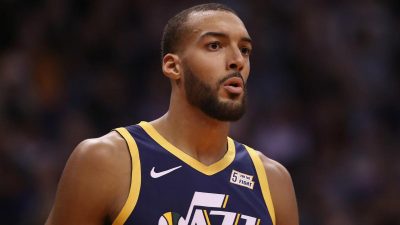
Jazz center Rudy Gobert might be the most unlikely hero of the fight against Covid-19

Rudy Gobert might be the most unlikely hero of the fight against the Coronavirus.

Sitting at the Big 10 Tournament as Indiana played Nebraska, The Athletic’s Bob Kravitz leaned over and showed me a tweet that Rudy Gobert of the Utah Jazz tested positive for the Coronavirus.  In that moment, we both knew the world changed.

A few minutes later, the NBA suspended its schedule.  There was an audible buzz at Bankers Life Fieldhouse, and a strangely enthusiastic ovation for famed halftime act Red Panda when she completed her act – flipping bowls onto her head while riding a unicycle.  It was as though the crowd felt what was coming because of the positive test of the Jazz center.

Click here for your copy of “Oops – the Art of Learning from Mistakes and Adventures” by Kent Sterling

The next day, conference tournaments were canceled, the NCAA Tournament was canceled, the NHL suspended its schedule, and Major League Baseball closed spring training.

The end of the sports schedule as we know it was an immediate and jarring alarm that told us life in America needed to change immediately and radically.  Many stayed home and practiced social distancing even before the orders came from the president, governors and mayors.

In that way, Gobert’s positive test had a positive outcome because it brought into immediate focus the need to take the Coronavirus very seriously and bring down the curtain on mass social gatherings, like sporting events.

As we’ve seen, a quick response has been the best remediation for the spread of the virus.  That reaction might have been delayed by two or three days without Gobert’s positive test, and a greater exponential spread of the virus would have been the likely result.

Gobert actually did America two favors as this pandemic became dangerous and disruptive.

Prior to his positive test, Gobert purposefully touched and rubbed the belongings of teammates.  That was reckless and foolish, but served as a dangerous example when it was discovered teammate Donovan Mitchell tested positive.  Gobert gave us a villain – and we always need a villain to ingrain exactly the behavior we do not want others to emulate.  It’s like your drunk Uncle Chuckie, who your parents would point to at holiday dinners and say, “Don’t grow up to be like him.”

Gobert differed from Uncle Chuckie in one important way.  He acknowledged his error.  Gobert’s statement reads, “I’m going to start by saying thank you to all the people who have been supportive and all the positive energy, it really means a lot.  As for myself I’ve been feeling better every single day, thanks to the healthcare people of Utah, Oklahoma City and all the people around me.

“As you already know, I just want to remind you to keep washing your hands, try to avoid touching your face and try to avoid making unnecessary contact with people. It’s all about protecting yourself and people around you. I wish I would’ve taken this thing more seriously and I hope everyone else will do so because we can do it together. Take care, and stay safe.”

So there’s a positive example of a reformed moron growing to understand that his selfish and dismissive behavior had a serious cost that had the potential for fatal consequences.  It would be nice if more people owned their mistakes, as Gobert did.

This has been a busy month for Gobert.  The positive test was a signal flare to America and the world.  His stupidity in the Jazz locker room had the potential to throw gasoline on that flare.  Then he acknowledged his error.

The truth is Gobert saved lives both through his positive test and dopey indifference to the lives of his teammates.  Then he showed grace with what seemed to be an honest admission of stupidity wrapped in guidance toward positive behavior.

Gobert is an unlikely and maybe undeserving hero in the fight against this damn virus.

When the NBA goes to a pod system to finish season, Indianapolis is perfect choice as a host @Pacers

If the NBA returns with a pod system of several cities where all 30 teams will play the remainder of their schedule without fans in attendance, Indianapolis would be a perfect host city for a variety of reasons.

Click here for your copy of “Oops – the Art of Learning from Mistakes and Adventures” by Kent Sterling

To be honest, I have no idea what the criteria would be for the NBA in selecting venues because fans will not be a part of the equation for a significant period.

Irrelevant items include:

  • Seating capacity
  • Concourse size
  • Proximity to population centers

There are a few needs to make games look somewhat normal on television:

  • Lighting
  • Camera platforms with angles similar to what we normally see.
  • 10-foot rims, wooden court, about 25 chairs for each team.

I’m a honk for Indianapolis.  No question about that, but I think this is a perfect choice as one of three cities for 10 teams to congregate for several weeks to play a lot of basketball against one another.

Here are some of the criteria that make Indy the right choice to convene for a portion of the remainder of the NBA season:

  • Bankers Life Fieldhouse is less than two blocks from a multitude of hotels.  Players would be able to avoid buses that may not be sterile by walking to and from the Fieldhouse.
  • Fans in Indianapolis are not prone to excited gatherings around celebrities.  They are allowed to live their lives without being surrounded by gawkers.  In other cities, fans would gather, which is exactly what is unwanted during these times of stay at home orders.
  • Health care facilities immediately across the street at the St. Vincent’s Center.
  • Pacers Sports & Entertainment always eager to mobilize to make Bankers Life Fieldhouse a solution to challenges, not a cause of problems.
  • Minimal distractions for players.  J.J. Redick said Indy is his least favorite NBA city to travel to, but he almost signed here to play for the Pacers.  Great place to live – boring spot to visit!  That makes Indy phenomenal for these purposes!
  • Small markets are likely to bounce back more quickly from Coronavirus infestation, and Indy is a small market.
  • Airport is a quick traffic-free ride from downtown.

Does it really matter that the airport is a 10 minute trip from Bankers Life Fieldhouse?  Well, it doesn’t hurt.  Why not make this as convenient as possible?  Would you rather endure a longer drive?  It’s a stretch as a reason to choose Indy, but when choosing among 30 great cities, we need to dig deep to build a long list.

It doesn’t matter much where these games are played – if they are played – but if I were commissioner Adam Silver, I would want to minimize the chances for complications and distractions as the NBA re-boots its season.

Indianapolis is the least complicated city I’ve ever lived in or visited, and I love it!  So will the NBA.

Five reasons extending eligibility for college basketball seniors by an additional year is wrong

It would be great for the seniors to get another year of eligibility, not unfair to virtually everyone else.

Life can be unfair.  That’s a crappy lesson for college students to learn, but it’s important because in the end – life is ultimately unfair, and when it’s over there are no appeals.

When some conference tournaments were canceled in progress and postseason events like the NCAA, NIT, CIT and CBA were scuttled before they began, seniors at the end of their eligibility were denied the career-ending opportunities they had worked toward their entire lives.  That’s bad luck for a bunch of young men and women who did nothing to cause the intervening problem.

Now, some are arguing it would be right and decent to unring that bell by extending the eligibility clock one year to provide those graduating student athletes the sendoff they deserve.

There is no denying that losing the opportunity to compete in the NCAA Tournament because some Chinese guy in Wuhan ate the wrong bat sounds like the worst plot in movie history.  It’s sad, unfair, and weird.

Click here for your copy of “Oops – the Art of Learning from Mistakes and Adventures” by Kent Sterling

But that doesn’t mean it requires a fix, especially when the fix being proposed causes more issues than it solves.

That’s life – and there should be no additional eligibility for those wronged by the Coronavirus for these five reasons:

Do-overs do not exist in life.  There is no rolling back the clock.  This is the perfect time to teach the most important lesson these young men and women will ever learn – nothing in life is guaranteed.  The seniors had three previous years and nearly an entire fourth to enjoy.  Time marches on, and so do experiences – fair and unfair.

Seasons had already ended for the majority of Division One programs.  Many conference tournaments ended the weekend prior to the mandated cessation of games.  Teams in those conferences who did not earn an automatic bid were likely finished for the year.  It would be absurd to award seniors for those programs an additional year.  If they don’t get the extra year, how can schools that had already wrapped compete on equal footing with those who allow seniors to return?

Unfair to juniors, sophomores, freshmen, and incoming recruits.  If seniors get to come back, they will eat significant minutes that otherwise would have gone to those who remain.  Juniors would be adversely affected because they would never get the chance to be captains and leaders based upon class.  The greatness of college basketball is partially due to the constant churn of student athletes.  Hope springs eternal because no one is allowed to stick around long enough to dominate play.

Competitive imbalance.  This would give the old basketball saying – “Get old, stay old” a whole new meaning.  If one team has five seniors and another has one or two, the team with five returnees for a fifth year would have a huge advantage – especially if that program also had five talented recruits coming in who were to replace the five seniors.  That would total 18 scholarship players, which would cause yet another subset of problems.

Money.  This is a red herring of a reason I don’t subscribe to, but one you will hear from the NCAA and its member institutions.  They will claim athletic departments cannot afford the additional scholarships, which is preposterous.  The true cost of a scholarship is a desk and food.  That’s not going to break a university.

This class of seniors has earned empathy from fans and their schools, but that’s where it should stop.  There is no earning a second bite at an apple it has already been eaten to the core.

The people championing the rights of the outgoing student-athletes are oafs not yet learned enough to recognize a problem whose solution would cause a cascade of additional problems.

Better to let the carnage begin and end with the seniors who were cheated by a virus than intercede and cause additional issues that will infect the experiences of many others.

New Albany loves basketball – and 40 years ago that love was rewarded with ecstasy then agony

Forty years later, New Albany gathered to celebrate a team that lost its last game. That’s how much people in that Ohio River valley community love basketball.

“Hi, I’m Mr. Cunningham.  Do you think we’ll be able to beat Jeff next year?”

These were the first words spoken to me at Scribner Junior High School after my family moved to New Albany, Indiana, from Lake Bluff, Illinois toward the end of my eighth grade year.  Confused by everything about Mr. Cunningham’s question, I shrugged and said, “I don’t know.”

I didn’t know who Jeff was (it’s what people in southern Indiana call Jeffersonville, a town that neighbors New Albany), and had know idea who “we” referred to or in what game we might beat Jeff.  I would learn very quickly that the only game discussed in New Albany is basketball.

Loving basketball is to New Albany as speaking Spanish is to Mexico.  There is no way to avoid it.  It took a little bit of time to understand the conversations about seventh graders who projected as contributors of the varsity.  I enjoyed basketball as much as anyone in my old hometown, but I never considered whether a seventh grader had what it took to win at Lake Forest High School, and I never met an adult there who wondered such things.

It seemed like basketball was the only thing people in New Albany wanted to talk about.  But New Albany High School’s basketball team wasn’t all they talked about.  They were also willing to debate the merits of the college basketball programs as Louisville, UK, and IU.  Fans were split in thirds with roughly an equal number of people backing each.

The period from 1978-1981 was a good one to fuel the debate about the Cardinals, Wildcats, and Hoosiers as each won a national championship.  In 1979, the year none of those three won, Larry Bird led Indiana State to the championship game against Magic Johnson and Michigan State.

In 1979-1980, my senior year at New Albany, the high school team was exceptionally big and talented.  Three of the starters were 6’8″ or taller, all could shoot, and they were unencumbered by individual ambition.  Ten of the 12 players went on to play Division One basketball.  As you might guess, fans responded in bulk as New Albany reeled off 27 straight wins.  A road game in Evansville – two hours from New Albany – was moved to Roberts Stadium to accommodate the thousands who caravanned down I-64 to watch.

Forty years ago yesterday, New Albany played Andrean High School as the first game of a historic doubleheader that illustrated exactly why basketball is as popular as it is.  A lifetime of work can be reduced to a single moment in time that either propels a team to victory and ecstasy or brings agony that will define a team forever.

New Albany dominated Andrean into the second half, building an 18 point lead.  Andrean’s Dan Dakich got hot, and New Albany went cold.  The lead shrunk to one, and when Mike Paulsin tried to win it for Andrean as the buzzer sounded, he was fouled by New Albany’s Jeff Stoops.

Paulsin stepped to the line.  If he made one shot, overtime.  If he made both, Andrean survives and advances.  If both were missed, Andrean goes home.  The reverse was true for New Albany.  Paulsin would be a hero or goat.  Same for Stoops, who was very emotional as he stood behind Paulsin, about to make history one way or another.

Paulsin missed both, collapsed, and was consoled by teammates.  Stoops and his teammates gathered themselves as a chance to conclude a perfect season was just eight hours away.

Broad Ripple and Marion played in the second semifinal, with the Rockets winning on a 65 foot buzzer beater by Stacy Toran.  There was a very questionable timeout by Marion that led to Toran’s opportunity and the Broad Ripple win.

In the championship game, Broad Ripple hit free throws they normally missed, and New Albany appeared to finally show fatigue as the weight of carrying the hopes for a community finally showed on the players’ shoulders.

Over the 12 hour period in which those three games were played, three dreams were granted and another three were crushed.  That’s the beauty of basketball.

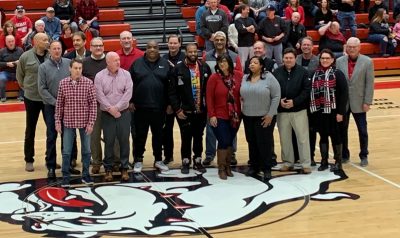
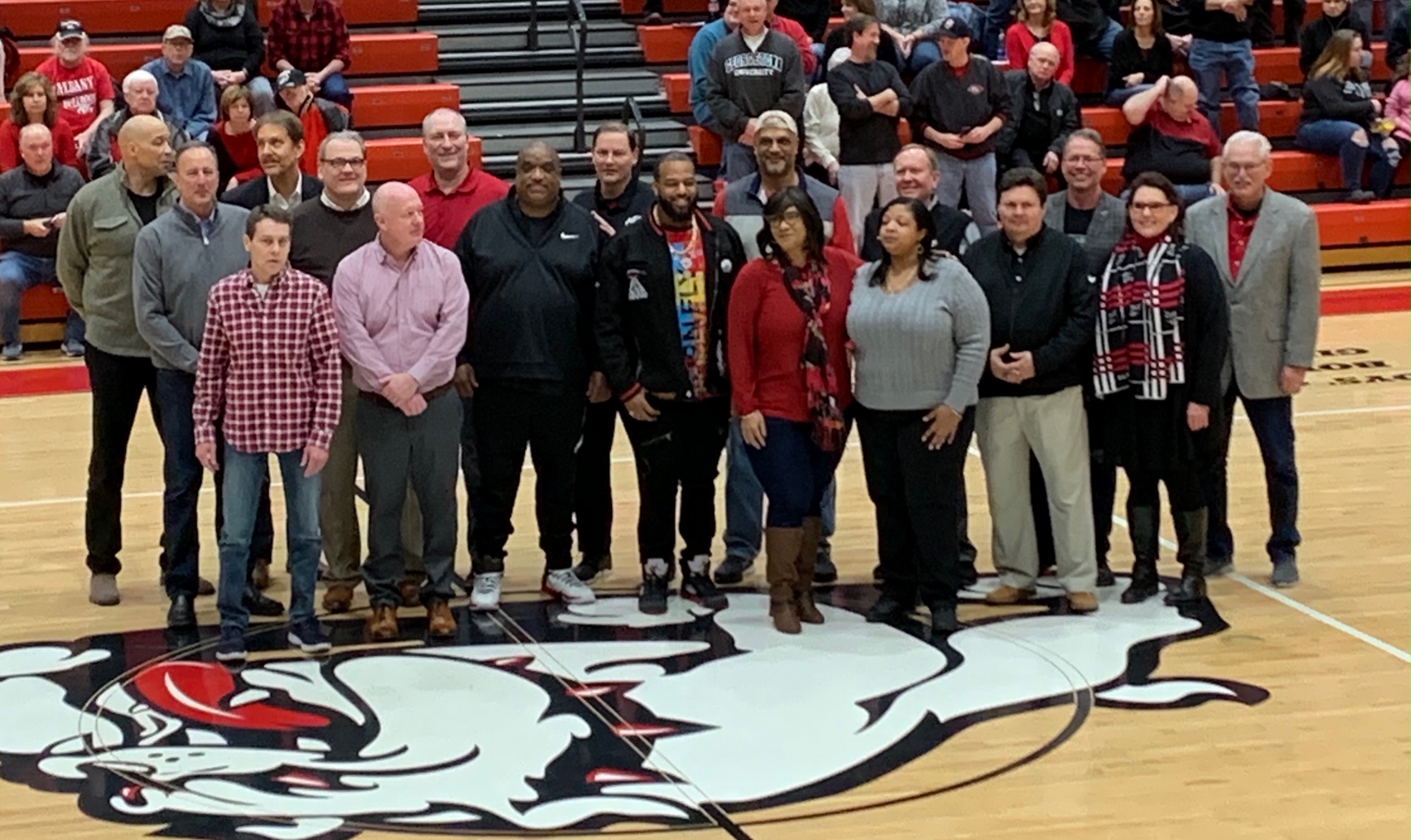
That beauty was celebrated last month as New Albany’s team was honored during halftime of a home game against Columbus East.  The lone surviving coach, Charlie Vass, made the trip from El Paso, Texas, to be a part of the fun, and all but one of the surviving players gathered to reconnect and be cheered one more time in the same gym they repeatedly filled with 5,000 fans.

Vass told me after the ceremony, “I told my wife about the reunion, and how I needed to come.  She looked at me and said, ‘They’re going to honor that team?  But they lost.'”

She was right.  They lost – once.  They won 27 times, and gave a town thrilling and selfless basketball during the strange and special winter of 1980.  There was agony and there was ecstasy.  There was sacrifice, and there were rewards.  That’s basketball in New Albany – and everywhere else.

Forty years ago today, 3,000 fans came to New Albany’s gym to welcome home that losing team.  Players and fans hugged each other and wept together in a celebration of the love they felt for the team and each other.  Results matter, but not so much as love and friendship so obvious among basketball players.

Paulsin missed those two shots, but he succeeded in life as a father and CEO.  Toran excelled as a defensive back at Notre Dame and the Oakland Raiders before being killed in a car wreck.  Stoops has lived a happy life filled with personal and professional successes.  Dakich built a successful career and a coach and broadcaster, with a blended family of four great kids.

The fires of New Albany’s basketball fans were recently stoked again by the team Romeo Langford led to a state championship.

Basketball is a remarkable game, worthy of the intense love New Albanians feel for it.  It tempts with moments of individual excellence but ultimately honors disciplined selflessness.  Sometimes shots fail, and sometimes they don’t.  The game provides opportunities for adversity and redemption, just as life does.  Countless hours of isolated work hedge odds toward success, but cannot guarantee it.

I’ll always be thankful to New Albany for instilling in me an intense love for a simple game that really isn’t so simple – a game that mirrors the challenges, rewards, and consequences we face every day.  And I’ll always be thankful to that 1980 team for sharing its journey and friendship so generously.

Curly Neal passes away – great player, great smile, and a party invitation I refused

Curly Neal and his ever-present smile will be forever remembered by basketball fans – especially those of us privileged to have met him.

Former Harlem Globetrotter Curly Neal died yesterday at age 77.

Kids in the 1970s knew two of the Globetrotters – Meadowlark Lemon and Curly.  Meadowlark was hilarious – a nonstop cascade of basketball comedy.  Curly had a shaved head and smiled all the time.  Both were featured prominently on Scooby Doo episodes and the  strange Saturday morning cartoon of their own that aired in 1970.

Curly came to Indianapolis in 1994 as an ambassador for the Globetrotters to promote a game.  He stopped by the WIBC Radio studios for an interview on the morning show.  As the station’s executive producer, I took it upon myself to meet famous guests in front of the building and bring them up to the third floor for their appearance.

Click here for your copy of “Oops – the Art of Learning from Mistakes and Adventures” by Kent Sterling

We had plenty of great in-studio guests back then.  Don “Barney Fife” Knotts, Robert Wise, MacLean “Col. Henry Blake” Stevenson, Butch “Eddie Munster” Patrick, Bob “Gilligan” Peter Tork of “The Monkees,” Hal “Barney Miller” Linden, Werner “Colonel Klink” Klemperer, KC & the Sunshine Band, and others stopped by to talk to Jeff Pigeon or Dick Wolfsie.  Hell, Soupy Sales was on with Wolfsie for an entire week!

Okay, so these WIBC’s guests were 20 years or more past their window of popularity and relevance, but it was cool to spend 15 minutes with them before their interview and walk them back to the parking lot so they could move on to their next media stop.  Those conversations were fun – for me – especially the one I had with Curly.

Curly was one of the nicest people I had the chance to meet.  He was friendly, funny, and gracious.  We talked a little about basketball and the Globetrotters, but he kept asking me questions about media and my life.

At the end of our little talk, Curly said, “You gotta come to my party downtown tonight.  I’m gonna have a rager.”  This was the first time I heard the term “rager,” and it kind of intimidated me.

“Thanks, but I have a thing with my wife and son tonight, so I can’t make it,” I reflexively told him.  That was technically true, as I had “a thing” with my wife and six-year-old son every night.  We ate dinner, and enjoyed each other’s company.  That’s a thing, isn’t it?

I’ve always regretted not going because a party with Curly Neal and his friends is not the kind of event I get invited to everyday.  In fact, I’ve never been invited anything like it before or since, and my imagination runs in a million directions every time I wonder about what it might have been like.

It could have been filled with wild women, loud music, and endless dancing.  Or, it could have gone in a bunch of other directions, many not my cup of tea.  Regardless of what Curly meant by “rager,” it would have been a great memory and fun story.

Instead of embracing whatever weirdness, wildness, or tedium existed in Curly’s world on that night, I refused my one-time ticket to join it.

Curly made countless people laugh as he entertained by playing basketball for the Globetrotters, and lived what seemed to be a very full and friendly life.  That’s a hell of a legacy no matter what I missed by staying home on that night in 1994.

Let’s focus on those who embrace the joy of giving rather than blaming those who don’t

Drew and Brittany Brees aren’t donating $5 million because it’s a responsibility and burden. They are doing it because it brings them joy.

Helping people is a privilege and joy, not a responsibility.

Especially in a time of crisis, people with cash need to help those without it.  We are in a health  crisis that is quickly going to morph into an economic calamity, and many millions will need assistance to survive.

The government will help some, and the wealthy will help some too.

I’m baffled by the outraged response of some on social media to professional athletes digging into their wallets and purses to help.  Where are the owners, they want to know.  They yell about the “absurdity of athletes taking on the burden of billionaires.”

Click here for your copy of “Oops – the Art of Learning from Mistakes and Adventures” by Kent Sterling

In fact, that is the headline of a post by Michael Eaves of The Undefeated.  In it, Eaves laments millionaire athletes shouldering a load disproportionate to billionaire owners who need to be prodded into chipping in.

New Orleans Saints quarterback Drew Brees and his wife Brittany are donating a cool $5 million.  What is Saints owner Gayle Benson doing with her cash to help Louisiana victims of Coronavirus or those who can’t put food on the table because their source of income has disappeared?  I don’t know.  It’s not of my business if she hides in the safe room of her mansion surrounded by gold bricks.  (A quick Google search shows she has donated $1 million to create the Gayle Benson Community Assistance Fund.)

I’m not a fan of billionaires sitting on their pockets rather than answer the enormous needs of a society that has allowed them to prosper at a level most of us cannot imagine, but claiming athletes are “burdened” by giving recognizes generosity as painful rather than joyous.

Helping others is not a responsibility but a choice to embrace a feeling that we are in this battle together – and I’m not talking about a war against some damned virus.  I mean, we are born and we die.  What happens in between is the battle.  Can we find it in our hearts to help one another eat until we are full, sleep without worry, and laugh with uncomplicated joy?

Making those things possible not a burden – it is a gift.  Whether you are a billionaire, millionaire, thousandaire or hundredaire, you can choose to be your best self and give – by donating, listening, or simply acknowledging the existence of fellow human beings on this crazy planet.

Judging those not as generous as Brees or Joel Embiid underscores the lonely and judgmental place we have chosen to exist – especially during trying times.  We blame those who fail to measure up against incredible people like the Brees Family.

We don’t know when Coronavirus will fade from headlines.  Hopefully, people doing good by sharing cash and attention will continue, and maybe we can focus on them rather than those we decide don’t measure up.