
Author Archives: Kent Sterling

Cubs botch Marquee Network launch – profiteer owner Tom Ricketts pushing fans away

Who can and can’t watch Cubs baseball?  No one knows.

Fans thought that signing up for DirecTV or Hulu+ would allow then to catch Saturday’s spring training opener.  For a variety of reasons, that didn’t happen for any of the Hulu+ subscribers and some of the DirecTV folks.

Marquee still has no deal with YouTube TV, Dish and Comcast, so the majority of Cubs fans within the team’s local territory couldn’t see its programming – regardless of its quality.

Click here for your copy of “Oops – the Art of Learning from Mistakes and Adventures” by Kent Sterling

This is what happens when sports franchises get into broadcasting.  Even with the Cubs partnership with Sinclair, the runway to launch has been bumpy.  Hires did not include Chicago favorites Dave Kaplan, Kelly Crull or Luke Stuckmeyer.  Instead they contracted with a guy from the NFL Network and a field reporter who worked for the Rockies.

Negotiations with carriers have been predictably slow, and delivery has been sketchy.

Chicago, like most cities, is very proud of its own.  Chicagoans don’t like change, and the Marquee Network has foisted a lot of change upon fans in the effort to maximize profits.  Cubs owner Tom Ricketts is big on profit.

Ricketts continues to charge fans top dollar for every aspect of Cubs fandom.  Tickets are among the most expensive in baseball.  Concessions are among the most expensive in baseball.  Watching games on TV used to be free.  Not anymore as Ricketts has moved games from free TV to the network he now owns.  He’s refurbished Wrigley Field – the Cubs most important asset – and talks about it as though it was done as a public service rather than an investment.

Cubs baseball used to be quaint.  The team was owned by the Wrigley Family.  Ticket prices remained static for decades.  Now, it’s big business for Ricketts, who is forcing generational fans to weigh their love for the team as an expense in the family budget,.

Instead of embracing fans as an important part of what makes the Cubs special, Ricketts and henchman Crane Kenney view them only through the prism of how much cash they can extract  before finally pushing them to find something else to do with their money, time, and attachment to the team.

What Cubs ownership has done is unique in sports.  Ricketts’ ravenous thirst for cash has driven fans into the odd position of loving their team while loathing its owner.  They root for the Cubs to win while hoping Ricketts loses money so he’ll sell to someone with a more holistic approach to ownership.

The Cubs Convention perfectly demonstrated this conflict.  Fans paid Ricketts $25 for the privilege of attending, and then roundly booed him during his annual appearance.  That’s the definition of an ironic spectacle.

No one is so naive they expect team owners to avoid financial windfalls, but profit as the singular measure of success insults the intelligence of fans.  Once fans are insulted, they invest their emotions – and cash – elsewhere.

These are strange days for the Chicago National League Ballclub.

Love the Cubs.  Loathe Ricketts.  Where does that leave the Marquee Network?
Trying to make sense of Indiana’s ups and downs is for fools – fans need to embrace and enjoy the ride

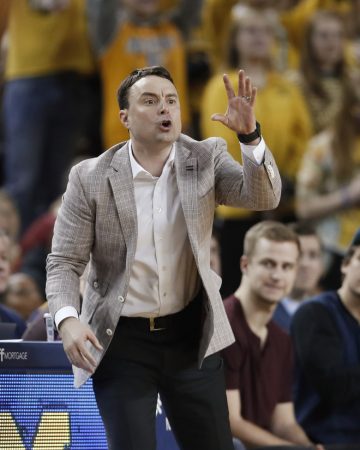
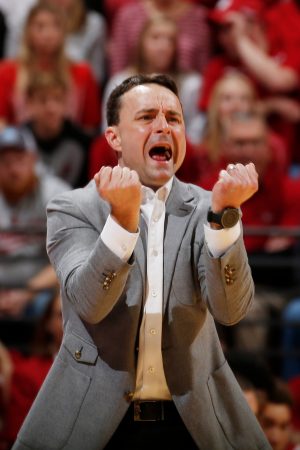
You think you’re frustrated? Archie Miller destroys a clipboard after a missed throw yesterday.

The Indiana Basketball roller coaster is fun again.

Up and down it has rolled through solid wins against Florida State and Penn State and miserable losses to Purdue and Maryland (2X).  Devonte Green has been a one-man thrill ride with made threes and ill-conceived lob passes with equal enthusiasm.

Coach Archie Miller was intractable in defending screen and rolls with repeated hard hedges, and seemed married to a rotation whether or not it achieved positive results.  Over the past two weeks, he has skinnied the rotation and shown different defensive looks.

Click here for your copy of “Oops – the Art of Learning from Mistakes and Adventures” by Kent Sterling

Indiana has also become a team hell bent on running the offense through Trayce Jackson-Davis.  That makes sense as Jackson-Davis is IU’s best player.

And today, with an 18-9 overall record and an 8-8 Big 10 mark with four games left in the regular season, Indiana appears on the verge of its first NCAA invitation since 2016.

There is still work to do, but if Indiana can split these four games, its ticket appears likely to be punched.  Road games at Purdue and Illinois are enormous challenges, and Minnesota and Wisconsin at Assembly Hall are hardly guaranteed wins given IU’s propensity for making its own path choppy.

Trying to make sense of anything done by 18-22 year-olds is idiotic.  Behavior wobbles from minute to minute, so expecting Indiana to continue to play at a high level seems silly, but it seems there are some predictable aspects to Indiana’s play.

Here are three bellwethers for Hoosiers success:

  • When IU has scored more than 65 points this season, they are 15-1 with the only loss coming to Maryland, when they had the Terps down six with just over one minute left.  When they score 65 or less, the Hoosiers are 3-8.
  • When Trayce Jackson-Davis scores in double figures, IU is 15-4  When he doesn’t, Indiana is 3-5.
  • When Race Thomson plays 15 or more minutes, Indiana’s record is 8-1.  When his minutes are limited, IU is 10-8.  When he plays 20+ minutes, IU is 4-0, including their last three wins.
  • To show you how screwy stats like these can be, IU is 7-2 when Rob Phinisee turns the ball over three or more times.  IU is also 5-0 when Phinisee has two or more steals.

If only basketball was as easy as making certain statistical mileposts are met.  Scoring 66 points is hard – especially on the road against a good defensive team.  Teams are well aware Jackson-Davis is Indiana’s most predictable offensive weapon, so they devote resources toward stopping him.  Even if IU feeds the post every possession Thursday night at Mackey Arena, there is no guarantee of success.

No sane person wants Phinisee to turn the ball over more often, but steals are a big deal.  Phinisee is finding his game as a sophomore, and now that he’s healthier the wins are coming more often.

Thompson playing 15+ minutes is entirely controlled by Miller.  His contributions have been enormous because his energy has been relentless and he gets loose balls like it’s his job – which it is.  What Miller can’t control is Thompson’s desire to keep throwing his body around to get loses balls.

Not only does Indiana have a chance to be an NCAA Tournament team, it just might have found the right combination of players and scheme to make it a tough out once they get there.

Or, they might forget the traits that put them in this position, lose out and end another season in the NIT!

The only thing that is certain is that the roller coaster will keep rolling.

Questions about Indiana Basketball frustrate fans, but we know what it will take for IU to get to NCAAs

IU fans would like some answers to their questions. They will need to wait – again.

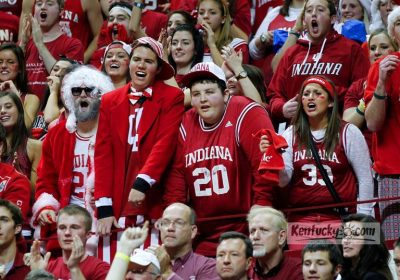
Indiana Basketball fans are exhausted by the seemingly endless malaise surrounding the program.

Day after day, week after week, month after month and year after year, the same questions are asked.  Is IU about to make the turn toward consistent quality basketball?  Is (insert coach’s name here) the right guy to get the program back to consistent respectability?  Are we at fault on some level for asking too much too soon?  Why is IU now the fourth best program in Indiana instead of among the top four in the country?

Click here for your copy of “Oops – the Art of Learning from Mistakes and Adventures” by Kent Sterling

The answers are the same – again and again.  Optimists see light at the end of the tunnel.  Wait until next year they chant.  We’re about to turn the corner!  Cynics see that light as an oncoming train.  Firing (insert coach’s name here) will bring another restart of the rebuild.  Maintaining the status quo will only bring more of the same.  Where is the good choice?!

Reasonable people say it’s unfair to judge the program under Archie Miller without seeing a roster entirely comprised of players he recruited.  Those same people point to Jay Wright and John Beilein as coaches whose programs finally gained traction in year four.  Other reasonable people point to Brad Underwood at Illinois and Chris Mack at Louisville as coaches who got it done before that magic fourth year.  They also point to John Groce and Tim Miles as examples of patience ill-invested.

One truth that’s certain is that it is damn hard to win games in the Big 10.  Every coach in the Big 10 is capable, but like the old saying goes, “The other guys are on scholarship too.”

Indiana is in a unique position as a national brand with an excellent local farm system.  That brings another set of questions – is a team with Indiana’s best and brightest they recipe for a sixth banner – or should Miller get the most talented players regardless of their home zip code?

Fans with a sense of history know the story of college basketball through 1993 cannot by told without a least one long chapter devoted to Indiana.  It’s also true that IU provides only three short sidebars to the sport’s story since then.  Two of them are nothing to be proud of.

The firing of Bob Knight will always compel conversation because America loves stories of arrogance slain.  The 2002 run to the championship game bears some mention too.  Finally, the Kelvin Sampson scandal is also an interesting moment because – again – an arrogant coach was ousted.

There have been moments like Christian Watford’s shot to beat Kentucky and two regular season Big 10 championships since, but Indiana’s last 20 years pale in comparison to Big 10 peers like Michigan State, Michigan, Wisconsin, and Ohio State.  Today, Indiana has more in common with Illinois and Iowa than the blue bloods.

That’s sad to read – worse to write.  But true.

The worst part is that there is no perfect way out of this tedious cycle.  Stick with Archie and hope for the best – or, write the check for the buyout and hope the new coach is finally the right answer?  Who the hell knows which is the right path?  Will Devonte Green’s graduation free up the rest of the roster to come together and compete – or, will his absence rob IU of its only dynamic offensive threat?  I dunno.

If you began reading this post hoping that your frustration would be magically cured, sorry.  I have no such verbal elixir.  Questions about Indiana’s future will not be answered tonight at The Barn, nor by how IU finishes the season.  This rebuild is almost certainly going to roll into a fourth season (sorry, IU/Beilein fans) with Miller retaining only two of Tom Crean’s recruits – assuming Justin Smith and/or Al Durham return.  A year from now, judgement of his work will be fair.

In the meantime, let’s discuss the increasingly remote chance that Indiana will return to the NCAA Tournament for the first time since 2016:

Here’s the math for Indiana to get back to the tournament – go 10-10 in the Big 10 and 20-11 overall prior to the Big 10 Tourney in Indianapolis.  That means they have to win four of their final six games.

Am I certain Indiana can’t squeak their way into the tournament if they finish 9-11 and 19-12 and add a win in the Big 10 Tournament?  No, but it would be an error by the selection committee to invite the Hoosiers if that’s what happens.  If a team can’t finish .500 in their conference, what right do they have to play for a national championship?

Three of IU’s final six games are at home and the other three obviously on the road.  Predicting the future is a dicey proposition, but expecting IU to win at either Illinois (who won last night at Penn State) or Purdue, who hammered them at Simon Skjodt Assembly Hall earlier this month borders on crazy.

That leaves the three home games (against Penn State, Minnesota, and Wisconsin) and tonight’s road tilt at Minnesota as must-wins.  The Golden Gophers have lost four of their last five – just as IU has.  That provides a window of hope.

According to ESPN, Indiana has only a 29% chance to win tonight, but those odds trump the likelihood they will beat either Illinois (28.2%) or Purdue (20.5%) at their places.

It’s been a long time since the Hoosiers have beaten the odds.  Maybe they are due.  They are certainly in line for a better result in the conference tournament, where they sport a hideous 12-22 record, but that’s three weeks away.

Lot’s of thrills and heartache before the Big 10 comes to Indy.


NCAA needs to get out of its own way and approve immediate eligibility for transfers!

Logic is dragging the NCAA into the 21st Century. They can drag their feet all they like, but student-athletes deserve freedom coaches enjoy.

When a company hosts a brain storm, most ideas are dismissed immediately, a few are earmarked for further discussion, and some are approved as “just do.”  The NCAA needs approve immediate eligibility for first-time transfers as a “just-do.”

Instead, this change in legislation will continue down the path of entrenched bureaucracy the NCAA has created to slow all proposals to a crawl in the effort to not actually change anything.  This is despite the head of the committee studying this issue expressing a keen understanding this will be a positive change, “The current system is unsustainable. Working group members believe it’s time to bring our transfer rules more in line with today’s college landscape,” said working group chair Jon Steinbrecher, commissioner of the Mid-American Conference.

“This concept provides a uniform approach that is understandable, predictable and objective. Most importantly, it benefits students.”

Click here for your copy of “Oops – the Art of Learning from Mistakes and Adventures” by Kent Sterling

The Big 10 and ACC have both given their stamp of approval to the change, but the NCAA’s working group on the issue has decided to seek feedback to ensure all possible unintended consequences are exposed prior to the legislation being approved.

Normally, that level of scrutiny is good business, but in this case what the NCAA slowing is bringing men’s and women’s basketball, football, baseball and men’s ice hockey into alignment with athletes competing in all other sports for whom immediate eligibility for first-time transfers is automatically granted given a few sensible criteria.

If it works in wrestling, swimming, and track, why would it not work for student-athletes in the other five sports?

This is what drives people crazy about bureaucracy.  The details of a common sense proposal are vetted to within an inch of their existence before finally reaching the point at which it becomes policy.

Even more odious than the NCAA’s plodding toward reason are complaints from coaches that the result of immediate eligibility will be prospects they develop will bounce to a bigger program.  How is that a bad thing for a student-athlete?  Oh wait, it isn’t.  It could be bad for some coaches.  At what point did the focus of collegiate athletics become what’s good for coaches at the expense of the players?  (That’s a hypothetical question, by the way.)

Some say sitting for a year is a good thing for student-athletes.  That’s true.  Chilling for a year can help some acclimate to the new surroundings.  But if that’s a righteous concern, why aren’t athletes in other spots forced to sit.  If a coach or athlete feels like it’s good to red-shirt, go ahead and red shirt!

There is also the argument that because of blanket eligibility for transfers, coaches will tamper with athletes as they play for other programs.  Guess what.  It already happens.

This rule change will not cause problems that don’t already exist, will allow athletes to better enjoy their college careers, and will free the NCAA from the onerous task of evaluating thousands of transfer waivers seeking immediate eligible.

Better for athletes.  Solving some problems while causing none.  Coaches griping.  Check, check, and check!

Just approve the damn thing and let’s move on to the NIL issue!


Idiots on Twitter pay attention! Six social media myths about Indiana Basketball fans debunked

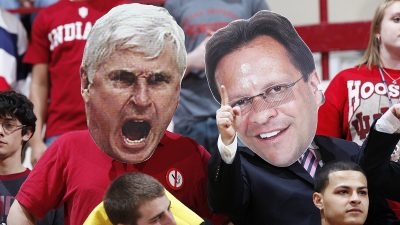
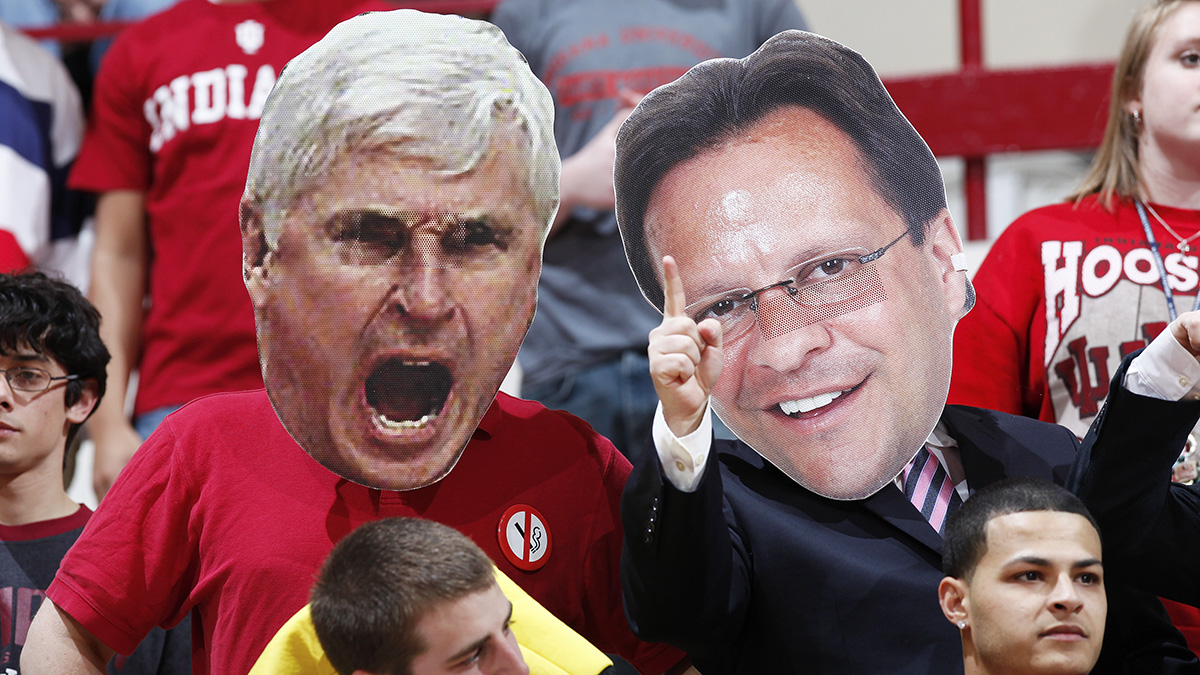
Bob Knight and Tom Crean are often the focus of silly tweets about the most misunderstood fanbase in college basketball.

Indiana Basketball fans are probably as tired of being painted as dopes as they are of the way their favorite team fails to compete.

Twitter can be an echo chamber of idiocy, reducing people and groups to their lowest common denominator.  Stereotypes are embraced and proffered as absolute truths.  This has happened to IU alums and fans for as long as social media has existed.  We are the cavemen of college basketball – people too stupid to understand the way the game is played today and unwilling to embrace a new era of roster construction.

Click here for your copy of “Oops – the Art of Learning from Mistakes and Adventures” by Kent Sterling

Some of the harangues against IU fans have a basis in truth.  Others are patently false, but because those particular drums are so relentlessly beaten, those doing the thumping believe they are legitimate.

Here are six of those fake news fabrications that deserve correction:

“IU fans need to understand it’s not 1987 anymore.”  No one wants it to be 1987.  To be honest, I’m not sure what the assertion that IU fans want to turn back the clock is all about.  All Indiana fans want is a team that executes and competes as a unit like the game matters to them.  It’s also important that the program does not cheat and graduates players.  Not sure why those concepts equate to Indiana Basketball from 33 years ago, but it does to critics.

“IU is not North Carolina, Duke, or Kentucky – not even close!”  Oddly, North Carolina isn’t North Carolina anymore either.  They are currently in the cellar of the ACC.  Indiana was never North Carolina, Duke or Kentucky, and no one at Indiana wants them to be those schools or programs.  Indiana needs to be Indiana, and the desire to be something other than IU has been its biggest problem – as a basketball program and university.  Indiana fans are not frustrated that the basketball program doesn’t compare to blue bloods.  It never really did – we just beat them.

“Indiana is paying for firing Tom Crean!”  This is a preposterous notion.  Crean’s ability to recruit nationally at a high level had eroded, and IU’s brand value among recruits in its home state had deteriorated to zero under Crean.  The arrogance and indomitability that allowed Crean to achieve success early in his run at IU became his greatest enemy as people grew tired of his presence.  That was true for players, administrators and fans.  A better argument can be made that IU is currently paying a high price for keeping Crean too long.

“Indiana Basketball is irrelevant!”  That Indiana hasn’t won a national championship since 1987 means it hasn’t been successful.  Success is not a prerequisite for relevance.  Granted, there isn’t a traditional undergraduate on the Indiana campus that remembers IU’s last trip to the Final Four.  Again, the memory of success does not equate to relevance.  There are hundreds of thousands of Indiana grads whose most present tether to their alma mater is through basketball.  CBS and ESPN don’t choose Indiana for national games because no one cares about them.

“If you fire Archie Miller, no coach would touch the Indiana job”  This is insanity.  If Indiana offered every coach working in college basketball the head coach position at $5M per year over seven years with five years guaranteed, 99% would sign the deal with a giant smiles on their faces.  Whether or not fans are deranged and the administration is thought to be stacking the deck against basketball, giant stacks of cash yell loudly.  The only people who would turn down the job are those who already earn more.

“Bob Knight isn’t walking through that door!”  Only the few fans who are married to the past would welcome back the Knight who coached from 1994-2000.  At that point, Knight had lost interest in doing what was necessary to win.  IU didn’t recruit at a high level anymore, and Knight’s behavior had become erratic.  What IU fans would have wanted was what happened at Purdue – an orderly and well-orchestrated passing of the torch from a legendary coach to the next leader who would evolve the culture forward.  That’s not what happened, and Indiana fans have been paying for it since.

Hope that clears things up.

Rob Manfred incapable of adequately handling MLB crisis – pales in comparison to NBA’s Adam Silver

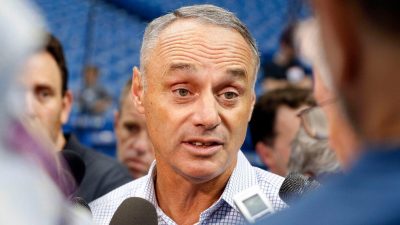
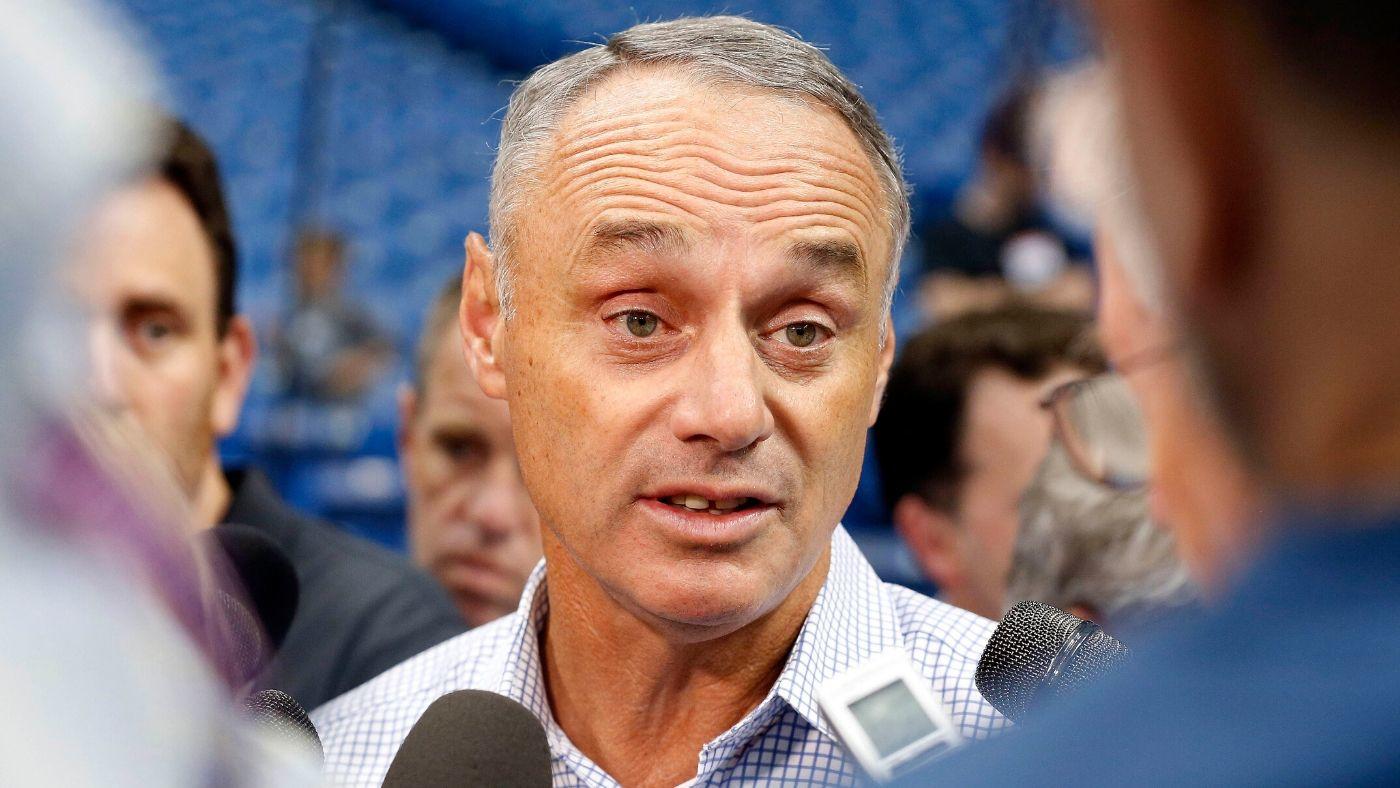
Crises define commissioners, and that is not good news for MLB’s Rob Manfred.

When NBA commissioner Adam Silver was presented with his first crisis in 2014, he understood the importance of the moment.

He embraced his role as protector of the game.

When a recording of Los Angeles Clippers owner Donald Sterling revealing himself to be a racist was aired, Silver convened an astute group of advisors to decide the right course of action.  As a result, Sterling was forced to sell his stake in the Clippers, and the league overcame what would have been a long-lasting nightmare in less capable hands.

Click here for your copy of “Oops – the Art of Learning from Mistakes and Adventures” by Kent Sterling

MLB commissioner Rob Manfred had his moment of truth recently with the Houston Astros cheating fiasco.  He swung and missed.  Like an inexperienced prosecutor trying his first felony case, Manfred gave immunity to every player involved to get to the facts.

No one who stole signals and then relayed them to batters via a rudimentary system of banging on trash cans (and perhaps a buzzer system) was suspended or punished in any way.  Manfred said yesterday that the Astros are being adequately punished through public ridicule.

Actually, this was more like a parent dealing with seven-year-old pranksters, “If you tell the truth, we won’t punish you!”  As with little kids, there was good news and bad news.  The truth being discovered is good, but the only people available for consequences as a result of this “player-driven scheme” non-players.  General manager Jeff Luhnow and manager A.J. Hinch were suspended for one year and then fired by owner Jim Crane.  That’s bad.

I guess public ridicule for Hinch and Luhnow wasn’t enough.

Former Astros bench coach Alex Cora and former Astros designated hitter Carlos Beltran were also fired as managers of the Boston Red Sox and New York Mets respectively because of their roles in the scheme.

Astros players got off without any discipline.  Players for opposing teams are furious with Manfred, and there has been talk of pitchers targeting Astros batters with fastballs in the backside as payback.  Instead of acting in the best interest of the game to punish cheats, Manfred says he will release a new set of enhanced punishments for pitchers who purposefully hit batters.

So, cheaters get a free pass, but players who attempt to correct Manfred’s lapse in discipline with a dose of street justice will face suspension.  Yeah, that makes a lot of sense.  This tactic is taught in Weak Management 101.

People in positions of power need to understand the difference between right and wrong, and that is especially true with major league commissioners.  Everyone understands that commissioners work for the owners, and their primary job is to maximize profits.  Good commissioners are able to see that what’s good for the game is also good for the owners checkbooks.

Manfred struck out as his clumsy effort to deal with this scandal communicated to players and fans that baseball will tolerate cheaters.  Players learned they can cheat with relative impunity.  Managers and executives might get canned, but like seven-year-olds who tell the truth, players skate.

The Astros haven’t helped matters as Crane apologized but claimed the cheating didn’t affect the results of games.  He said it as though it was self-evident, and then denied saying anything of the sort only one minute later.  Astros players like Carlos Correa have taken a defiant tone with media.  Manfred is getting a little chippy himself as media continues to probe for a logical reason for the free pass to cheats.

Exactly 100 years since the final spring training of the most disgraced team in baseball history, the Chicago Black Sox, the Astros are trying to turn off the noise that will forever taint their 2017 World Championship, assuming Manfred allows them to keep it.

Only one thing is for sure as Manfred continues to inelegantly deal with his first crisis – he’s no Adam Silver.

Archie Miller needs to bring the gift of pain to the Hoosiers, or change will never come

Archie Miller looks stern in yesterday’s postgame presser, but does he have the mettle to change what bothers him?

“What’s the worst that can happen?” is a question kids ask themselves all the time as they assess the risk and reward scenarios for behavior.

If I make everyone in class laugh, I might get a detention.  Is that worth it?

Within the Indiana Basketball program, it appears the harshest discipline Archie Miller is willing to wield is an unchanging rotation and an occasional scowl.

Not much of a deterrent for those not hard wired toward competing every single opportunity.  It takes awhile for kids to understand that regret is the most effective teacher.  Opportunities lost haunt adults for a lifetime.  That lesson requires experience these kids have not banked yet.

The only playing time casualty this season has been Damezi Anderson, who has earned a spot at the end of the bench because of an entrenched inability to make shots.  Other than that, players continue to get their run regardless of their lack of desire to compete.

Click here for your copy of “Oops – the Art of Learning from Mistakes and Adventures” by Kent Sterling

When I was in high school, I knew the punishment for breaking curfew was being grounded for one week, so as the deadline approached at various parties on many Friday nights, I asked myself whether staying later was worth a week at home.  The problem for my parents was that I liked being at home almost as much as going out.  Being grounded was hardly a punishment at all.  So guess what I did?  Stayed out as late as I wanted quite a bit – or stayed home.  It was a win-win.

Seems that’s where Indiana Basketball is right now.  By Miller’s own admission, his Hoosiers refused to compete yesterday.  That’s happened many times this season, and whatever punishment Miller has deployed has yet to bring a change in attitude.

The players seem to have figured out that whatever consequence Miller is willing to Impart, it’s not worth the counter measure of their investment of consistent effort.  Miller has yet to get their attention in three years at IU, and it appears he is unwilling to use the nuclear option of telling a player he has forfeited the right to wear an Indiana uniform.

That’s led to a permissive culture that allows bringing effort on the players’ schedule rather than the coach’s.  Missed shots are on players.  Missed opportunities to lead are all on Miller.

Teams become what leaders tolerate, and Indiana is now 12th in the Big 10 standings.  Unless there is a pivot toward quality effort and play, IU will miss the NCAA Tournament for the fourth straight year.  That hasn’t happened since 1972, when the field totaled 25 teams.  Bob Knight’s Indiana teams never missed the NCAAs in two consecutive years.

That means that Devonte Green and De’Ron Davis will be the first seniors at Indiana in just under a half century to never earn a trip to March Madness.  Clearly, despite Davis’s performance yesterday, that ignominious distinction hasn’t moved either senior to pony up on a regular basis.

With six opportunities remaining this season for the Hoosiers to prove themselves worthy of an NCAA Tournament berth, the roster appears ill-prepared in every sense to compete.  Miller frequently expresses frustration, but until his irritation is visited upon the players in a way that gains their attention and compliance, nothing will change.

Few coaches or managers want to tell their players employees to pack a box, but that’s the price for sitting in the big chair.  Indiana University isn’t paying Miller more than $3-million per year to teach children how the pack-line defense works.  They pay him to turn children into men, and at that responsibility Miller has utterly failed to this point.

Indiana’s basketball team is filled with boys enjoying a prolonged adolescence because their leader has not yet found or utilized the punishment needed to compel a change in attitude and discipline.  Not a person affiliated with Indiana Basketball will avoid regret for what this season might become.

Change comes when it is less painful that the pain of maintaining the status quo.  If losing by 24 to Michigan isn’t pain enough, Miller’s job requires he raise the ante.

We’ll see Wednesday night at Minnesota whether he got that job done.

Indianapolis Colts need a defensive tackle – and may take one from South Carolina at #13

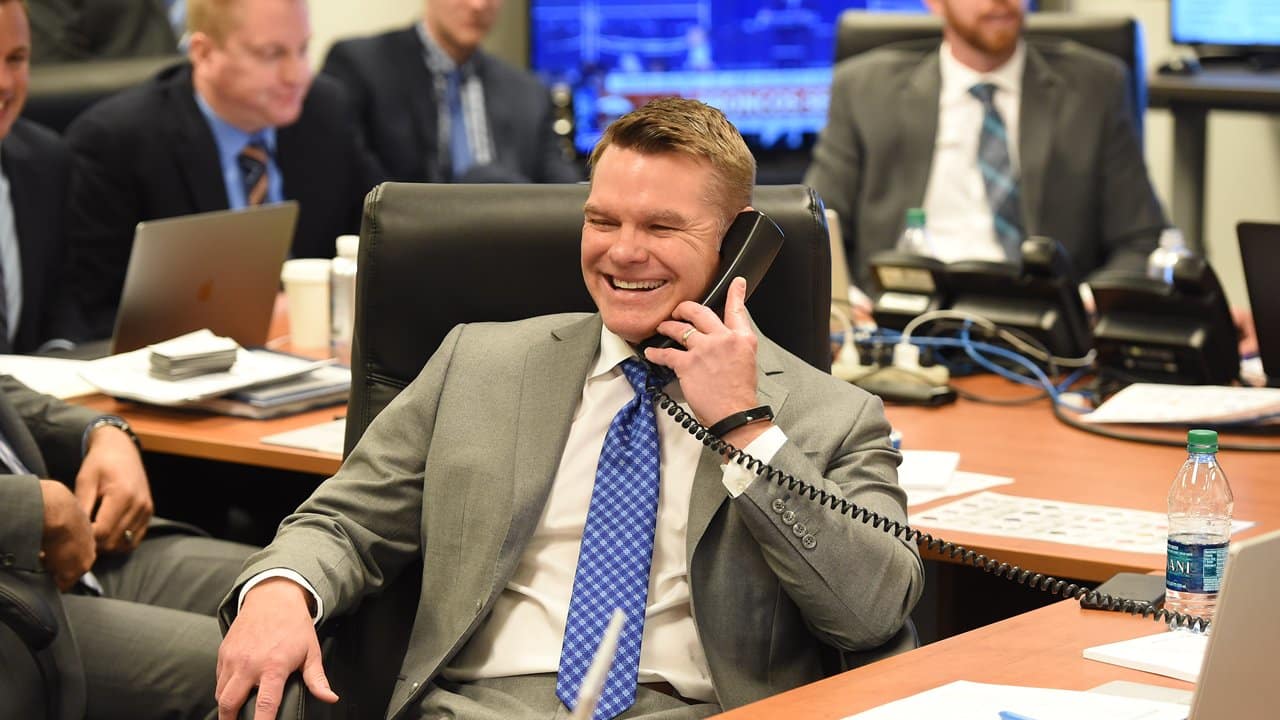
Chris Ballard will be smiling on draft night if Javon Kinlaw is still on the board at 13.

No one knows who the Indianapolis Colts are going to take with the 13th overall pick in the NFL Draft.  Until teams target and sign free agents, we won’t even know what their needs will be on April 23rd.

Nobody even knows whether the Colts will actually draft 13th.  They could move back and get extra picks.  Maybe general manager Chris Ballard moves up, but that doesn’t seem to be a strategy he embraces in the first round.  It’s expensive to move up, and GMs who do better by right.

Mock drafts are popping up all over the place.  Many have the Colts grabbing quarterback Jordan Love.  Others believe Ballard will grab a wide receiver like Alabama’s Jerry Jeudy.  My money is on the Colts taking a defensive tackle.

Click here for your copy of “Oops – the Art of Learning from Mistakes and Adventures” by Kent Sterling

The logic for the Colts taking a three-technique is two-fold.  First, Ballard is relentlessly honest, and he may have laid out the path shortly after the end of the season, “The 3-technique drives this thing. It does. Every time I’ve been a part of this, the 3-technique drives this.”  Dominant three techniques aren’t available in free agency very often, so the draft makes sense as a source.

Second, history suggests really good defensive tackles are available at #13.  Over the last nine drafts, five DTs have been selected at with the 13th pick, including Aaron Donald – the five-time first-team All Pro for the Los Angeles Rams.

The other four have been a little hit and miss.  Nick Fairley was highly thought of coming out of Auburn in 2011, but is now out of football.  Sheldon Richardson played in one Pro Bowl after being drafted in 2013, but has played for four teams in the last four seasons.  Da’Ron Payne made the All-Rookie team in 2018 for the Redskins.  Last year, Christian Wilkins was productive if not spectacular in the middle of the defensive front for the Dolphins.

The Colts drafting a defensive tackle at 13 will have a lot to do with what happens prior to that pick.  Auburn’s Derrick Brown is expected to be off the board long before Ballard has a chance to grab him, so that leaves Javon Kinlaw out of South Carolina as a top tier prospect at the three technique.  If Kinlaw is taken by the Browns, Jets or Raiders (the three teams that immediately precede the Colts in draft order at 11, 12 and 13), Ballard will have to pivot toward another position or trade down.

Kinlaw is a young man we will learn a lot about over the next 10 weeks.  He was homeless as a teen, played at a Juco to get his academics straight, and learned a hell of a lot at South Carolina in building the resume’ as a future millionaire.  He has lofty goals – among them becoming the best defensive tackle in the NFL.

By the way, the last quarterback taken at #13 was Chris Miller in 1987.  That’s not to say getting a franchise QB type can’t happen there, but most GMs either take a quarterback early – as will be the case for Joe Burrow and Tua Tagovailoa – or wait to grab one with apparent flaws later.

Anyone who watched the excellent Colts produced video, “The Colts Are on the Clock” has a pretty solid idea that trying to outguess Ballard and his front office is ridiculous.  Smart guys for the Colts will evaluate during the NFL Combine, execute player interviews to make sure those they draft fit, spend frugally (if history is any clue) during free agency, and then put together their board. So will the 12 teams scheduled to draft ahead of them.  Then they will decide who to take.

And most of the experts will find out they were wrong.

I’ll stick with Kinlaw as my choice and feel good about it until Ballard out-thinks me, which is damn likely.

Indiana fans are nuts – and they are not going to change – so #iubb needs to

Indiana fans want players to embrace the effort to be collectively great. Archie Miller needs to want it badly enough to compel it.

Indiana won last night.  In 49 other states, that would be enough.  But this is Indiana.

Throughout last night’s 89-77 win against #19 Iowa, Indiana fans were thrilled or frustrated by each possession regardless of the score because that’s what we do.  For years we were taught that basketball is a possession by possession quest for perfection in execution and effort.  Up 30, down 30, or tied, each moment provides a precious opportunity.

People either get that or they don’t.

Click here for your copy of “Oops – the Art of Learning from Mistakes and Adventures” by Kent Sterling

Here’s a reply to a tweet I posted as IU led by 14 in the second half:

That’s not the way Indiana fans do things.  We watch the game possession by possession and then celebrate wins when the clock hits zeroes – not a second before.  It might be insane to indulge in that level of relentless judgment, but it’s what we do.

Indiana Basketball is not about passively watching and shrugging our shoulders when Devonte Green throws his nightly ill-advised lob pass out of bounds.  We don’t jump up and down when the Hoosiers go up 18 in the first half after Green hits a three.

It’s about what is next, not what has been.

People who don’t understand tell us to relax.  We talk about poorly set screens, bad block outs, and getting in a stance.  As players try to indulge in an opportunity to get on Sportscenter, we yell about the game being about points and winning, not highlights.  it’s about we – not me.

Indiana fans are not satisfied with a 12-point win against a ranked opponent.  We’re thinking about how to compete on the road against Michigan and Minnesota with a team that doesn’t show itself to be a fundamentally sound very often.

Basketball in Indiana is defined by missed opportunities, not made three-pointers.  That is likely very confusing to a player like Devonte Green, who is capable of getting so hot from deep that he lifts Indiana to wins that should have been losses.  Fans whine about bad alley oop attempts instead of congratulating great shooting nights.

The rest of the Hoosiers are likely baffled by a fanbase more demanding than the coaching staff, and I don’t blame them.  Our behavior is borderline psychotic.  Why the hell do we care so much about flaws as a possession unfolds rather than results?  I can’t explain it – although I’m trying – but there is no changing it.

Indiana Basketball stands for something in the minds of fans – especially those who remember when they won Big 10 titles every other year and national championships every five years for a while.  While talent was certainly part of the equation back then, Indiana won through disciplined and relentless execution by players dedicated to each other and the effort to attain the myth of perfection.

When Indiana teams appear to be unaware of the beauty of that pursuit, fans get salty – win or lose.  Tom Crean never understood that, and Archie Miller seems similarly oblivious to how IU fans perceive the game.  They seem not to trust fans’ willingness to take the ride with a coach who demands sacrificing the individual to embrace the collective.

Whatever Miller needs to do to drive buy-in for team execution at the expense of individual glory won’t just be tolerated by fans – it will be cheered.  Eliminating selfishness works for Indiana fans, if only a coach would bring the consequence necessary to compel compliance.

Indiana fans are crazy, but they don’t apologize for it.  This program is different, and it needs to be led differently.  It’s not about wins and losses, but about the pursuit of perfection.

As long as Indiana represents that motivation, fans will invest wholeheartedly in it.  When sloppy play goes unaddressed and the same mistakes are repeated, fans yell – even if Indiana leads by 18.

That’s Indiana Basketball through the eyes of its fans.  We demand collective efforts toward perfect execution, and that will never change.

Indiana faces must-win tonight – does anyone have the fire to demand more of teammates?

Armaan Franklin seems like a good candidate to be a leader, so he should ask himself to do just that.

Indiana Basketball needs a leader.

Tonight, the Hoosiers will play for their NCAA Tournament dreams against Iowa.  With a win, they are still in the conversation.  A loss would drop IU into the nether regions of the Big 10 standings and likely land them outside the bubble for the fourth straight year.

Someone on Indiana’s roster needs to stand up, grab this team by its collective jersey, and compel 40 minutes of effort and execution against one of the top 20 teams in the country.  The consequences for another exhibition of sloppy and passionless basketball are dire.

Some people crave conflict; they are fueled by it.  Others wither from the potential of a fight – verbal or physical.  The culture of Indiana Basketball for the last several years has been go along to get along.  At least that’s the appearance based upon on-court behavior.  It’s also the message received by fans who listen to Archie Miller’s radio show.

Click here for your copy of “Oops – the Art of Learning from Mistakes and Adventures” by Kent Sterling

Miller has responded to a fourth straight season (three under his watch) of disconnected play by threatening a change in the rotation.  He has spoken of banishment for those who don’t prioritize winning above all else.  But a coach can only do so much.

Players need to police the locker room, and that requires someone to declare loudly that mediocrity and indifference are not an option.  The words need to be backed up by an eagerness to hold violators accountable.

That can mean a lot of things, and many of them are unpleasant.  If it was easy being a leader, everyone would do it.

Despite the notion being advanced in Bloomington that all players are leaders, sensible people understand that if everyone leads, no one leads.  It’s like the quarterback position in the NFL.  If a team has two starters, it actually has none.

We are what we tolerate, and at Indiana Basketball, an unhealthy tolerance of selfishness and disconnected play has developed.  Being well-liked in the Indiana locker room appears to be more valued than competing at the highest level.  That has to change.

During yesterday’s media availability, Armaan Franklin said, “It’s hard being a freshman and speaking up.”  And he’s right.  But in the absence of seniors and juniors willing to step up and lead, it is necessary.  Everyone in that locker room needs to look in the mirror today and ask, “If not me, who?”

Whether it’s Franklin, Rob Phinisee, Trayce Jackson-Davis, or Cooper Bybee is unimportant.  What is important is that anything but 100% effort and execution is unacceptable.

Sure, it’s uncomfortable for many to step up and demand excellence, but losing is even more uncomfortable for winners.

Change is uncomfortable.  It’s been said by very smart people, “The pain of change must be outweighed by the pain of staying the same for change to occur.”  If losing is not loathed at a level greater than being disliked, Indiana is going to be stuck in this rabbit hole forever.

Someone needs to say ‘enough is enough – this crap ends right now.’  When the inevitable splash back comes from comfortable losers, the leader needs to stand firm and back up his words.

When that happens, toughness will become apparent, those without the stomach for it will leave, and a new culture of Indiana Basketball will be born.  Until then, Indiana will circle the drain.

Franklin is right, “It’s hard being a freshman and speaking up.”  So is everything worthwhile.  The easy road has led to three straight years sitting out meaningful March games.  The hard road leads somewhere different.

Maybe it’s time for the freshman to embrace what is hard.