Author Archives: Kent Sterling

If Archie Miller needs advice, Bob Knight lives three miles away – here’s their conversation

With Bob Knight living a couple of miles from Assembly Hall, why shouldn’t Archie Miller pop over to talk basketball?

When Indiana got home Saturday night after getting drilled at Maryland, coach Archie Miller drove straight from the airport to Bob Knight’s house near College Mall to seek advice about his team.

After all, when the guy who led the Hoosiers to 11 Big 10 titles, five Final Fours, and three National Championships lives three miles from Miller’s office, why wouldn’t he make the drive to seek the counsel of one of the greatest minds in college basketball history.

Click here for your copy of “Oops – the Art of Learning from Mistakes and Adventures” by Kent Sterling

Here is the transcript of that brief conversation after the initial pleasantries:

Miller:  Coach, we lost to Maryland.  Couldn’t score like we needed to.

Knight:  Yeah, I saw it.  Let me ask you a question.  How many shooters do you have?

Miller:  Devonte Green, Al Durham, Rob Phinisee,…

Knight:  (Interrupting) Wait a minute.  Durham and Phinisee made two shots against Maryland, so don’t talk to me about Phinisee and Durham being shooters.  Shooters shoot.  And they make shots.  If you had shooters, they would score, and you wouldn’t get your ass beat by 30.

Miller:  We got beat by 16.

Knight:  Bullshit.  You were down 71-41 when Turgeon emptied the bench.  Should have been 40.  You think I’m not watching?  Don’t treat me like Russ Brown, Billy Reed, Robin Miller, and the rest of those media pains in the ass I had to deal with.

Miller:  Alright.  How do I fix it?

Knight:  Who’s your best offensive player?

Miller:  Trayce or Devonte.

Knight:  Green?  Jesus.  The Davis kid is the best you have.  What percentage of possessions are there in a game where he doesn’t get a touch?

Miller:  Probably half.

Knight:  What the hell kind of offense are you running where your best offensive player gets a touch half the time?  Run everything through that kid.  Green can shoot, but that’s a double edged sword for you.  When he makes, he believes they’re all going in, which they aren’t.  Seems like Green runs the offense he wants instead of the offense you want.  Get the ball to Davis, and if the defense doubles kick it to a kid for a three.  If you don’t have kids who can hit an open three, go get some.  You cannot allow Green to dictate terms offensively.

Miller:  There is some of that.

Knight:  There can’t be any of that.  Are they paying that kid four-million a year?  You’re the coach of this damn team, so coach ’em.  Players don’t do what you want?  Sit their asses next to you.  They don’t do what you want after that?  Make ’em someone else’s problem.

Miller:  It’s $3.2 million, coach, but I get the point.  If I sit Devonte, I have no one scoring from the outside.

Knight:  With him you got your ass run out of the gym at Maryland.  One in four games, he hits a bunch of shots.  You like winning one out of four games?  Can you coach or not?

Miller:  Yeah, I can coach.

Knight:  Then coach ’em, damn it.  It’s just crazy to me that coaches are willing to give over the direction of a team to 20-year-olds who don’t know their ass from third base.  Take charge of your team.  You know how many guys left when I coached ’em.  Dozens.  And we were just fine.  Addition by subtraction is a hell of a motivator.

Miller:  Times have changed.  Kids are different.

Knight:  That’s horseshit.  Go find tough kids ready to be coached.  Look at Butler.  I mean those goddamn kids play hard.  Look at McDermott.  He hits threes, rebounds, and defends.  He’s an Indiana kid that Indiana didn’t recruit.  How f***ing dumb is that?  Don’t just recruit Indiana.  Recruit the right kind of Indiana kid.  I look at your team, and the lack of toughness wears my ass out.

Miller:  Anything else?

Knight:  Yeah.  Your team has no aversion to making mistakes.  If I’ve said it once, I’ve said it 10,000 times – victory favors the team making the fewer mistakes.  Stupid ass turnover?  Put somebody else in there.  If you get down to that Bieber walk-on kid, fine.  Put his ass in there.

Miller:  Bybee?

Knight:  Yeah, whoever.  Bieber, Bybee.  Whoever the hell it is.  Kid doesn’t take care of the ball, it’s bye-bye! (Laughs)  Good to see you.  Hook me up with some tickets for the Purdue game, will you?  I have to pick up dinner at Chick-fil-A.  Good luck to you.  Remember this.  If you aren’t tough, you’re players will never be tough.  Soft players don’t win, and they aren’t any fun to coach.

Miller:  Thanks coach!

Knight:  Thanks, hell!  Give me 40 bucks to cover my dinner.  My wisdom isn’t free, kid.

Miller:  Forty for Chick-fil-A?

Knight:  You’re right.  Give me 60.  I’m a big tipper!

Of course this conversation never happened, but there are a lot of Indiana fans who would love it to.  And why shouldn’t they talk?  Knight lives a five minute drive away.
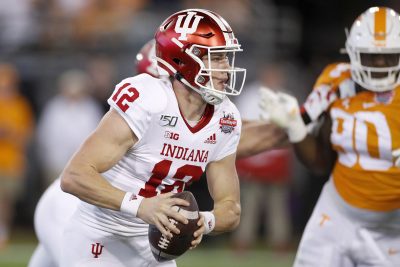
 

IU QB Peyton Ramsey teaches teammates and fans that the best answer for adversity is hard work

Peyton Ramsey was good enough as a starter to beat Tennessee. Will he return for another bite at the bowl apple?

Indiana lost to Tennessee last night’s Gator Bowl after leading by 13 with under five minutes left.  We can spend a lot of time talking about what happened – blown onside kick recovery, wasted timeouts, bad clock management, missed kicks – OR we can focus on what should be THE story of the 2019 Hoosiers.

Peyton Ramsey.

After two seasons as the starting quarterback, Ramsey was relegated to the bench by a coaching staff that valued the tool set of Michael Penix over the incumbent.  The coaching staff was right.  Penix has a stronger arm and quicker feet, and Ramsey publicly responded to his disappointment with graceful and generous support for Penix.

Ramsey then relied upon what earned him the success he enjoyed as a freshman and sophomore – hard work and support of his teammates.  Never a quarterback that wowed anyone with arm strength or dynamic speed, Ramsey has always found a way to excel despite dominant physicality.

Click here for your copy of “Oops – the Art of Learning from Mistakes and Adventures” by Kent Sterling

For those Indiana fans more familiar with basketball than football, think Jordan Hulls, the point guard for the Hoosiers almost a decade ago.  Hulls was never thought to be a gifted athlete, and had to work harder than anyone else to overcome stereotypes and earn respect.

Penix played five games between injuries, validated coach Tom Allen’s faith in his abilities, and then was shut down with a shoulder issue after the win against Northwestern.

Ramsey’s mental and physical toughness kept Indiana’s season from unraveling as he nearly found a way to lead the Hoosiers to an upset win at Penn State, and then earned a double OT win at Purdue.  It didn’t work out for the Hoosiers last night in Jacksonville, but that is not a reflection of Ramsey’s ability as a quarterback or leader.

What a great example Ramsey has set for those who are faced with a setback and consider quitting or mailing it in as a defiant response to temporary setbacks.  That is the best part of college athletics – it teaches lessons related to work ethic that are difficult to access elsewhere.

And Ramsey’s story didn’t end with last night’s loss.

The next chapter will be whether Ramsey wants to stick around Bloomington for his final season or bounce elsewhere as a grad-eligible transfer.  If Penix comes back 100% healthy, why would Ramsey accept the back-up spot as an insurance policy for the Hoosiers as his eligibility expires?  If Ramsey stays, will Penix bet on himself to supplant Ramsey or seek another program?  And what about Jack Tuttle, the highly touted transfer from Utah?

Whatever Ramsey decides, he’s earned the opportunity, and will always be thought of as an incredibly tough quarterback who showed his teammates and fans that adversity should always be answered with hard work.

The offseason is going to be every bit as interesting as last night’s Gator Bowl.

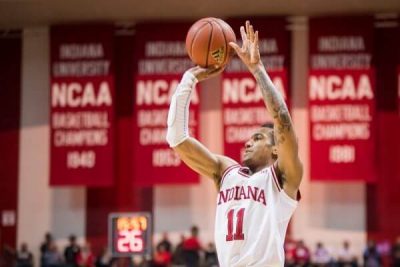
Devonte Green’s errors cost Indiana just as surely as his three-pointers benefit them

Devonte Green is a talented shooter, but there is more to basketball than shooting.

Devonte Green is the Indiana Basketball player fans love to love and hate – sometimes during the same game.

IU likely doesn’t beat Florida State without Green creating offense when there was none otherwise.  His 30 points on 10-15 shooting (5-7 from beyond the arc) were crucial in the Hoosiers’ pasting of the Seminoles.  No one cared much about Green’s four turnovers during that game because he shot it so well.

The opposite was true in the loss against Arkansas.  Green was 5-16 (4-12 on threes), so the three turnovers stood out like Romeo Langford’s sore thumb.

Click here for your copy of “Oops – the Art of Learning from Mistakes and Adventures” by Kent Sterling

Turnovers are obvious.  The behind the back passes at the feet of bigs on the block ruin possessions, but there has also been a play in each of Indiana’s past two games that didn’t show up in the boxscore but are indicative of Green’s poor decisions leading to negative plays.

Up 11 with 4:06 left in the first half of the win that almost wasn’t against Notre Dame in the Crossroads Classic, Green heaved up a long (and ill-conceived) three from the left wing with 21-seconds left on the shot clock.  It came off the rim in Green’s direction.  Instead of getting back on defense, Green took a step toward the ball but lost the rebound to Notre Dame’s Prentiss Hubb who passed ahead to TJ Gibbs for a transition layup.

If Green retreats on defense, the Irish likely have to set up their half-court offense, which was mostly inert to that point in the game.  Instead the lead shrunk to single digits.  Games are won and lost on plays like that.  If Armaan Franklin misses his late-game three-pointer, Green’s poor decisions during that possession would have been correctly blamed in part for the loss.

Ahead by two against Arkansas near the five-minute mark of the second half, Franklin drove toward the bucket from the left wing.  Trapped on the baseline, Franklin sought relief by passing to the wing he had just vacated.  Green was supposed to be there.  He wasn’t, so the ball bounced out of bounds.  The turnover belongs to Franklin, who should pass to people instead of spots, but the correct basketball play was not made by Green.  On the other end, Isaiah Joe made a basket to tie the score.

That play was not solely responsible for Indiana’s loss, but like the attempted offensive board against Notre Dame, it represents a lack of adherence to basic basketball principles that will turn wins into losses.

A senior like Green should understand basketball better than the typical freshman.  No one is perfect, but Green’s mental errors continue to cost Indiana at an alarming rate.  Coach Archie Miller’s continued allowance for Green’s mistakes make it more and more difficult for Indiana to function consistently as a unit.

Making 23-foot shots is a great skill, and Green is one of the few Hoosiers who can do it well.  But poor fundamental basketball causes wasted offensive opportunities just as missed shots do.  Worse, Green being allowed to continue to make those mental errors shows Miller is either ignorant of them (which is not the case) or not concerned enough to bring the right combination of consequences to correct the behavior.

Indiana is going to win and lose games because of Green, which is exactly the same spot the Hoosiers were in with players like Troy Williams, Jeremy Hollowell and James Blackmon.  Until the tolerance for bad basketball changes, Indiana will continue to be mired in mediocrity.

Indiana Basketball fans can help Archie Miller be the right coach by believing he is #iubb

Archie Miller becoming the right coach for IU might be fans believing it before they see it.  

Conversations about Indiana Basketball remains the same.  The Hoosiers are underachieving.  The cause is debated on message boards and sports bars.

Some Indiana fans, tired of the entrenched mediocrity, believe coach Archie Miller is the cause and want him fired.  Others believe five years is the minimum a coach needs to build a roster that reflects his culture, and Miller deserves that amount of time to establish his culture.

Click here for your copy of “Oops – the Art of Learning from Mistakes and Adventures” by Kent Sterling

Many point to coaches like Louisville’s Chris Mack, Ohio State’s Chris Holtmann and Butler’s LaVall Jordan as examples of coaches who took over a program and achieved success well inside that five-year window.  They believe patience is wasted because of their ability to win quickly.

I’m more pragmatic.

The reality is that outgoing athletic director Fred Glass will not fire Miller at the end of this season – period.  If Indiana goes 1-19 in the Big 10, Glass won’t fire Miller.  The new AD is not going to fire Miller as one of his first acts.  That means Miller will be Indiana’s coach until March, 2021, at the minimum, so IU fans need to marshal all resources behind helping Miller be the best coach he can be for as long as he is at IU.

That means empowering him to accelerate the cultural development.  Miller’s efforts to maintain continuity as he rebuilt after Tom Crean’s firing were laudable, but Crean’s lack of understanding that talent without culture yields uneven results continues to plague Indiana 33 months after he drove to the airport instead of the meeting where he would have been canned.

Miller admitted after the loss to Arkansas that a lack of control over his Hoosiers has been problematic, “There were a few times we called the play, (and) we didn’t execute the play.”  No basketball team can function successfully without players listening to a respecting the coach, and Miller needs to exert consequences that compel players to play as they are directed.

Fans need to support Miller at a level that allows Miller the latitude to do what is necessary to gain his roster’s attention.  If that means a talented player transfers, that’s the way it goes.  If it means a talented player sits, good.  If that means Indiana takes a loss now to win later, that needs to be celebrated, not criticized.

Miller needs to control the team instead of hoping they succeed by wildcatting.  Sure, a team can win by being more talented, but the Hoosiers aren’t close enough in talent to compete consistently with Kentucky, Duke or the other blue bloods.  Indiana needs to out-execute to win, and if they are not running the plays as called, how can they out-execute?

There is some good under Miller at Indiana.  The recruiting has been exactly what Indiana needs as the culture shifts away from Crean’s East Coast focus.  Miller has done a great job establishing relationships in Indiana and getting the state’s best talent to commit to the rebuild.  The last two Mr. Basketballs have come to IU, and they have Anthony Leal and Trey Galloway on the way this summer.  The 2021 class will be crucial for Miller with Caleb Furst, Khristian Lander and Trey Kaufman among home state targets.

I don’t know whether Miller underestimates the Indiana fan base’s willingness to accommodate attention-getting measures he might take to get his third Indiana team to do the right thing offensively and play connected basketball on the defensive end, but the time has come for the dog to start wagging the tail at Assembly Hall rather than the other way around.

Indiana fans are willing to be patient if there are signs of growth in understanding the game.  When IU players show they care more about their teammates than their individual agendas, IU fans will get behind Miller with enthusiasm.

The key to making that happen might be a healthy dose of presumptive support and positive energy.

Top 10 Indiana sports stories of the about to end decade – whatever we call it

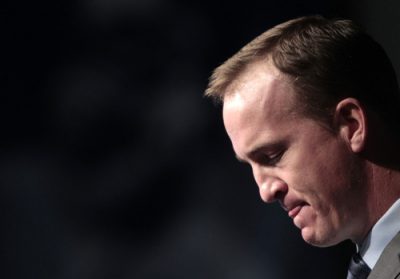
Peyton Manning release is the biggest story of the soon-to-conclude decade. “I will always be your quarterback,” is the quote of the decade.

First of all, if you are one of those lunatics who insist this decade will end with after 2020, please stop reading.  I cannot help you, and your thoughts on correct decade definition are bonkers.  The 20s start with 2020.  Arguing that is the defiant act of an entrenched contrarian.

Now that we’ve cleared out the kooks, let’s get down to the top 10 Indiana sports stories of whatever we called this previous decade.

Click here for your copy of “Oops – the Art of Learning from Mistakes and Adventures” by Kent Sterling

10 – Brandon Miller leaves Butler.  After Brad Stevens bounced to the Boston Celtics, AD Barry Collier tabbed Miller as the next head coach.  During the offseason following a difficult 14-17 campaign – Butler’s first in the Big East – Miller took a leave of absence from which he never returned.  He was replaced by Chris Holtmann, who was the right guy in the right place at the right time.  Holtmann’s three teams won 70 games and earned a bid to the NCAA Tournament in every season.  He was then replaced by LaVall Jordan after being hired by Ohio State.  We have not heard from Miller since.

9 – Pacers bounce back.  The prevailing wisdom among national media after Paul George demanded and received a trade out of town was that the Pacers would founder.  Not so much.  The Pacers won six more games without their “star” in 2017-2018 than they had the year before.  The players exchanged for George – Victor Oladipo and Domas Sabonis – were a breath of fresh air compared to the self-immersed fringe all-star.  Pacers fans never missed George, and the team continues to flourish without him.

8 – Indianapolis hosts very successful Super Bowl.  Yeah, the weather was incredible, but the best part of the city during that wonderful Super Bowl week was the generosity of welcoming Hoosiers.  The volunteers smiled and helped, while the city’s layout kept people happy and safe as they careened from party to party and finally the game without the need of a car or cab.  The amount of goodwill fans and media carried from Indy back to their hometowns continues to pay off today.  Because of its performance in 2012, Indy is correctly viewed by many as the perfect venue for national sports events.

7 – Pacers steal Victor Oladipo and Domas Sabonis.  George requested a trade from the Pacers simultaneous to this public comment at a charity softball game, “I’m under contract as a Pacer. That’s all that needs to really be known. I’m here. I’m a Pacer. Again, what I’ve been dealing with is stories. You guys talking or teams talking. I’m a Pacer. There’s no way around that. This is my team, my group and this is where I’m at.”  Less than three weeks later, George was on his way to Oklahoma City in exchange for two future all-stars (assuming Sabonis goes – which seems safe).  Two years after that, George was off again – this time to Los Angeles.

6 – Indiana fires Tom Crean.  After nine years that saw the ascension and then decline of Indiana hoops under Crean, AD Fred Glass asked his coach to meet him in his office.  Crean read the writing on the wall and boarded a plane out of town with his family.  Crean’s act wore thin within the athletic department, among Indiana high school and summer coaches, and with the majority of one of America’s most fervent fanbases.

5 – Chuck Strong.  There was a perfect confluence of events that made the 2012 Colts a huge feel-good story.  After the Colts finished the 2011 season 2-14, coach Jim Caldwell and president Bill Polian were fired, Peyton Manning was released, Chuck Pagano was hired, Andrew Luck was drafted #1 overall, and Pagano was diagnosed with cancer.  As the likable Pagano successfully battled cancer, Bruce Arians led the team to an 11-5 record, and Luck emerged as an elite level quarterback.

4 – Paul George snaps his leg in Las Vegas.  The Pacers were coming off back-to-back trips to the Eastern Conference Finals when George’s lower leg snapped during a USA Basketball scrimmage.  The Pacers changed, and George changed.  He worked his way back to health and productivity, but neither he nor the Pacers have won a playoff series since.

3 – Andrew Luck retires.  Everything but the timing of Luck quitting was predictable.  Injuries and rehab had eroded Luck’s love for the game.  He was a reluctant superstar who was never comfortable in the spotlight, recently married, and with a baby on the way.  Always reflective and smart, Luck decided enough was enough and he retired 15 days before the start of the 2019 season.  There are consistent rumors that he might return to football – either in the NFL or XFL (his father is the commissioner of the XFL).  Those rumors are clickbait.  Luck understands his body feels better because he no longer plays – and so he will never play again.

2 – Butler goes to back-to-back NCAA championship games.  We tend to discount the special accomplishment of the 2010 and 2011 runs by Butler because the Bulldogs did it twice.  The first appeared to be a 49th Street miracle.  The second solidified Brad Stevens and Butler as a program that deserved national respect.  The result of the tourney success was an invitation to slide into the A-10 and then the Big East.  The Butler program has evolved from cute and cuddly Horizon League team to nationally relevant Big East competitor.  Stevens became the coach of the Boston Celtics and Matt Howard deserves a statue outside Hinkle Fieldhouse for their incredible success.

1 – Peyton Manning released.  When a certain hall of Famer with gas left in the tank is released, it’s a huge story because it doesn’t happen very often.  Manning’s multiple neck surgeries made him a huge risk and with Andrew Luck as the clear #1 pick in the 2012 draft, the Colts decided the risk of continuing with Manning at QB was greater than the reward.  Manning signed with the Denver Broncos, went to two Super Bowls, and won one.  The Colts went to the playoffs during Luck’s first three seasons before injuries and the relentlessness of rehab eroded his availability and finally caused his retirement

As a postscript, the sale of the Indianapolis Motor Speedway and Hulman Company assets to Roger Penske could have a huge affect on the city’s iconic signature event.  It could be the #1 story of the decade depending upon what Penske does with the property and Indy 500.  The deal has not closed, so changes have not been made and we don’t know what this sale means.

Numbers say Colts can win with Jacoby Brissett, but not because of him

Jacoby Brissett is a quarterback with a high floor and low ceiling. The Colts have a decision to make regarding Brissett and the quarterback position.

Is Jacoby Brissett the guy?

That’s the first question that needs to be answered about the Indianapolis Colts as we head into an offseason that will be a few weeks longer than we anticipated before Andrew Luck retired.

Brissett has been exactly as advertised.  Last season, coach Frank Reich was asked about where Brissett would slot among NFL starters, and he said “I think he’s top 20.”  Sounds about right – just inside the threshold of those who might be kept, but not high enough for a team to embrace him as the unquestioned starter.

Click here for your copy of “Oops – the Art of Learning from Mistakes and Adventures” by Kent Sterling

Over and over again in this wasted 2019 season, Brissett has been good enough to keep the Colts close but not good enough to win them.  A part of his mediocrity might have been caused by injuries to his receivers, but the numbers are what they are.  Stats might have been affected by the knee sprain to his plant leg, but again, the numbers tell a story that makes Reich’s assessment seem smart.

T.Y. Hilton has missed time, and Devin Funchess, Parris Campbell, Chester Rogers, Deon Cain and Daurice Fountain have either gone on IR or been claimed after being waived.  Those receivers being unavailable didn’t help, but off-target passes didn’t throw themselves and indecision wasn’t created entirely because of those not present.

There are as many opinions about Brissett as fans watching the games, so let’s take a look at the numbers and rankings – raw numbers without any judgment:

  • Passer Rating – 89.2 (18th)
  • QBR – 56.4 (17th)
  • Yards – 2,780 (25th)
  • Completion % – 61.6% (25th)
  • INTs – 6 (9th)
  • Drops – 20 (T-16th)
  • On target passes – 70.4% (19th)
  • Completed air yards per completion – 5.3 (T-27)
  • Intended air yards per completion – 7.9 (19th)

The average of those rankings is 19.4.  In other words, Reich knew what the hell he was talking about.  Unfortunately, a good bit of Brissett’s good work is done during the first three quarters. His fourth quarter passer rating plummets to 75.5, which ranks him 27th in the NFL.

Brissett could develop into a better quarterback.  It’s possible within the margins, but he is clearly a low ceiling/high floor type of quarterback.  Maybe he moves into the top 15, but it’s hard to imagine evolution higher than that.

Can the Colts win a championship with Brissett?  They won’t win a championship because of him, but if every other area is outstanding, it’s possible they could win with him.

You can bet general manager Chris Ballard is going to be aggressive in trying to find an upgrade at QB in the same way he’s looked at other spots during his three drafts.  With a likely pick in the teens of the first round and the second pick of the second round, Ballard should be able to select Oregon’s Justin Herbert, Georgia’s Jake Fromm or Utah State’s Jordan Love if he chooses.

Given the situation with Andrew Luck’s retirement, Ballard and Reich were justified in piling all their chips on #7.  Next year, they will be held accountable for what they learned as all of us saw the same Brissett.

NCAA Tournament will be just fine without James Wiseman; it doesn’t need stars – it makes stars

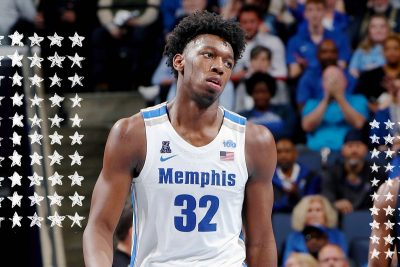
James Wiseman won’t play again for Memphis. College basketball will not be less without him.

Media hot take artists are in a snit over James Wiseman leaving Memphis to prepare for the NBA.

The NCAA Tournament needs stars, they say, and James Wiseman is a star.  What will the NCAA Tournament be like without him, they gush.  Well, It will be like all of the NCAA tournaments that haven’t been blessed by Wiseman’s presence, which means all of them.

It will be thrilling.

Stars are made by the NCAA Tournament, not the other way around.  The star-making power of the NCAA Tournament is so immense that it turned 98-year-old Sister Jean of Loyola University Chicago into a national sensation during the 2018 tourney.

Click here for your copy of “Oops – the Art of Learning from Mistakes and Adventures” by Kent Sterling

March Madness is about teams and schools, not stars.  This is not the NBA.  It was a quaint little spectacle back in the day, and then people started filling out brackets.  The 1979 NCAA Tournament turned Larry Bird and Magic Johnson into stars as they competed in the championship[ game, and that star power was bright enough that the NBA morphed from the finals being shown on tape delay to the global Goliath it is today.

Media  hysterics and hot take artists yelping about the NCAA being at fault for Wiseman’s decision to bolt Memphis is precisely the reason he feels comfortable leaving.  His ticket is punched, and he’s getting more attention by walking away than by anything he’s done on the court.  Media is good at many things, but it might be best at giving 18-year-olds an inflated sense of entitlement that proves to be their ruin.

A little history lesson for those who have forgotten – Wiseman has been suspended because his mother accepted an $11,000 loan from Penny Hardaway to move to Memphis, where Wiseman played for the high school team Hardaway coached.  Hardaway and Wiseman won a state championship, Hardaway was hired as head coach at Memphis, and Wiseman committed to play there.  Because Hardaway was a Memphis booster at the time, Wiseman was suspended until January 12.

I’m writing this in historic Hinkle Fieldhouse, one of the great halls of college basketball, where basketball is taught and played by college students.  It’s the place where hall of fame coach Tony Hinkle invented the orange basketball, Barry Collier devised and perfected “The Butler Way”, and Brad Stevens coached teams to back-to-back NCAA Championship games in 2010 and 2011.

Perhaps no building in America has a greater claim to being the heart of all that is good about college basketball than Hinkle Fieldhouse.  I look at the court, the original court still in use today that was installed when the building was constructed in 1928, and try to picture someone deciding he would rather train in isolation for the NBA rather than compete with teammates.  It’s too incongruous to imagine.

Hey, kids and families have to make decisions to answer longterm financial needs, but hurrying through experiences meant to be enjoyed and savored seems like something a wise parent counsels against.

Blaming the same NCAA that helps student-athletes here work toward their potential on the court and in the classroom for the Wiseman debacle is contrary to logic.  Believing college basketball and its centerpiece event will be less special because of the absence of a young man who doesn’t value the experience enough to participate in it is ludicrous.

College basketball was no less popular when splendid players like Kevin Garnett, Kobe Bryant, and LeBron James moved straight from high school to the NBA, so I doubt it will miss Wiseman.

March Madness will be here in three months, and over 1,000 competitors and coaches will be thrilled to experience it.  Millions of fans will fill out brackets with their hearts instead of their heads, and a few will be thrilled with the results.  The rest will have to settle for witnessing incredible upsets, many shining moments, and the birth of several stars.

And very few will remember the kid who said no to all of it.

College sports “plantation mentality” and corruption can only be ended by lawmakers

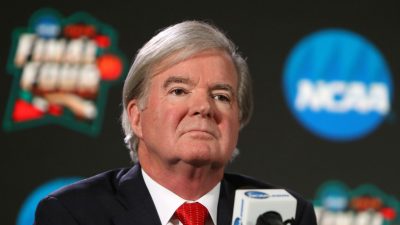
NCAA president Mark Emmert is not the cause in the ongoing corruption of college sports – just a seemingly feckless bystander powerless to end it.

The NCAA has a trust problem, according to its president Mark Emmert.

He’s right.

Emmert is spending a significant amount of time meeting with lawmakers trying to head off a spate of legislation that will correct the course of college athletics because the NCAA can’t, or more accurately won’t.

The trust issue exists for two reasons; first is the accurate perception that college athletics makes millionaires of white administrators and coaches at the expense of an unpaid labor force comprised primarily of African Americans playing football and basketball.

Click here for your copy of “Oops – the Art of Learning from Mistakes and Adventures” by Kent Sterling

The second is that the NCAA is not as good at penalizing corruption as the media is at reporting it.  The result is the apparent tolerance for wrongdoers.

Neither is good, but who can argue with the financial results for the schools that comprise the NCAA’s membership?  Money is rolling into Power Five conference universities faster than they can spend it.  In order to balance the books so it doesn’t look like everyone is getting rich but the athletes, schools engage in creative accounting that shuffles cash to other departments in the form of what is called “transfer expenses.”

There is no financial penalty for the schools and administrators for sleazy behavior, so the members aren’t eager to punish it.  Because the members don’t want to upset the apple cart, the NCAA has no authority to unilaterally bring the hammer down, despite Emmert’s keen desire to be seen as a solver rather than a causer of the corruption.

I know that defies prevailing logic by letting Emmert and his staff off the hook, but it’s important to remember the NCAA is nothing more than a collection of its members.  The members determine policy.  It’s a bottom up dynamic, not top down.  Emmert is powerless without the support of members, as he learned early in his reign when he tried to clean things up without the support of the university presidents.  They taught Emmert very quickly who runs collegiate sports.

So the NCAA has a perception problem driven by corruption being tolerated by members who embrace the status quo with their inaction.  The axiom – “Those with money tend to want to keep it,” comes into play here.  Sharing wealth is never the first choice of the wealthy.  Generosity being rewarded with tax breaks is a good example of society’s understanding of that dynamic.

The only downside to corruption in collegiate athletics is the stain left by public reports.  Illegal payments to recruits and athletes have been made for as long as games have been played, and no one has ever done what has been necessary to stop it because the system has never hurt the popularity of the guilty programs.  Fans only stomp their feet when the other guys cheat.

Emmert is the face on the dartboard, but the real perpetrators are the pious nincompoops who run college athletics – the presidents and athletic directors who are accountable for revenue and fan engagement.  Distrust should be directed toward them, not the NCAA staff in Indianapolis who not only fight corrupt coaches, shoe guys, and handlers, but those real crooks at the universities who cash big checks for looking the other way.

The University of North Carolina didn’t get away with academic fraud because the NCAA didn’t investigate reports from Mary Willingham and others.  They went unpunished because university attorneys cleverly appealed the NCAA findings by arguing the fraud was not an athletic benefit due to non-athletes also enrolling in the sham classes.

That’s next level smart – smart enough to provide a blueprint for other schools uninterested in providing real educations for their athletes.

College sports is as entrenched in corruption as a Chicago alderman, and the fix has proved to be distasteful enough to make its implementation a pipe dream unless state legislatures and/or congress decide the time is right to put an end to what former NCAA president Walter Byers called the “neo-plantation mentality” of college athletics.

For college presidents, the cure is worse than the disease, no matter how eager Dr. Emmert is to administer it.  But for lawmakers, maybe a thorough re-boot of the system would move sports fans to the ballot boxes in their support.

Here’s hoping IU forming a search committee to find a new athletic director is a sham

Maybe the same people who hired Fred Glass will be smart enough to hire the right candidate to replace him.

It is said by very astute business leaders that the chances of making a terrible decision increases with every additional person involved in the process.

Indiana University appears to be testing the limits of that axiom with the formation of a 14-person search committee to find the replacement for athletic director Fred Glass.

The committee includes six IU administrators/professors, four alums/donors who are members of the IU Foundation, three head coaches and one student-athlete.  It is chaired by Bill Stephan, the same guy who chaired the committee that selected Glass 10 years ago.

Click here for your copy of “Oops – the Art of Learning from Mistakes and Adventures” by Kent Sterling

My hope is that this committee is a sham that provides 14 people representing four constituencies a perceived voice in the selection process, but confers no power to them whatsoever.

The athletic director is a very important position within Indiana University charged with ensuring a fulfilling experience for student-athletes from both an athletic and academic perspective.  The AD puts in place and reinforces the culture that allows athletes the ability to pursue their potential in competition and the classroom.  The AD keeps them safe and challenged by employing coaches and building facilities embodying that culture.

The responsibility for hiring a person to a position of such importance cannot be trusted to donors, an athlete, people who will be managed by the AD, and a group of university bureaucrats.  But each of those fiefdoms would like to feel their voices have been heard.  That, I hope, is the point of the committee – the canard of perceived importance for people who enjoy pontificating.

I would suspect this committee might be trusted to make a legitimate recommendation if not for the inclusion of an athlete.  While the IU women’s soccer team member named to the committee might be brilliant in every way, her unquestioned lack of meaningful managerial experience renders her opinion valueless.

Coaches destined to be managed by the new AD also have no business in the selection process.  There is a reason staffers are not tasked with hiring managers.  Self-serving biases are unavoidable.

Donors write checks in exchange for access, in addition to feeling good about helping their university.  If IU values major gifts, like Cindy Simon-Skjodt’s $47-million to renovate Assembly Hall, it also needs to value her perspective.  At the very least, she needs a chair at a table where people debate the merits of candidates – even if the debate has no bearing on the actual decision.

A great way to preemptively shut up IU administrators is to get their buy-in on the front end as an athletic director is hired.  Not inviting them can be perilous because they live to second guess.  Giving them perceived ownership of the first guess silences the second guess.

There is one person whose input would be incredibly valuable, and that is Glass himself.  No one on the planet understands better than Glass the traits are required by his position.  That apparent exclusion is another reason to suspect this committee is strategic rather than functional.

It would be great if IU president Michael McRobbie stood up and said, “Hiring department heads is my biggest responsibility.  It’s what I get paid to do.  I’ll handle this without the input of donors, coaches, professors, and especially a student who is blissfully unaware of the awesome responsibilities of the position of athletic director.  This is my call and I alone will make it!”

It needs to be enough to hope that McRobbie understands his responsibility, but is smart enough to not voice it.

My faith the right decision will be made is driven by Glass being hired a decade ago via the same people executing the same procedures.  If they were smart enough to find Fred, I’ll trust they might be able to get it right again.

Until they don’t.  And then all bets are off because I have no voice in the decision.  All I have left is my ability to second guess.

Team-first basketball leads likable Pacers past Lakers to surprising 19-9 record

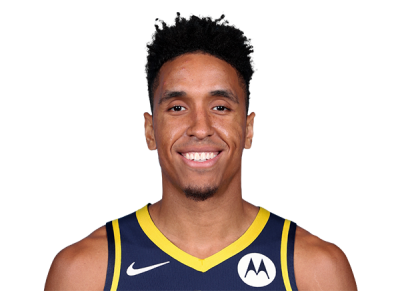
Malcolm Brogdon is one of many good gets Kevin Pritchard acquired to build the most likable Pacers team in a long time.

I love watching the Pacers.

They beat the Lakers last night to win their 19th game of the season, but winning is only part of the work they have done to win my heart.

In the star-driven NBA where brand value often trumps success in the eyes of fans, the Pacers are an anomaly.  They excel without a star.  None of the Pacers are in the NBA’s top 30 in scoring.  Malcolm Brogdon leads the team with an average of 18.9 points per game.  That ranks 34th among all NBA players.  Domas Sabonis is 39th at 18 ppg, and T.J. Warren 46th at 17.6.

The Pacers are a team.  They are greater than the sum of their parts – just as we like it in Indiana.

Click here for your copy of “Oops – the Art of Learning from Mistakes and Adventures” by Kent Sterling

In a universe where hundreds of millions can be earned by those who excel individually on losing teams, the Pacers choose to thrive as a unit.

Basketball is a remarkable game where the magnificence of an individual can compel hero worship even when it comes at the expense of a team success.  During highlights of the Pacers 105-102 win last night on ESPN, LeBron James was featured seven times.  The Pacers were repped by a Brodgon reverse layup around Dwight Howard and a missed free throw by Sabonis.

Vince Lombardi is inaccurately quoted as saying, “Winning isn’t everything; it’s the only thing.”  In the NBA, not only is winning neither everything nor the only thing – it’s irrelevant.

People want to see the spectacular, and the Pacers never oblige, unless quick ball-movement to create open space for shooters and connected defense are spectacular to you – and good for you if they are.

This group is more fascinated by trying to find the sweet spot of collective excellence than individual wealth.  Don’t get me wrong, these Pacers aren’t forfeiting any money and many are earning more every 20 games than most of us will net in a lifetime, but on the floor they are willing to be benevolent worker bees.

And the best part about attending practices and talking to players after is that they are as cooperative and willing to share with the media as they are on the court.  They like talking about what they are doing and how much they enjoy it.

The Pacers are thoughtful and generous with praise for one another.  As other teams fire coaches, contemplate firing GMs for entrenched mediocrity after many attempts at rebuilding rosters, and whine about stars coming together to build prefabricated mega teams, the Pacers keep rebuilding and winning.

Pacers president Kevin Pritchard has been faced with as much tumult as any NBA executive, and all the Pacers do is win.  Only one player remains from the 2016-2017 team.  When Paul George demanded a trade the following Summer, Pritchard obliged and received Domas Sabonis and Victor Oladipo.  With those two as a nucleus, Pritchard cobbled a roster around them and won six more games than during the final season with George.

After a second straight 48-win season, the Pacers said goodbye to three starters and five of their top 10 scorers.  They also have been without Oladipo for all 28-games this season.  Their record?  19-9.

In Chicago, Bulls VP of basketball operations John Paxson whined recently about how Derrick Rose’s injury set the franchise back.  What!  He missed the 2012-2013 season!

Instead of whining, Pritchard went to work and rebuilt – twice!

Now, Pacers fans are reaping the rewards of a job well done by Pritchard.  The Pacers are playing at a level equal to or better than every team in the East that doesn’t have the Greek Freak on their roster.

The Pacers are rolling with a likable group of team first players trying to figure out how quickly they can hit their potential.

And that is worth watching.